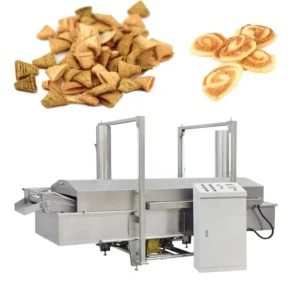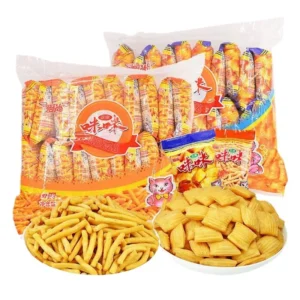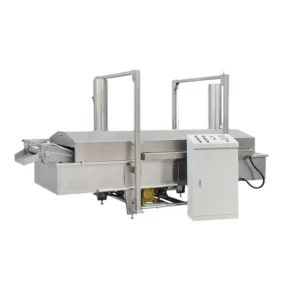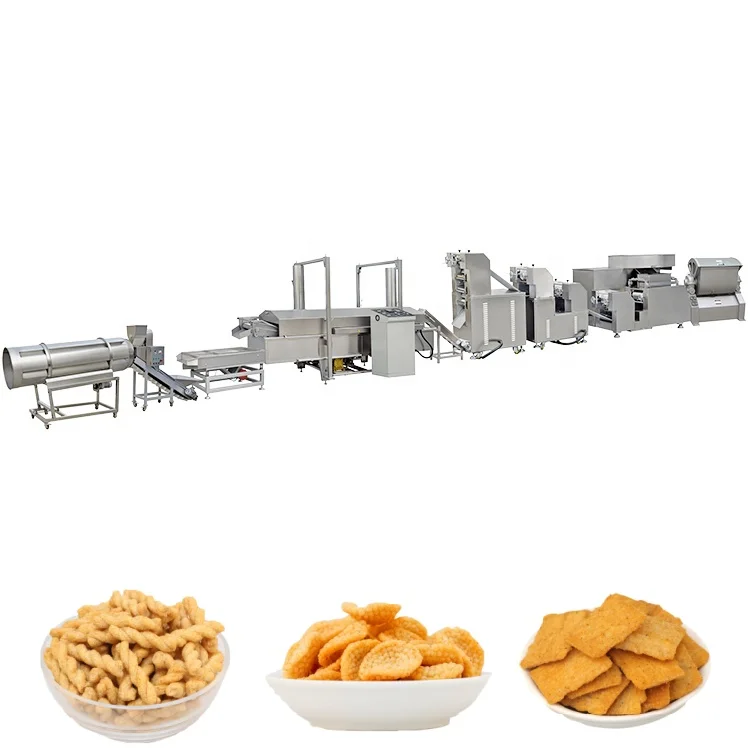
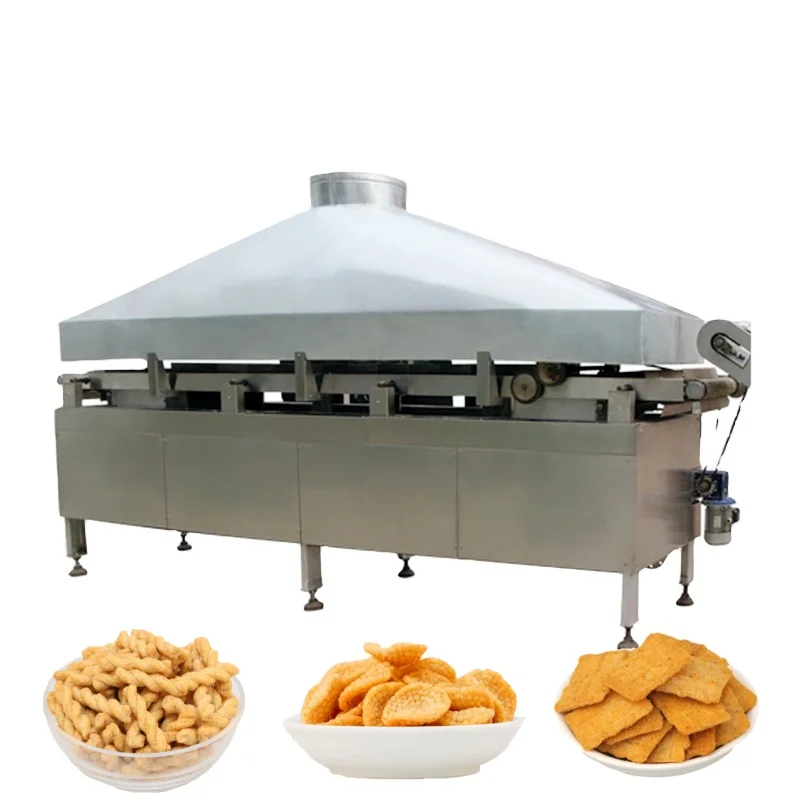
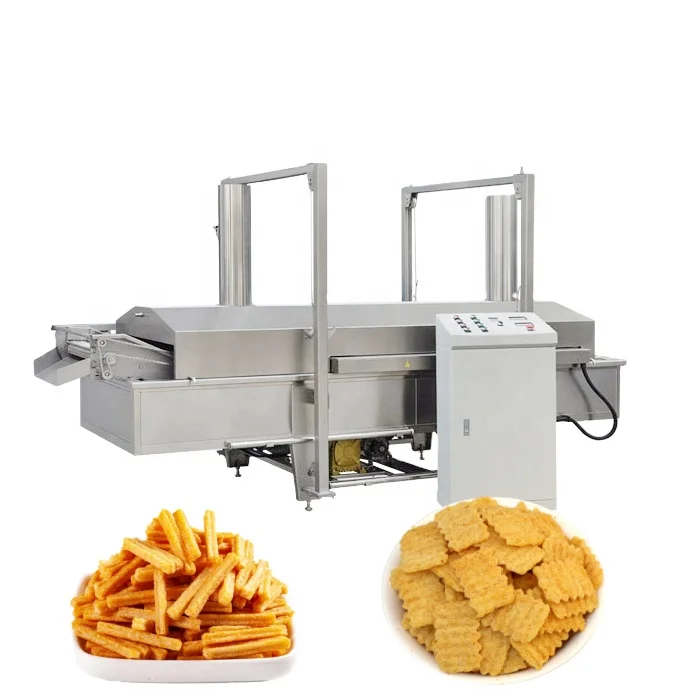
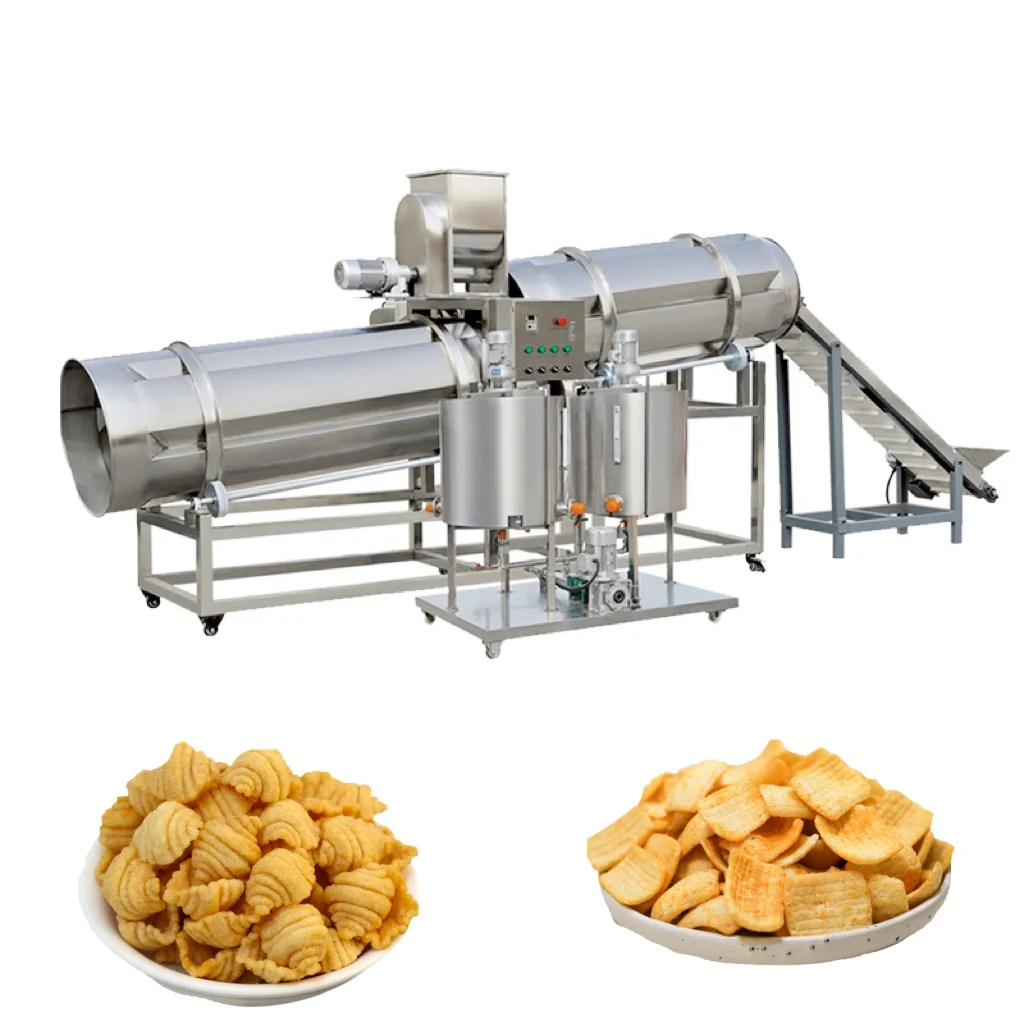
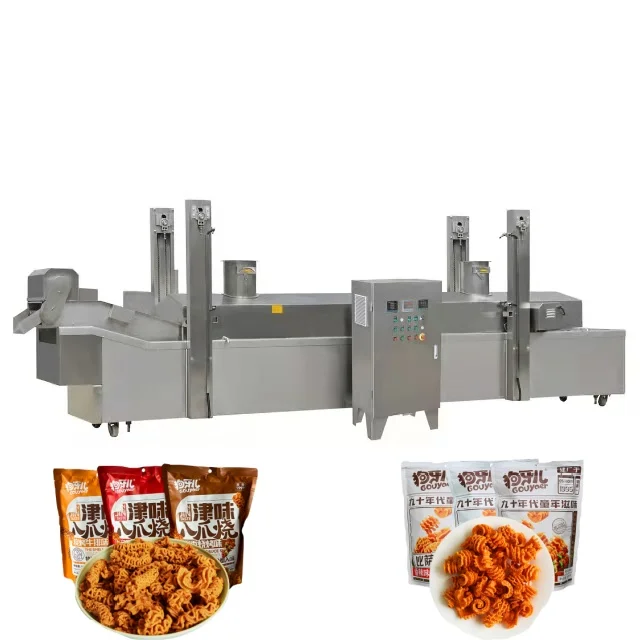
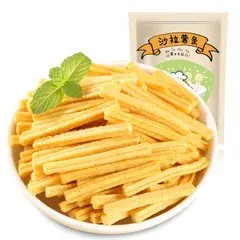
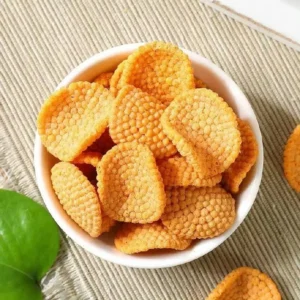
Electric Heating Fried Puffed Food Production Line, Single Screw Extruder, PLC Control — engineered as a complete turnkey project with throughput matched at every station from mixing through frying to cooling. Screw configuration and die design specified to your raw material formulation, producing consistent shapes including screw shells, tubes, rings, and cartoon formats across wheat flour, corn starch, and potato starch recipes. Multiple energy options available: electricity, gas, diesel, or steam to suit local infrastructure.
- Complete line layout with capacity calculation and voltage confirmation provided before shipment
- Trial run on customer raw material in testing workshop validates output before delivery
- On-site installation, commissioning, and operator training included with ongoing maintenance support
Description
Integrated throughput balancing — every station from mixer to cooler is sized against the single screw extruder’s real output on your starch blend, preventing downstream bottlenecks before the line ships.
Technical Specifications
| Parameter | Value |
|---|---|
| Product Type | Fried Puffed Snack Food Production Line |
| Extruder Type | Single screw extruder |
| Available Models | MT100 / MT120 |
| Rated Power | 50–70 kW (electric heating); 50–60 kW (gas or diesel) |
| Voltage & Frequency | Three-phase 380V/50Hz or single-phase 220V/50Hz; customizable to local supply |
| Output Capacity | 120 kg/h (basis not stated in source — confirm raw material, moisture content, and product shape) |
| Overall Dimensions (L×W×H) | 12,000–26,000 × 1,200 × 2,200 mm |
| Contact Material | Food-grade stainless steel 201/304 |
| Energy Options | Electricity, gas, diesel, or steam |
| Control System | PLC available (verify against final quotation) |
| Motor & Drive | Siemens (China-made) or equivalent top-tier Chinese brand; Delixi or Delta inverter |
| Process Flow | Mixer → Screw Conveyor → Single Screw Extruder → Pulling & Cutting Machine → Automatic Fryer → Automatic Flavoring Line → Cooling |
| Certifications | CE, ISO 9001 |
Application Suitability
| Application | Material or Output |
|---|---|
| Fried puffed snack production | Wheat flour, corn starch, potato starch blends |
| Secondary puffing snack formats | Salad sticks, golgappa, pani puri |
| Extruded shape variety | Screw shells, round tubes, square tubes, rings, cartoon shapes |
| Turnkey snack line projects | Complete production from batching through cooling and packing |
Why Nominal Line Capacity Often Fails at Startup
A fried puffed food production line turnkey quoted at a fixed hourly output means little if that number was derived from a generic starch formula rather than your actual recipe.
We verify throughput on your specific raw material blend before any equipment leaves the factory.
I once configured an electric-heating fried puffing line for a Southeast Asian buyer who planned to run a high-ratio corn flour recipe. The heating zones had been calculated around a standard wheat-starch mix. When the line started up, the extrudate came out dense and undercooked in the core, and the fryer could not recover the lost expansion. Production dropped sharply, and the buyer spent weeks adjusting temperatures and screw speeds on-site before reaching acceptable quality [NEED_CITE: raw material variability and extrusion throughput correlation]. That experience reshaped how we approach every project: the testing workshop runs your exact formulation first, so the quoted capacity reflects reality, not a brochure figure.
Matching Every Station to the Extruder’s Real Output
The single screw extruder sits at the heart of this fried puffed food production line turnkey, and every upstream and downstream station must match its actual throughput. The pulling and cutting machine must keep pace with the extrudate exit speed, while the automatic fryer needs sufficient belt length and oil volume to handle peak output without temperature collapse. When any station is undersized, the entire line stalls or produces inconsistent product.
Energy Source Selection and Its Effect on Fryer Performance
Choosing between electric, gas, diesel, or steam heating is not just a utility question — it directly shapes fryer recovery time and product texture. Electric elements deliver precise zone control but demand a stable, high-capacity power supply. Gas and diesel heaters recover temperature faster after a product load enters the oil, which matters when running high-moisture extrudate [NEED_CITE: industrial fryer energy recovery rates by fuel type]. We map your facility’s available infrastructure before recommending a configuration.
Reading the Specs That Actually Matter
The single screw extruder’s barrel length-to-diameter ratio determines how long your starch blend stays under heat and shear, directly influencing gelatinisation completeness. A short barrel may leave uncooked cores in thick-walled shapes like tubes, while an overly long residence time can over-expand delicate rings. The die configuration — interchangeable across screw shell, tube, ring, and cartoon profiles — controls expansion direction and final product density. Food-grade stainless steel 201/304 on all contact surfaces prevents corrosion from the high-moisture, high-salt environment inside the fryer and flavoring drum. The PLC control system, when specified, maintains consistent barrel temperature profiles and screw speed across production runs, reducing batch-to-batch variation that manual adjustment cannot eliminate.
The Hidden Cost of Undersized Supporting Equipment
When the fryer or flavoring drum is specified based on the extruder’s nominal capacity rather than its verified output on your recipe, the line develops a bottleneck that no amount of operator skill can fix. I have seen projects where the extruder ran fine but the fryer belt was too short, forcing the operator to slow the entire line and accept a lower hourly yield [NEED_CITE: throughput imbalance in multi-station food processing lines]. The flavoring drum then received product in surges rather than a steady stream, producing unevenly seasoned batches. These mismatches surface only after installation, when changes are expensive and delays compound.
Why Buyers Source This Line Here
Complete line integration from batching through cooling means every conveyor speed, dryer temperature, and drum rotation rate is calculated as a single system rather than assembled from independent vendor quotes. Screw and die configurations are specified to your raw material and target shape before production begins, not copied from a generic template. Our in-house testing workshop runs trial batches on your actual flour and starch formulation before shipment, generating a documented report you can review before the line is crated. Pre-sales engineering covers line layout, utility planning, and phased installation scheduling, while on-site commissioning includes operator training on your specific product range. CE and ISO 9001 documentation supports customs clearance in regulated markets.
Documentation & Verification
- Line layout drawing with throughput calculations matched between extruder, fryer, and flavoring stations
- Trial run report produced on your specific wheat flour or starch formulation before dispatch
- Electrical schematic confirming voltage, frequency, and phase to your local supply standard
- CE declaration of conformity and ISO certificate included with full customs documentation package
Installation, Commissioning & Support
- Floor plan showing 12,000–26,000 mm line length with utility connection points marked per station
- Dedicated circuit sizing for 50–70 kW electric heating or gas/diesel supply routing confirmed pre-installation
- Modular station delivery with on-site assembly, belt alignment, and oil-fill procedures supervised by our engineer
- First-run parameter setting on your raw material, including barrel temperature profile and fryer dwell time
- Operator training covering die changeover, PLC navigation, and emergency stop sequences across all stations
- Wear parts list covering screws, dies, and fryer belt segments with recommended replacement intervals
What We Need to Build Your Line
To move from inquiry to a firm proposal, share your target product shapes, the exact flour and starch ratios you plan to run, and your expected daily output volume. We also need your workshop dimensions, local voltage and frequency, and preferred control language. If you have existing upstream or downstream equipment that must integrate, include model and capacity details so we can match throughput accordingly.
Frequently Asked Questions
Q: How is line capacity verified on my specific raw material and recipe formulation?
A: Before shipment, we run your exact flour, starch, and moisture blend through the single screw extruder and downstream stations in our testing workshop. The trial run produces a documented report showing actual throughput, product density, and fryer performance on your recipe. We adjust screw speed, barrel temperatures, and die selection until the output meets your specification, then lock those parameters into the final configuration.
Q: What voltage and frequency configurations are available for my target market?
A: The standard offering covers three-phase 380V/50Hz and single-phase 220V/50Hz. We can customize voltage and frequency to match your local grid, including 60Hz markets. Confirmation happens during the specification stage, and the electrical schematic reflects your exact supply before production begins, preventing commissioning delays caused by mismatched motors or control transformers.
Q: How is throughput balanced between the extruder, fryer, flavoring, and cooling stations?
A: Each station’s capacity is calculated from the extruder’s verified output on your material, not from a generic nameplate figure. The fryer belt length, oil volume, and heating recovery rate are sized to handle peak extrudate flow. The flavoring drum rotation speed and seasoning feed rate are matched to the cooled product flow, ensuring even coating without surges or idle gaps between batches.
Q: What does on-site installation, commissioning, and operator training include?
A: Our engineer oversees station assembly, belt and conveyor alignment, utility connections, and first-run parameter setting using your raw material. Training covers die changeover for different product shapes, PLC operation, fryer temperature management, and routine maintenance including screw and die inspection. The commissioning period runs until your operators can independently produce product that meets your density and texture specifications.
Q: How do I select the right die configuration for my target product shape and density?
A: Die geometry controls expansion direction, wall thickness, and final product density. During the trial run, we test multiple die options against your target shape — whether screw shell, tube, ring, or custom profile — and measure the resulting expansion ratio and fryer response. The configuration that delivers the correct crunch texture and market-expected density is locked into the final build and documented in your screw and die configuration record.
Related products
-
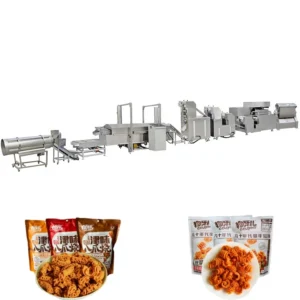
Puffed Octopus Snack Processing Line – Full-Automatic Fried Octopus Production Machinery
¥65.00 Select options This product has multiple variants. The options may be chosen on the product page -
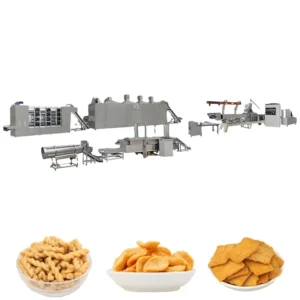
Doritos Chips Making Extruder Fried Corn Bugles Crispy Chips Process Machine Frying Salad Sticks Pellet Snacks Production Line
¥100.00 Select options This product has multiple variants. The options may be chosen on the product page -
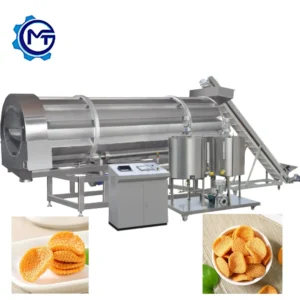
Automatic Rice Crust Chips Making Machine Bugles Pizza Rolls Fried Snack Food Processing Line Machine
¥8,570.00 Select options This product has multiple variants. The options may be chosen on the product page -
New Automatic Bugles Puff Snack Production Line Price Corn Chips Making Machine Fried Maize Machine High Productivity Large
¥8,570.00 Select options This product has multiple variants. The options may be chosen on the product page