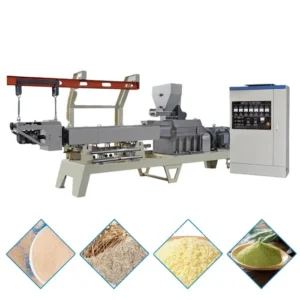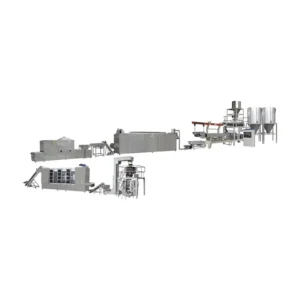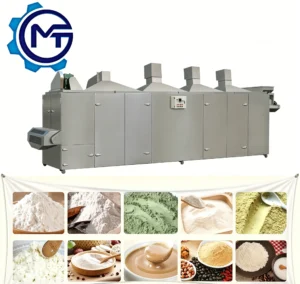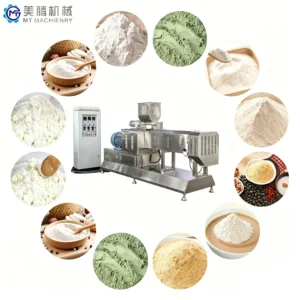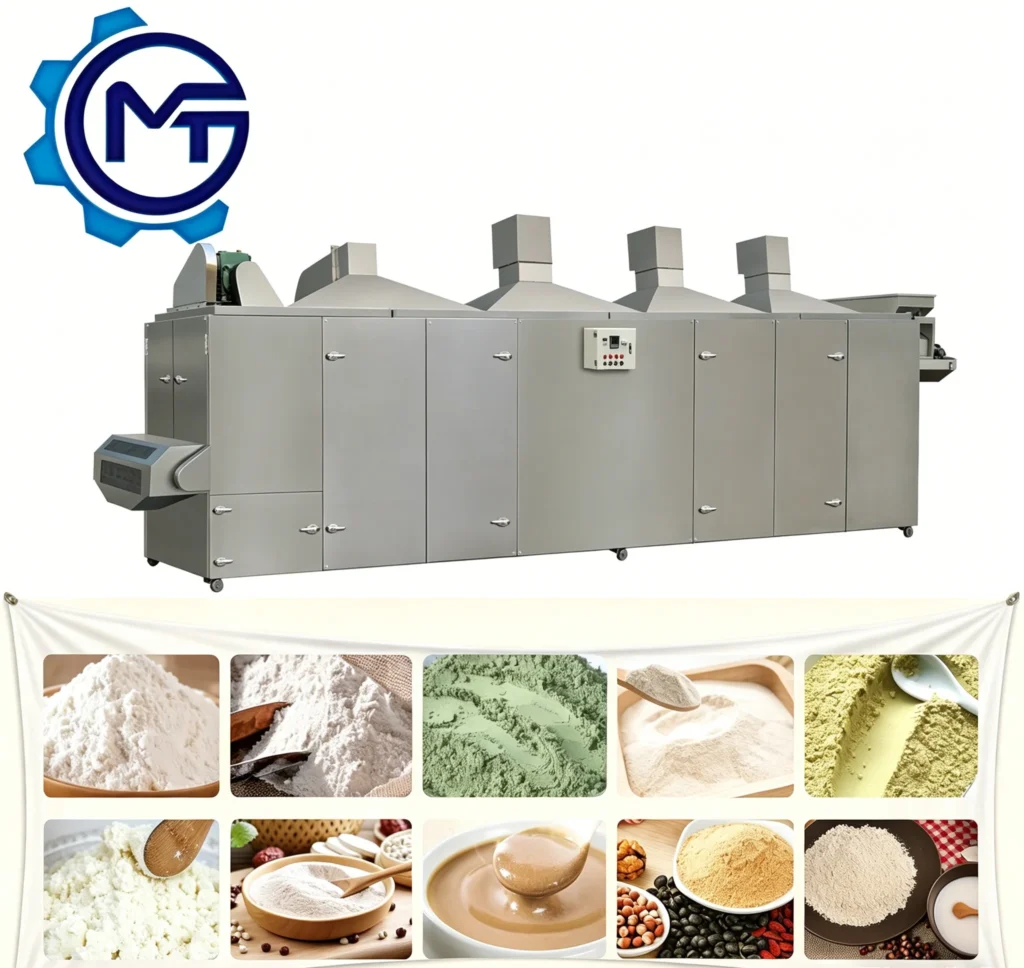
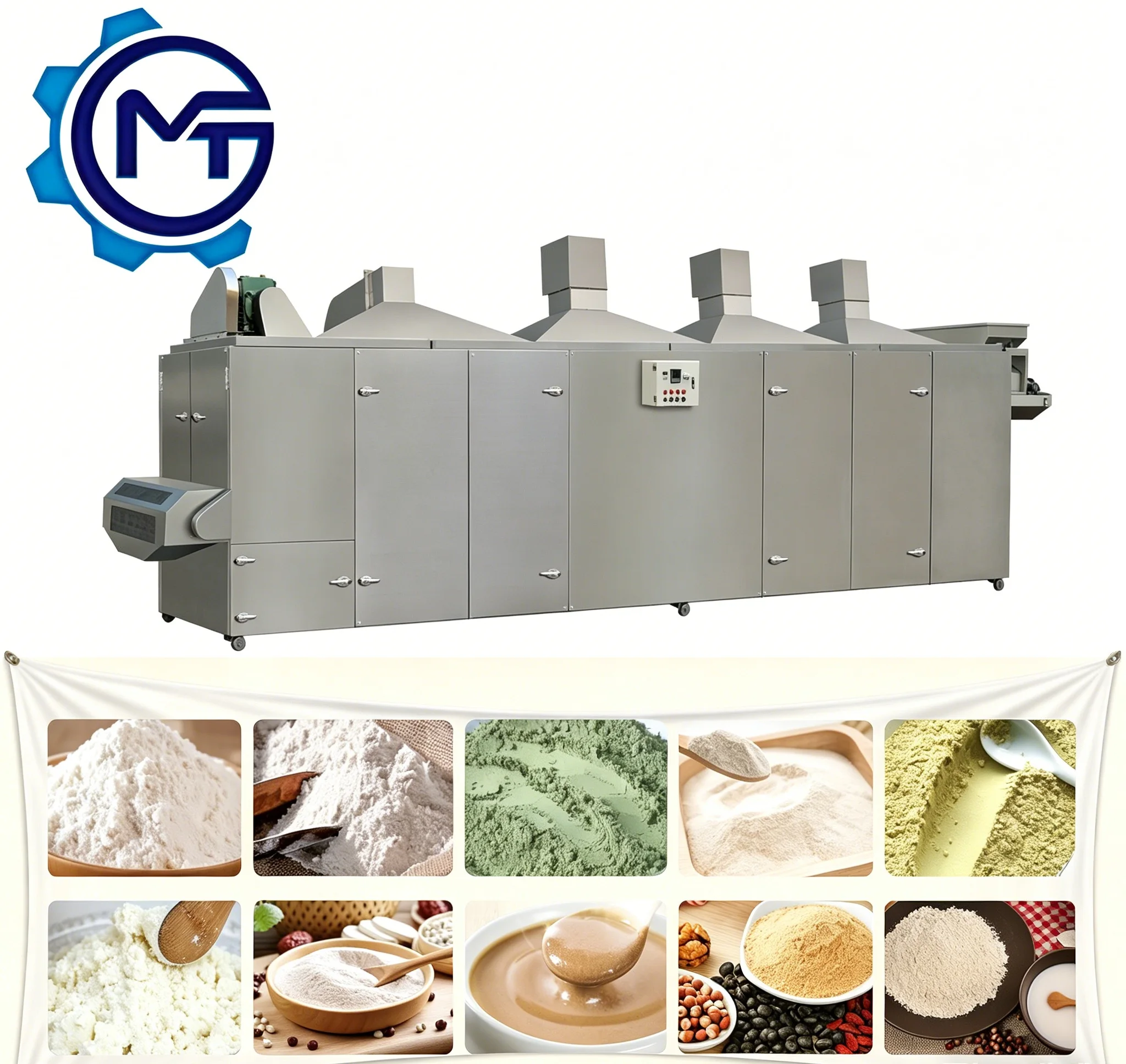
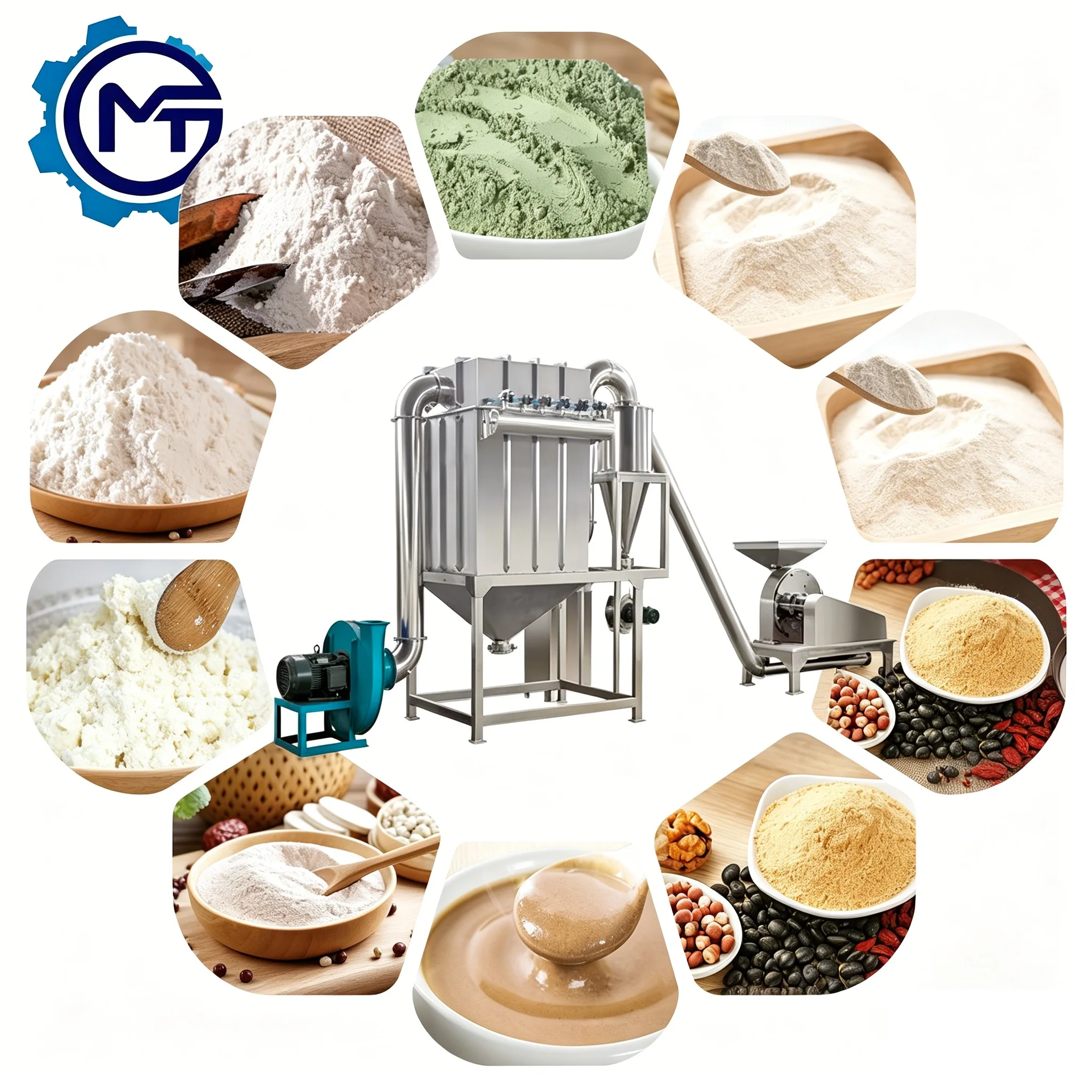
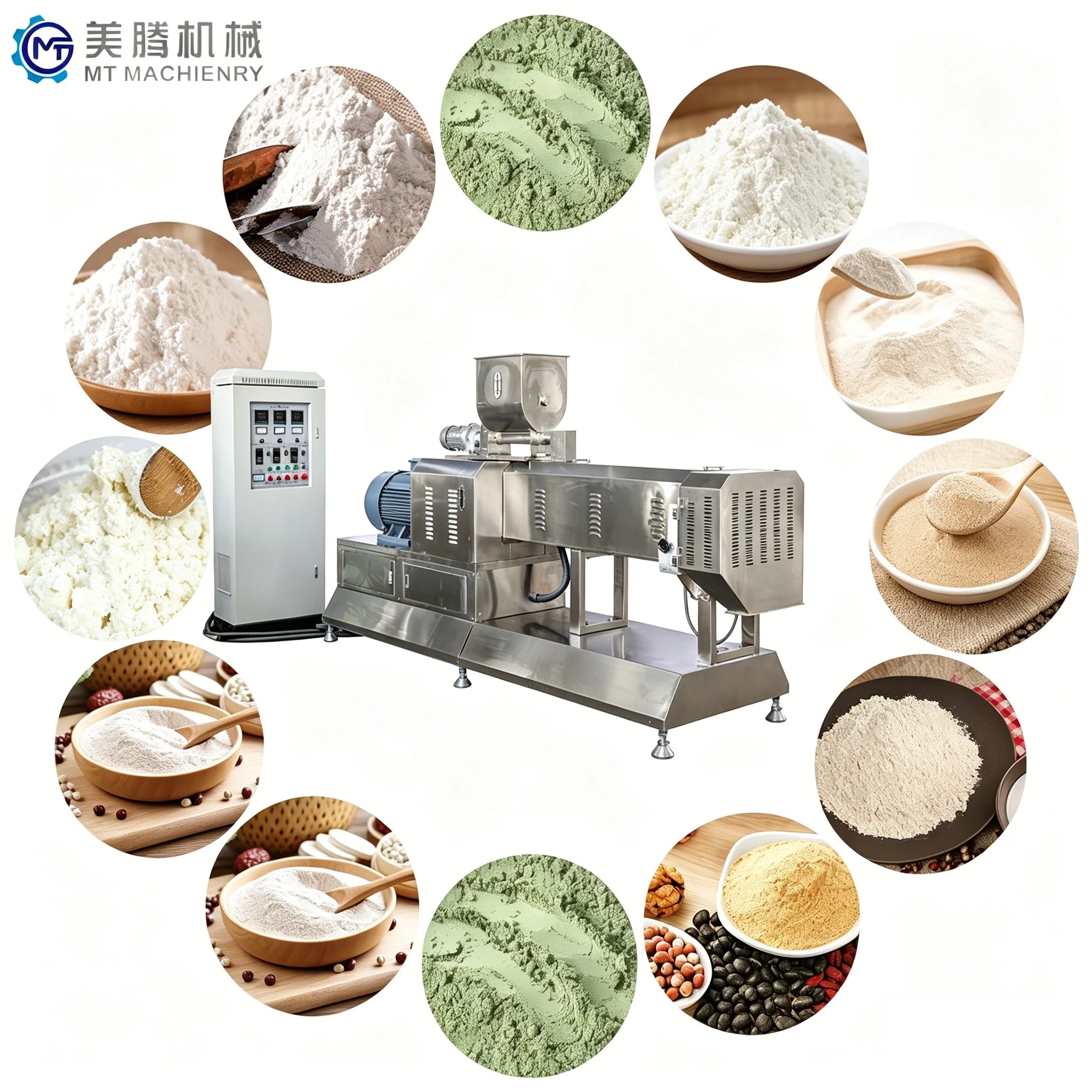
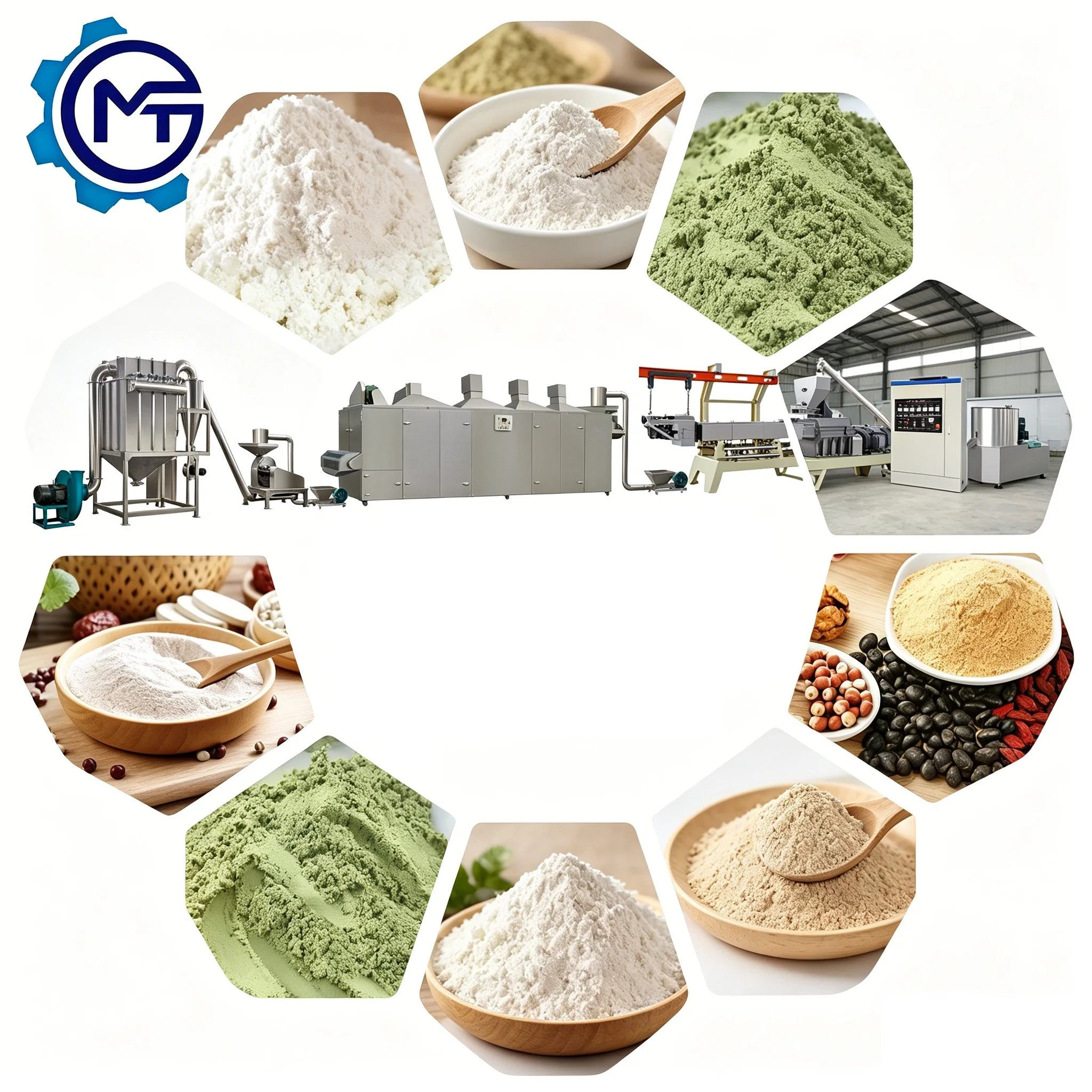
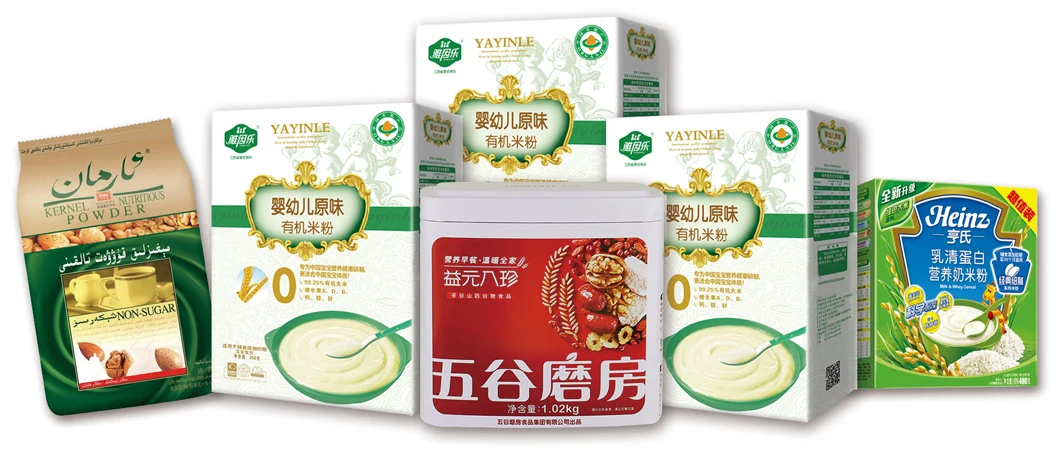
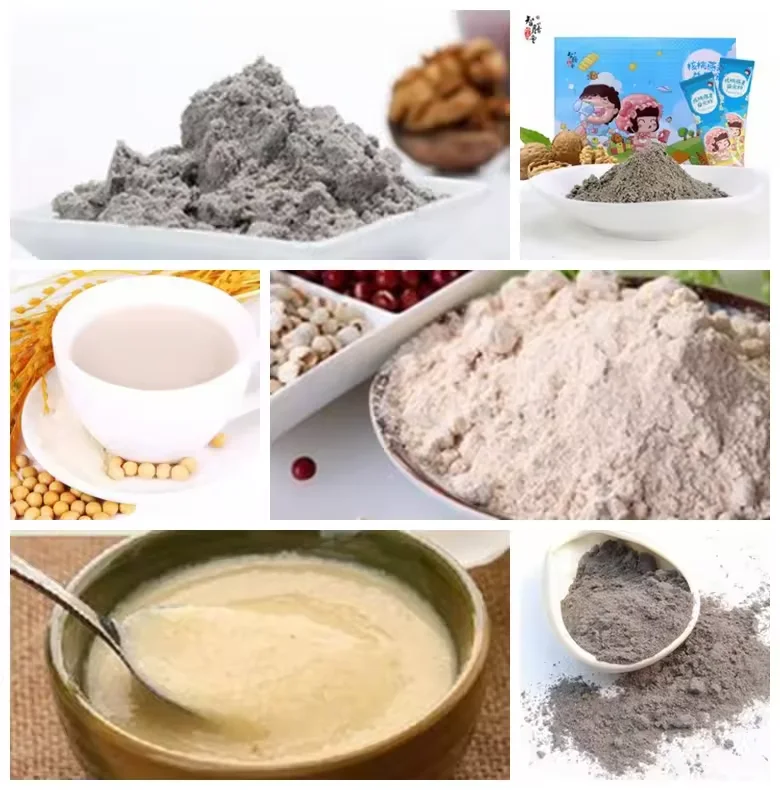
Nutrition Powder Processing Line, 200–500 kg/h Capacity, Food-Grade 304 SS — engineered as a complete turnkey system from batching through extrusion, drying and packing. Twin-screw configuration with screw geometry and barrel temperature profile matched to grain-based formulations for consistent gelatinisation and powder density. Touch-screen digital control supports recipe repeatability across baby cereal and fortified nutrition runs. Flexible heat source options (electric/gas/steam) align with your plant utilities, while in-house trial runs on your raw material validate output before shipment.
- Full-line throughput matching eliminates station bottlenecks
- Trial run report provided on customer-supplied formulation
- Electrical schematic and voltage confirmed pre-production
Description
Integrated Extrusion to Packing — throughput balanced at every station so the extruder never waits on the dryer or the coating drum, verified on your grain blend before the line ships.
Technical Specifications
| Parameter | Value |
|---|---|
| Product Type | Nutrition Powder Processing Line |
| Output Capacity | 200–500 kg/h (basis not stated in source — confirm raw material type, moisture content, and formulation) |
| Screw Configuration | Twin-screw |
| Construction Material | Food-grade 304 stainless steel (product contact surfaces) |
| Control System | Touch control panel with digital system |
| Heat Source Options | Electric / Gas / Steam (configurable to plant utility) |
| Automation Level | Full automatic |
| Line Stations | Mixers, extruder, baking ovens, downstream finishing |
| Energy Profile | Low energy consumption design (rated or benchmark not specified in source) |
| Warranty | 1 year |
| Certification | CE, ISO |
Application Suitability
| Application | Material or Output |
|---|---|
| Baby cereal and infant nutrition powder | Rice, corn, oat, and multi-grain blends processed into fine instant powder |
| Breakfast cereal and porridge powder | Wheat, barley, and sorghum formulated into hot or cold cereal bases |
| Fortified food and nutrition programme supply | Grain-based carriers blended with vitamin and mineral premixes |
| Health supplement and dietary powder | Bean, soy, and pulse-based raw materials extruded into digestible powder formats |
What "200–500 kg/h" Leaves Out When Sourcing a Nutrition Powder Processing Line Turnkey
Capacity is only meaningful when tied to the exact grain formulation and moisture profile you intend to run.
I once watched a nutrition powder line stall for two months because the supplier quoted throughput on corn flour, while the buyer’s actual recipe leaned heavily on brown rice and local millet. The starch gelatinisation window shifted, the expansion collapsed, and the screw profile had to be redesigned from scratch. Most buyers focus on the headline number without asking which raw material it was measured on. [NEED_CITE: starch gelatinisation behaviour across different grain types in twin-screw extrusion] The consequence is a line that technically runs but never reaches the quoted output on your real recipe. A nutrition powder processing line turnkey project only delivers when the capacity figure is locked to your specific formulation before the contract is signed.
How Screw Profile Dictates Powder Texture on Brown Rice and Local Grains
When I worked on a project in Southeast Asia, the client switched from a standard corn-based premix to a brown rice and mung bean blend common in their local market. The original screw combination produced a dense, under-expanded output that refused to mill into the fine powder texture infant cereal demands. Reconfiguring the screw elements — adjusting the kneading block sequence and compression ratio — was the only path to recovery. Every grain carries a different starch structure and fibre content, meaning the nutrition powder processing line turnkey setup must treat screw design as a variable, not a fixed catalogue item.
Why In-House Trial Runs Eliminate the Costliest Commissioning Delays
Starting product development after the line arrives at your factory is the most expensive way to learn that your raw material behaves differently. Running your actual grain blend through a testing workshop before shipment means the screw configuration, barrel temperature profile, and die geometry are already validated. I have seen commissioning periods stretch well beyond schedule because the first real production run was also the first time the machine met the buyer’s flour. [NEED_CITE: typical commissioning delays caused by untested raw material compatibility] A nutrition powder processing line turnkey delivery should include a trial run report that documents output rate, expansion behaviour, and powder fineness on your material — not a generic certificate.
Reading the Specs That Actually Matter for Grain-Based Powder Lines
The twin-screw configuration matters because single-screw extruders struggle with the fibre and protein variation found in multi-grain infant cereal blends; twin-screw self-cleaning action and adjustable shear handle those inconsistencies without clogging. Food-grade 304 stainless steel across all contact surfaces is non-negotiable when processing nutrition powder intended for infants, where any corrosion residue would violate food safety standards in most export markets. The touch control panel with digital system allows operators to store and recall recipe parameters — barrel zone temperatures, screw speed, feed rate — which is what keeps batch-to-batch density consistent when you run the same formulation weeks apart. Flexible heat source compatibility, available in electric, gas, or steam, determines whether the baking oven integrates with your existing plant boiler or requires a separate utility installation. These four parameters collectively define whether the line will run reliably on your floor, not just in the factory test.
The Hidden Cost of Mismatched Throughput Between Extruder and Dryer
An extruder producing at the upper end of its range means nothing if the downstream baking oven cannot handle the volume. I have encountered lines where the oven became a chokepoint, forcing the extruder to idle and creating moisture inconsistency in the powder output. When throughput is not balanced across every station — mixing, extrusion, drying, and packing — the quoted capacity becomes theoretical. [NEED_CITE: throughput bottleneck effects in sequential food processing lines] Buyers who source individual stations from separate vendors often discover this mismatch during commissioning, when reconfiguring the layout is no longer practical.
Why This Line Is Configured as a Single-Source Turnkey Project
The screw configuration and die design are specified to the buyer’s raw material rather than copied from a generic build, which means the expansion and texture match your target product specification from the first production run. Every station — from the batching mixer through the extruder, baking oven, and packing interface — is sourced from one supplier, so throughput is matched rather than assembled from mismatched capacities. The in-house testing workshop runs your exact grain blend before the equipment leaves the factory, producing a documented trial run report instead of a promise. Electrical schematics and voltage specifications are confirmed against your local grid before production begins, avoiding the situation where a control panel arrives wired for a frequency your plant does not supply. Full-line automation from mixing through finishing reduces manual intervention points, which is what keeps fortified nutrition powder consistent across long production runs.
Documentation & Verification
- Line layout confirming throughput balance across mixer, extruder, oven, and packing stations
- Trial run report recording expansion and powder fineness on your specific grain blend
- Screw and die configuration record tied to your raw material formulation
- Electrical schematic with voltage and frequency matched to your plant grid
- CE declaration of conformity and ISO certificate for the complete line
- Wear parts list identifying screw elements and dies for the first replacement cycle
Installation, Commissioning & Support
- Foundation and floor space layout accounting for the full line footprint from mixer to packing station
- Dedicated electrical circuit sized to the extruder motor and oven heat source configuration
- Barrel zone temperature calibration and screw speed tuning on your grain formulation during commissioning
- Operator training on the touch control panel recipe storage and recall functions
- Spare screw elements and die plates supplied for the first maintenance interval
- Scheduled inspection of food-grade 304 stainless steel contact surfaces and sealing points
What to Include in Your Inquiry
Provide your primary grain types and any secondary ingredients so the screw profile can be matched before quotation. Specify your local voltage, frequency, and preferred control language to ensure the electrical package and touch panel arrive correctly configured. Confirm your available heat source — electric, gas, or steam — and whether you need a trial run on your raw material before the line ships.
Frequently Asked Questions
Q: How is the 200–500 kg/h capacity verified, and on which raw material formulation?
A: The capacity range is confirmed during a trial run using your specific grain blend, moisture content, and recipe. Output rate, powder fineness, and expansion behaviour are documented in the trial run report before shipment. The quoted figure only becomes a guaranteed throughput once your formulation has been tested and the screw configuration finalised to match.
Q: Can the line run a trial on my specific grain blend before shipment?
A: Yes. The in-house testing workshop processes your exact raw material — whether brown rice, millet, corn, or a multi-grain blend — to validate screw configuration, barrel temperature, and die geometry. A trial run report covering output rate and powder texture is provided before the line is cleared for dispatch.
Q: What voltage, frequency, and control language options are confirmed before production?
A: Electrical specifications are confirmed against your plant’s grid before the build begins. The touch control panel can be configured for your local voltage and frequency, with the interface language set to your operators’ preference. The electrical schematic is included in the documentation package for your reference.
Q: How is throughput matched between the extruder, baking oven, and downstream stations?
A: Every station is sourced from a single supplier, so capacity is balanced across mixing, extrusion, drying, and packing rather than assembled from separate vendors. The line layout document specifies throughput at each station, ensuring no single point becomes a bottleneck during continuous production.
Q: What is included in the on-site installation, commissioning, and operator training package?
A: Overseas engineer service covers equipment positioning, utility connection, and parameter tuning on your raw material. Operators are trained on the touch control panel, recipe management, and routine maintenance including screw and die replacement. A wear parts list is provided so replacements are available when the first maintenance cycle arrives.
Related products
-
Organic Gluten Free Baby Rice Nutrition Powder Automatic 500kg/h Production Processing Line
¥8,238.27 Add to cart -
Compact Automatic Baby Cereal Nutrition Powder Production Line with 500kg/h Capacity and PLC Control
¥9,500.00 Add to cart -

Automatic Iron Fortified Baby Rice Cereal Nutrition Powder Making Machine 500kg/h PLC Controlled
¥8,238.27 Add to cart -

High Precision Automatic 500kg/h Baby Food Nutrition Powder Rice Extrusion Processing Line
¥8,238.27 Add to cart