

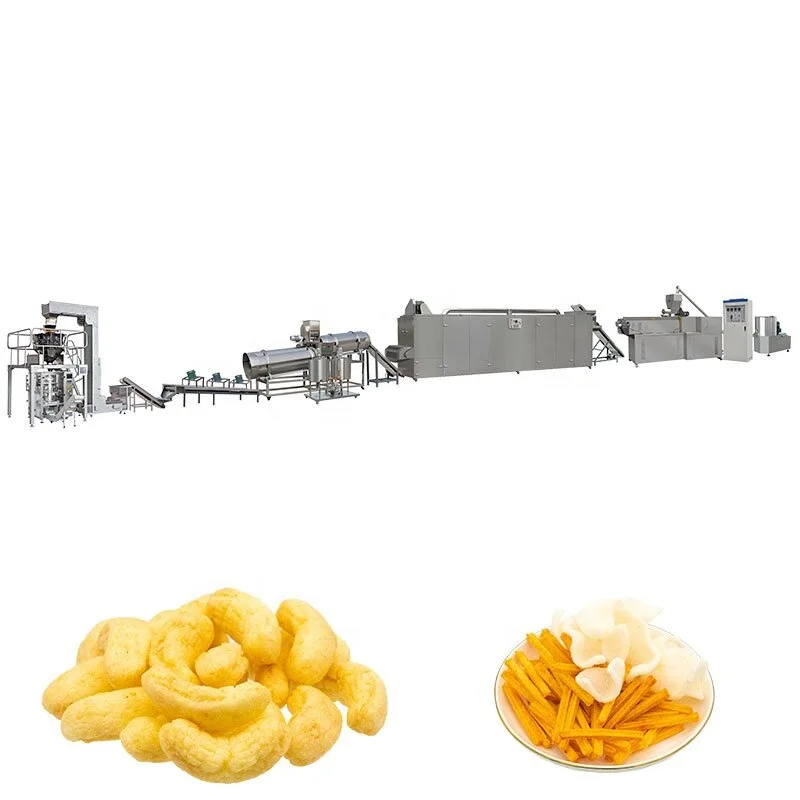
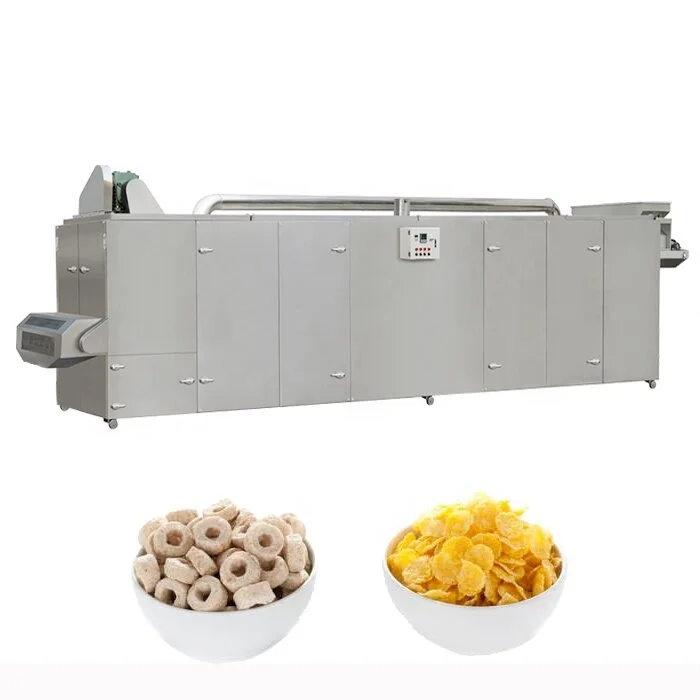
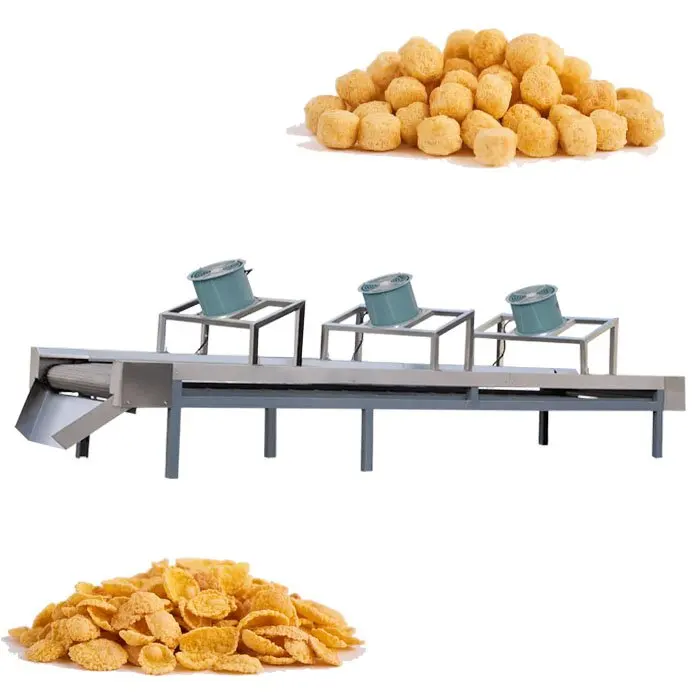

Puffed Core Filled Snack Food Extrusion Line, Twin-Screw, PLC Control — engineered for complete production from mixing through drying and flavoring.
- Configurable screw and die setups matched to grain-based formulations for consistent expansion and texture control
- Multi-layer dryer sized to extruder output, with semi-automatic or automatic seasoning systems
Backed by in-house raw material trial runs, full line throughput matching across stations, and on-site commissioning with operator training.
Description
Matching Extruder Output to Dryer and Flavoring Capacity — Every station on this puffed core filled snack production line turnkey project is sized against the others, preventing the dryer or coating drum from becoming the bottleneck that limits actual throughput.
Technical Specifications
| Parameter | Value |
|---|---|
| Product Type | Puffed Core Filled Snack Food Extrusion Line |
| Extruder Type | Twin-screw (double screw extruder) |
| Line Stations | Mixing → Extruding → Shaping → Cutting → Drying → Flavoring (one-pass operation) |
| Control System | Automatic (PLC/MCC details to be confirmed) |
| Dryer Configuration | Multi-layer design, length and layer count configurable per product |
| Flavoring System | Semi-automatic or automatic; supports sugar, oil, and powder seasoning |
| Screw Configuration | Interchangeable screws and dies for puffed, core-filled, and fried formats |
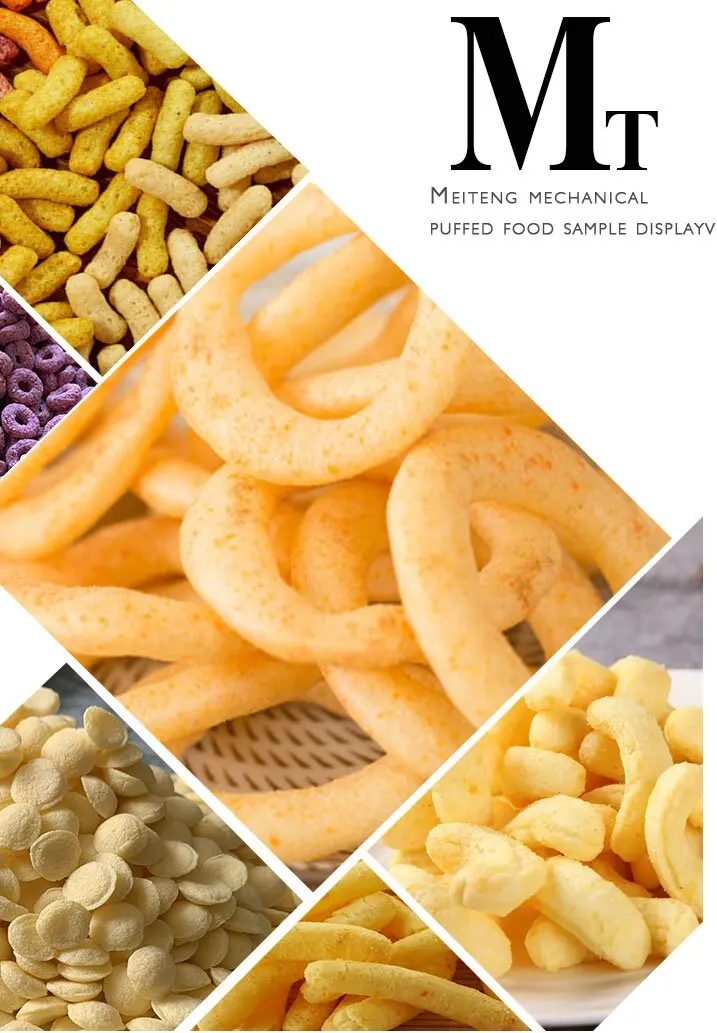
| Product Formats | Puffed corn snacks, core-filled snacks, puffed rice snacks, artificial rice |
| Shape and Size | Freely selectable via die configuration |
| Voltage & Frequency | Configurable to destination market (basis to be confirmed) |
| Assembly State | Complete line, factory tested before shipment |
| Warranty | 24 months with lifetime service |
| Payment Terms | 30% T/T down payment, 70% before shipping; or irrevocable L/C at sight |
Application Suitability
| Application | Material or Output |
|---|---|
| Puffed corn snack production | Corn grits, maize flour, and grain blends |
| Core-filled snack production | Cereal-based outer shell with cream or chocolate filling |
| Puffed rice snack production | Rice flour and rice grits formulations |
| Artificial rice production | Fortified grain blends and starch-based mixtures |
| Fried snack formats | Dough-based pellets for downstream frying |
Why Nominal Capacity Means Nothing Without Matching Every Station Downstream
A puffed core filled snack production line turnkey system only performs when the extruder, dryer, and flavoring drum are each sized against the same realistic output figure.
I once watched a snack producer in the Middle East lose two full weeks of production because the extruder was rated at a nominal capacity that the dryer simply could not keep up with. Moisture levels coming out of the oven were too high, and the product went soft within hours of packing [NEED_CITE: impact of moisture content on shelf stability in extruded snacks]. The extruder ran fine on its own; it was the mismatch between stations that killed the line’s real-world output. When evaluating any turnkey extrusion project, the question is never just how much the extruder can push through, but whether every downstream station can sustain that same volume without creating a queue.
How Throughput Matching Works Across the Line
Each station on this puffed core filled snack production line turnkey layout is calculated against the extruder’s actual sustained output, not its peak theoretical figure. The multi-layer dryer is specified with enough belt length and residence time to reduce moisture to the target level at the line’s working speed. If the dryer is undersized, product backs up or exits with residual moisture that compromises crispness and shelf life. The flavoring drum, whether semi-automatic or fully automatic, is matched to the same throughput so that seasoning coverage remains consistent at full speed rather than degrading when the line runs at capacity.
The Role of Screw Configuration in Line Stability
The twin-screw extruder uses interchangeable screw elements and die plates that are selected based on the buyer’s raw material formulation and target product texture. Corn-based puffed snacks require a different shear profile and barrel temperature zone arrangement than core-filled formats where a cream or chocolate center is injected post-extrusion [NEED_CITE: screw configuration effects on starch gelatinisation in twin-screw extrusion]. Running the wrong screw setup causes uneven expansion, inconsistent density, or surface defects that no downstream station can correct. Each configuration is documented before the machine leaves the factory, so the buyer knows exactly which screw and die combination produced acceptable product during the trial run.
What the Specs Actually Mean on the Production Floor
The twin-screw design provides consistent mixing and shear across the barrel, which is essential when processing grain-based formulations with varying starch and protein ratios. The multi-layer dryer allows configurable belt length and layer count, meaning the drying time can be adjusted without increasing the machine’s floor footprint — a critical factor when factory space is constrained. The flavoring system’s ability to handle oil, sugar, and powder seasoning in either semi-automatic or automatic mode gives producers flexibility to switch between product formats without installing separate coating equipment. Voltage and frequency remain configurable to the destination market, which matters because commissioning delays frequently originate from electrical mismatches that should have been resolved at the quotation stage [NEED_CITE: voltage and frequency standards by export market].
The Cost of Getting the Layout Wrong
When a line is assembled from separate vendors, each supplying their own station without visibility into the others, the gaps show up at commissioning. The extruder runs at full speed while the dryer falls behind, forcing operators to slow the entire line to match the slowest station. Flavoring coverage drops when product moves through the drum too quickly, and the result is inconsistent taste from batch to batch. These are not problems that appear in a quotation — they emerge only after the line is running and the buyer realizes the actual output is well below what was promised [NEED_CITE: common causes of throughput loss in multi-vendor extrusion lines]. Resolving them after installation means either replacing equipment or accepting permanently reduced capacity.
What This Supplier Does Differently on Turnkey Projects
The entire line from mixing to packing is supplied under one contract, so throughput calculations span every station rather than stopping at the extruder discharge. Screw configuration and die design are specified to the buyer’s actual raw material and target product, not copied from a generic template. Every line is trial-run in the in-house testing workshop using the buyer’s own material before shipment, which means product development starts before the equipment arrives, not after. Twin-screw expertise spans puffed snacks, core-filled formats, cereals, starch, and protein applications, so the screw elements are chosen from experience with similar formulations. Pre-sales consultation covers line layout, utility planning, and phased installation scheduling, with on-site commissioning and operator training included in the project scope.
Documentation & Verification
- Line layout and capacity calculation showing throughput matching between extruder, dryer, and flavoring stations
- Trial run report on buyer’s actual raw material conducted in the testing workshop before shipment
- Screw and die configuration record specifying which setup is matched to the target product format
- Electrical schematic with voltage and frequency confirmed for the destination market
- CE declaration of conformity and ISO certificate in electronic edition for export customs
Installation, Commissioning & Support
- Utility planning covers electrical load for the twin-screw extruder motor, dryer heating elements, and flavoring drum drives
- Multi-layer dryer footprint and belt access clearance are confirmed in the line layout before shipment
- PLC and MCC control interface language is set to the buyer’s operator preference during factory configuration
- Commissioning includes running the buyer’s actual formulation to verify expansion, density, and moisture targets
- Wear parts list covers screws, dies, and dryer belt sections with recommended first-replacement intervals
- Operator training covers screw changeover procedures, barrel temperature profiling, and seasoning system calibration
What to Prepare Before Requesting a Quotation
To configure this puffed core filled snack production line turnkey project accurately, the buyer should provide the target product format (puffed, core-filled, or both), the primary raw material and formulation, the intended daily or hourly output, and the workshop’s available floor area and ceiling height. Electrical supply details including voltage, phase, and frequency at the installation site are needed to finalize the motor and control specifications. If the buyer has existing upstream or downstream equipment that must integrate with the new line, those machine specifications and interface points should be included in the inquiry.
Frequently Asked Questions
Q: How is line throughput matched between the extruder, dryer, and flavoring system to avoid bottlenecks?
A: Each station’s capacity is calculated from the extruder’s sustained output on the buyer’s actual raw material, not its nominal rating. The dryer’s belt length and layer count are set to achieve target moisture at that speed, and the flavoring drum is sized so seasoning coverage holds at full line speed without product backlog.
Q: What raw materials and formulations can the twin-screw extruder handle across puffed and core-filled formats?
A: The extruder processes corn grits, maize flour, rice flour, and blended grain formulations. Screw elements and barrel temperature zones are reconfigured for each product type — high-expansion puffed corn requires a different shear profile than core-filled snacks where filling is injected after the die.
Q: Is a trial run on the buyer’s raw material performed before shipment, and what does the report cover?
A: Yes. The buyer’s material is run through the complete line in the testing workshop before dispatch. The trial run report documents screw configuration, barrel temperatures, expansion ratio, moisture content after drying, and seasoning coverage at the target line speed.
Q: How are screw and die configurations selected and documented for each target product format?
A: Configurations are chosen based on the buyer’s raw material composition and target product texture. The selected screw element arrangement and die plate are recorded in a configuration document supplied with the line, so operators can replicate trial-run results and plan changeovers between product formats.
Related products
-

New Puffed Snack Food Machine Production Line Corn Flake Puff Corn Making Machine Twin Screw Extruder 100-500kg/h Capacity Food
¥8,500.00 Select options This product has multiple variants. The options may be chosen on the product page -

Twin Screw Corn Puffs Extruder Machine Small Corn Snack Food Extruder Machine
¥100.00 Select options This product has multiple variants. The options may be chosen on the product page -

Automatic High Productivity Puffed Corn Snacks Extruder Production Equipment New Condition Puff Snack Food Making Machine
¥11,050.00 Select options This product has multiple variants. The options may be chosen on the product page -

Twin Screw Extruder for Cheese Puffs Food Stainless Steel Simple Puffed Rice Snack Machine
¥8,500.00 Select options This product has multiple variants. The options may be chosen on the product page


