

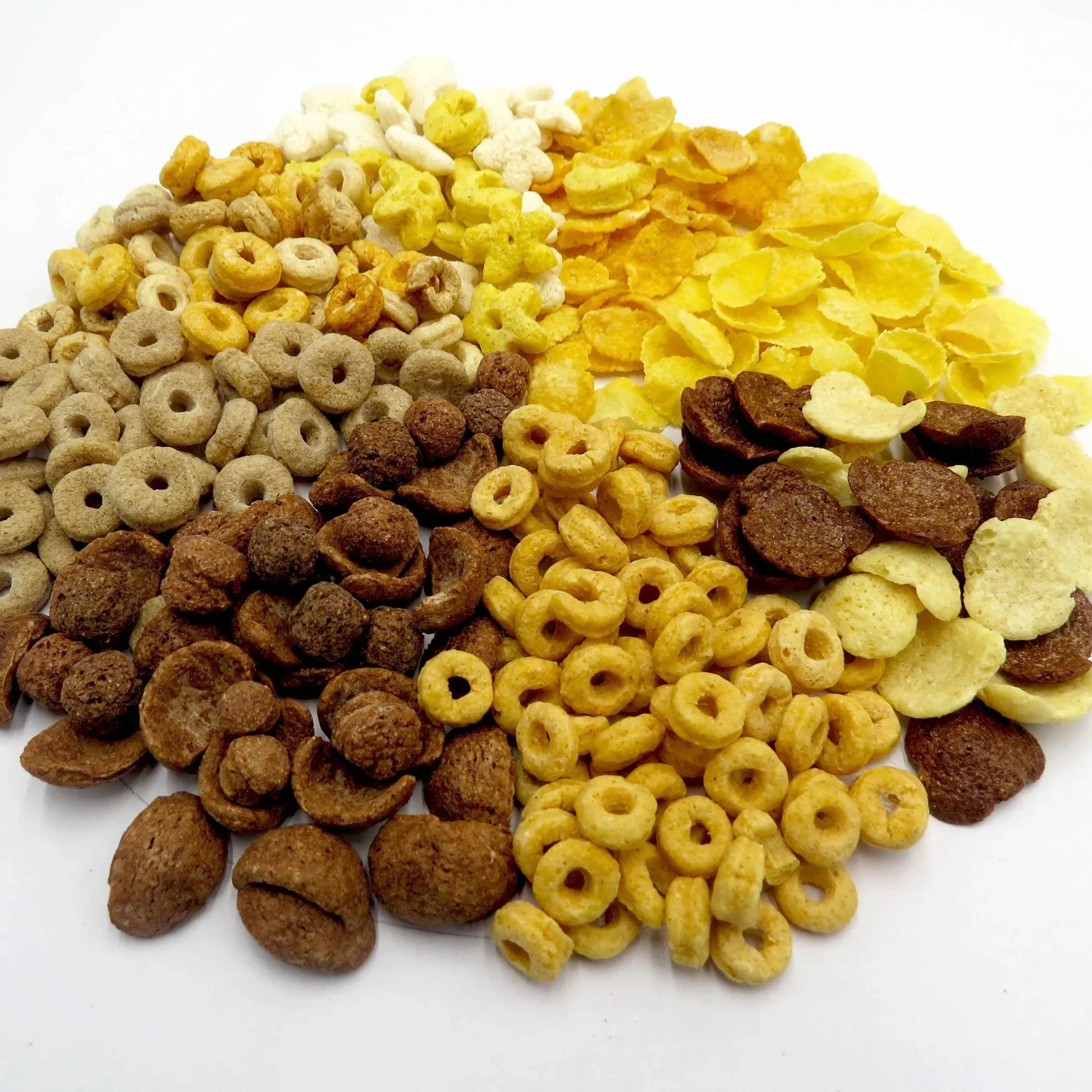
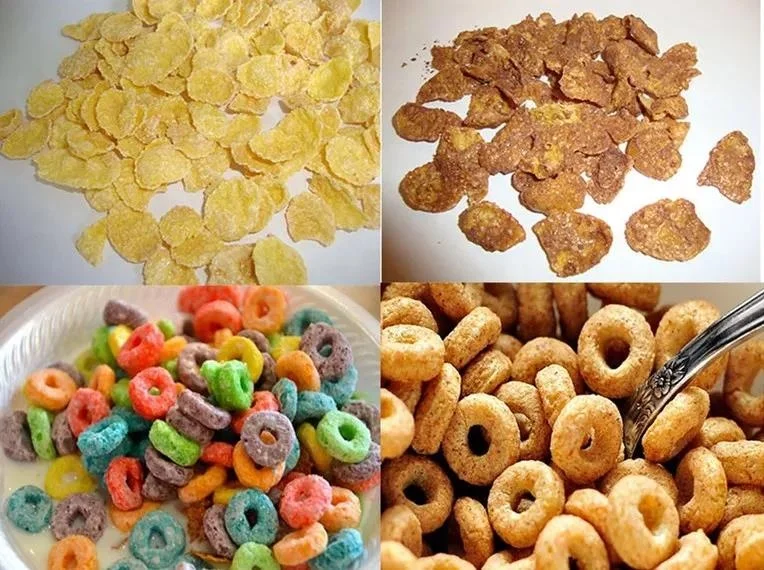
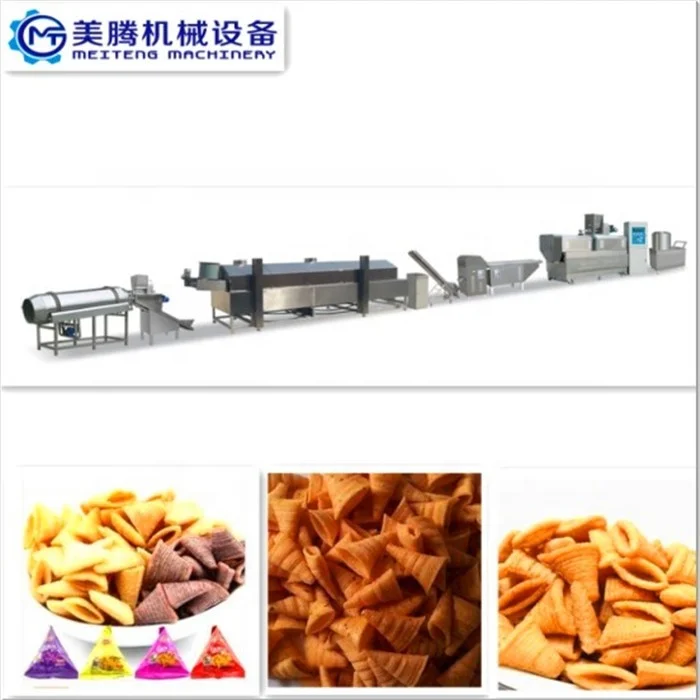
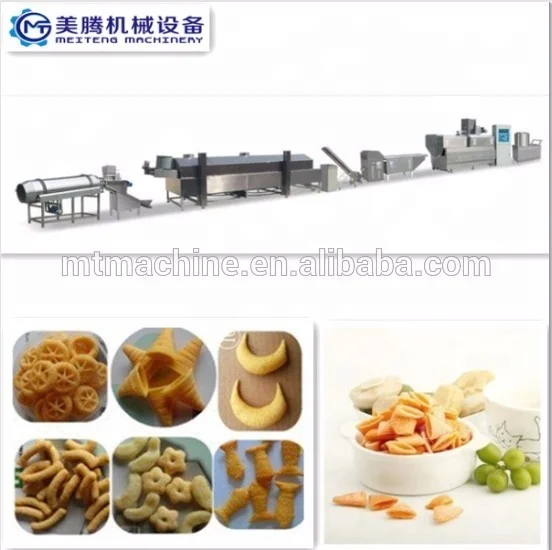
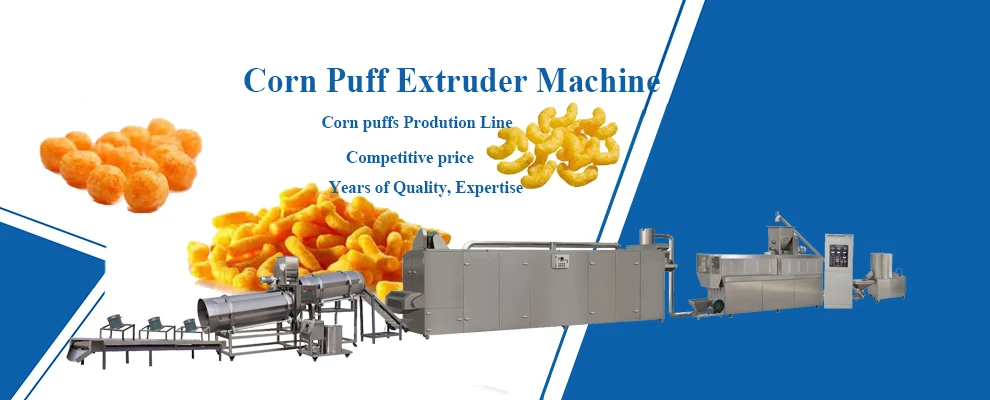
Corn Flakes & Rice Crispies Extrusion Line, Twin-Screw, PLC & MCC Control — engineered as a complete turnkey project from batching through extrusion, drying, coating to packing. Throughput is balanced across every station including multilayer oven and seasoning drums, eliminating bottlenecks common when assembling from separate vendors. Screw configuration and die design are specified to your raw material and target product density, with in-house trial runs on your actual formula before shipment.
- Models: MT65 / MT70 / MT85
- Oven: 3/5/7-layer, 0–200 °C, stainless steel mesh belt
- Raw materials: corn flour, rice flour, wheat flour, grain flour
- CE and ISO certified
Description
Throughput-Matched Line Design — Every station from mixing to packing is sized against the extruder’s actual output on your grain formulation, preventing the dryer or coating drum from becoming a bottleneck.
Technical Specifications
| Parameter | Value |
|---|---|
| Product Type | Corn Flakes & Rice Crispies Extrusion Production Line |
| Extruder Models Available | MT65 / MT70 / MT85 |
| Installed Power | 86.35 kW (MT65) / 90.75 kW (MT70) / 121.06 kW (MT85) |
| Power Consumption | 55 kW (MT65) / 57 kW (MT70) / 85 kW (MT85) |
| Output Capacity | 100–150 kg/h (MT65) / 150–200 kg/h (MT70) / 200–350 kg/h (MT85) (basis to be confirmed) |
| Overall Dimensions | 21000×1200×2200 mm (MT65) / 23000×1500×2200 mm (MT70) / 28000×3500×4300 mm (MT85) |
| Control System | PLC and MCC control |
| Oven Type | Electric multilayer (3 / 5 / 7 layers), stainless steel mesh belt, 0–200 °C |
| Cutting Size Range | 2 cm – 20 cm adjustable |
| Seasoning Options | Octagonal drum, cylinder, single-roller, double-roller; oil spraying, sugar spraying, coating |
| Voltage & Frequency | Configurable to target market standard (basis to be confirmed) |
| Certifications | CE, ISO |
Application Suitability
| Application | Material or Output |
|---|---|
| Corn flakes breakfast cereal production | Corn flour and grain flour blends, toasted and flaked |
| Rice crispies manufacturing | Rice flour formulations, puffed and dried to target density |
| Chocolate-coated cereal output | Flaked base with downstream chocolate enrobing |
| Core-filled puffed snacks | Grain flour shell with cream or fruit paste injection |
| Wheat flaking snack processing | Wheat flour and bran blends, flaked and seasoned |
| Fortified breakfast cereal production | Vitamin and mineral premixed grain formulations |
Why "Rated Capacity" Is Only Half the Story for a Corn Flakes Extrusion Production Line
A number on a nameplate means nothing until it is verified on the exact grain blend and moisture level you will run in your factory.
I once worked on a corn flake line for a Southeast Asian buyer who sent wheat flour specs instead of the corn g*rial hit the extruder, the gelatinisation profile was completely off — the flakes came out dense, the oven could not keep up with the wet product, and the entire line ran well below the quoted throughput. That turnkey rice crispies extrusion plant sat at partial capacity for weeks while we reconfigured the screw profile and adjusted barrel temperatures. [NEED_CITE: starch gelatinisation behaviour across different grain flours]
This is the gap that a corn flakes extrusion production line must close before any steel is cut.
How Grain Behaviour Drives Every Station Upstream and Downstream
Corn flour, rice flour, and wheat flour each carry different starch ratios and protein structures, which dictate how they respond to shear and heat inside a twin-screw extruder. The screw configuration and die geometry must be selected against the buyer’s specific formulation — a generic setup copied from a standard build will produce flakes that are either too dense or too fragile for the market. When planning a corn flakes extrusion production line, the moisture content entering the extruder determines not only expansion behaviour but also the load placed on the downstream multilayer oven.
Balancing the Dryer and Coating Drum Against Extruder Output
A common failure point in cereal lines is the dryer falling behind the extruder. If the multilayer oven is undersized, wet product accumulates on the belt, and you end up cycling the extruder on and off to let the oven catch up. The turnkey rice crispies extrusion plant configuration here addresses this by offering three, five, or seven oven layers matched to the extruder tier, with stainless steel mesh belts running at temperatures up to 200 °C. The seasoning station — whether an octagonal drum, cylinder, or roller type — is sized against the same output target so that oil spraying, sugar spraying, and coating keep pace without material backing up. [NEED_CITE: dryer-to-extruder throughput matching in cereal processing]
Reading the Specs That Actually Matter
The installed power spread — from 86.35 kW on the MT65 to 121.06 kW on the MT85 — reflects the motor capacity needed to drive different screw diameters through varying grain densities. Power consumption figures of 55 kW to 85 kW give a clearer picture of running cost, since they account for the full line under typical operating load rather than just the extruder motor at peak. The PLC and MCC control system coordinates mixing ratios, feeder speed, barrel temperature zones, and oven belt speed from a single interface, which is what keeps batch-to-batch density consistent on a corn flakes extrusion production line. Overall line dimensions ranging from 21 to 28 metres in length mean that floor planning and utility routing must be confirmed before the equipment is built, not after it arrives.
What Happens When Stations Are Mismatched
When a line is assembled from separate vendors, each supplier sizes their station to a nominal figure that may not match reality. The extruder pushes out more than the dryer can handle, the coating drum overflows, and the packing station cannot keep up — so you end up with operators manually shovelling product off belts. I have seen lines where the cutter was specified for a completely different product format, producing flakes outside the target 2–20 cm range. These integration failures do not show up in individual machine specs but they dominate the first six months of production. [NEED_CITE: integration risks in multi-vendor food processing lines]
Why This Configuration Holds Up in Actual Production
The line is configured under a single supplier, meaning throughput is calculated across every station from the mixer through to the packing machine rather than patched together from disconnected quotes. Screw configuration and die design are specified to the buyer’s raw material and target product density, not pulled from a generic catalogue. An in-house testing workshop allows trial runs on the customer’s actual grain formulation before shipment, so product development starts before installation rather than after. The PLC and MCC control architecture is documented in electrical schematics with voltage and frequency confirmed for the destination market. CE and ISO certifications are maintained across the product range, and a full wear parts list — covering screws, dies, and cutting blades — is provided so that the first replacement cycle does not catch the maintenance team off guard.
Documentation & Verification
- Line layout and capacity calculation confirming throughput at every station
- Trial run report on your actual grain formulation conducted before dispatch
- Screw and die configuration record matched to your target flake density
- Electrical schematic with voltage and frequency confirmed for your facility
- CE declaration of conformity and ISO certificate for customs clearance
- Operation and maintenance manual with complete wear parts list
Installation, Commissioning & Support
- Foundation plan based on 21–28 metre line length with utility routing confirmed before delivery
- Dedicated power circuit sized to installed capacity of up to 121.06 kW
- Equipment arrives in modular sections with assembly sequence documented for local crews
- First-run parameter setting covering barrel zones, oven belt speed, and cutter adjustment
- Operator training on PLC interface including fault diagnosis and batch recipe storage
- Wear parts inventory covering screws, dies, and cutting blades for initial replacement cycle
What to Share Before Quoting Your Line
To configure a turnkey rice crispies extrusion plant that matches your actual production conditions, the most useful starting information includes your grain formulation and moisture content, target daily output in kilograms, available factory floor space and ceiling height, local voltage and frequency standard, and preferred control language. If you have existing upstream or downstream equipment that the new line must integrate with, sharing those specifications early avoids rework. Samples of your raw material sent for a trial run before shipment will confirm screw and die selection.
Frequently Asked Questions
Q: How is output capacity verified on my specific raw material and moisture content?
A: Capacity figures are confirmed through a trial run in the testing workshop using your actual grain formulation. The screw configuration, barrel temperature profile, and die geometry are adjusted during this run, and a report documenting achieved throughput, product density, and texture is provided before shipment.
Q: How do you ensure the dryer and coating stations match extruder throughput?
A: Each station is sized during the line layout phase based on the extruder output verified on your raw material. The multilayer oven layer count and belt width are selected so that moisture removal keeps pace, and the seasoning drum volume is calculated against the same output figure to prevent accumulation.
Q: What does the installation and commissioning schedule look like?
A: Installation follows a phased sequence documented in the line layout, starting with foundation and utility work, then mechanical assembly of each station, electrical connection of the PLC and MCC panels, and finally product trials with your raw material. Operator training runs alongside the commissioning phase.
Q: How are screw configuration and die design matched to my product?
A: The screw profile and die geometry are specified based on your grain formulation, target flake thickness, and desired product density. The trial run in the testing workshop validates this configuration and produces a record document that is supplied with the line for future reference.
Q: What voltage and control language options are confirmed before shipment?
A: The electrical schematic is prepared with your facility’s voltage, frequency, and phase confirmed before production begins. The PLC interface language and control labels are set to your preference, and all parameters are documented so that adjustments can be made locally without requiring remote support.
Related products
-

New Stainless Steel Automatic Puffed Rice Flour Snacks Making Machine High Productivity Multi-function
¥11,050.00 Select options This product has multiple variants. The options may be chosen on the product page -

New Stainless Steel Automatic Snack Food Machinery Extruder Puffed Corn Maize Puff Processing Line for Food Industry High
¥12,350.00 Select options This product has multiple variants. The options may be chosen on the product page -

Twin Screw Corn Puffs Extruder Machine Small Corn Snack Food Extruder Machine
¥100.00 Select options This product has multiple variants. The options may be chosen on the product page -

Automatic Rice Crispies Extruder Machine/Chocolate Corn Flakes Extrusion Plant/wheat Flaking Snacks Production Line
¥8,500.00 Select options This product has multiple variants. The options may be chosen on the product page


