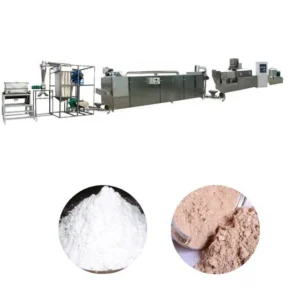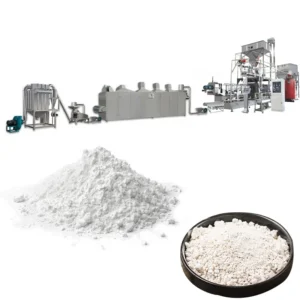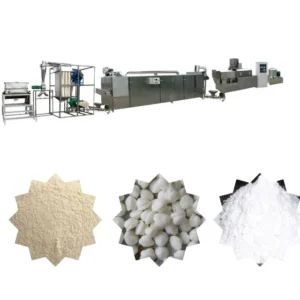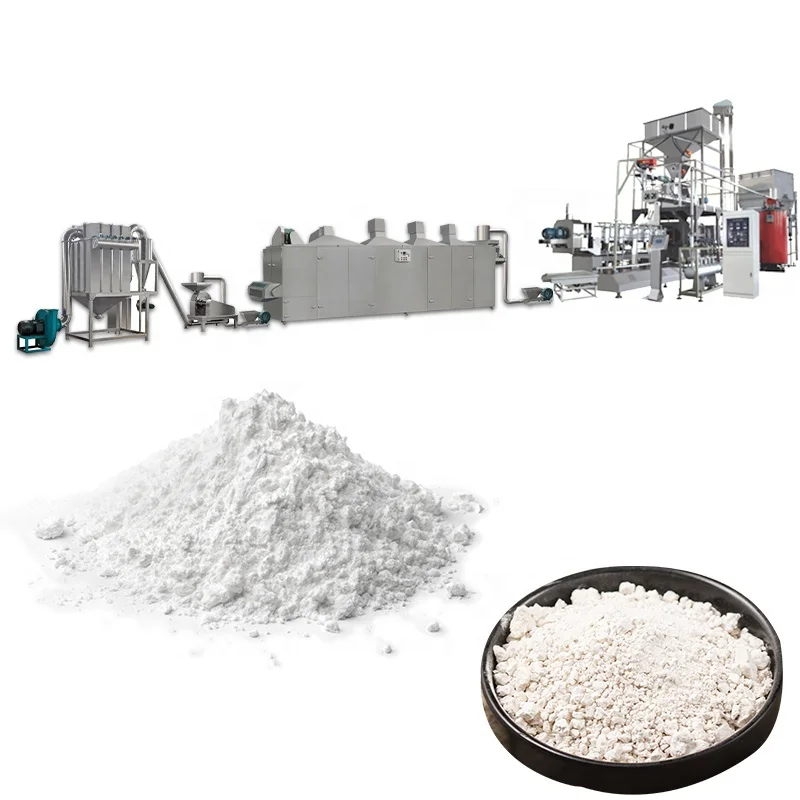


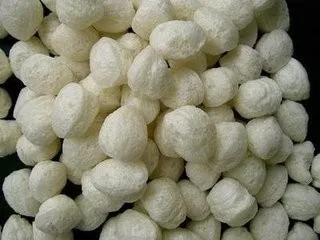

Modified Starch Processing Line, Twin-Screw Extruder, 80–500 kg/h, PLC Control — engineered for pregelatinized and modified starch production from batching through grinding.
- Throughput-matched stations eliminate bottlenecks across mixing, extrusion, drying, conditioning and grinding
- Screw configuration and die design specified to your raw material — corn, wheat or potato starch — for target gelatinisation degree and viscosity
- Multi-energy drying options (electricity / gas / diesel / steam) configurable to local utility infrastructure
Trial runs on your actual raw material in our in-house testing workshop validate line performance before shipment.
Description
Throughput-Matched Line Design — Every station from mixing to grinding is sized so the modified starch processing line runs at its rated capacity without bottlenecks between independently sourced equipment.
Technical Specifications
| Parameter | Value |
|---|---|
| Product Type | Pregelatinized & Modified Starch Extrusion Line |
| Extruder Type | Twin-screw extruder |
| Output Capacity | 80–500 kg/h (basis not stated in source — confirm raw material, moisture, screw configuration) |
| Rated Power | Approximately 100 kW (electricity-heated line); 50–60 kW (gas or diesel heated line) |
| Voltage & Frequency | Three-phase 380 V / 50 Hz; Single-phase 220 V / 50 Hz (customizable to local standard) |
| Control System | Available with PLC / MCC control |
| Energy Options | Electricity / Gas / Diesel / Steam |
| Frame Material | Stainless steel 201 |
| Contact Parts Material | Food-grade stainless steel 304 |
| Screw & Barrel Material | 45 steel |
| Electrical Components | Siemens (China) or top Chinese brand motors; Delixi or Delta inverters |
| Die Configuration | Interchangeable dies for product variation |
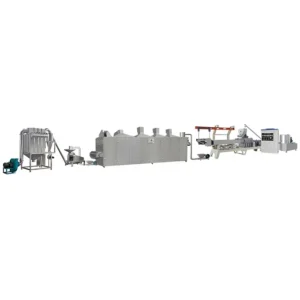
| Line Stations | Mixer → Screw Conveyor → Twin-screw Extruder → Shift → Air Conveyor → Dryer → Air Conveyor → Conditioning → Conveyor → Grinder |
| Mixer Motor | 4.0 kW |
| Mixer Batch Output | 3.0–4.0 kg per batch (source value — verify against manufacturer catalog) |
| Screw Conveyor Motor | 1.1 kW |
| Screw Conveyor Output | 0–150 kg/h (source value — verify against manufacturer catalog) |
| Standards | CE; ISO |
Application Suitability
| Application | Material or Output |
|---|---|
| Oilfield drilling fluid production | API-standard pregelatinized starch from corn or cassava starch for viscosity control |
| Industrial paper and textile processing | Modified starch for coating, sizing, and adhesive formulations from wheat or potato starch |
| Food ingredient manufacturing | Pregelatinized starch for instant foods, bakery mixes, and sauce thickening agents |
Why the Raw Material Question Must Come Before the Line Quote
The screw configuration and die design only work if they match your exact starch source and target gelatinisation degree.
I once helped commission a pregelatinized starch line where the factory trial ran perfectly on standard corn starch. When the machine arrived at the buyer’s site, they were running a cassava-dominant blend for API-standard drilling fluid. The gelatinisation degree would not reach spec. We had to rebuild the screw combination and temperature profile from scratch while the drilling crew waited on material. That two-week delay happened because the raw material conversation came after the purchase order instead of before it. A modified starch processing line turnkey project only performs when the screw geometry and thermal zones are specified to the buyer’s actual feedstock [NEED_CITE: API specification for pregelatinized starch in drilling fluids].
Matching Screw Geometry to Starch Gelatinisation
The twin-screw extruder at the heart of this line uses 45 steel screws and barrels configured to the specific gelatinisation target. Pregelatinized starch for oilfield applications requires a different degree of starch destruction than modified starch for food-grade instant products. The screw element arrangement controls shear intensity and residence time inside the barrel, which directly determines how completely the starch granules rupture and absorb water. Getting this wrong means the product either under-performs in viscosity tests or degrades beyond the specification the end user requires.
Throughput Matching Across Every Station
A complete modified starch processing line turnkey installation eliminates the most common cause of capacity shortfalls: stations sourced from different vendors that cannot pass material at the same rate. The mixer, screw conveyor, extruder, dryer, conditioning unit, and grinder in this line are specified as one system. The dryer capacity matches the extruder output so material does not queue and degrade. The grinder throughput matches the conditioning conveyor speed so product does not back up or run through under-processed [NEED_CITE: typical throughput mismatch causes in multi-station extrusion lines].
Reading the Specs That Actually Matter
The energy option selection — electricity, gas, diesel, or steam — determines both the rated power draw and the drying temperature profile available to the operator. An electricity-heated line draws approximately 100 kW, while gas or diesel heating reduces electrical demand to the 50–60 kW range, which matters for sites with limited transformer capacity. The PLC and MCC control system manages barrel temperature zones and screw speed, and the HMI language must be confirmed before build to avoid commissioning delays. Food-grade stainless steel 304 on all contact parts ensures compliance for food-ingredient production, while the stainless steel 201 frame keeps structural cost reasonable without sacrificing hygiene in the processing zone.
What Happens When Stations Are Specified Independently
When a buyer assembles a starch line from separate equipment suppliers, the extruder may produce at a rate the dryer cannot handle. Material sits in the air conveyor too long, moisture redistributes unevenly, and the grinder receives product outside its design feed rate. The result is inconsistent particle size and gelatinisation values that drift across every batch. I have seen lines where the extruder was rated correctly but the conditioning stage was undersized, forcing the operator to slow the entire line just to keep the final product within spec.
Why Buyers Source This Line from One Supplier
The screw and die configuration is specified to the buyer’s raw material and target product viscosity before production begins, not copied from a generic build. An in-house testing workshop allows trial runs on the buyer’s actual starch source — corn, wheat, potato, or cassava — before the line ships, catching gelatinisation problems at the factory rather than at the installation site. Every electrical schematic confirms voltage, frequency, and control language to the target market’s standard before the cabinet is wired. The line layout document shows throughput calculations for every station so the buyer can verify there are no hidden bottlenecks. CE and ISO documentation supports customs clearance and regulatory filing in the destination country.
Documentation & Verification
- Line layout and capacity calculation showing throughput matching across mixing, extrusion, drying, and grinding stations
- Screw and die configuration record specified to buyer’s starch source and target gelatinisation degree
- Trial run report on customer’s actual raw material performed in the testing workshop before shipment
- Electrical schematic with voltage, frequency, and PLC language confirmed for destination market
- CE declaration of conformity and ISO certificate for customs and regulatory compliance
- Wear parts list identifying screws, dies, and barrel liners with replacement intervals
Installation, Commissioning & Support
- Foundation and floor space planning based on the full line footprint from mixer through grinder
- Dedicated electrical circuit sized to the 100 kW electricity-heated or 50–60 kW gas-heated configuration
- On-site assembly and alignment of screw conveyors, extruder barrel sections, and air conveying ductwork
- First-run parameter setting including barrel temperature profile and screw speed for buyer’s starch material
- Operator training on PLC interface, die changeover, and daily cleaning of food-grade 304 contact surfaces
- Spare screw elements and die plates supplied with the initial shipment to cover the first replacement cycle
What to Include in Your Inquiry
To size a modified starch processing line turnkey project correctly, specify the starch source you will run — corn, wheat, potato, or cassava — and the target product application such as API drilling fluid or food-grade pregelatinized starch. Confirm your local voltage and frequency standard, the control language your operators need, and whether your site has access to gas, diesel, or steam for the dryer. If you have existing upstream or downstream equipment, share the interface specifications so the line can be matched to your facility.
Frequently Asked Questions
Q: How is line capacity verified on my specific starch raw material before shipment?
A: We run a trial in our in-house testing workshop using your actual starch source — whether corn, wheat, potato, or cassava — and document the output rate, gelatinisation degree, and product consistency. The trial run report ships with the line so you can verify performance against your specification before installation begins.
Q: What screw configuration and die design is specified for pregelatinized versus cross-linked modified starch?
A: Pregelatinized starch requires higher shear and longer residence time to fully rupture the granules, so the screw elements are arranged for maximum mechanical energy input. Cross-linked modified starch needs gentler handling to preserve the chemical bonds formed during reaction. We configure the screw combination and select the die plate based on your target product and confirm both during the factory trial.
Q: How are voltage, frequency, and PLC language confirmed for my country’s electrical standard?
A: During the specification phase, we request your local voltage, frequency, and preferred HMI language. The electrical schematic is drawn and approved before the MCC cabinet is wired. This prevents rewiring on site and ensures operators can read alarms and adjust parameters in their working language from day one.
Q: What is the phased installation and commissioning schedule for a complete turnkey starch line?
A: Installation proceeds station by station — mixer and conveyor first, then extruder and dryer, followed by conditioning and grinding. Each stage is mechanically aligned and electrically tested before the next begins. Commissioning starts with single-station dry runs, progresses to full-line wet trials on your raw material, and concludes with operator training on the PLC interface.
Q: How are spare wear parts supplied and when is first replacement due?
A: A wear parts list ships with the line, identifying screws, dies, and barrel liners with expected service life based on the trial run data. We supply the first set of replacement parts with the initial shipment so they are on site before the originals reach end of life, avoiding unplanned downtime during early production.
Related products
-
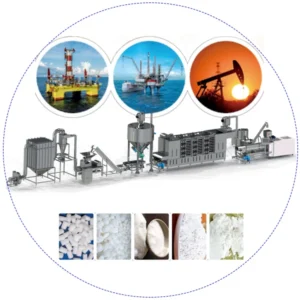
Modified Starch Production Line for Industrial Drilling Twin Screw Extruder Large Output Modified Starch Manufacturing Machine
¥50.00 Select options This product has multiple variants. The options may be chosen on the product page -
Corn Cassava Modified Starch Powder Production Line Electric-powered Motor Automatic 400kg/h Processing Equipment New Condition
¥65.00 Select options This product has multiple variants. The options may be chosen on the product page -
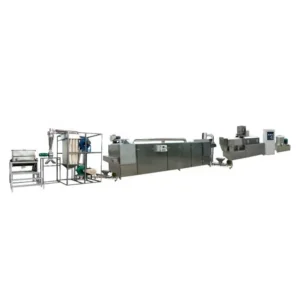
Automatic Modified Corn Starch Making Machine 304 Stainless Steel Gearbox High Efficiency Starch Processing Production Line
¥30.00 Select options This product has multiple variants. The options may be chosen on the product page -
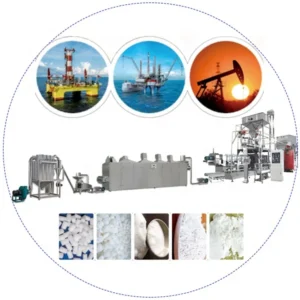
Pre-gelatinized Starch Production Line – Modified Starch Integrated Puffing Equipment
¥65.00 Select options This product has multiple variants. The options may be chosen on the product page