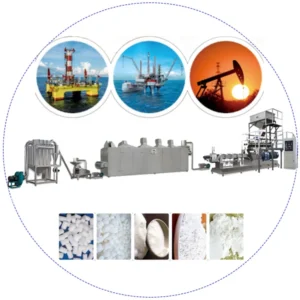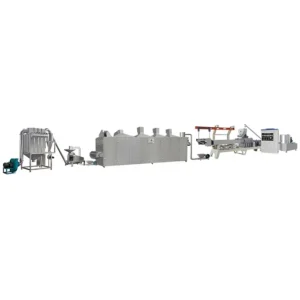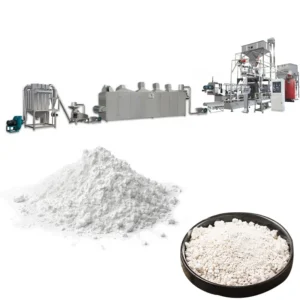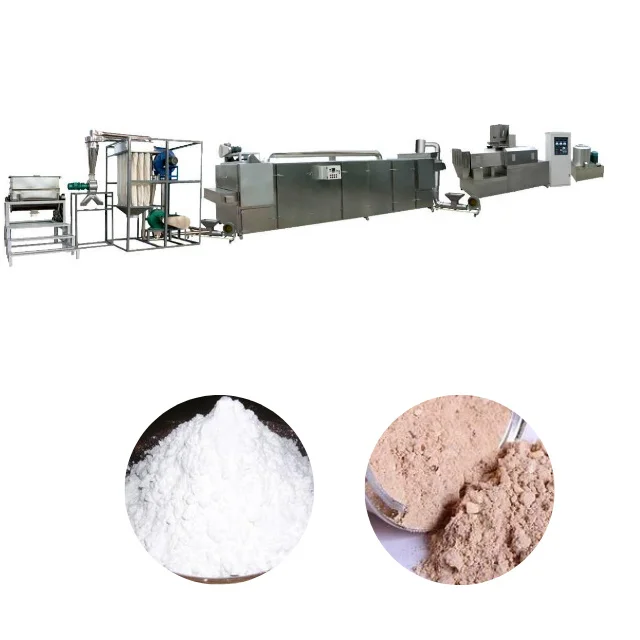
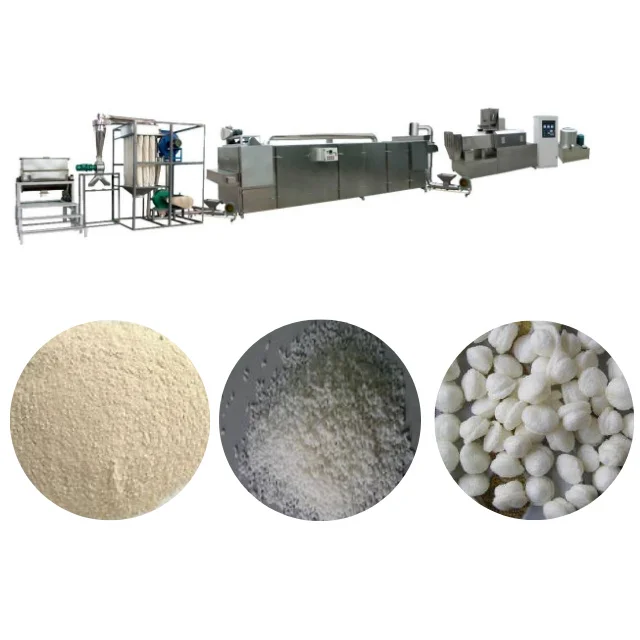
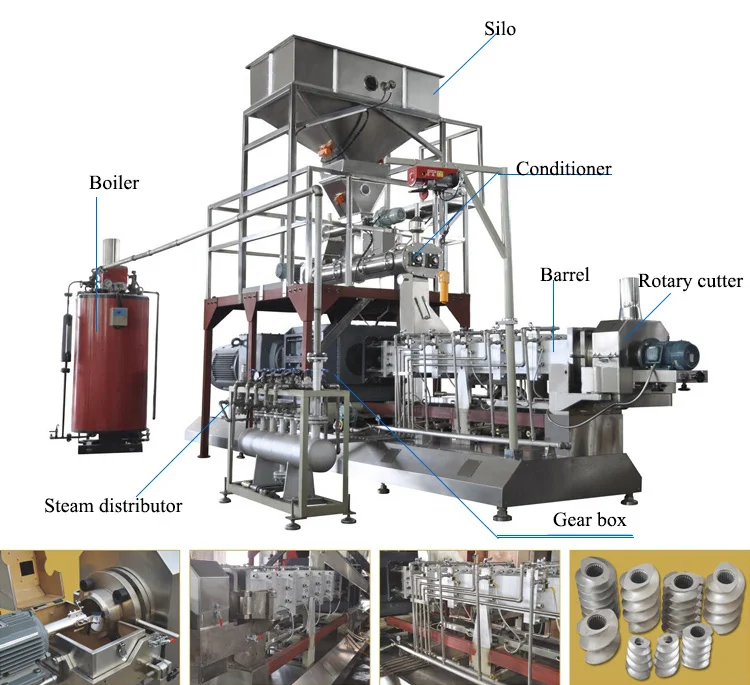
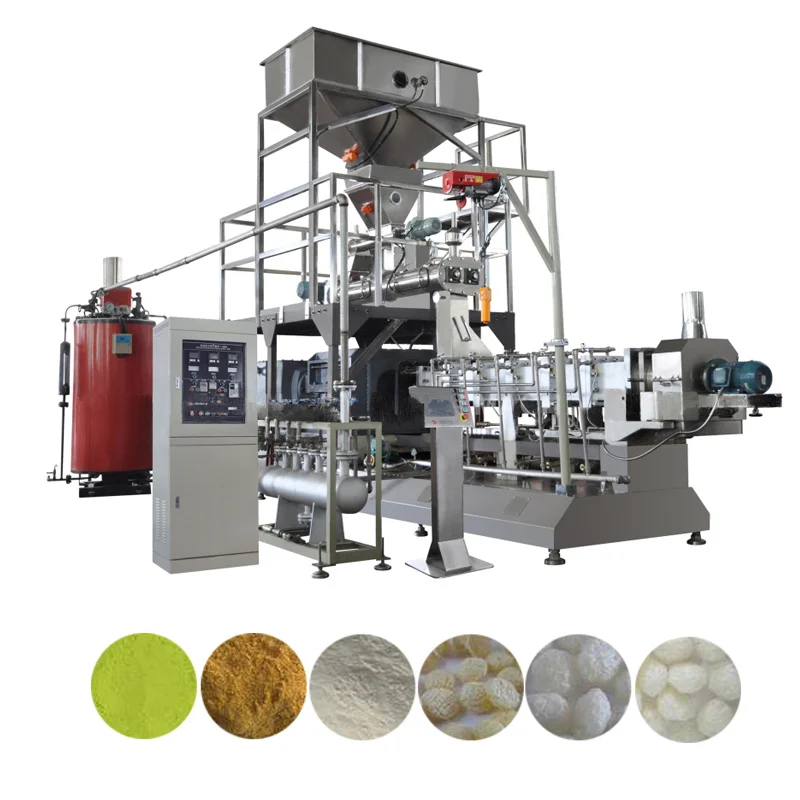
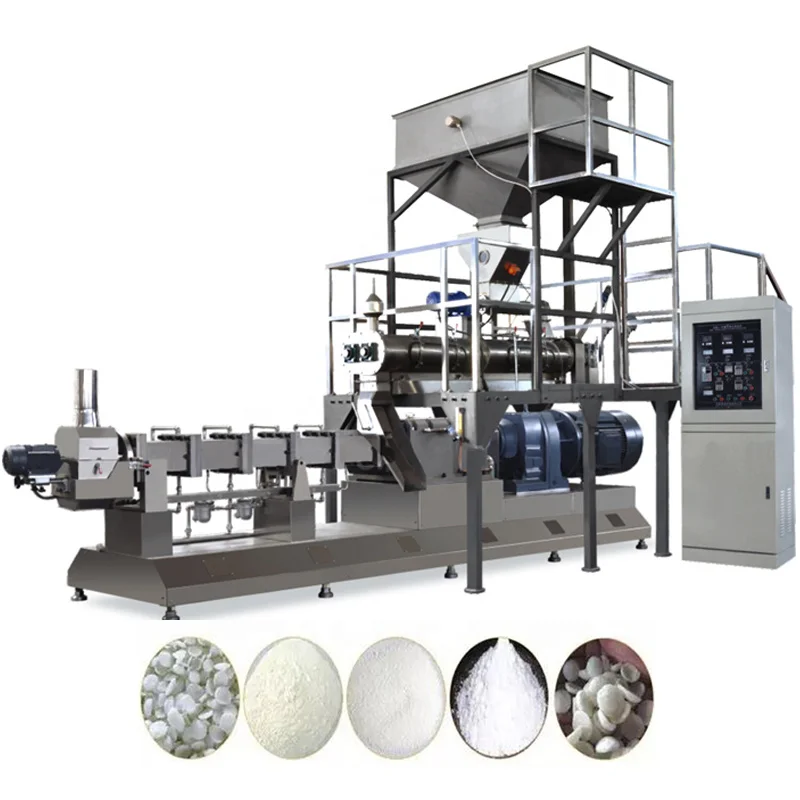
Modified Starch Production Line, Twin-Screw Extrusion, MT85–MT135 Models — configured as a complete turnkey solution from material blending through extrusion, drying, grinding, and packing.
Screw and barrel geometry is matched to corn, tapioca, or potato starch feedstock, controlling shear and gelatinisation to reach target viscosity, gel strength, and film-forming properties. Throughput at every station is balanced so the dryer or grinder never limits extruder output.
Line layout, capacity calculation, and raw-material trial run report are provided before shipment, with on-site installation and operator training included.
Description
Throughput-matched turnkey engineering — Every station on this modified starch processing line turnkey is sized so the dryer and grinder never starve or flood the extruder, keeping the line balanced from batching through packing.
Technical Specifications
| Parameter | Value |
|---|---|
| Product Type | Modified Starch Production Line (Twin-Screw Extrusion) |
| Line Models Available | MT85 / MT100 / MT110 / MT135 |
| Raw Materials | Corn starch, tapioca starch, potato starch |
| Output Capacity (MT85) | 100–200 kg/hr (basis not stated in source — confirm moisture content and starch type) |
| Output Capacity (MT100) | 500–600 kg/hr (basis not stated in source — confirm moisture content and starch type) |
| Output Capacity (MT110) | 500–600 kg/hr (basis not stated in source — confirm moisture content and starch type) |
| Output Capacity (MT135) | 1000–1500 kg/hr (basis not stated in source — confirm moisture content and starch type) |
| Installed Power (MT85) | 90 kW |
| Installed Power (MT100) | 180 kW |
| Installed Power (MT110) | 200 kW |
| Installed Power (MT135) | 240 kW |
| Real Consumption (MT85) | 63 kW |
| Real Consumption (MT100) | 120 kW |
| Real Consumption (MT110) | 150 kW |
| Real Consumption (MT135) | 165 kW |
| Screw Type | Twin-screw |
| Extruder Control | Frequency speed controlling system |
| Lubrication & Cooling | Automatic |
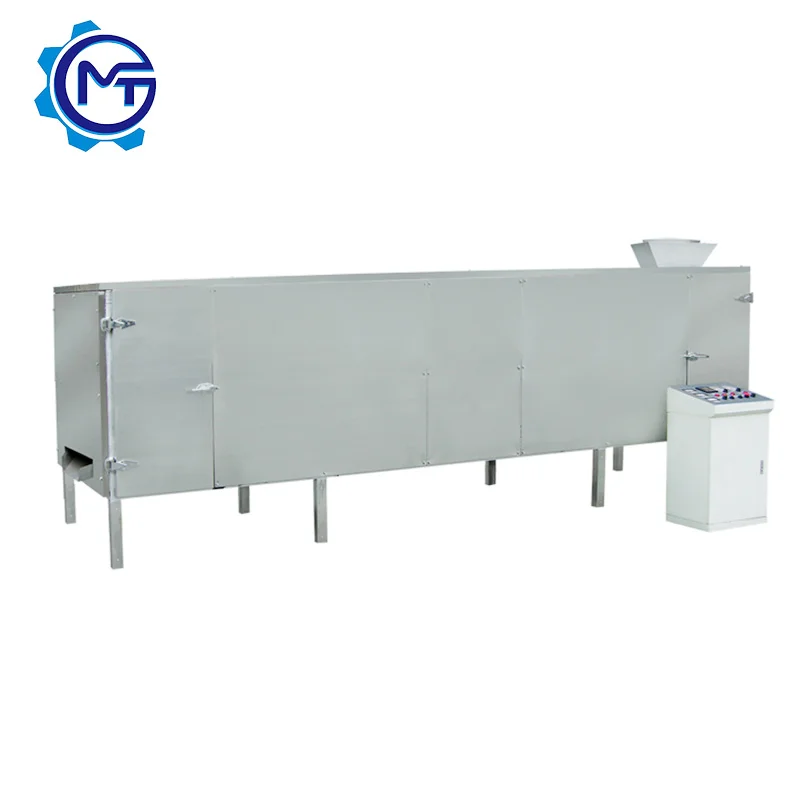
| Dryer Heating Source Options | Electric, steam, or gas (configurable to local conditions) |
| Grinding Machine Contact Material | Stainless steel 304 (food-contact parts) |
| Grinding Machine Discharge | Bottom butterfly valve |
| Processing Flow | Materials preparation → Blending → Mixing → Extruding → Drying → Grinding → Packing |
| Barrel and Screw Design | Changeable to produce modified / denatured starch variants |
| Voltage & Frequency | Configurable per buyer market (to be confirmed) |
| Control System (PLC / MCC) | Available with PLC or MCC control (to be confirmed) |
| Warranty | 1 year |
| Assembly State | Turnkey line |
Application Suitability
| Application | Material or Output |
|---|---|
| Pre-gelatinized starch for food processing | Corn, tapioca, or potato starch with targeted thermal viscosity and gel strength |
| Modified starch for textile sizing | Starch variants requiring specific film-forming properties and transparency |
| Starch for oil drilling fluids | Denatured starch with adjusted freeze-thaw stability |
| Modified starch for paper manufacturing | Pregelatinized starch with controlled thermal viscosity |
| Starch for construction additives | Modified starch grades with tailored gel strength and stability |
Why "Nominal Capacity" Rarely Survives Contact with Your Raw Starch
A line rated on one starch type can lose significant throughput when fed a different feedstock.
When I planned a pre-gelatinized starch line a couple of years ago, the trial ran on standard tapioca starch. The buyer’s actual material was corn starch, which has a different gelatinization temperature and shear response. On arrival, the screw speed and barrel temperature profile had to be rebuilt from scratch, and commissioning stretched well beyond the original schedule. That is the kind of gap a modified starch processing line turnkey project cannot afford. The screw and barrel configuration must be specified against the buyer’s exact raw material before the build begins — not adjusted after the containers are opened [NEED_CITE: starch gelatinization behavior across corn, tapioca, and potato feedstocks].
Screw Configuration and Barrel Temperature Profiling
Starch modification through extrusion depends on the interplay between shear, moisture, and residence time inside the barrel. The twin-screw design allows the screw elements to be rearranged — adjusting kneading block positions and pitch — so that the mechanical energy input matches the gelatinization window of corn, tapioca, or potato starch. Barrel zones are heated and cooled independently, letting the operator build a temperature gradient that brings the starch through its transition without over-degrading the polymer chains. Getting this profile right is what separates consistent modified starch from batch-to-batch variation in viscosity and gel strength.
Throughput Matching Between Extruder, Dryer, and Grinder
An extruder that pushes material faster than the dryer can handle leaves wet starch accumulating downstream, while an oversized grinder running half-empty wastes energy and generates excess heat that can damage starch properties. Each station on this modified starch processing line turnkey configuration is sized so that material flow remains continuous without buffer overload. The dryer heating source — whether electric, steam, or gas — is selected to match the plant’s existing utility infrastructure, and the grinding stage with its stainless steel 304 contact surfaces and bottom butterfly discharge is matched to the dried output rate [NEED_CITE: thermal degradation thresholds for pregelatinized starch during grinding].
Reading the Power and Capacity Data Correctly
The installed power figures across the MT85 through MT135 models represent peak motor and heater draw, while the real consumption values reflect typical running loads. The gap between installed and real consumption matters for transformer sizing and cable specification at the installation site. Capacity numbers for each model are listed with the caveat that actual output depends on the starch type and its moisture content — corn starch at a given moisture level will yield different throughput than tapioca at the same setting. Confirming these parameters during the specification phase prevents surprises when the line is powered up for the first time.
What Happens When Stations Are Mismatched
If the dryer capacity falls short of the extruder output, partially dried starch reaches the grinder, producing uneven particle sizes and risking clogging at the butterfly valve discharge. If the grinder is undersized, it becomes the bottleneck, forcing the extruder to idle between batches and disrupting the thermal profile the screws were set to maintain. These imbalances are not always visible in a line quoted on paper — they show up as inconsistent product quality and frequent line stoppages during the first weeks of production [NEED_CITE: common throughput bottlenecks in starch extrusion lines].
Engineering and Verification Behind Each Line Build
Every modified starch production line is configured from batching to packing under a single supplier, which means throughput calculations cover the entire chain rather than individual machines. The screw and die configuration is documented against the buyer’s specific raw material, not copied from a generic template. Before dispatch, the line runs a trial in the in-house testing workshop using the buyer’s actual starch, producing a test report that records real output, barrel temperatures, and screw speeds. Electrical schematics are prepared with the target market’s voltage and frequency confirmed, and the control system language is set before the panels are wired. CE and ISO documentation is included with each shipment.
Documentation & Verification
- Line layout with throughput calculations at each station for your starch type
- Screw and barrel configuration record matched to your raw material specification
- In-house trial run report on your actual starch before dispatch
- Electrical schematic with voltage and frequency confirmed for your market
- Operation and maintenance manual with wear parts list and replacement intervals
Installation, Commissioning & Support
- Foundation plan aligned to the MT-series extruder footprint and total installed power
- Dedicated electrical circuit sized to real consumption values with confirmed voltage and frequency
- Modular line sections arrive pre-assembled with station-to-station connections marked
- First-run parameter setting using trial run data as the baseline for your starch type
- Operator training covering screw configuration changes for different starch modification targets
- Wear parts list for screws, dies, and grinder components with recommended reorder points
Preparing a Line Inquiry
To move from a general specification to a firm layout and capacity calculation, we need to know the exact starch feedstock you will be running, the target modification profile such as pre-gelatinized or denatured, and the output range your market requires. Share your plant’s available voltage, frequency, and preferred heating source so the dryer and electrical system can be configured correctly. If you have existing upstream blending or downstream packing equipment, provide the interface points so the line integrates without throughput gaps.
Frequently Asked Questions
Q: How is line capacity verified on my specific starch raw material before shipment?
A: Before dispatch, the complete line runs a trial in our testing workshop using your actual starch feedstock. We record barrel temperatures, screw speeds, moisture levels, and real output rates. The trial run report is shared with you, so the commissioning team starts with validated parameters rather than generic settings that need days of adjustment on-site.
Q: How are extruder, dryer, and grinder throughput matched across the line?
A: Each station is sized based on capacity calculations that account for moisture loss in the dryer and volume reduction in the grinder. The goal is continuous material flow with no station starving or flooding the next. This prevents partially dried starch from reaching the grinder and avoids extruder idling caused by downstream bottlenecks.
Q: What voltage, frequency, and control language are confirmed for my target market?
A: These are locked in during the specification phase before production begins. The electrical schematic is drawn to your local supply standards, the frequency-controlled drive is set accordingly, and the PLC or MCC interface language is configured to match your operators. This avoids rewiring and reprogramming delays during commissioning.
Q: What does phased installation and commissioning look like for a full turnkey line?
A: The line arrives in modular sections with marked connections between stations. Installation follows a sequence from the extruder outward through drying, grinding, and packing. Commissioning begins with dry runs, then progresses to running your starch using the trial report parameters, with adjustments made station by station until the full line reaches steady-state output.
Q: What spare wear parts are included and how are replacements supplied?
A: Each line ships with a documented wear parts list covering screw elements, die plates, and grinder contact components. The list specifies reorder points based on running hours. Replacement parts are manufactured to the same configuration records used in your original build, ensuring fit and performance consistency across change cycles.
Related products
-
Modified Starch Production Line for Industrial Drilling Twin Screw Extruder Large Output Modified Starch Manufacturing Machine
¥50.00 Select options This product has multiple variants. The options may be chosen on the product page -
Cassava & Pregelatinized Corn Starch Extrusion Equipment – CE Certified Industrial Twin-Screw Modified Starch Line
¥65.00 Select options This product has multiple variants. The options may be chosen on the product page -
Modified Starch for Construction Adhesives Production – Custom Built Double Screw Extruder Line
¥65.00 Select options This product has multiple variants. The options may be chosen on the product page -
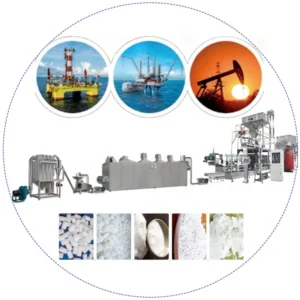
Automatic Modified Tapioca Starch Production Line 304 Stainless Steel Flour Mill and Bakery Machine
¥30.00 Select options This product has multiple variants. The options may be chosen on the product page