

Record ID: 7936
Description
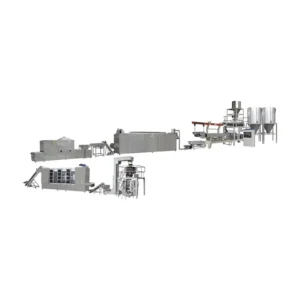
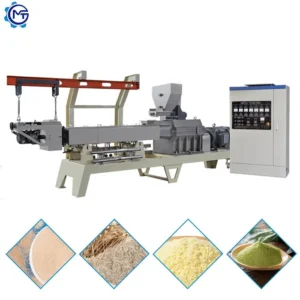
Integrated throughput matching — Every station on this nutrition powder processing line, from batching to packing, is sized as one system to prevent downstream bottlenecks.
Technical Specifications
| Parameter | Value |
|---|---|
| Product Type | Nutrition Powder Processing Line |
| Output Capacity | 200–500 kg/h (basis not stated in source — confirm raw material, moisture content, and formulation) |
| Construction Material | Food-grade 304 stainless steel |
| Control System | PLC with touch control panel and digital system |
| Heat Source Options | Electric / Gas / Steam |
| Raw Materials Processed | Rice, corn, beans, various grains |
| Automation Level | Full automatic |
| Energy Profile | Low energy consumption, high-speed processing |
| Warranty | 1 year |
| After-Sales Support | Overseas engineer service available |
| Voltage & Frequency | To be confirmed by manufacturer |
| Overall Dimensions | To be confirmed by manufacturer |
| Net Weight | To be confirmed by manufacturer |
| Screw Type / Extruder Configuration | To be confirmed by manufacturer |
| Language Options | To be confirmed by manufacturer |
Application Suitability
| Application | Material or Output |
|---|---|
| Baby food and infant nutrition powder | Rice, corn, and mixed grain formulations |
| Nutritional porridge manufacturing | Pre-gelatinised grain and bean blends |
| Fortified food programme supply | Vitamin and mineral-enriched cereal bases |
| Grain-based food powder processing | Rice, corn, beans, and multi-grain inputs |
What a Nominal Capacity Rating Conceals on a Nutrition Powder Line
The stated throughput only holds if the screw profile, barrel heating, and dryer capacity were all sized for your exact formulation.
A nutrition powder processing line turnkey quoted at a fixed kilogram-per-hour figure often assumes a standard grain recipe at a set moisture level. When the actual raw material carries higher fat content or a different starch ratio, the extruder may not sustain that output, and the dryer can fall behind. I once watched a line stall because the baking oven was spec’d for a lean rice formula while the client was running a high-fat pre-mix that needed longer residence time. The extruder kept pushing, but the dryer couldn’t keep up. [NEED_CITE: starch gelatinisation behaviour under varying fat and moisture ratios]
Matching Throughput Between Extrusion and Drying Stages
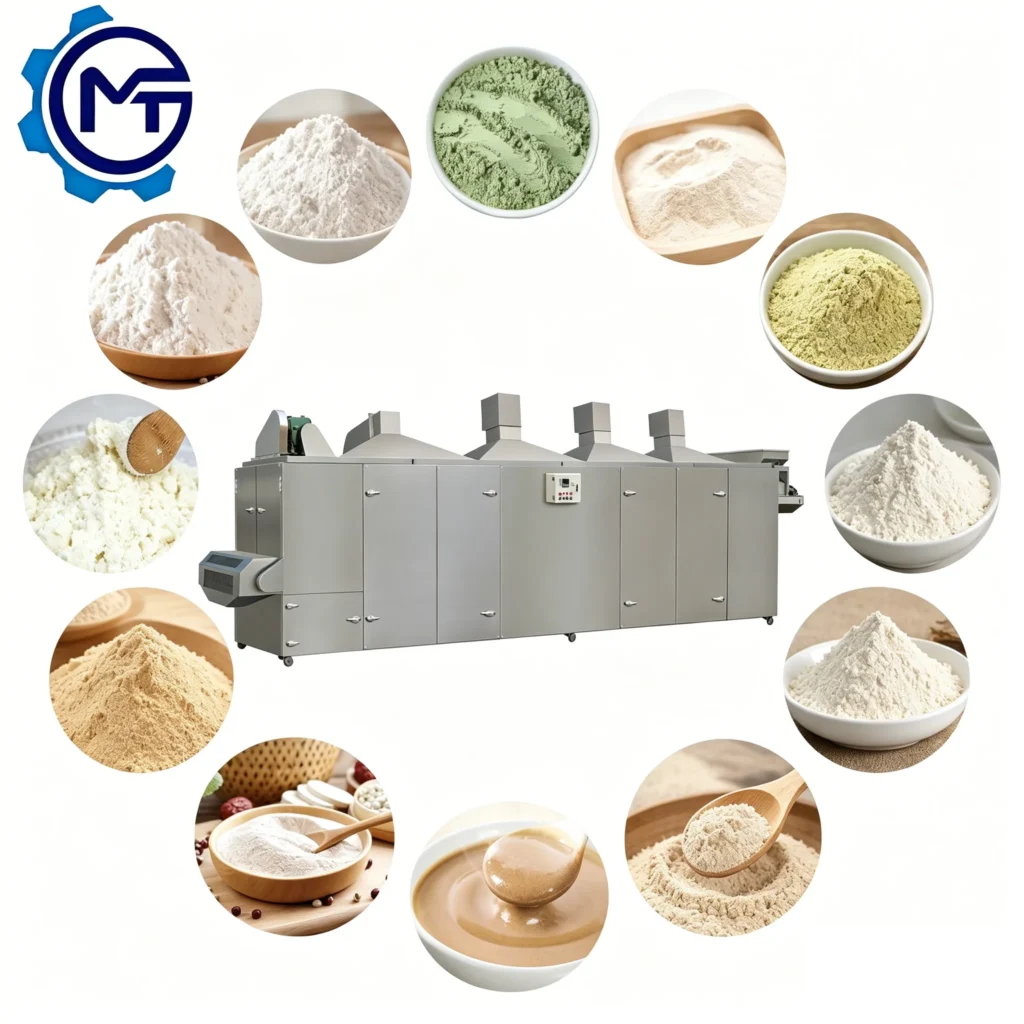
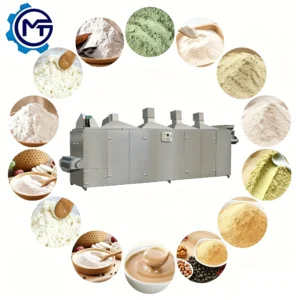
On a nutrition powder processing line, the extruder sets the pace, but the dryer decides whether that pace is sustainable. If the drying capacity is undersized relative to extruder output, moisture remains trapped in the powder particles, leading to clumping and reduced shelf life. The heat source selection — electric, gas, or steam — must align with both the factory’s existing utility infrastructure and the thermal sensitivity of the nutritional additives in the formulation.
Screw Configuration for High-Fat and Multi-Grain Formulations
The screw profile determines how thoroughly the grain matrix is cooked and expanded before it reaches the die. A configuration designed for pure rice flour will not handle a blend containing 20 percent fat from added milk powder or nut meals without adjustments to compression ratio and barrel temperature zones. This is where a pre-shipment trial run on the buyer’s actual raw material becomes essential rather than optional. Running the real formulation through the machine before it leaves the factory catches density drift and texture failures early. [NEED_CITE: twin-screw extrusion behaviour on high-lipid grain formulations]
Reading the Specs That Matter for Powder Consistency
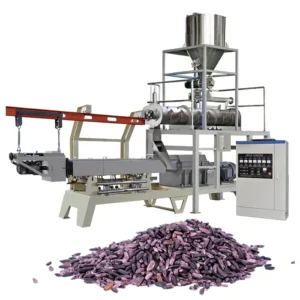
Food-grade 304 stainless steel across all product-contact surfaces ensures the line meets hygiene standards required for infant and baby food production, and it simplifies wash-down between formulation changeovers. The full automatic PLC with touch control panel allows operators to store and recall recipes, reducing batch-to-batch variation that manual adjustment introduces. Flexible heat source options for the drying and baking stations mean the line can integrate into facilities that already have steam boilers or gas lines, avoiding the cost of adding new electrical infrastructure. Automation across the entire line — mixing, extrusion, drying, and packing — keeps human intervention to recipe loading and quality sampling.
The Hidden Cost of Skipping a Pre-Shipment Trial
When a nutrition powder line ships without a test run on the buyer’s actual formulation, all product development happens after installation, on the factory floor, under production pressure. Screw combinations are swapped, temperature curves are rewritten, and dryer settings are adjusted while raw material is being consumed and delivery deadlines are slipping. I spent three days on-site reconfiguring a line because the trial had used standard rice flour instead of the client’s high-fat pre-mix. The expansion ratio was off, powder density drifted outside specification, and the packing station could not fill sachets to target weight. That entire disruption would have been resolved in the factory workshop before shipment. [NEED_CITE: on-site commissioning delays caused by untested raw material formulations]
Why Buyers Source This Line From a Single Supplier
Every station is throughput-matched under one engineering responsibility, so the mixer output feeds the extruder at the correct rate, and the dryer capacity aligns with extruder throughput rather than being sourced independently and guessed. Screw configuration and die design are specified to the buyer’s raw material, not copied from a generic build. The in-house testing workshop runs the client’s actual formulation before dispatch, producing a trial report that documents output rate, expansion ratio, and powder density. The PLC and MCC control systems are confirmed for the buyer’s voltage, frequency, and language requirements before production begins, preventing delays at commissioning. On-site installation includes operator training and a documented maintenance schedule covering wear parts such as screws and dies.
Documentation & Verification
- Line layout showing throughput calculation at each station for your grain formulation
- Screw and die configuration record matched to your raw material test results
- Trial run report documenting powder density and output on your specific pre-mix
- Electrical schematic confirming voltage, frequency, and PLC language for your market
- CE declaration of conformity and ISO certificate for import clearance
- Wear parts list with part numbers for screws, dies, and dryer belts
Installation, Commissioning & Support
- Foundation and floor space plan based on the confirmed line layout and dryer length
- Dedicated power circuit sized to the PLC-controlled extruder motor and heating elements
- Modular station delivery allowing phased assembly in facilities with limited access
- First-run parameter setting using your trial run report as the baseline recipe
- Operator training covering PLC recipe recall, screw wear inspection, and dryer temperature adjustment
- Spare screw and die sets included at delivery with documented lead times for reorders
What to Prepare Before Requesting a Quotation
To configure a nutrition powder processing line turnkey that matches your production target, share your raw material specification including grain types, fat and moisture content, and any vitamin or mineral additives. Confirm your target daily output, available floor space, and ceiling height for the dryer and cooling conveyor. Specify your local voltage, frequency, and the control language your operators need.
Frequently Asked Questions
Q: How is line capacity verified against my specific raw material before shipment?
A: We run your actual formulation through the extruder and dryer in our testing workshop. The trial produces a documented report covering output rate, powder density, and expansion ratio, so you know the line holds capacity on your material before it leaves the factory.
Q: How do you match throughput between the extruder, dryer, and packing station?
A: Each station is calculated from the extruder’s verified output on your formulation. The dryer residence time and packing speed are set to that confirmed rate, preventing bottlenecks where one station runs faster than the next can handle.
Q: How are voltage, frequency, and PLC language confirmed before production?
A: We document your site’s electrical specification and preferred control language in writing at the order stage. The PLC panel and motor drives are built to those confirmed values, and the electrical schematic is included in the shipping documentation.
Q: What does on-site installation and operator training include?
A: Our engineer oversees station assembly, utility connections, and first-run parameter setting based on the trial report. Training covers PLC recipe management, screw and die inspection, dryer adjustment, and routine maintenance intervals.
Q: Which spare wear parts are included, and what is the replacement lead time?
A: The initial delivery includes spare screws, dies, and dryer belt sections. The wear parts list provided at order stage documents part numbers and typical lead times, so you can plan reorders before the first replacement is needed.
Related products
-

Fully Automatic 500kg/h Baby Cereal Nutrition Powder Extrusion Drying Line with PLC Control
¥9,500.00 Add to cart -

High Precision Automatic 500kg/h Baby Food Nutrition Powder Rice Extrusion Processing Line
¥9,500.00 Add to cart -
High Productivity New Condition Safe Healthy and Nutritious Baby Food Meal Replacement Powder Production Line
¥30.00 Select options This product has multiple variants. The options may be chosen on the product page -
Commercial Stainless Steel Baby Rice Powder Grinding Mixing Machine
¥8,238.27 Select options This product has multiple variants. The options may be chosen on the product page