

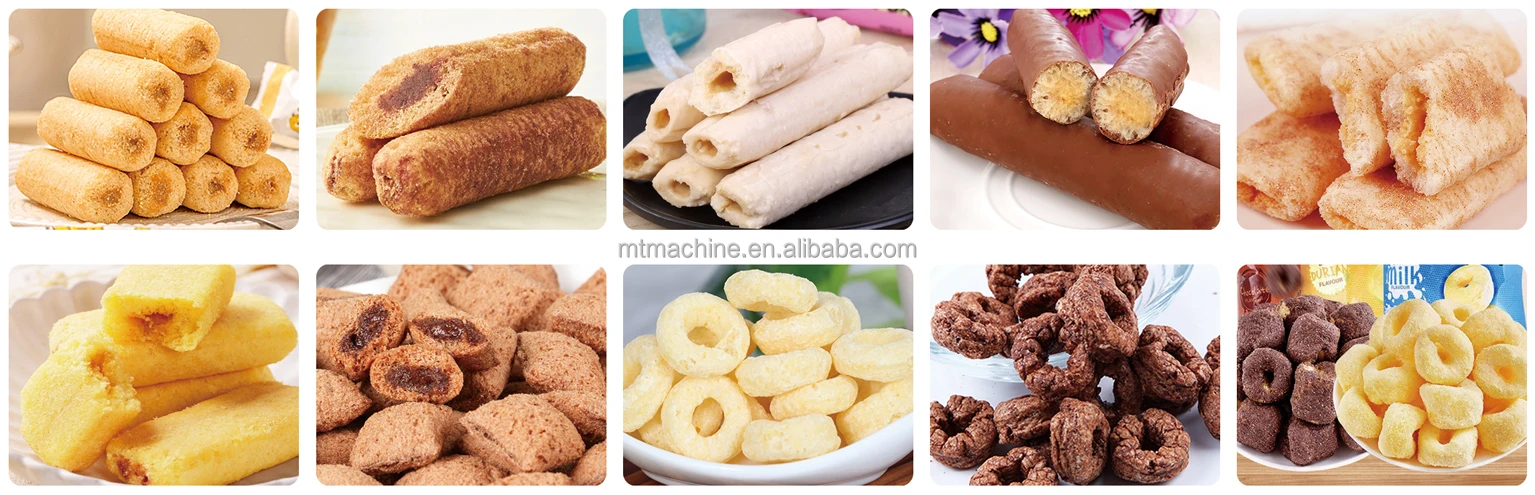
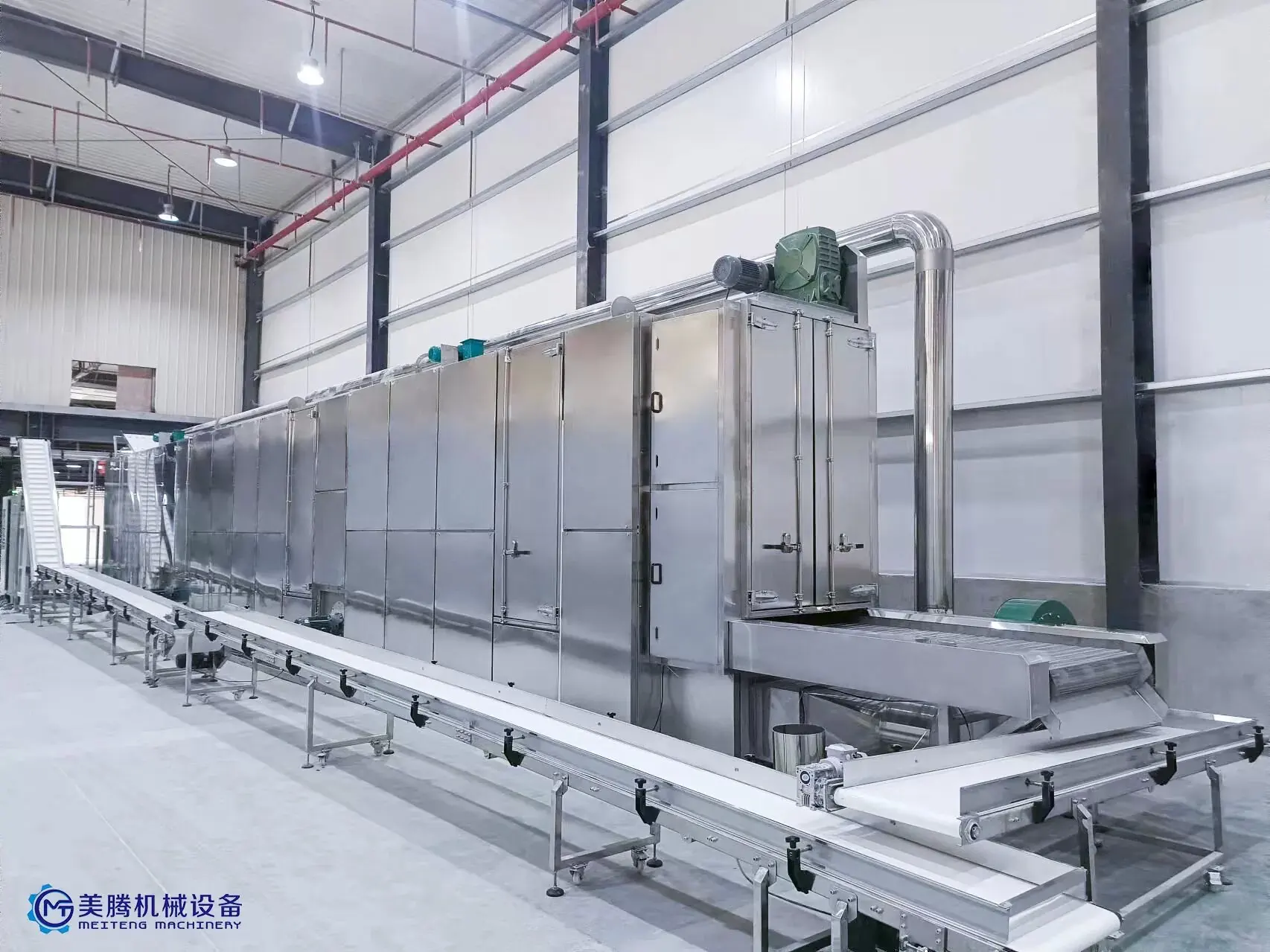
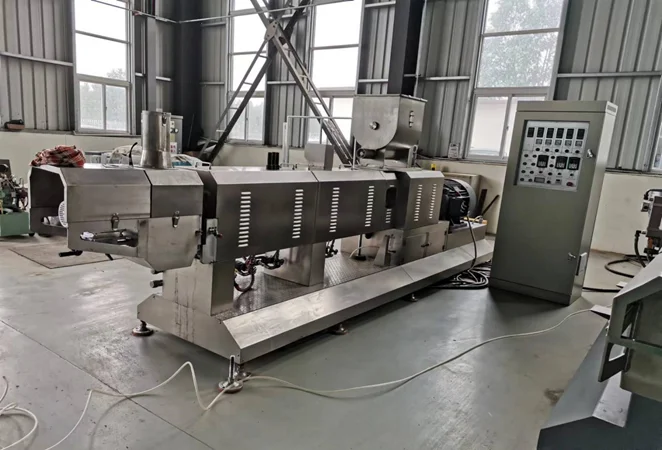
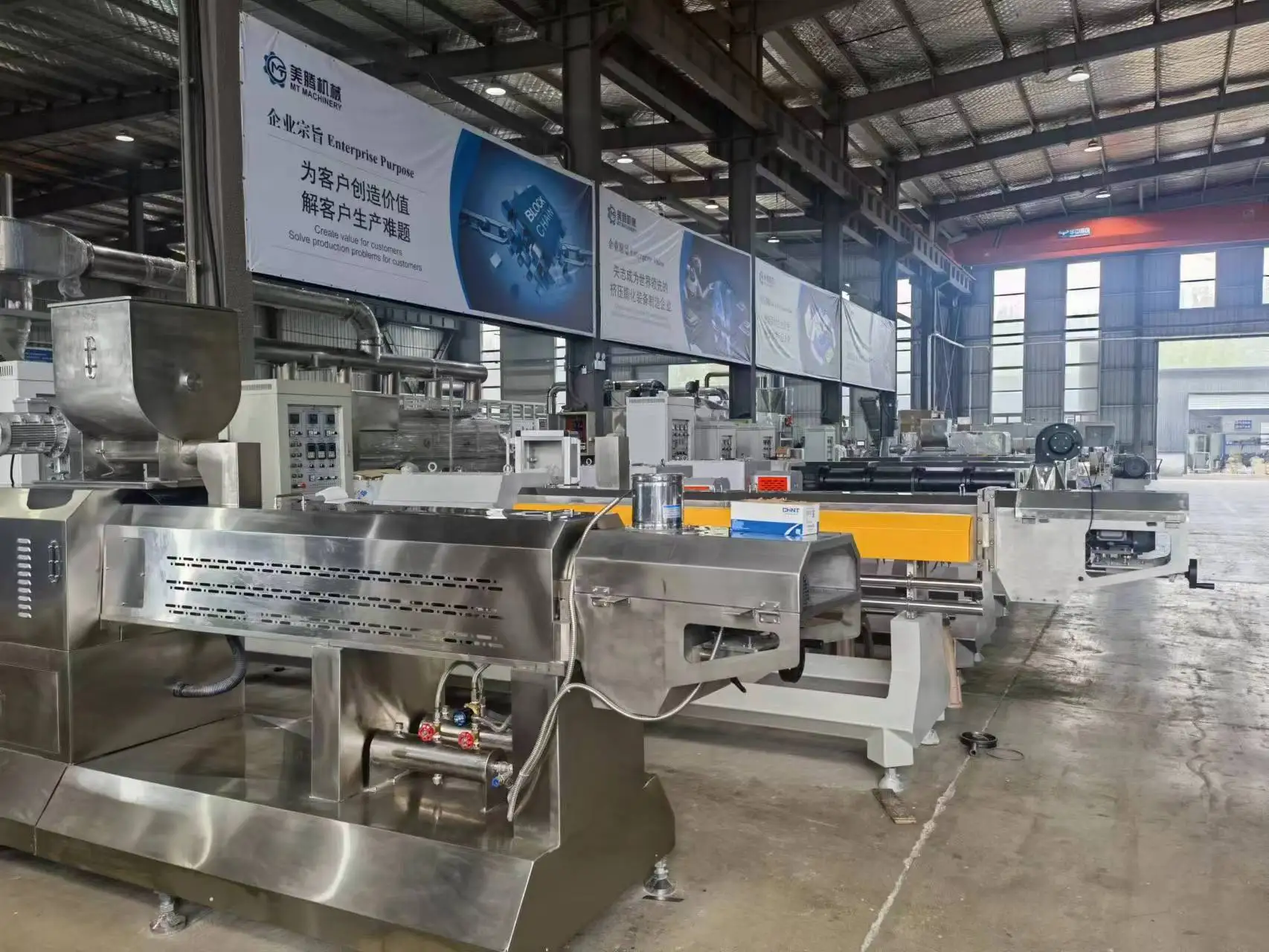
Puffed Corn Maize Puff Processing Line, Twin-Screw, PLC Control, Multi-Layer Dryer — integrated from mixing through extrusion, drying, and flavoring with matched throughput at every station. Screw configuration and die design are specified to your raw material and target product texture, controlling expansion, density, and moisture profile across the line. Delivered with in-house trial runs on your actual formulation before shipment, full layout documentation, and on-site commissioning with operator training.
- CE and ISO certified
- Interchangeable dies for varied snack shapes
- 24-month warranty with lifetime service support
Description
One-supplier line responsibility — every station from batching through packing is engineered under a single project scope, so throughput matching is calculated on your actual corn or maize formulation before any steel is cut.
Technical Specifications
| Parameter | Value |
|---|---|
| Product Type | Twin Screw Snack Food Extrusion Line |
| Line Configuration | Mixing → Extruding → Shaping → Cutting → Drying → Flavoring (one-pass operation) |
| Extruder Type | Twin-screw (double screw extruder) |
| Die Configuration | Interchangeable dies for varied shape and size of puffed snacks |
| Dryer Type | Multi-layer continuous dryer (length and layer configured per product) |
| Flavoring System | Semi-automatic or automatic; supports sugar, oil, and powder seasoning |
| Control System | Available with PLC and MCC automated control |
| Output Capacity | Rated capacity determined after raw material trial run (basis to be confirmed) |
| Voltage & Frequency | Configurable to destination market standards (basis to be confirmed) |
| Certification | CE, ISO |
| Warranty | 24 months, lifetime service |
Application Suitability
| Application | Material or Output |
|---|---|
| Puffed corn and maize snacks | Corn grits, maize flour, corn meal at controlled moisture levels |
| Puffed rice snacks | Rice flour, broken rice, rice grits |
| Core-filled snacks | Cereal-based outer shell with cream, chocolate, or fruit paste filling |
| 2D and 3D pellet snacks | Corn starch, potato starch, wheat flour blends for secondary frying or hot-air puffing |
| Artificial rice | Rice flour, corn flour, and fortified grain blends extruded into rice-grain shapes |
| Fried snack formats | Extruded pellets or direct-expanded shapes for downstream frying |
Why "Nominal Capacity" Fails on Real Corn Formulations
A line rated on ideal laboratory corn grits will underperform the moment your raw material arrives with higher moisture or different granulation.
I saw this firsthand on a project for a Middle Eastern buyer. The contract was signed on nominal capacity figures, but the local maize they sourced had a noticeably higher moisture content than our test samples. The screw feed rate could not keep up, and actual throughput dropped well below what was promised. It took reworking the three-zone temperature profile and swapping the die combination before the line stabilized. That trial-run step is something I will not let anyone skip now, regardless of how urgent the shipment schedule looks [NEED_CITE: impact of raw material moisture variance on twin-screw extrusion throughput].
Throughput Matching Across Every Station
A snack food extrusion production line turnkey project only works when each station is sized against the same throughput target. The extruder may push a certain mass flow, but if the multi-layer dryer is too short or has too few belt passes, product moisture stays above specification and shelf life suffers. We calculate the dryer length and layer count against the extruder’s actual output on your specific corn or maize recipe, so the line holds a consistent pace from mixing to packing without any single machine forcing the rest to slow down.
Screw and Die Configuration Built Around Your Material
The twin-screw extruder at the heart of this line uses interchangeable screw elements and dies. Corn grits behave differently from maize flour in terms of gelatinization temperature and shear sensitivity, so the screw profile must be selected accordingly. A die designed for a light, highly expanded puff will produce the wrong density if the formulation shifts toward a coarser grind. We specify both the screw arrangement and the die geometry after running your raw material in our testing workshop, giving you a configuration record that becomes part of the project documentation [NEED_CITE: twin-screw extrusion screw element arrangement and starch gelatinization].
Reading the Spec Sheet: What Actually Matters
Three parameters on the table above drive daily production decisions. The twin-screw extruder type gives the line the shear and mixing range needed to handle cereal formulations with varying starch content — a single-screw would struggle with the same breadth of recipes. The multi-layer continuous dryer is specified by length and layer count rather than a single number because residence time inside the dryer directly controls final moisture and crunch. Finally, the control system option between PLC and MCC determines how much line coordination is automated; a PLC setup lets the extruder, dryer, and flavoring drum communicate speed changes without manual intervention, which matters when you run multiple SKU changeovers per shift.
The Hidden Cost of Mismatched Line Components
When the dryer or flavoring drum is sourced from a separate vendor who sizes it on a generic assumption, the bottleneck shows up two weeks after commissioning. Operators find themselves idling the extruder every few minutes to let the dryer catch up, and the flavoring drum cannot coat product fast enough to keep the packing station fed. The result is a line that technically runs but never reaches the throughput you budgeted for [NEED_CITE: production line bottleneck analysis in continuous food processing]. That is the gap a single-responsibility turnkey snack food extrusion production line turnkey scope is meant to close.
Why Source This Line Here
Every station — mixing, extruding, drying, flavoring, cooling, packing — sits under one engineering responsibility, so throughput calculations are cross-checked rather than assumed. The screw configuration and die design are specified to your corn, maize, or rice formulation, not copied from a generic build. We run your actual raw material in the in-house testing workshop before shipment, producing a trial report that confirms expansion, density, and texture. PLC and MCC control options allow the line to be set up for the automation level your operators can support. Pre-sales consultation carries through to on-site installation, commissioning, and operator training, keeping the same project team involved from first layout sketch to steady-state production.
Documentation & Verification
- Line layout and capacity calculation showing station-by-station throughput matched to your cereal formulation
- Screw and die configuration record documenting the exact element arrangement chosen for your product
- Trial run report produced on your raw material in our testing workshop before dispatch
- Electrical schematic with voltage and frequency confirmed against your local supply standards
- CE declaration of conformity and ISO certificate included in the shipping documentation package
Installation, Commissioning & Support
- Foundation and floor space plan issued before delivery, matched to the dryer length and extruder footprint
- Dedicated power circuit sizing based on the confirmed voltage and total connected load of the line
- Assembly sequence scheduled so the extruder, dryer, and flavoring stations come online in logical order
- First-run parameter setting performed on your raw material, adjusting barrel zones and die selection
- Operator training covering screw changes, die swaps, and PLC screen navigation in your preferred language
- Wear parts list with lead times for screws, dies, and dryer belt sections to support your first year of production
Preparing Your Inquiry
To size the line accurately, we need the specific corn, maize, or rice variety you plan to run, along with typical moisture content and granulation data. Share your target daily output and the shift pattern you intend to operate. Provide the voltage and frequency at your facility and the control language your maintenance team reads. If you have existing packing or warehouse equipment the line must tie into, send the conveyor heights and floor layout so we can match the discharge points.
Frequently Asked Questions
Q: How is line capacity verified on my raw material before shipment?
A: We run your actual corn, maize, or rice sample through the extruder in our testing workshop, recording throughput, expansion ratio, and product density. The results are documented in a trial run report that accompanies the shipment, so you know the rated output is based on your formulation rather than a generic benchmark.
Q: What does the turnkey project scope cover from layout to operator training?
A: The scope starts with a line layout and capacity calculation, continues through equipment manufacturing and factory testing, and extends to on-site installation and commissioning. Operator training is conducted on your raw material, and the project team stays available for follow-up adjustments during the initial production period.
Q: How do you prevent the dryer or flavoring drum from bottlenecking the extruder?
A: Each station is sized against the same throughput figure derived from your raw material trial. The multi-layer dryer length and belt speed are calculated to match extruder output, and the flavoring drum volume is set so residence time allows full coating coverage without forcing upstream equipment to idle.
Q: What utility and factory preparation is needed before installation starts?
A: You receive a utility plan covering electrical circuit capacity, water supply points, and compressed air requirements. Floor loading and ceiling clearance details are provided so your contractor can prepare the space. We confirm voltage and frequency early to avoid transformer delays once the snack food extrusion production line turnkey equipment arrives.
Q: Can the line be phased with extrusion first and packing added later?
A: Yes. The layout can reserve floor space and conveyor tie-in points for future packing equipment. Commissioning is staged so the extrusion, drying, and flavoring sections are validated independently, and the packing phase is integrated during a second visit without disrupting the sections already in production.
Related products
-

Twin Screw Extruder for Cheese Puffs Food Stainless Steel Simple Puffed Rice Snack Machine
¥8,500.00 Select options This product has multiple variants. The options may be chosen on the product page -

Fully automatic puff snack processing line
¥8,500.00 Select options This product has multiple variants. The options may be chosen on the product page -

Stainless Steel Corn Puff Cake Making Machine Corn Snack Food Machines Top Selling Snacks Machine
¥8,560.00 Select options This product has multiple variants. The options may be chosen on the product page -

Automatic Corn Crisps Extruder Production Machine for Maize Chips and Corn Sticks New Condition
¥8,000.00 Select options This product has multiple variants. The options may be chosen on the product page


