

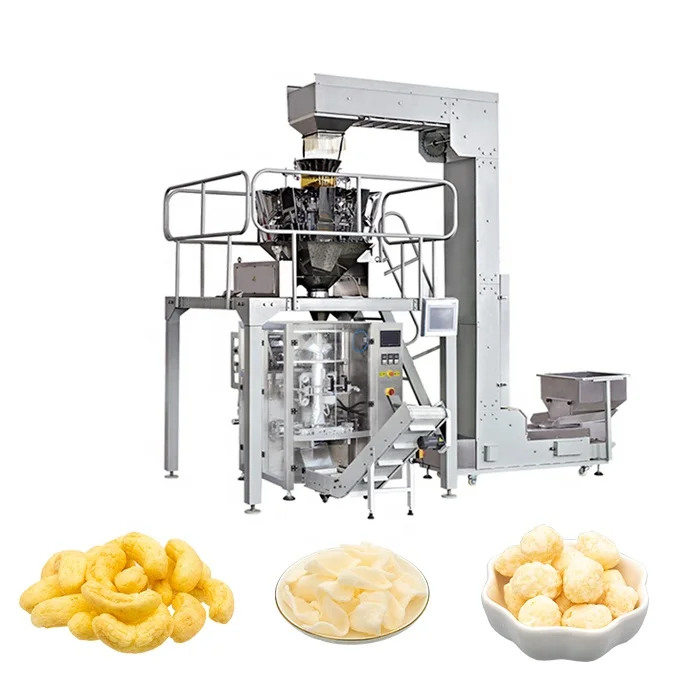
Twin Screw Puffed Snack Extrusion Line, PLC Control, Multi-Energy Dryer, Food-Grade SS304 — configured as a complete turnkey project from batching through packing, with throughput balanced across every station rather than assembled from separate vendors. Screw and die design are specified to your cereal recipe and target density, covering maize, rice, millet and fortified blends on one platform. Trial runs on your raw material are completed in our testing workshop before shipment, with line layout, electrical schematics and full documentation supplied for your destination country.
- ID: 6392
Description
Balanced Throughput Across Stations — screw, dryer and flavoring drum sized together so one station never starves the next on your cereal recipe.
Technical Specifications
| Parameter | Value |
|---|---|
| Product Type | Twin Screw Puffed Snack Extrusion Line |
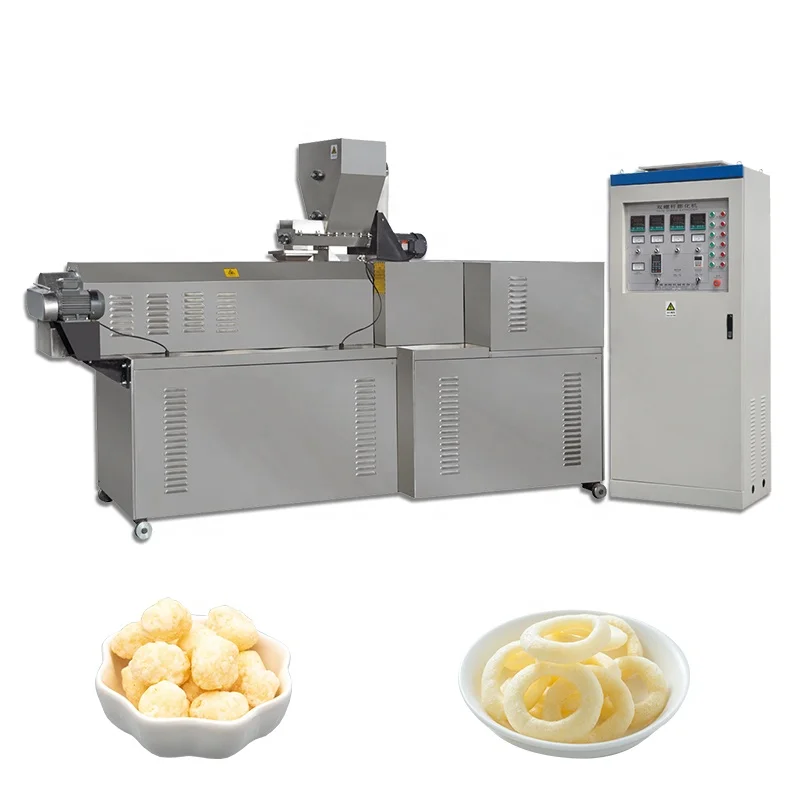
| Screw Type | Double screw (twin-screw) |
| Raw Material Compatibility | Rice, millet, brown rice, buckwheat, maize, other cereals; vitamins, proteins and minerals blendable |
| Voltage & Frequency | Three-phase 380V/50Hz; single-phase 220V/50Hz (customizable to local voltage) |
| Rated Power | ~100 kW (electric heating) / ~50–60 kW (gas or diesel heating) |
| Energy Source Options | Electricity, gas, diesel, steam |
| Control System | PLC-based with inverter (Delixi or Delta brand); Siemens or China top-brand motor |
| Contact Material | Food-grade stainless steel 201/304 |
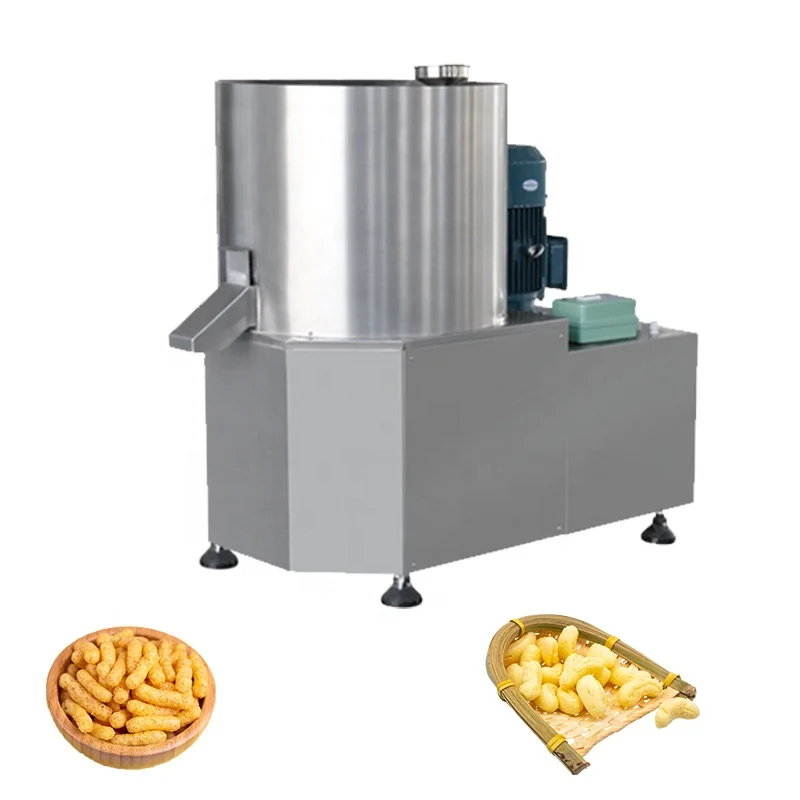
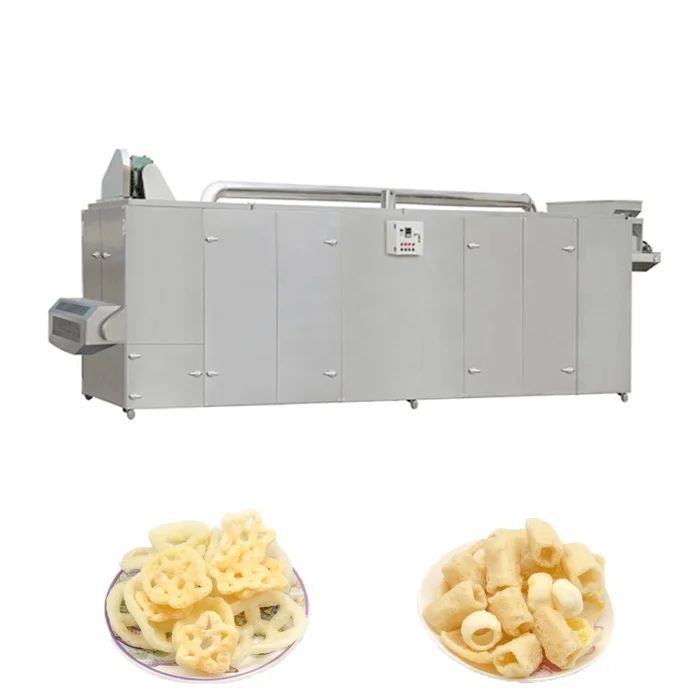
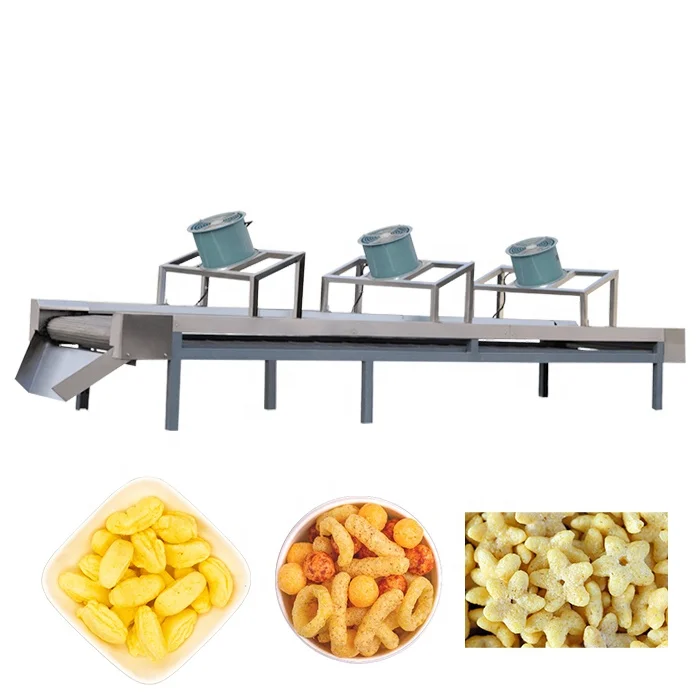
| Line Stations | Mixer → Extruder → Vibrating cooler → Roasting/drying machine → Packing machine |
| Dryer Type | Multi-layer belt dryer, length and layer count configurable to product |
| Flavoring System | Semi-automatic or automatic; supports sugar, oil and powder seasoning |
| Output Capacity | To be confirmed against buyer’s raw material and target product density (basis not stated in source) |
| Certification | CE and ISO (certificates referenced in documentation) |
| Assembly State | Complete line, pre-shipped with factory test |
Application Suitability
| Application | Material or Output |
|---|---|
| Maize and corn puffs | Corn grits, maize flour, cornmeal blends |
| Rice and millet puffs | Rice flour, millet, brown rice, buckwheat |
| Core-filled extruded snacks | Cereal base with cream or fruit filling |
| Fortified puffed snacks | Cereal blends with added vitamins, proteins and minerals |
| Artificial and restructured rice | Rice flour and starch blends on the same twin-screw platform |
Why "500 kg/h" Means Nothing Without the Recipe
Line capacity is only real when measured against your actual raw material, moisture content and target density.
I once watched a buyer fly to Shandong after their new extruder stalled at half the quoted throughput. The nameplate promised a certain output on standard corn grits, but the buyer’s local maize had a different starch profile and higher fibre. The screw configuration was generic, the dryer was undersized, and five days of on-site adjustment followed. That puffed snack extrusion production line eventually ran well, but only after the screw pitch and barrel temperature zones were rebuilt around the real material [NEED_CITE: impact of starch gelatinisation temperature on extrusion throughput]. When a turnkey corn puffs food line is quoted on a single number with no material context, that number is a starting guess, not a guarantee.
Screw Geometry Matched to Cereal Starch Behaviour
Twin-screw extrusion gives you independent control over shear, residence time and barrel temperature at each zone. For maize, which gelatinises at a different point than rice or millet, the screw pitch and flight depth determine whether starch molecules open fully before the die. A puffed snack extrusion production line configured for high-amylose corn will produce dense, under-expanded pellets if the same screw setup is later fed a high-amylopectin rice blend. The configuration record should specify which material the screw was built for.
Dryer and Flavoring Capacity as Line Constraints
Extruders rarely bottleneck a complete line — the dryer and flavoring drum do. Moisture leaving the die can be substantial, and if the multi-layer belt dryer is too short or has insufficient air flow, the product reaches the packing station above safe storage moisture. On a turnkey corn puffs food line, the dryer length, layer count and belt width must be calculated from the extruder output rate and the target final moisture. The same logic applies to the flavoring drum: a semi-automatic drum may not keep pace if the extruder runs at the upper end of its range [NEED_CITE: moisture reduction curves in multi-layer belt drying of extruded snacks].
What the Power and Control Specs Mean on the Floor
The rated power split — roughly 100 kW on electric heating versus 50–60 kW on gas or diesel — tells you how much thermal energy reaches the barrel zones and how that affects your utility bill. In regions with high industrial electricity tariffs, gas-heated barrels lower running costs noticeably. The PLC and inverter control lets operators store recipes for different cereal blends, adjusting screw speed and barrel temperatures between batches without manual recalibration. Confirming that the HMI language matches your operators before the machine leaves the factory avoids commissioning delays that no amount of on-site troubleshooting can fix quickly.
The Cost of Skipping the Trial Run
Buyers who waive the pre-shipment trial run save weeks on the schedule and then lose them on the factory floor. A screw and die set that produces perfect maize puffs on standard grits may choke on a buyer’s local blend with higher bran content, producing irregular shapes and inconsistent density. Without a trial run report tied to the buyer’s own raw material, the first week of production becomes an unplanned product development exercise [NEED_CITE: pre-shipment trial runs and commissioning time reduction].
Why Sourcing the Whole Line from One Supplier Matters
A single supplier matching throughput across every station means the extruder output, dryer residence time and flavoring drum cycle are calculated together, not specified in isolation. The screw and die configuration is documented against the buyer’s cereal recipe and target product density, not copied from a previous build. An in-house testing workshop allows trial runs on the buyer’s actual raw material before the line ships. Voltage, frequency and control language are confirmed to the destination country’s grid and operator requirements during the engineering phase, not discovered at commissioning. On-site installation covers layout positioning, utility hook-up, parameter setting and operator training as a single sequence rather than separate contractor visits.
Documentation & Verification
- Line layout drawing with throughput matched across mixer, extruder, dryer and packing stations
- Screw and die configuration record tied to your cereal recipe and target density
- Trial run report produced on your raw material in the testing workshop before dispatch
- Electrical schematic with voltage, frequency and HMI language confirmed to your destination
- CE declaration of conformity and ISO certificate included in the shipping documentation
- Operation and maintenance manual with wear parts list and replacement intervals
Installation, Commissioning & Support
- Floor plan and foundation requirements sized to the full line footprint including dryer length
- Dedicated three-phase 380V or customised voltage circuit with breaker rated to the ~100 kW peak draw
- Line arrives in modular station sections for sequential assembly and belt alignment
- First-run parameter setting covers barrel temperature zones, screw speed and die pressure for your cereal blend
- Operator training on PLC recipe storage, inverter adjustment and HMI navigation in confirmed language
- Wear parts list covering screws, dies and dryer belt sections with reorder codes
What to Include in Your Inquiry
To size a puffed snack extrusion production line accurately, share the cereal type or blend you intend to run, including any vitamin or protein additions, along with the target product density and shape. Specify your local voltage, frequency and the control language your operators need. If you have existing upstream batching or downstream packing equipment, note the interface requirements so the line layout accounts for those connections.
Frequently Asked Questions
Q: How is line capacity verified against my raw material and recipe?
A: Throughput is calculated from your specific cereal type, moisture content and target density, not from a generic benchmark. A trial run on your raw material in the testing workshop confirms actual output before the line ships, and the results are documented in the trial run report.
Q: How do you match dryer and flavoring capacity to the extruder?
A: Dryer length, layer count and belt width are calculated from the extruder output and the moisture reduction curve of your product. The flavoring drum diameter and cycle time are set so that seasoning application keeps pace without product backlog between stations.
Q: What does the installation and commissioning schedule cover?
A: On-site work includes station positioning, utility connection, first-run parameter setting on your cereal recipe and operator training on the PLC and HMI. The schedule is phased so each station is tested before the next is brought online.
Q: Which documents ship with the line?
A: You receive the line layout, screw and die configuration record, trial run report on your material, electrical schematic with confirmed voltage and language, CE declaration, ISO certificate, operation manual and a wear parts list with reorder codes.
Related products
-

Automatic Rice Crispies Extruder Machine/Chocolate Corn Flakes Extrusion Plant/wheat Flaking Snacks Production Line
¥8,500.00 Select options This product has multiple variants. The options may be chosen on the product page -

Puff Corn Extruder Machine Puffed Core Filled Snack Food Production Line Machine
¥8,500.00 Select options This product has multiple variants. The options may be chosen on the product page -

Sweet Puffed Rice Making Machine Stainless Steel Extruded Puff Snacks Ball Food Produce Machinery
¥7,580.00 Select options This product has multiple variants. The options may be chosen on the product page -

Automatic Corn Crisps Extruder Production Machine for Maize Chips and Corn Sticks New Condition
¥8,000.00 Select options This product has multiple variants. The options may be chosen on the product page


