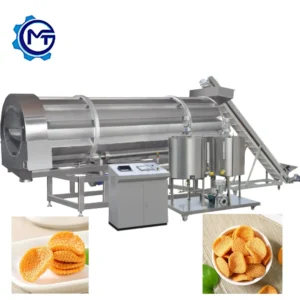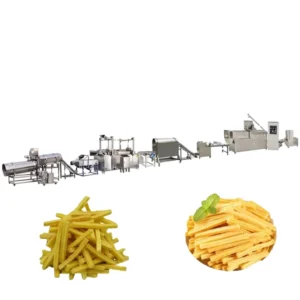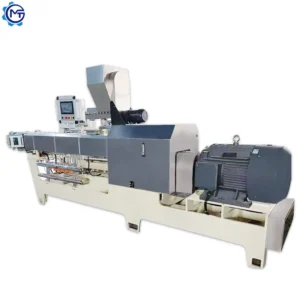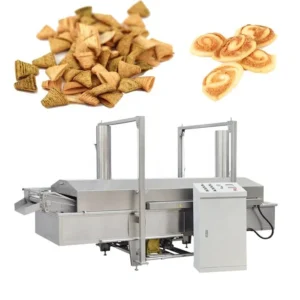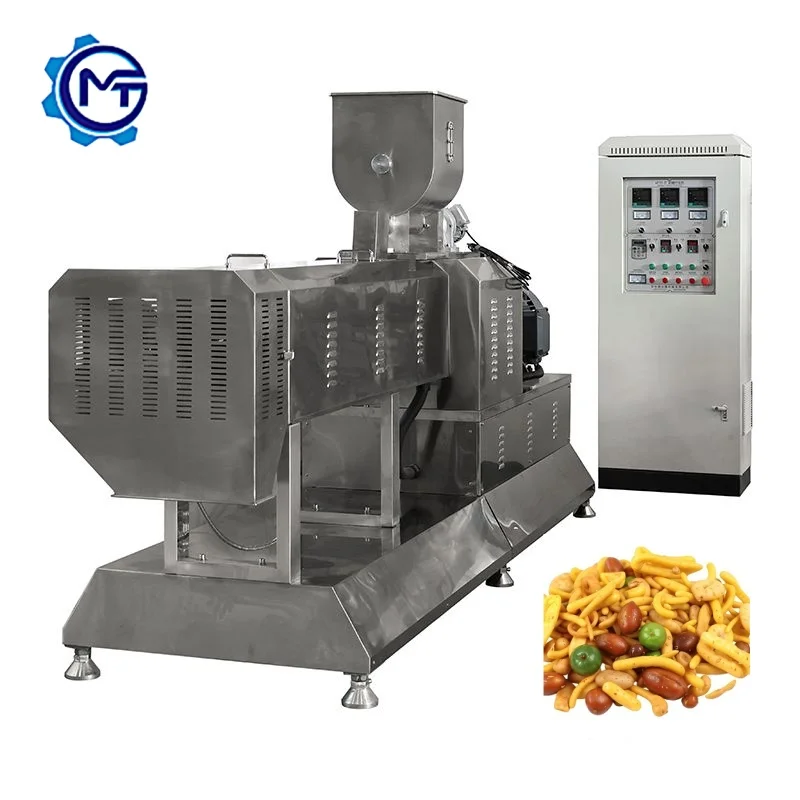


- In-house testing workshop runs your raw material before shipment to confirm product texture and density.
- On-site installation, commissioning, and operator training provided by MT engineers.
- Screw and die configuration specified to your target fried snack format.
Description
Integrated Line Throughput — Extruder, fryer, and seasoning stations engineered as one system, preventing the bottlenecks that arise when stations are sourced from separate vendors and mismatched on capacity.
Technical Specifications
| Parameter | Value |
|---|---|
| Product Type | Continuous Deep Frying Machine / Fried Snacks Processing Line |
| Capacity | 100-1000 kg/h (basis not stated in source — confirm product type, moisture, and frying time) |
| Heating Method | Electricity Heating or Gas Heating |
| Heating Tube Power | 60 kW (electric heating option) |
| Oil Capacity | 320 L |
| Drive Power | 2.6 kW |
| Voltage & Frequency | 380V / 50Hz (configurable) |
| Control System | PLC |
| Construction Material | Food-grade 304 Stainless Steel |
| Overall Dimensions (L×W×H) | 6700 × 2200 × 1200 mm |
| Net Weight | 2000 kg |
| Belt Type | Double-layer mesh belt with frequency conversion stepless speed regulation |
| Oil Filtration | Automatic oil circulation filtration system |
| Slag Discharge | Bottom slag discharge system |
| Lifting System | Automatic lifting for upper hood and mesh belt |
| Key Features | Belt conveying, oil filling, filtering, and temperature control integrated; CE certified; ISO certified |
Application Suitability
| Application | Material or Output |
|---|---|
| Fried nimko production | Chickpea flour, gram flour, and spice-blended dough pellets |
| Extruded fried chips | Corn grits, potato starch, and wheat flour extruded pellets |
| Pellet-based fried snacks | 2D and 3D starch pellets expanded through hot oil immersion |
| Snack line expansion | Integration downstream of existing twin-screw or single-screw extruders |
What a "Turnkey" Label Actually Requires from Your Fried Snacks Processing Line
A true turnkey line matches throughput at every station, not just at the extruder.
I have walked into plants where the fryer could not keep up with the extruder pushing dough into the oil. The oil temperature dropped with each overload cycle, and the snacks on the belt came out unevenly cooked — some golden, some pale and oily. The nominal capacity on the quotation meant nothing against the reality of that recipe and that dough density [NEED_CITE:common causes of throughput mismatch in snack processing lines]. A fried snacks processing line turnkey solution only earns its name when extrusion output, fryer belt speed, oil volume, and seasoning drum capacity are all calculated against the same raw material behaviour.
Throughput Matching Across Extrusion and Frying Stages
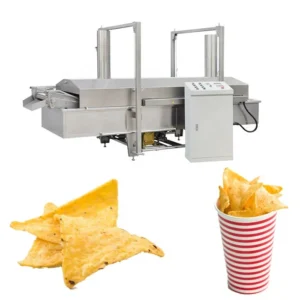
The extruder sets the pace for the entire fried snacks processing line turnkey project. If it outputs more dough than the fryer belt can carry through the oil at the correct residence time, product piles up at the fryer inlet or gets rushed through undercooked. The double-layer mesh belt on this continuous fryer holds the product submerged, and the frequency conversion speed control allows the belt pace to be set precisely against extruder output. This coordination is where most multi-vendor lines fail during commissioning.
Oil Temperature Stability Under Continuous Production Load
Maintaining oil temperature across a long frying run is a function of heating capacity, oil volume, and product load entering the belt. With 60 kW of electric heating and a 320 L oil bath, the fryer sustains temperature as product enters continuously from the extruder and dryer stages. The automatic oil circulation filtration system removes fine particulates that would otherwise accelerate oil degradation, keeping the acid value within acceptable range over extended production shifts [NEED_CITE:edible oil degradation factors in continuous frying operations].
Reading the Specs That Determine Frying Consistency
The double-layer mesh belt is not a minor detail. Single-layer belts allow lightweight pellets to float, resulting in uneven oil contact and inconsistent colour. The upper mesh holds product submerged for the full belt travel. Belt speed regulation through frequency conversion means frying time is adjustable without mechanical gear changes — necessary when switching between dense nimko pellets and lighter extruded chip formats that require different oil exposure. The 6700 mm length provides a sufficient travel path for products needing longer fry cycles. Food-grade 304 stainless steel throughout all contact surfaces meets the hygiene expectations of food export markets and simplifies wash-down between recipe changeovers.
The Cost of Skipping Line-Level Capacity Verification
Buying a fryer as a standalone unit and connecting it to an extruder from a different supplier is how plants end up with oil temperature swings, half-cooked product, and excessive oil absorption rates. The extruder may push product faster than the fryer can handle, forcing operators to slow extrusion down and lose output, or run the fryer overloaded and sacrifice quality [NEED_CITE:consequences of unmatched station capacity in food processing]. Downtime during commissioning stretches from days into weeks when throughput conflicts are discovered on the factory floor instead of on paper during the layout phase.
Why Sourcing the Full Line from One Supplier Changes the Outcome
Every station on this fried snacks processing line turnkey project — extruder, fryer, de-oiling, seasoning, and packing — is specified together so that capacity calculations align from the first mixer to the final bag. The screw and die configuration on the extruder is selected to produce the dough density and pellet geometry that the downstream fryer is sized to handle. An in-house testing workshop allows trial runs on the buyer’s actual raw material and recipe before the line ships, so product development happens at the factory, not on the buyer’s floor during installation. PLC controls across stations share a common language and logic framework, reducing the integration problems that arise when separate control systems must communicate. CE and ISO documentation supports machinery import and food safety audit requirements in the destination market.
Documentation & Verification
- Line layout drawing showing station spacing and throughput calculation for your target snack format
- Trial run report produced on your raw material and recipe in the testing workshop before dispatch
- Screw and die configuration record matched to your product density and expansion specification
- Electrical schematic confirming voltage, frequency, and PLC interface language for your facility
- CE declaration of conformity and ISO certificate for customs clearance and food safety compliance
- Operation and maintenance manual covering belt tension, oil filtration cycles, and heating element inspection
Installation, Commissioning & Support
- Foundation must support 2000 kg net weight across the 6700 × 2200 mm footprint with level tolerance for belt alignment
- Dedicated 380V circuit required for 60 kW heating load, separate from extruder and downstream motor circuits
- Fryer ships as a complete assembled unit with belt, hood, and filtration system pre-installed
- First-run commissioning includes belt speed calibration, oil temperature profiling, and frying time verification against your snack format
- Operator training covers mesh belt cleaning, oil filtration system maintenance, and PLC parameter adjustment
- Wear parts list includes replacement mesh belt sections, heating elements, and filtration media with lead times confirmed at order
Preparing Your Line Inquiry
To receive an accurate line configuration, provide the raw material composition and moisture content of the dough or pellet entering the fryer, the target fried snack weight and colour specification, and the hourly output you need the full line to sustain. Include your facility voltage and frequency, preferred PLC language, and the floor area available for the complete line layout. If you can send a sample of your raw material, a trial run in the testing workshop will confirm capacity and product quality before the quotation is finalised.
Frequently Asked Questions
Q: How is the line capacity verified against my specific raw material and snack format?
A: Capacity is confirmed through a trial run using your actual raw material and recipe in the in-house testing workshop. The extruder screw configuration, die selection, and fryer belt speed are all adjusted during this test to document the achievable output on your specific dough composition and target product specification before shipment.
Q: How do you ensure throughput matching between the extruder, fryer, and seasoning stations?
A: Each station is calculated against the same production target and raw material data during the layout phase. The extruder output rate, fryer belt speed and oil volume, and seasoning drum batch cycle are all specified together so that no station becomes a bottleneck when the line runs at full pace.
Q: What voltage, frequency, and PLC language options are confirmed before shipment?
A: Your facility voltage, frequency, and preferred PLC interface language are confirmed during the specification stage and documented on the electrical schematic. The control system is configured and tested at the factory against those parameters before the line is packed, preventing delays during on-site commissioning.
Q: Can I send my raw material for a trial run before the line ships?
A: Yes. The in-house testing workshop conducts trial runs on buyer-supplied raw material and recipe. The resulting trial run report documents product texture, colour, density, and achievable throughput, and forms part of the shipment documentation so you know what to expect when the line starts in your facility.
Q: What does on-site installation, commissioning, and operator training cover?
A: Engineers oversee station placement, utility connections, belt alignment, and oil system filling. Commissioning includes running your recipe through the full line, adjusting fryer belt speed and temperature profiles, and verifying seasoning coverage. Operator training covers daily start-up, PLC parameter changes, oil filtration maintenance, and mesh belt replacement procedures.
Related products
-
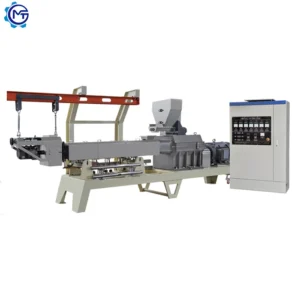
Industrial Wheat Flour Snacks Processing Equipment – Stainless Steel Fried Food Production Line
¥65.00 Select options This product has multiple variants. The options may be chosen on the product page -
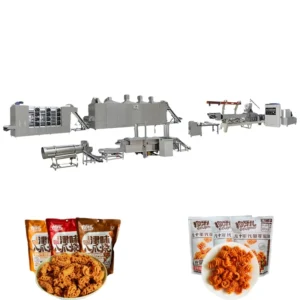
Línea de producción de máquina de alimentos para snacks Doritos, chips extruidos, pellets, Bugles de maíz frito.
¥100.00 Select options This product has multiple variants. The options may be chosen on the product page -
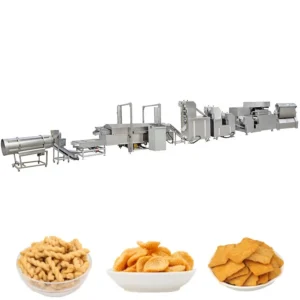
Línea de producción de máquina de alimentos para fritura de bocadillos de chips fritos de pellets de Bugles de maíz 3D crujientes, extrusora para hacer Bugles
¥100.00 Select options This product has multiple variants. The options may be chosen on the product page -
Nueva Línea de Producción de Snacks Crujientes de Gran Capacidad de Acero Inoxidable 304, Máquina de Procesamiento de Chips Bugles Fritos Totalmente Automática
¥30.00 Select options This product has multiple variants. The options may be chosen on the product page