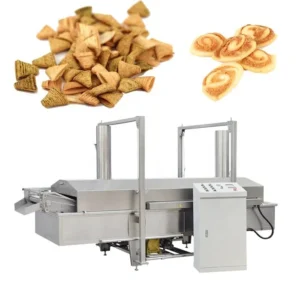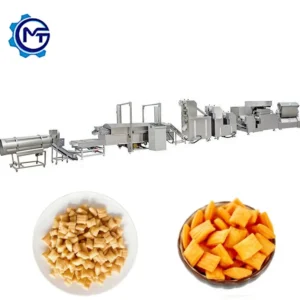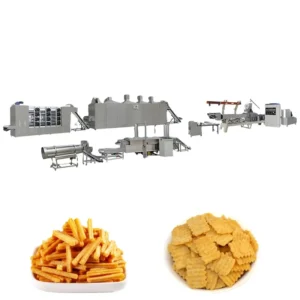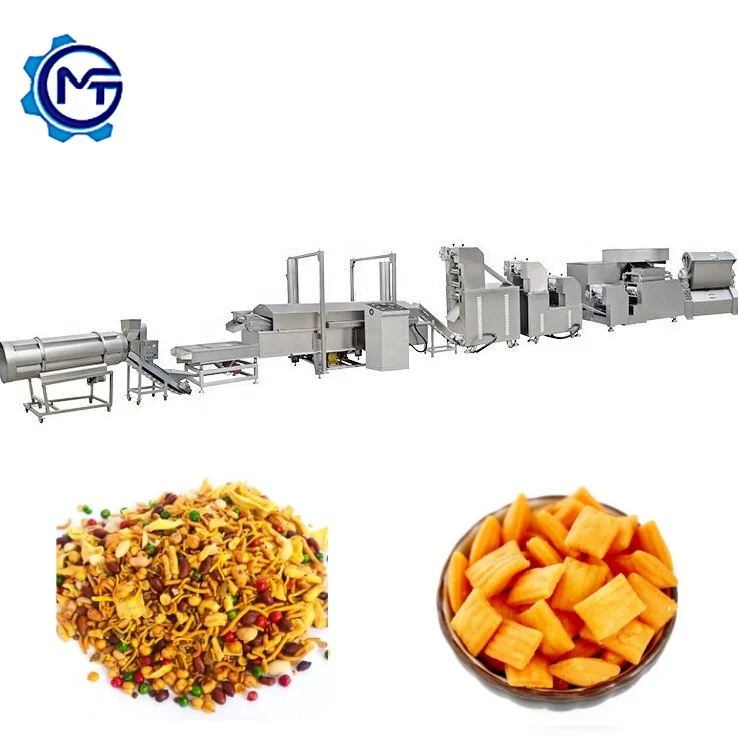
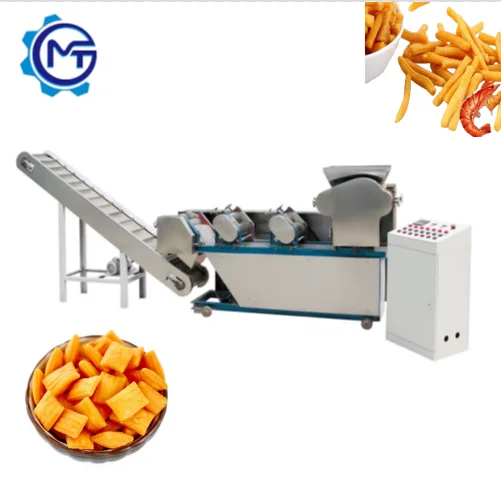
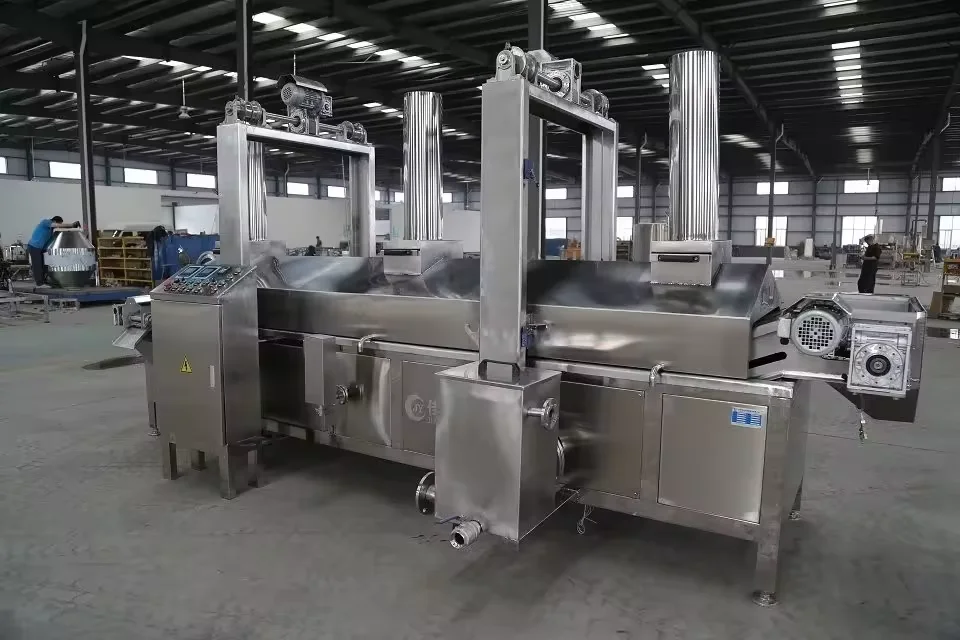
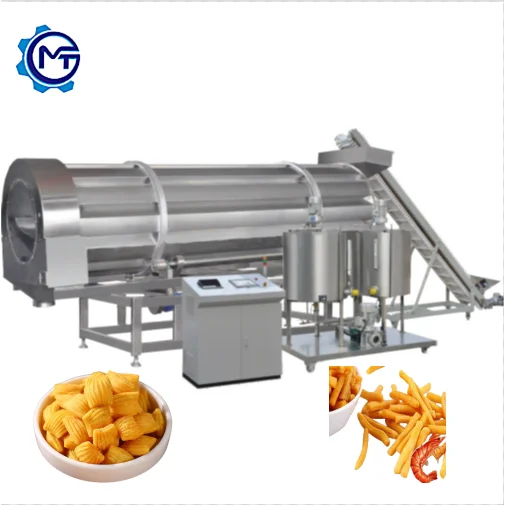
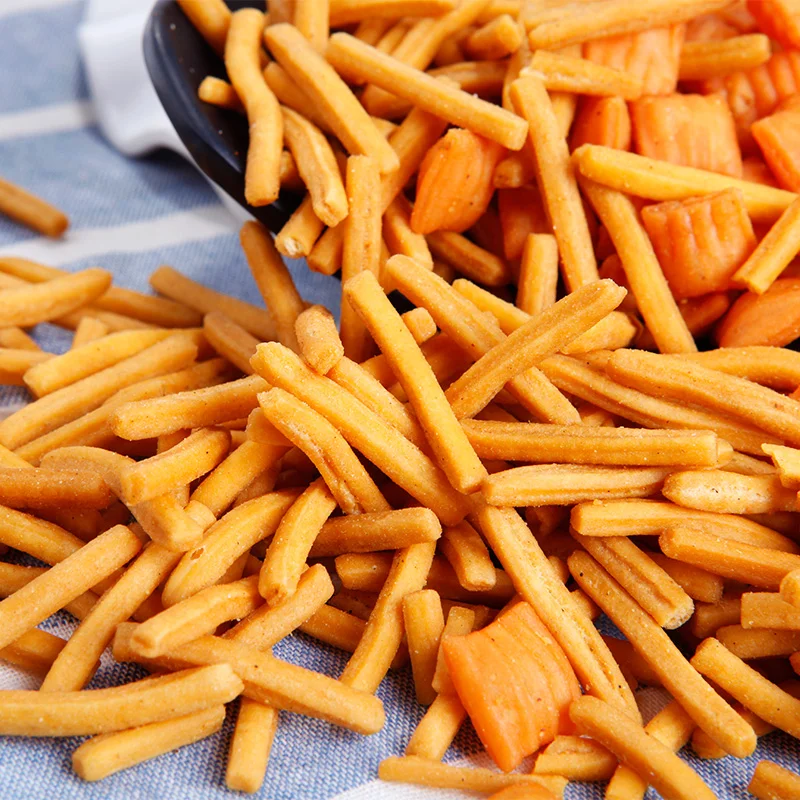
Continuous Frying Machine for Snack Production Line, 380V/50Hz, PLC Control, 304 Stainless Steel — designed for extruded snack formats including corn curls, fried sticks, and pellet-based crisps. Double-layer mesh belt with stepless frequency-controlled speed ensures adjustable frying time and consistent submersion, while automatic oil circulation filtration extends edible oil service life. Throughput across extrusion, frying, de-oiling, and packing stations is matched under one supplier, with in-house trial runs on your raw material before shipment.
Description
Throughput-Matched Frying Lines — Every station from extruder to packing is calculated against your raw material, so the continuous frying machine production line never bottlenecks upstream output or lets density drift.
Technical Specifications
| Parameter | Value |
|---|---|
| Product Type | Continuous Deep Fryer / Snack Frying Machine |
| Heating Method | Electricity or Gas |
| Rated Power | 60 kW (heating tube); 2.6 kW (drive) |
| Voltage & Frequency | 380V / 50Hz |
| Control System | PLC with configurable temperature and speed profiles |
| Overall Dimensions (L×W×H) | 6700 × 2200 × 1200 mm |
| Net Weight | 2000 kg |
| Oil Capacity | 320 L |
| Conveyor Type | Double-layer mesh belt, stepless frequency-controlled speed |
| Material | Food-grade 304 stainless steel |
| Oil Filtration | Automatic oil circulation filtration system |
| Lifting System | Automatic lifting for upper hood and mesh belt |
| Slag Discharge | Bottom slag discharge system |
| Output Capacity | 100–1000 kg/h (basis to be confirmed) |
| Warranty | 1 Year, including core components |
| Assembly State | Complete unit, packed in strong plywood case |
| Certification | CE, ISO |
Application Suitability
| Application | Material or Output |
|---|---|
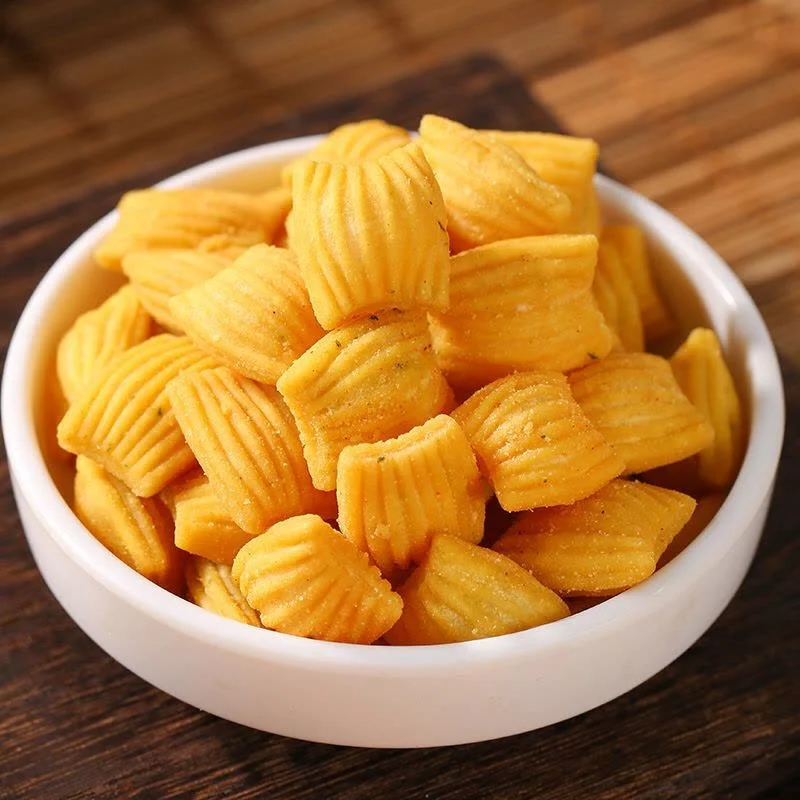
| Corn curls and cheese balls | Extruded corn grits, rice flour blends |
| Fried sticks and pellet-based crisps | Starch-based pellets, wheat flour dough |
| Spix and Soba-style snacks | Potato starch, corn starch, seasoning premixes |
| Mie Sedap-style fried noodle snacks | Wheat flour sheets, alkaline-treated dough |
| General extruded snack frying | Any pellet or direct-expanded piece requiring oil finish |
Why Your Fryer Capacity Must Match the Extruder Before the Line Ships
A turnkey snack frying line only works when every station is throughput-matched under one supplier.
I have stood in workshops where the extruder was pushing product faster than the fryer could accept it. The result is not just a slowdown — it is a pile-up on the conveyor, uneven oil contact, and pieces that leave the fryer with colour and moisture outside specification. One project in West Africa stalled three times in the first week because the frying section could not keep pace with the upstream twin-screw extruder, and the operator had no choice but to throttle the extruder down, losing the gelatinisation profile that gave the product its crunch. When you evaluate a continuous frying machine production line, the question is not what the fryer can do in isolation — it is whether its belt speed, oil volume, and filtration rate align with the extruder’s actual output on your specific formulation [NEED_CITE: extrusion and frying line throughput matching principles].
Oil Circulation and Temperature Stability Across the Belt
The 320 L oil capacity is paired with an automatic circulation filtration system that continuously removes particulates and free fatty acids from the bath. In practice, this means the acid value stays lower for longer, which matters when you are running a turnkey snack frying line for an eight-hour shift without an oil change. Slag collects at the bottom discharge rather than drifting back onto the mesh belt, so pieces that spend thirty seconds in the oil leave with a consistent golden tone rather than dark spots. The PLC records temperature profiles across zones, letting you replicate a successful run the next day without guessing at dial positions.
Belt Speed and Submersion Control for Different Snack Densities
The double-layer mesh belt with stepless frequency-controlled speed lets the operator adjust frying time from a few seconds for thin crisps to over a minute for denser pellet-based pieces. Because the upper belt holds the product below the oil surface, floating snacks like corn curls receive the same heat exposure on every side. This matters when you transition from a light rice-based formulation to a heavier corn grits mix — the density shift changes buoyancy, and without positive submersion the top surface fries unevenly. The belt width accommodates the full discharge width of a typical twin-screw extruder die face, so product lands directly onto the fryer infeed without manual spreading.
Reading the Specifications That Actually Define Fryer Performance
Heating power at 60 kW determines how fast the oil recovers temperature after cold product enters the bath. On a high-moisture pellet snack, each kilogram of water that flashes into steam pulls thermal energy from the oil; if recovery is too slow, the temperature drops and the next batch enters oil that is below set-point, leading to oil absorption rather than surface dehydration. The 380V / 50Hz electrical supply is standard for industrial fryers in most export markets, but confirming local voltage and frequency before production avoids rewiring delays on site. Food-grade 304 stainless steel contact surfaces resist the chloride attack that hot oil and salted seasoning create over months of operation, and the automatic hood lifting system reduces cleaning time by allowing full access to the belt and heating tubes without manual unbolting [NEED_CITE: food-grade stainless steel performance in high-temperature oil environments].
The Hidden Cost of an Undersized Fryer in a Snack Line
When the fryer is specified by catalogue capacity rather than actual upstream output, the consequences compound downstream. De-oiling drums receive product that is still surface-wet, so seasoning does not adhere and rejects increase. Cooling conveyors cannot drop product temperature fast enough because residual oil retains heat, and by the time pieces reach the packing scale they are still warm enough to create condensation inside the bag. These are not defects in individual machines — they are symptoms of a line where station-to-station throughput was never calculated against a single raw material and target product [NEED_CITE: downstream quality impact of fryer throughput mismatch].
Why Procure the Frying Station from the Same Source as the Extruder
MT designs the continuous frying machine production line so that the fryer’s oil volume, belt width, and filtration rate are calculated against the extruder’s die configuration and expected output on your raw material. The in-house testing workshop runs trial batches before shipment, documenting frying time, oil temperature, and final moisture so that commissioning on site starts from a known baseline rather than a blank control panel. Electrical schematics are confirmed to your local voltage and frequency, and the control language is set before the PLC is wired — eliminating the scenario where an operator faces an interface they cannot read. Screw and die configuration records for the upstream extruder are archived alongside the fryer’s temperature profile, so when you re-order a seasoning changeover or a new pellet shape, the thermal reference point is already established.
Documentation & Verification
- Line layout and capacity calculation showing extruder-to-fryer throughput match
- Trial run report on your raw material with frying time, temperature, and moisture data
- Electrical schematic confirming voltage, frequency, and control language for your market
- Screw and die configuration record linked to the fryer’s temperature profile
- CE declaration of conformity and ISO certificate
- Factory test record and packing photographs before dispatch
Installation, Commissioning & Support
- 6700 × 2200 mm footprint requires level concrete floor with oil-resistant drainage channel
- 60 kW heating load demands dedicated circuit with appropriate breaker rating at 380V / 50Hz
- Arrives as complete unit; hood and belt lifting system enables first-day access for inspection
- PLC parameters pre-loaded from trial run; on-site commissioning adjusts belt speed to local humidity
- Operator training covers oil filtration cycle, slag discharge interval, and temperature recovery monitoring
- Wear parts list includes replacement mesh belt sections and heating elements with lead time confirmed
What to Include in Your Inquiry
To size the frying station correctly, share your raw material formulation, the extruder model or expected output on that formulation, and the target moisture after frying. Confirm your workshop’s available length and ceiling height — the 1200 mm hood clearance plus lifting travel needs overhead space. State the local voltage, frequency, and preferred control language so that the electrical package matches before the panel is built.
Frequently Asked Questions
Q: How is frying line capacity verified against my raw material and extruder output?
A: Before the line ships, a trial run is performed in the in-house testing workshop using your actual raw material. The trial documents frying time, oil temperature, belt speed, and final moisture, producing a report that becomes the baseline for on-site commissioning. This ensures the fryer’s throughput is matched to the extruder’s real output, not a catalogue figure.
Q: What voltage and control language are confirmed before shipment?
A: Electrical schematics are prepared once your local voltage and frequency are confirmed. The PLC interface language is set to your preference before the control panel is wired, so the operator faces a readable display from day one rather than waiting for a software update on site.
Q: How is throughput matched between the extruder, fryer, and downstream stations?
A: The line layout calculation starts with the extruder’s output on your specific formulation and propagates that figure through every station — fryer belt speed and oil volume, de-oiling drum residence time, flavouring drum capacity, and cooling conveyor length. Each piece of equipment is sized so that no station creates a bottleneck or forces the upstream machine to throttle down.
Q: Is a trial run on my raw material performed before the line ships?
A: Yes. The testing workshop runs your formulation through the extruder and into the fryer, documenting all parameters. You receive the trial run report before shipment, and the recorded settings are loaded into the PLC so that commissioning begins from a proven baseline.
Q: What spare wear parts are included, and what is the lead time for replacements?
A: The initial shipment includes a wear parts list covering mesh belt sections, heating elements, and filtration media. Replacement lead times are confirmed at quotation stage, and the parts list specifies part numbers so that reorders can be placed directly without reverse-engineering specifications on site.
Related products
-
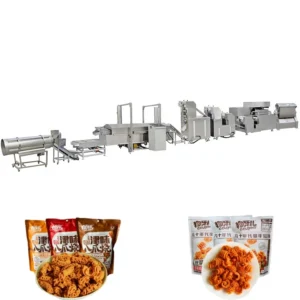
Puffed Octopus Snack Processing Line – Full-Automatic Fried Octopus Production Machinery
¥65.00 Select options This product has multiple variants. The options may be chosen on the product page -
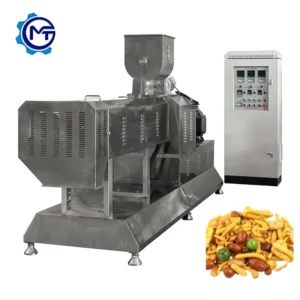
Nueva Máquina Automática de Fabricación de Nimko Frito Tradicional Alta Productividad Gran Capacidad Línea de Producción de Acero Inoxidable
¥8,575.00 Select options This product has multiple variants. The options may be chosen on the product page -
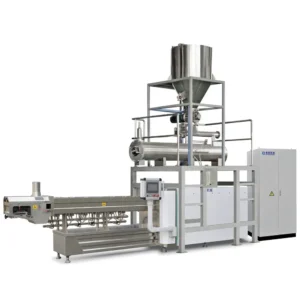
New Automatic 150-200kg/h Nimko Fried Pasta Snacks & Kurkure Making Machine Food Grade Stainless Steel High Productivity
¥8,585.00 Select options This product has multiple variants. The options may be chosen on the product page -
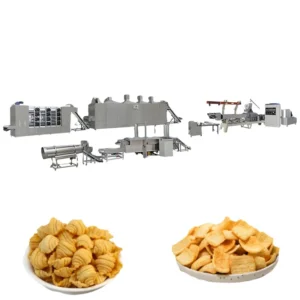
Nueva Línea de Producción de Alimentos para Freír Automática, Portátil y de Alta Productividad para Palitos de Ensalada, Chips y Snacks
¥100.00 Select options This product has multiple variants. The options may be chosen on the product page