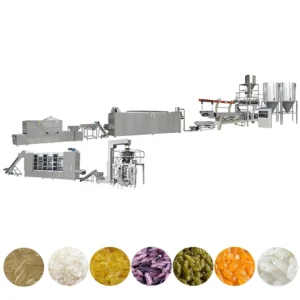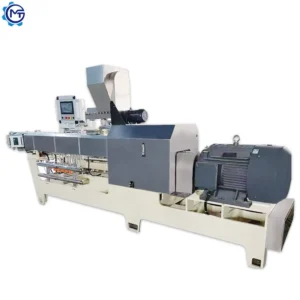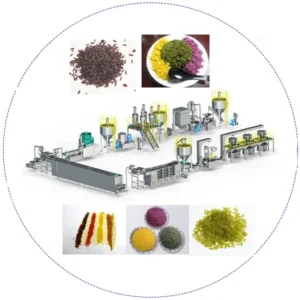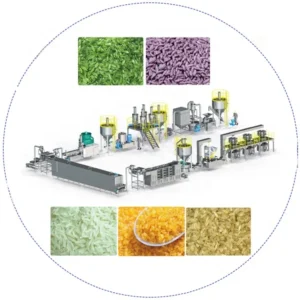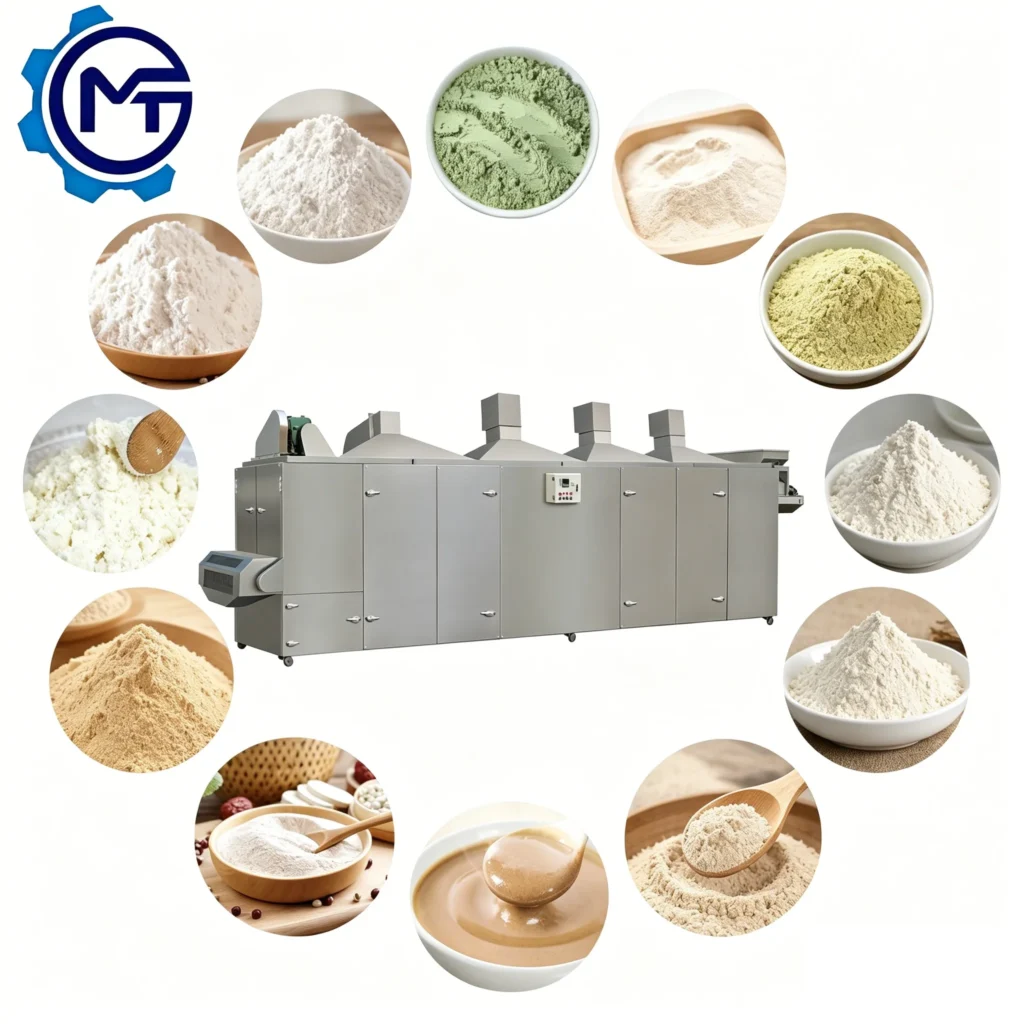
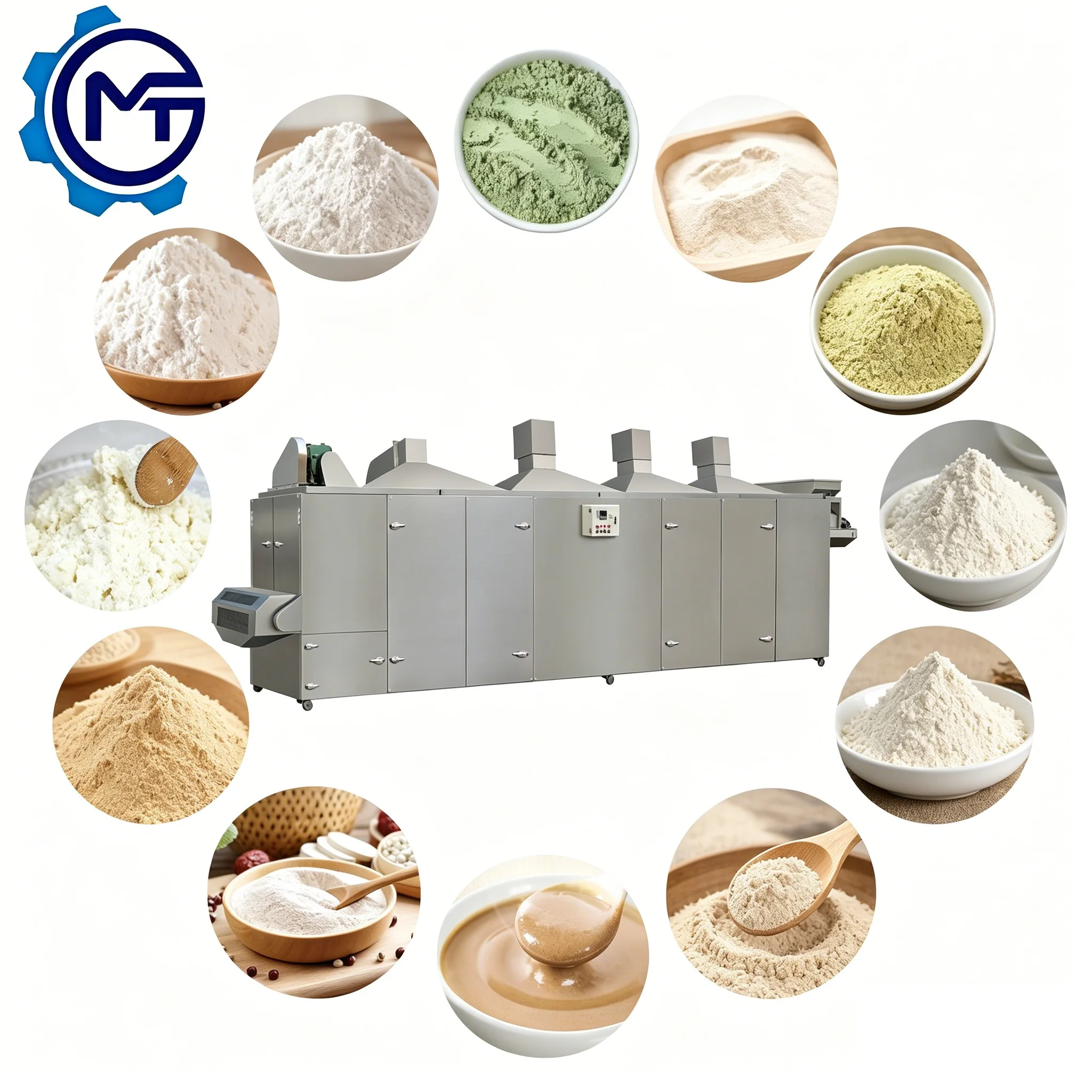
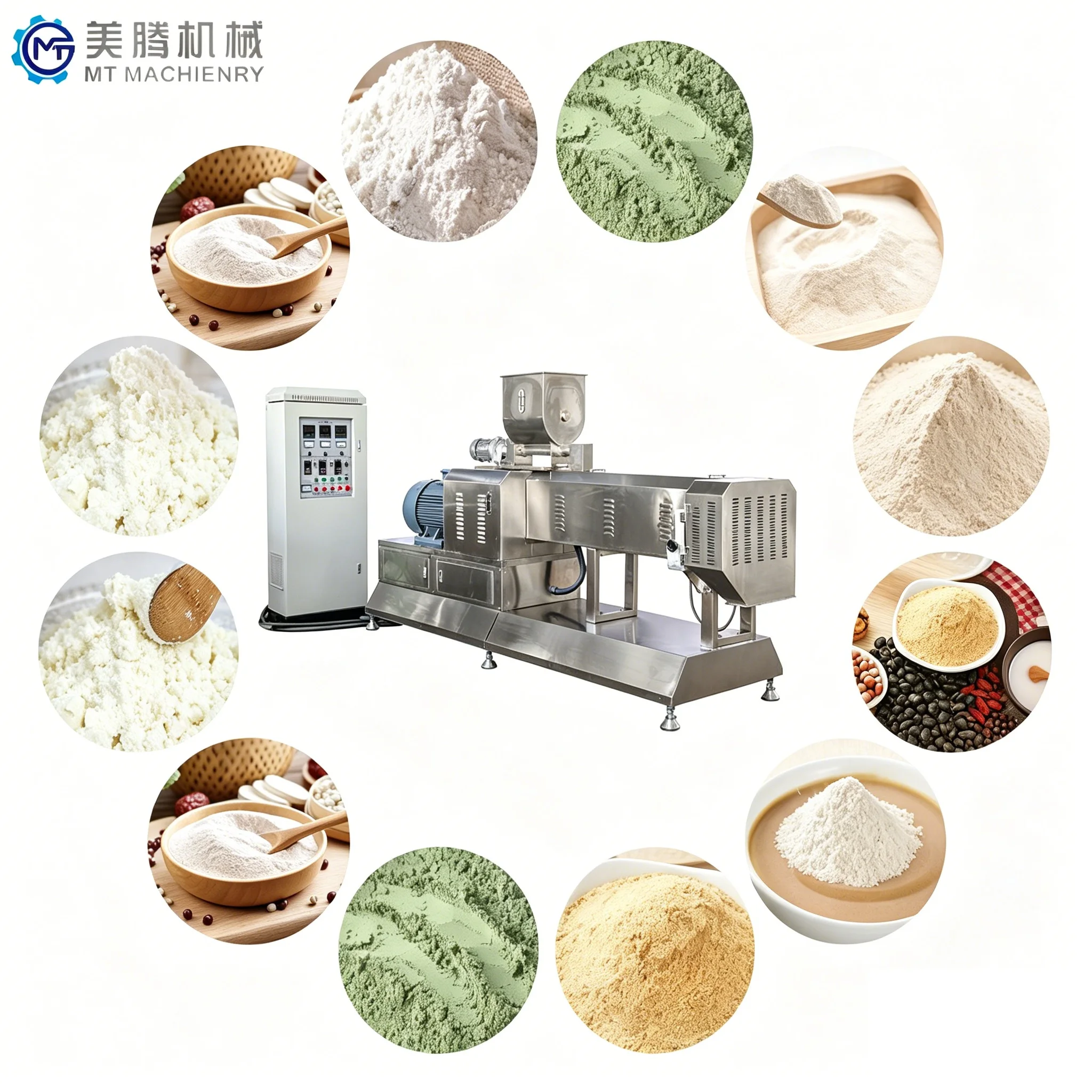

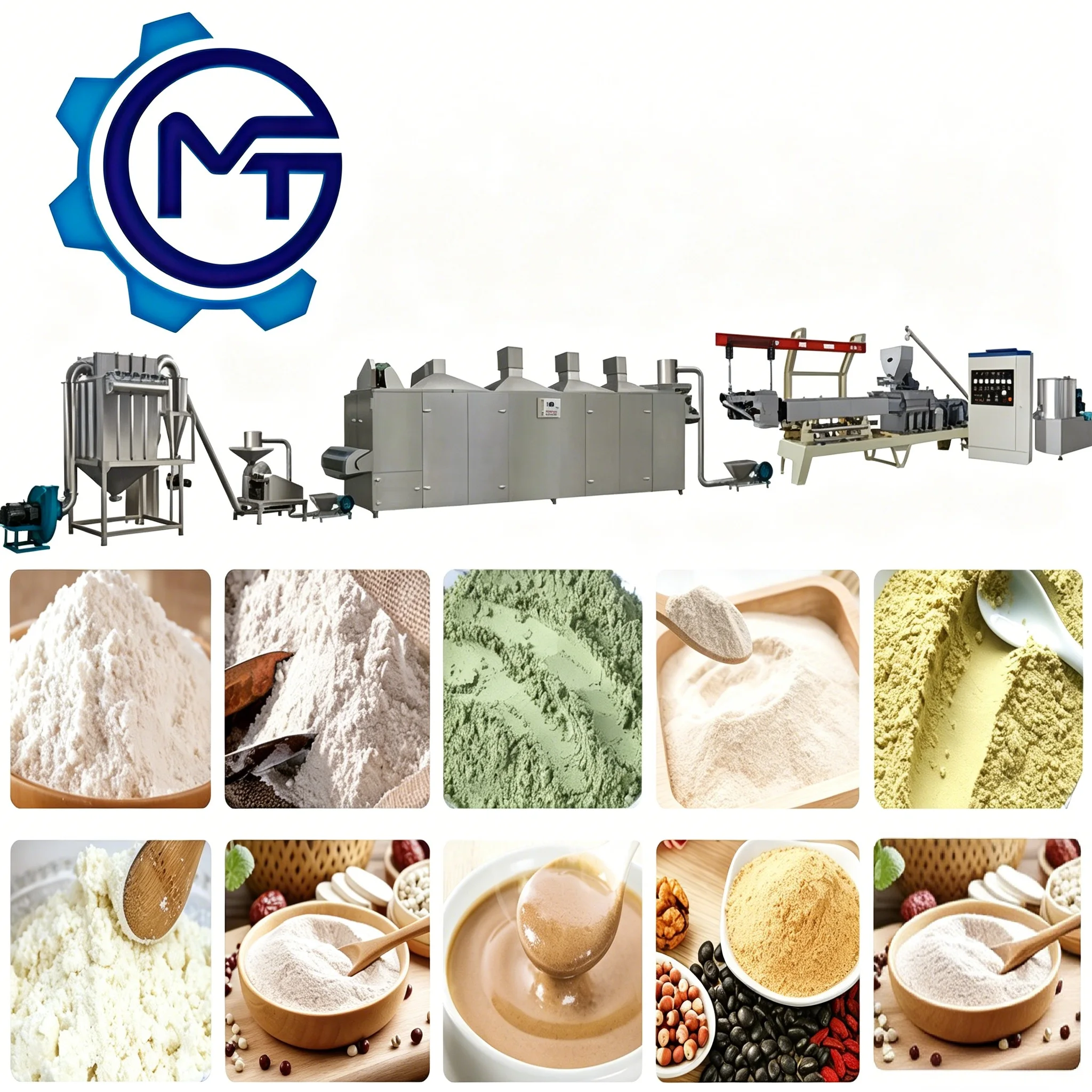


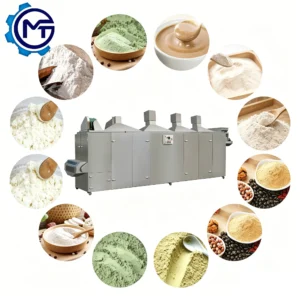
Nutrition Powder Processing Line, 200-500 kg/h Capacity, PLC Touch Control — complete turnkey setup for infant rice powder and grain-based nutrition formulations.
Designed as a full production system from batching to packing, this line addresses throughput matching across every station so mixer, baking oven, and packaging maintain synchronized output. Food-grade 304 stainless steel contact surfaces and flexible heat source options (electric, gas, steam) accommodate diverse factory utilities and multi-grain recipes including rice, corn, and bean blends.
Every installation includes on-site commissioning with operator training and trial runs verified against your specific raw material formulation before shipment.
Description
Matched Throughput Engineering — Every station on this nutritional powder processing line is calculated against the same target output, so mixers, ovens, and packing systems run in sync rather than creating idle time or pile-ups between stages.
Technical Specifications
| Parameter | Value |
|---|---|
| Product Type | Nutrition Powder Processing Line |
| Output Capacity | 200–500 kg/h (basis not stated in source — confirm raw material type, moisture content, and formulation before quoting) |
| Construction Material | Food-Grade 304 Stainless Steel |
| Control System | PLC with Touch Control Panel |
| Heat Source Options | Electric / Gas / Steam |
| Automation Level | Full Automatic |
| Line Stations | Mixers, Baking Ovens, Conveying, Packing |
| Assembly State | Complete Production Line |
| Warranty | 1 Year |
Application Suitability
| Application | Material or Output |
|---|---|
| Infant rice powder production | Milled rice blended with vitamins and minerals |
| Baby food nutrition powder | Multi-grain blends of rice, corn, and beans with added micronutrients |
| Cereal-based porridge powder | Pre-cooked grain flours for instant hot cereal |
| Fortified nutrition programme supply | Grain and legume blends meeting institutional dietary specifications |
Why "Rated Capacity" Means Nothing Without Your Recipe
A nutritional powder processing line turnkey proposal only holds up when the capacity number is tied to your actual raw material formulation, moisture content, and target bulk density.
When I was still working the assembly floor, I watched lines ship out with a nameplate capacity that looked solid on paper. Then the customer would introduce whey protein isolate or a specific mineral premix into the recipe, and the gelatinisation temperature would shift enough to change expansion behaviour entirely. Output dropped, texture went off-spec, and commissioning stretched from days into weeks. The gap between a generic grain flour trial and a fortified infant formula recipe is wider than most line proposals acknowledge [NEED_CITE: thermal behaviour of fortified grain blends during baking]. That gap is where projects stall.
Matching Thermal Profile to Ingredient Sensitivity
Infant rice powder and fortified porridge blends contain heat-sensitive vitamins, milk proteins, and mineral premixes that degrade or react unpredictably above certain temperatures. The heat source selection — electric, gas, or steam — must align with both your factory utility setup and the thermal tolerance of your specific formulation. A nutritional powder processing line turnkey configuration that ignores ingredient sensitivity will produce inconsistent colour, reduced nutritional retention, or clumping at the packing stage.
Throughput Synchronisation Across Every Station
The mixer batch cycle, oven residence time, cooling conveyor speed, and packing rate must all be calculated against the same output target. When one station runs faster than the next, product accumulates and degrades. When one runs slower, upstream equipment idles. For grain-based nutrition powders where moisture migration continues after baking, even a short bottleneck between oven and cooler can alter final texture [NEED_CITE: moisture migration in baked cereal powders post-thermal treatment].
What the Specification Numbers Actually Mean for Your Floor
Food-grade 304 stainless steel at every product contact point prevents metallic contamination and withstands the frequent wash-downs required in infant food production environments. The PLC touch panel centralises temperature setpoints, conveyor speeds, and batching timers into one interface, reducing the operator variables that cause batch-to-batch drift. Heat source flexibility — electric, gas, or steam — matters because a facility in Southeast Asia may have abundant steam from a co-generation plant, while a new factory in West Africa might rely entirely on electrical heating elements. The control language, voltage, and frequency must match your market before the panels are wired, not after.
The Hidden Cost of Skipping Formulation-Specific Trials
Shipping a line without running your exact recipe first means commissioning becomes product development. Engineers adjust oven zones, mixer speeds, and moisture addition rates on-site while installation costs accumulate. If the formulation includes heat-sensitive dairy fractions or encapsulated micronutrients, the trial window narrows further. Lines configured on generic rice flour data often require significant rework when the actual recipe introduces protein or fat content above baseline assumptions [NEED_CITE: impact of fat and protein addition on grain baking behaviour].
Why Sourcing the Full Line From One Supplier Matters
Every station — mixing, baking, cooling, packing — is engineered under a single throughput calculation, eliminating the blame-shifting that occurs when separate vendors supply mismatched equipment. Screw and process configurations are documented against your raw material behaviour, not copied from a generic catalogue. The in-house testing workshop runs your actual formulation before the line ships, catching gelatinisation or density issues early. Electrical schematics, voltage confirmation, and control language are verified against your target market during production. Post-commissioning support covers operator training, wear part scheduling, and ongoing process adjustments as your recipes evolve.
Documentation & Verification
- Line layout drawing showing throughput matching between mixer, oven, and packing stations
- Trial run report on your specific infant rice powder or multi-grain formulation before dispatch
- Electrical schematic with voltage and frequency confirmed to your market standard
- Process configuration record noting oven zone temperatures and batch cycle times
- Food-grade 304 stainless steel material certificates for product contact surfaces
Installation, Commissioning & Support
- Foundation and floor space plan sized to the full line footprint including mixer and oven clearance
- Dedicated power circuit layout matching your confirmed voltage and the PLC panel load
- Assembly sequence covering modular oven sections, conveyor alignment, and packing station integration
- First-run parameter setting for oven zones and mixer timers based on your formulation trial data
- Operator training on PLC touch interface, recipe storage, and batch changeover procedure
- Wear parts list covering mixer blades, oven seals, and conveyor belts with reorder intervals
Before You Send an Inquiry
To configure a line that matches your production reality, we need your target formulation including all grain types, protein sources, and micronutrient additions. Share your desired hourly output and the moisture content of your raw material blend. Confirm your factory voltage, frequency, and preferred control panel language. If you have existing upstream milling or downstream packing equipment, provide the model and capacity so the new line integrates without creating a throughput mismatch.
Frequently Asked Questions
Q: How do you verify line capacity against my specific infant rice powder formulation?
A: We run your exact recipe — including all grain ratios, protein additions, and micronutrient blends — in our testing workshop before finalising the line configuration. The trial measures actual throughput, moisture reduction across the oven, and final powder bulk density. Results are documented in a trial run report that accompanies your shipment.
Q: What voltage and control panel options are available for different export markets?
A: The PLC system and electrical panels are built to your confirmed voltage and frequency after you share your local utility specifications. Control panel language is set during production so operators can navigate the touch interface from day one without translation delays on-site.
Q: How do you prevent bottlenecks between the mixer, oven, and packing station?
A: Each station is sized against the same target output during layout design. We calculate mixer batch cycle time, oven residence time, and packing speed as a linked chain. The line layout document shows matched throughput values for every station so no single point constrains the whole line.
Q: Can the line switch between rice, corn, and bean-based recipes without long changeovers?
A: The PLC touch panel stores multiple recipe profiles with preset temperatures, mixer timers, and conveyor speeds. Changeover involves selecting the stored profile and adjusting raw material feed at the mixer. Cleaning between allergen-containing and allergen-free recipes follows a documented wash-down protocol using the stainless steel contact surfaces.
Related products
-

Línea de procesamiento de extrusión de arroz en polvo nutricional para bebés de alta precisión 500kg/h
¥8,238.27 Add to cart -

Línea de Producción Automática Instantánea de Polvo Máquina Extrusora de Polvo Nutricional
¥10,000.00 Select options This product has multiple variants. The options may be chosen on the product page -
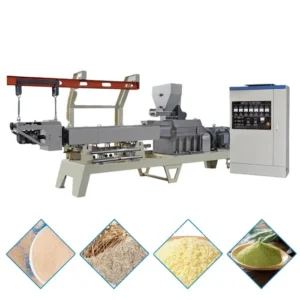
Máquina extrusora automática de alimentos para bebés controlada por PLC de 500 kg/h para el procesamiento de cereales de arroz
¥9,500.00 Add to cart -
Línea de producción de pasta de maíz instantánea industrial Equipos de procesamiento de polvo nutricional Máquina de polvo de nutrición para reemplazo de comidas
¥65.00 Select options This product has multiple variants. The options may be chosen on the product page