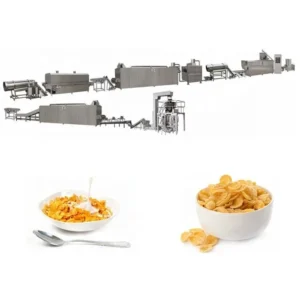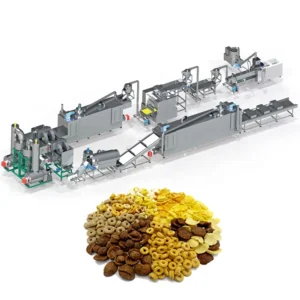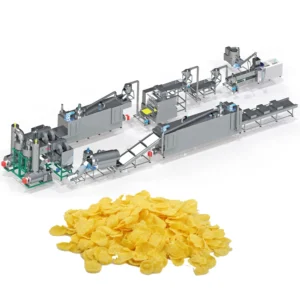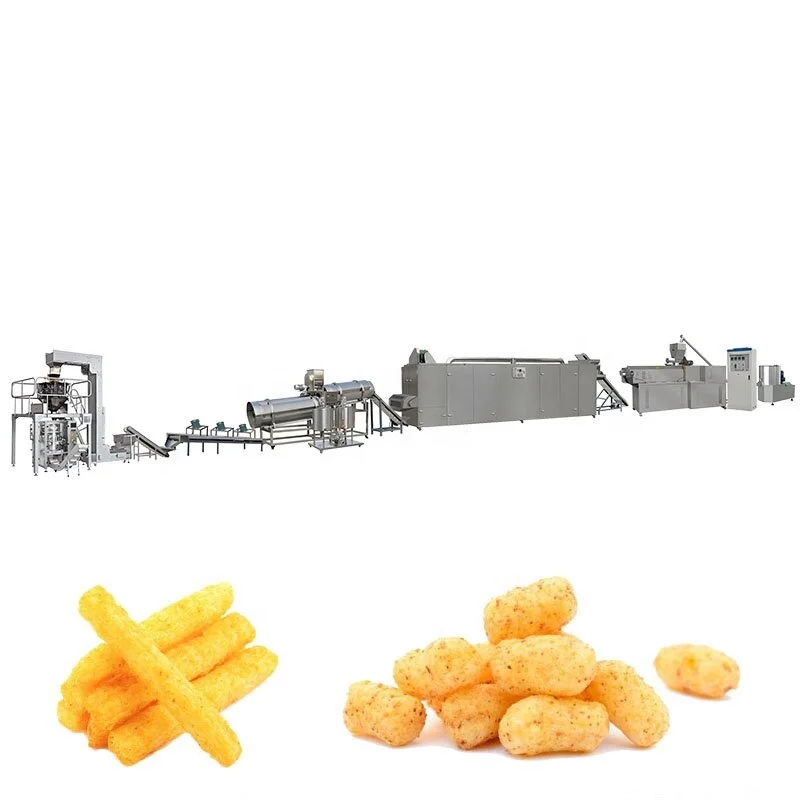
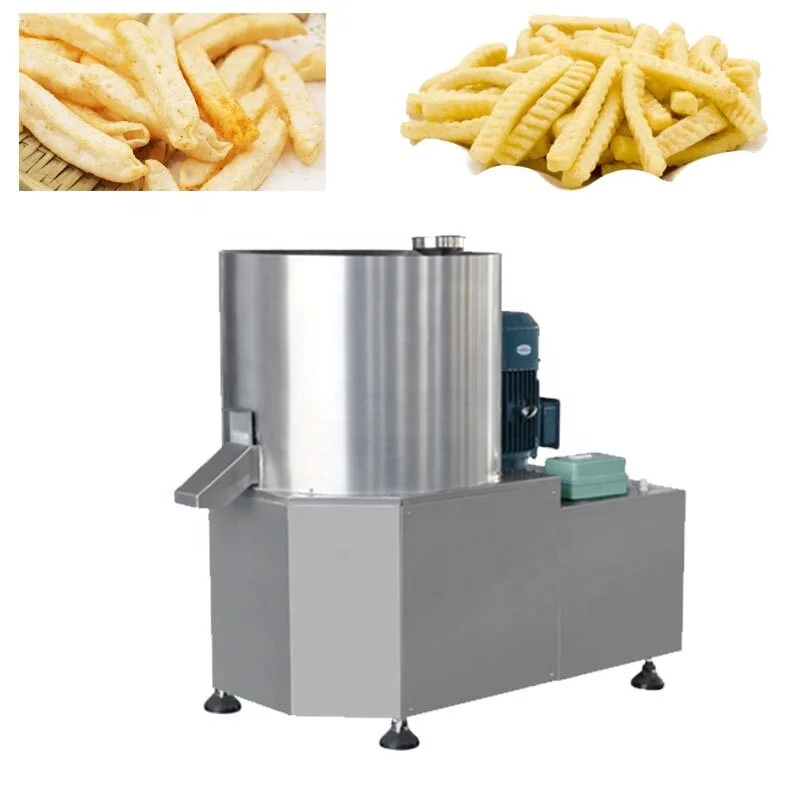
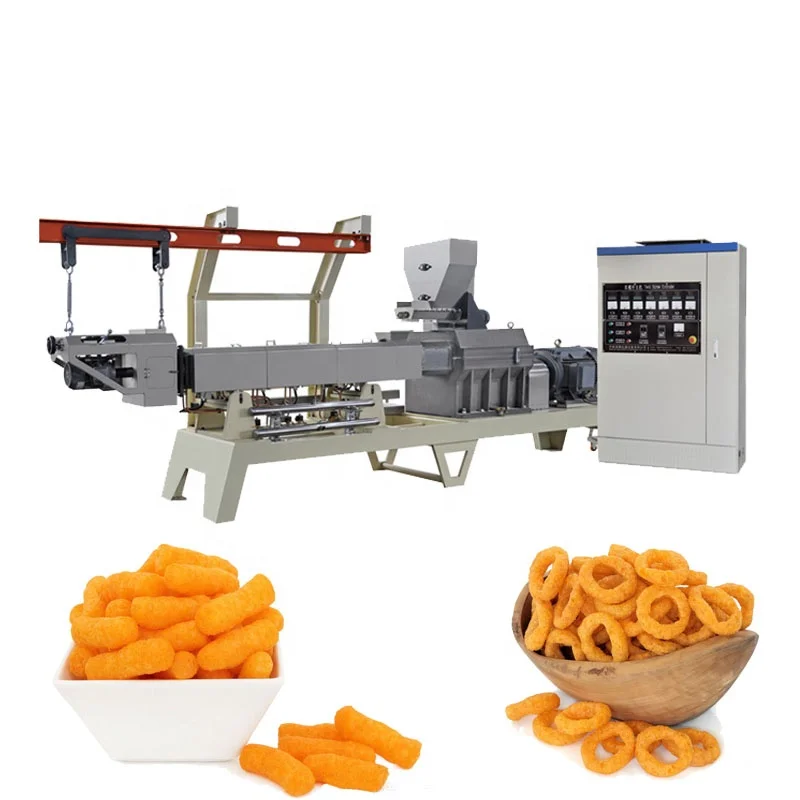


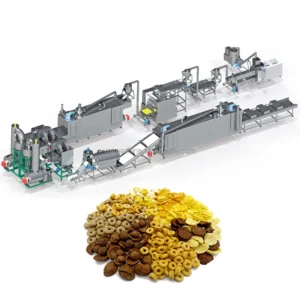
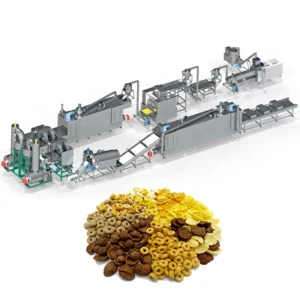
MT75 / MT70 / MT85 Corn Flakes Extruder Production Line, Twin-Screw, PLC Control — turnkey breakfast cereal line from batching through extruding, flaking, drying, roasting, coating and packing.
- Screw configuration and die design matched to your grain formulation and target flake density
- Hydraulic flaking rolls with infrared temperature control ensure uniform thickness across the sheet
Engineered as a single-project layout with throughput matched at every station, backed by in-house trial runs on your raw material before shipment.
Description
Turnkey Project Engineering — Every station from mixer to packing is throughput-matched and layout-engineered to your factory footprint before the corn flakes production line turnkey ships.
Technical Specifications
| Parameter | Value |
|---|---|
| Product Type | Corn Flakes Extruder Production Line |
| Models Available | MT70, MT75, MT85 |
| Extruder Type | Twin Screw |
| Installed Power | MT70: 160 kW; MT75: 210 kW; MT85: 190 kW |
| Power Consumption | MT70: 120 kW; MT75: 150 kW; MT85: 140 kW |
| Output Capacity | MT70: 150–200 kg/hr (basis not stated in source); MT75: 300–500 kg/hr (basis not stated in source); MT85: 300–400 kg/hr (basis not stated in source) |
| Overall Dimensions (L×W×H) | MT70: 41 × 1.5 × 2.2 m; MT75: 45 × 1.5 × 3.5 m; MT85: 43 × 1.5 × 3.2 m |
| Control System | PLC control; MCC available |
| Flaking Machine | Hydraulic double rollers, separate roller motors, infrared-sensor temperature control |
| Dryer Heating Source | Gas or Electric (configurable) |
| Hot Air Roasting Oven | Vibrating pan, conciliation burner, dual circulating fans, cyclone dust removal |
| Coating System | Double tumble sugar melting, elevator, coating drum, spraying nozzle |
| Certifications | CE (since 2014), ISO |
Application Suitability
| Application | Material or Output |
|---|---|
| Natural corn flakes breakfast cereal | Corn grits and corn flour |
| Sugar-coated corn flakes | Corn base with sugar syrup coating |
| Multi-grain flakes | Rice, wheat, oat, and barley flour blends |
| Shaped cereal snacks | Ball, tube, ring, star, wheel, fruit loop formats via die exchange |
| Fortified breakfast cereals | Grain powder blends with nutritional additives |
Why Nominal Line Capacity Rarely Survives Contact with Your Raw Material
A quoted throughput number means nothing until it is proven on your exact corn formulation at your target moisture level.
I have stood on factory floors in South Asia watching a brand-new corn flakes line choke because the extruder was rated on one starch profile while the buyer ran a completely different corn variety. The extruder pushed nominal output, but the downstream flaker could not keep pace, and the roasting oven scorched everything in the gap [NEED_CITE: raw material variability impact on extrusion throughput]. That mismatch does not show up in a brochure. It shows up on day three of commissioning when the floor manager calls you at midnight. A corn flakes production line turnkey must be validated against the grain you will actually feed it, not the grain the factory had on hand during a generic test run.
Throughput Matching Across Every Station in the Cereal Line
The extruder is only one link in a chain that includes mixing, flaking, drying, hot air roasting, sugar coating, cooling, and packing. If any station runs slower than the one before it, material backs up, moisture shifts, and flake quality collapses. Our layout engineering starts with your target output and works backward through every station, sizing the hydraulic flaker, the dryer belt length, and the roasting oven volume so the corn flakes production line turnkey runs as one continuous flow rather than a collection of independent machines fighting each other.
What Happens When the Flaker and the Roasting Oven Disagree on Timing
On one installation in East Africa, the flaking rollers pressed corn pellets to correct thickness, but the hot air roasting oven had a shorter dwell cycle than the dryer upstream. Flakes entered the oven still holding excess surface moisture, and the conciliation burner could not flash it off evenly. The result was a batch with uneven bubbling — some flakes crisp, some still chewy in the center [NEED_CITE: moisture balance between dryer and roasting stages in flaked cereal production]. We reconfigured the oven fan speed and adjusted the vibrating pan amplitude to correct it, but the lesson stayed: every station must be tuned to the one before and after it.
Reading the Specs That Actually Matter for Flake Quality
The twin-screw extruder configuration determines how completely your corn starch gelatinizes before the pellet reaches the flaker. Screw pitch, barrel temperature zones, and die geometry together control the expansion ratio and internal moisture of each pellet. The hydraulic flaking machine uses infrared sensors to hold roller temperature uniform, which translates directly to consistent flake thickness — a critical variable because uneven flakes toast at different rates in the roasting oven. The roasting oven itself relies on two separate circulating fans and a cyclone dust removal device to manage airflow; without that balance, fine corn dust accumulates and creates scorch points on the vibrating pan surface. PLC control ties these stations together so operators adjust one parameter and the system recalculates downstream setpoints instead of requiring manual intervention at every station.
The Hidden Cost of Buying Stations from Separate Vendors
When the extruder comes from one supplier and the dryer from another, nobody owns the gap between them. I have debugged lines where the dryer ran at a belt speed that starved the roasting oven, and both vendors pointed at the other [NEED_CITE: single-supplier accountability in turnkey food processing lines]. The buyer pays twice — once for the equipment, once for the weeks of downtime while two service teams argue over whose specification was wrong. A single-supplier corn flakes production line turnkey eliminates that blame gap because one engineering team sizes every station and one commissioning crew tunes the entire chain.
Why Procurement Teams Specify This Line as a Single Project
Layout engineering begins with your factory drawing, not a generic template, so utility drops, drainage, and maintenance corridors are placed before any equipment is built. Screw configuration and die design are matched to the specific corn variety and target flake density you provide during pre-sales consultation. An in-house testing workshop runs your actual raw material through the extruder and flaker before shipment, producing a trial report that confirms output and flake geometry. The PLC and MCC control architecture is specified to your local voltage and frequency before production begins, preventing the commissioning delays that happen when a control panel arrives wired for the wrong power grid. CE and ISO certifications are documented and shipped with the line, not promised after the fact.
Documentation & Verification
- Line layout and capacity calculation engineered to your factory footprint and target corn variety
- Trial run report on your raw material confirming flake thickness and output before shipment
- Screw and die configuration record matched to your formulation and target expansion ratio
- Electrical schematic with voltage, frequency, and PLC language confirmed before production
- Operation and maintenance manual with wear parts list specific to your line configuration
Installation, Commissioning & Support
- Foundation plan accounts for the full line length up to 45 m and vibrating pan load distribution
- Dedicated power circuit sized for MT75 installed power of 210 kW with confirmed voltage and frequency
- Equipment arrives in modular sections for staged assembly matching your construction schedule
- Commissioning includes PLC parameter tuning across extruder, flaker, dryer, and roasting oven as one system
- Operator training covers screw replacement intervals, hydraulic roller adjustment, and burner calibration
- Wear parts inventory includes screws, dies, and spraying nozzles sized to your first-year consumption
What We Need to Engineer Your Line
To begin layout and throughput calculations, share your target corn or grain formulation, daily output requirement, and available factory floor dimensions including ceiling height. Confirm your local voltage standard, frequency, and preferred control language. Let us know whether you plan to run natural flakes, sugar-coated variants, or shaped cereal formats so we can specify the correct die set and coating stations from the start.
Frequently Asked Questions
Q: How is line capacity verified against my actual raw material and formulation?
A: Before shipment, we run your specific corn or grain blend through the extruder and flaker in our in-house testing workshop. The trial confirms pellet expansion, flake thickness, and achievable throughput on your formulation. You receive a trial run report documenting results, and any screw or die adjustments are completed before the line leaves the factory.
Q: How do you match throughput between extruder, flaker, dryer, and roasting oven so no station bottlenecks?
A: Layout engineering starts from your target output and sizes each station backward through the chain. The flaker roller speed, dryer belt length, and roasting oven volume are all calculated against the extruder discharge rate. During commissioning, PLC parameters are tuned across every station simultaneously so material flow stays balanced at full production speed.
Q: What does the phased installation and commissioning schedule look like for a complete cereal line?
A: Equipment arrives in modular sections aligned with your construction milestones. Mechanical assembly proceeds station by station from mixing through packing. Electrical connection and PLC programming follow once all stations are positioned. Wet commissioning with your raw material comes last, with operators trained on each station before full-speed production begins.
Q: How is voltage, frequency, and control language confirmed before production?
A: During pre-sales consultation, we collect your facility electrical specification and confirm voltage, phase, and frequency in writing. The PLC interface language is agreed at the same stage. These values are locked into the electrical schematic before manufacturing starts, so the control panel arrives ready for your grid without rewiring or reprogramming on site.
Q: What operator training and spare wear-parts support is included after commissioning?
A: Training covers daily operation, screw and die replacement procedures, hydraulic flaker adjustment, and roasting oven burner calibration. A wear parts list specific to your line configuration ships with the equipment, including recommended first-year quantities of screws, dies, and spraying nozzles. Ongoing technical support continues after the commissioning team departs.
Related products
-
Línea de producción automática de copos de maíz en círculo de trigo para desayuno comercial
¥65,000.00 Add to cart -
Línea de producción de copos de maíz automática de 1000 lbs Mezclador de cereales para el desayuno Línea de producción de copos de maíz
¥45,000.00 Select options This product has multiple variants. The options may be chosen on the product page -
Máquina de producción de copos de cereal de desayuno de maíz en copos pequeños de acero inoxidable
¥30,000.00 Add to cart -
Máquina de fabricación de cereales para el desayuno a pequeña escala para la línea de proceso de copos de maíz
¥45,000.00 Select options This product has multiple variants. The options may be chosen on the product page