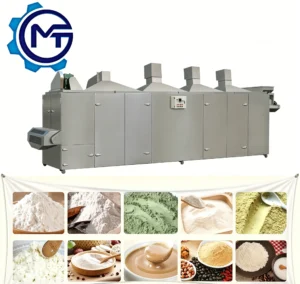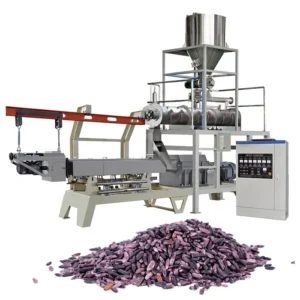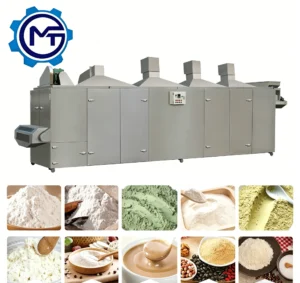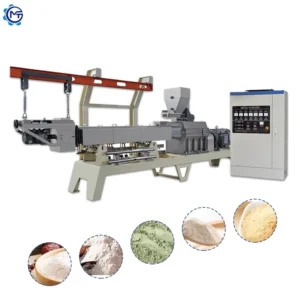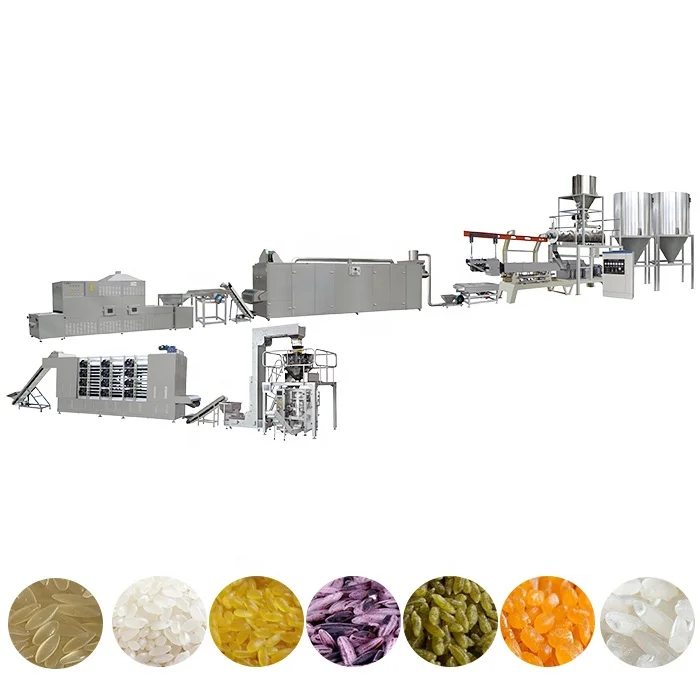
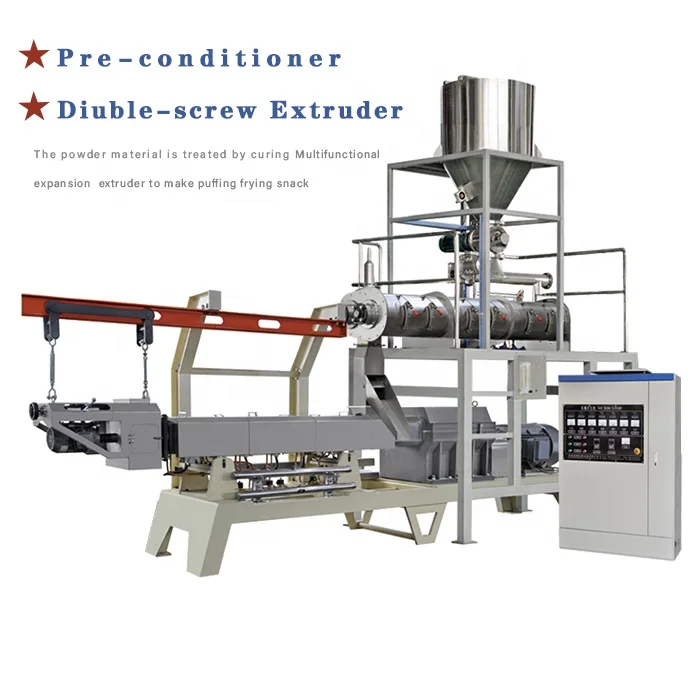
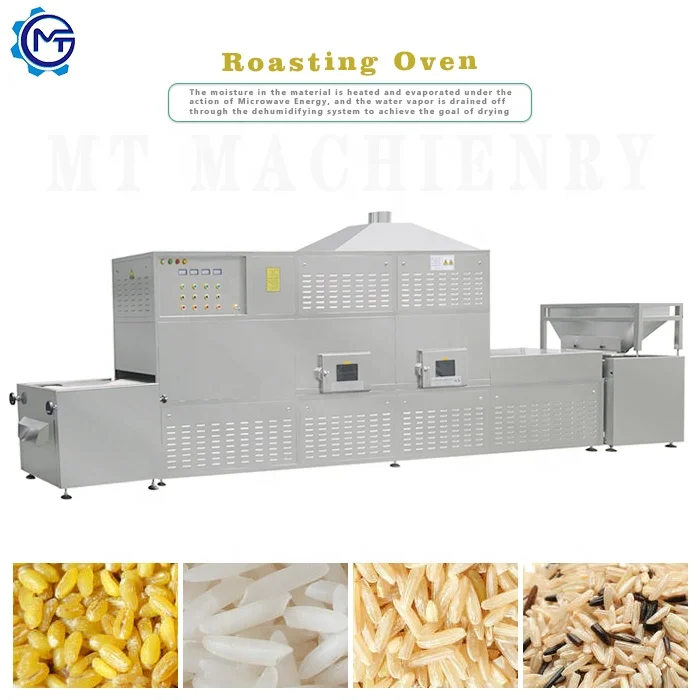
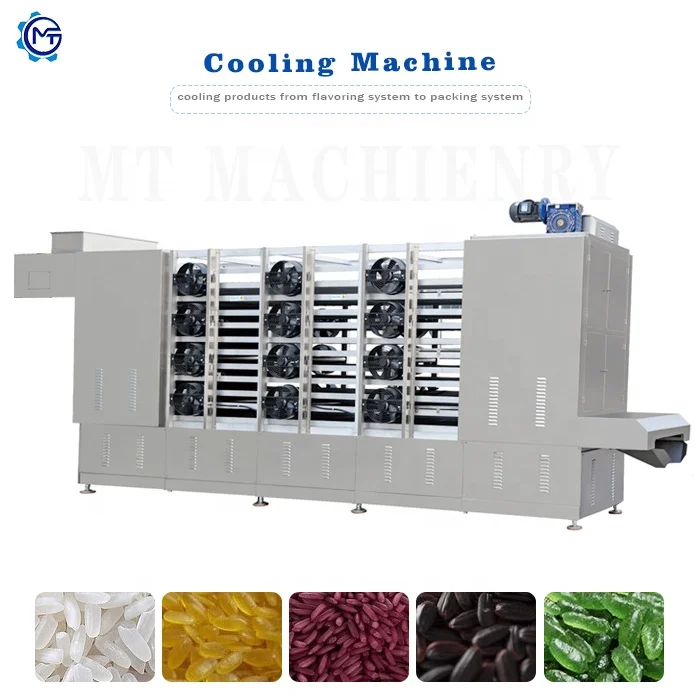
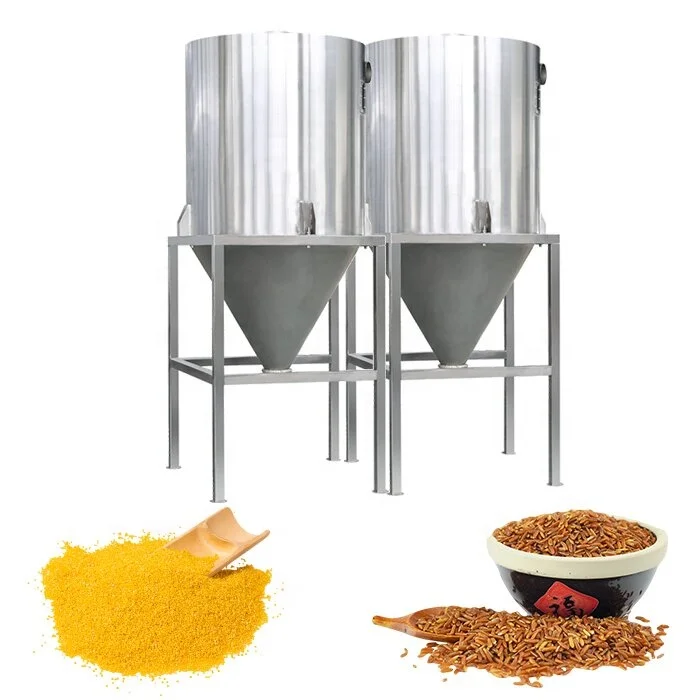
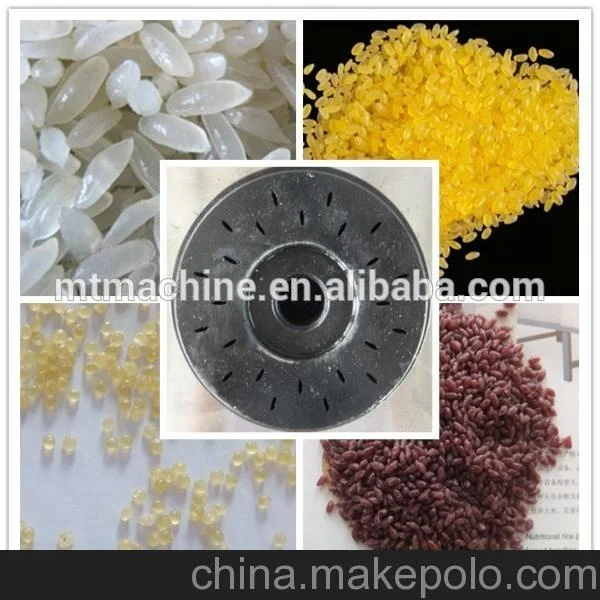
MT65 / MT70 / MT85 / MT75 / MT95 Fortified Rice Processing Line, Twin-Screw Extrusion, Frequency Speed Control — engineered as a complete turnkey layout from mixing through extruding, drying, roasting, cooling to packing, with every station throughput-matched to your grain formulation and target kernel density.
- Line capacity verified via in-house trial runs on your exact raw material before shipment
- Screw configuration and die design specified to your formulation, supported by full electrical schematic and voltage confirmation
- On-site installation, commissioning and operator training included with ongoing wear parts supply
Description
Integrated extrusion line engineering — every station from mixing to packing is throughput-matched under one supplier to prevent bottlenecks when producing fortified rice kernels on your actual formulation.
Technical Specifications
| Parameter | Value |
|---|---|
| Model | MT65 / MT70 / MT85 / MT75 / MT95 |
| Product Type | Fortified Rice Processing Line |
| Screw Type | Twin-screw with single or double screw feeding system |
| Installed Power | 85 kW (MT65) / 120 kW (MT70) / 235 kW (MT85) / 180 kW (MT75) / 260 kW (MT95) |
| Power Consumption | 60 kW (MT65) / 85 kW (MT70) / 165 kW (MT85) / 135 kW (MT75) / 195 kW (MT95) |
| Output Capacity | 80–100 kg/h (MT65) / 100–120 kg/h (MT70) / 200–300 kg/h (MT85) / 300–500 kg/h (MT75) / 800–1000 kg/h (MT95) — basis to be confirmed on actual raw material formulation and moisture content |
| Overall Dimensions | 28 × 1.2 × 2.2 m (MT65) / 30 × 1.5 × 2.2 m (MT70) / 34 × 3.5 × 4.3 m (MT85) / 32 × 3.5 × 4.3 m (MT75) / 36 × 3.5 × 4.3 m (MT95) |
| Line Sequence | Mixing → Extruding → Vibrating → Low Temperature Drying → Cooling → High Temperature Roasting → Cooling → Packing |
| Control System | Frequency speed control |
| Drying Oven Heating | Electric or gas |
| Screw Material | Special wear-resistant alloy |
| Lubrication | Automatic lubricating and cooling system |
| Voltage & Frequency | Customized to customer’s local supply |
| Certifications | CE, ISO |
Application Suitability
| Application | Material or Output |
|---|---|
| Fortified rice kernels for nutrition programmes | Broken rice with vitamin and mineral pre-mix enrichment |
| Artificial rice production | Rice flour, corn, millet, wheat, oats, buckwheat starch blends |
| Grain value-addition processing | Broken rice reconstituted into shaped nutritional kernels |
| Fortified staple food manufacturing | Bean and cereal formulations with micro-nutrient integration |
Why "Nominal Capacity" Fails on Your Actual Fortified Rice Formulation
Real output only exists after the line runs your specific raw material blend.
A buyer once specified a line rated for a standard rice flour base, but the actual formulation included whey protein and mineral pre-mixes. The screw speed and barrel temperature profile needed full recalibration on-site, and kernel density drifted outside specification for two weeks before the process stabilised [NEED_CITE: raw material formulation impact on extrusion parameters]. When a fortified rice processing line turnkey project is quoted purely on a reference material, the gap between quoted capacity and achievable throughput becomes your problem, not the supplier’s.
Line Station Matching Eliminates the Dryer Bottleneck
In extrusion-based fortified rice production, the extruder does not work in isolation. If the low-temperature drying stage cannot handle the extruder’s moisture removal load, semi-dried kernels back up on the vibrating screen and deform under their own weight. Each station in this fortified rice processing line turnkey configuration is calculated against the others so that the drying oven mesh belt speed, the cooling conveyor length, and the packing station rate all align with extruder output.
Screw Configuration Dictates Kernel Density and Nutrition Uniformity
The twin-screw extruder in this line is configured specifically around the buyer’s grain base and micro-nutrient load. Barrel temperature zones and screw element sequencing determine how thoroughly starch gelatinises and how evenly vitamins distribute through the kernel matrix [NEED_CITE: starch gelatinisation requirements in fortified extrusion]. A generic screw build copied from standard puffed snack tooling will produce kernels with uneven nutrient bands and inconsistent cooking behaviour when the end user prepares them.
Power and Drying Source Shape Operating Economics
The installed power range spans from 85 kW on the MT65 to 260 kW on the MT95, with actual consumption figures proportionally lower. The drying oven supports electric or gas heating, and the choice between them often depends on local energy costs and site utility availability. Frequency speed control across the extruder and oven belt allows operators to adjust throughput and drying curve without hardware changes, giving the line flexibility across different fortified rice formulations and target moisture levels.
What Happens When the Voltage Question Gets Skipped
Arriving on-site to find the local supply does not match the extruder’s motor rating is a recurring issue in international turnkey projects. Frequency mismatches cause the screw to run at the wrong RPM, altering shear and residence time inside the barrel [NEED_CITE: voltage and frequency standards by export market]. Confirming voltage, frequency, and control panel language before production begins prevents weeks of commissioning delays.
Why Procurement Through a Single Line Integrator Matters
Having the mixing, extruding, drying, roasting, and packing stages supplied by separate vendors means nobody owns the throughput gap between stations. This line is engineered as one system with matched capacities across every transfer point. The screw and die configuration is specified against your actual grain blend and target kernel shape rather than a generic catalogue build. In-house trial runs on your raw material validate capacity and product quality before the equipment leaves the factory. The automatic lubricating and cooling system on the extruder reduces unplanned downtime during sustained production runs. Electrical schematics are delivered with your site voltage already confirmed and documented.
Documentation & Verification
- Line layout and capacity calculation confirming throughput balance from mixer to packer
- Trial run report on your grain formulation and micro-nutrient blend before dispatch
- Screw and die configuration record matched to your target kernel density
- Electrical schematic with site voltage and frequency confirmation documented
- Factory test record showing actual output on your raw material
- Operation and maintenance manual with wear parts replacement schedule
Installation, Commissioning & Support
- Floor area planning based on the selected model’s footprint up to 36 × 3.5 × 4.3 m
- Dedicated power circuit sized for the confirmed installed power and local voltage
- Phased assembly starting with extruder and dryer alignment before downstream stations
- First-run commissioning with screw speed and barrel temperature optimisation on your blend
- Operator training covering frequency speed adjustment and drying curve management
- Wear parts list with screw and die replacement intervals and stocking guidance
Before You Send the Inquiry
To build an accurate line proposal, share your primary grain base and the exact vitamin-mineral pre-mix ratio you intend to run. Provide your target hourly output, available workshop dimensions, and local voltage and frequency specifications. If you have existing upstream milling or downstream packing equipment, note the interface requirements so the line layout accounts for those connection points.
Frequently Asked Questions
Q: How is line capacity verified on my specific fortified rice formulation before shipment?
A: Your exact grain blend and micro-nutrient pre-mix are run through the extruder and downstream stations in the in-house testing workshop. The trial produces actual output data, kernel density readings, and drying curve results, all documented in a report that accompanies the shipment.
Q: How is throughput balanced between the extruder, dryer, and packing station?
A: Each station is sized during the engineering phase so that the extruder output rate, the drying oven belt speed and length, and the packing station feed rate are all calculated against one another. This prevents material accumulation at any transfer point.
Q: What voltage, frequency, and control language options are confirmed before production?
A: Your site electrical specifications are confirmed during the quotation stage and documented in the electrical schematic. The control panel language and frequency speed settings are configured to match your local power supply and operator requirements before the line ships.
Q: What does the phased installation and commissioning schedule look like?
A: Installation begins with extruder positioning and dryer alignment, followed by connecting the vibrating screen, cooling conveyors, and roasting stage. Commissioning runs through dry testing, then wet runs with your raw material until kernel quality and throughput meet the agreed specification.
Q: How are spare wear parts such as screws and dies supplied?
A: A wear parts list is included with the documentation package, identifying screws, dies, and other consumables with their expected service intervals. Replacement parts are available directly, and the first replacement timing is noted based on the trial run results on your formulation.
Related products
-
Nueva máquina automática para la producción de polvo nutricional para la línea de producción de alimentos para bebés.
¥20.00 Select options This product has multiple variants. The options may be chosen on the product page -

Línea de procesamiento de polvo de arroz para bebés de acero inoxidable higiénico, capacidad automática de 500 kg/h, controlada por PLC.
¥9,500.00 Add to cart -
Línea de producción de extrusión de polvo de nutrición de arroz orgánico para bebés de la marca MT, aprobada por CE, con capacidad de 500 kg/h y grado automático.
¥9,500.00 Add to cart -

Línea de Extrusión y Secado de Polvo de Nutrición para Bebés de 500kg/h Totalmente Automática con Control PLC
¥9,500.00 Add to cart