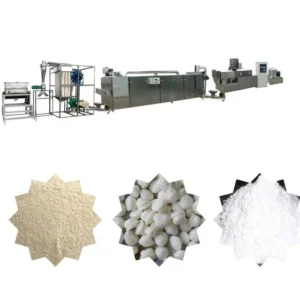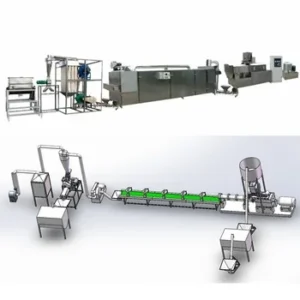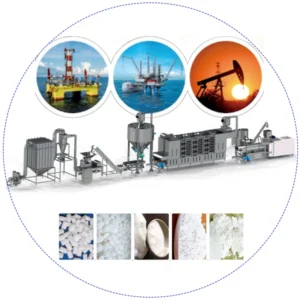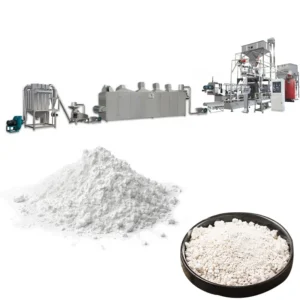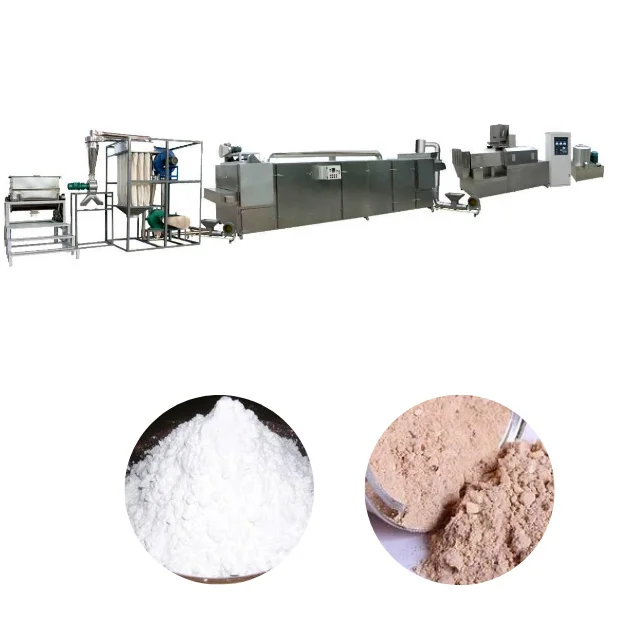


MT85 / MT100 / MT110 / MT135 Modified Starch Production Line, Twin-Screw Extrusion, PLC Control — complete turnkey layout from batching through extrusion, drying, grinding to packing. Screw and die configuration matched to your corn, tapioca or potato starch feedstock and target gelatinisation degree, ensuring consistent thermal viscosity and expansion across every production run.
- Throughput-matched stations eliminate bottlenecks between extruder, dryer and grinder
- Selectable drying heat source (electric / steam / gas) aligned to local utility
- Stainless steel 304 food-contact materials on grinding and handling sections
Delivered as a validated turnkey project with in-house trial runs on your raw material before shipment, full line layout documentation, and on-site commissioning support.
Description
Turnkey line integration — Every station from material blending to final packing is throughput-matched so the modified starch processing line holds rated output on your actual feedstock rather than a generic lab benchmark.
Technical Specifications
| Parameter | Value |
|---|---|
| Product Type | Modified Starch Production Line |
| Model Options | MT85 / MT100 / MT110 / MT135 |
| Screw Configuration | Twin screw with interchangeable barrel and screw designs |
| Installed Power | 90 kW (MT85) / 180 kW (MT100) / 200 kW (MT110) / 240 kW (MT135) |
| Real Consumption | 63 kW (MT85) / 120 kW (MT100) / 150 kW (MT110) / 165 kW (MT135) |
| Output Capacity | 100–200 kg/h (MT85, basis to be confirmed) / 500–600 kg/h (MT100, basis to be confirmed) / 500–600 kg/h (MT110, basis to be confirmed) / 1000–1500 kg/h (MT135, basis to be confirmed) |
| Raw Materials | Corn starch, tapioca starch, potato starch |
| Processing Flow | Materials preparation → Blending → Mixing → Extruding → Drying → Grinding → Packing |
| Drying Heat Source | Electric / steam / gas (configurable to local utility) |
| Grinding Contact Material | Stainless steel 304 (food-contact parts) |
| Grinding Fineness | Less than 10 mm |
| Control System | Frequency speed control with automated operation |
| Lubrication & Cooling | Automatic lubricating and cooling system |
| Mixer Design | Special mixing shaft and blade for uniformity and cook degree |
| Assembly State | Complete turnkey line from batching to packing |
| Warranty | 1 year free warranty |
| Delivery Time | Approx. 30 working days (small capacity) / 50 working days (large capacity) |
| Standards | CE, ISO |
Application Suitability
| Application | Material or Output |
|---|---|
| Pre-gelatinized starch for textile sizing | Corn starch or tapioca starch with controlled thermal viscosity |
| Modified starch for paper coating and corrugation | Potato starch or corn starch targeting film-forming properties |
| Industrial starch for oil drilling fluids | Tapioca starch processed for thermal stability under downhole conditions |
| Modified starch for construction adhesives and gypsum | Corn starch with adjusted gel strength and water retention |
| Food-grade modified starch for frozen meals and sauces | Corn or tapioca starch targeting freeze-thaw stability and transparency |
Why "Rated Capacity" Means Nothing Without Your Raw Material on the Table
A modified starch processing line turnkey must be validated on your specific starch feedstock before the purchase order is signed, not after installation.
I spent years on the procurement side of a food processing plant before moving into equipment supply, and the most expensive lesson I learned was trusting a brochure number. A modified starch line we once sourced ran perfectly during the factory test with corn starch. When the buyer switched to tapioca starch at their own facility, gelatinisation degree dropped sharply, and the twin-screw extruder lost roughly half its output. The dryer then ran underloaded, energy costs climbed, and the entire project stalled for weeks while screw configurations were reworked on-site. That kind of delay is why every modified starch processing line turnkey we now ship goes through an in-house trial run using the buyer’s own raw material before it leaves the workshop [NEED_CITE: starch gelatinisation behaviour across corn, tapioca and potato feedstocks].
How Screw and Die Design Shape Your Modified Starch Properties
The twin-screw extruder sits at the centre of any modified starch processing line turnkey, and its screw configuration determines the shear profile, residence time, and thermal history the starch experiences. Different target properties — thermal viscosity, gel strength, freeze-thaw stability, film-forming behaviour — require different screw element arrangements and die geometries. A configuration optimised for high gelatinisation degree on corn starch may underperform on tapioca starch, where granule size and gelatinisation temperature differ. Barrel and screw designs on the MT85 through MT135 are interchangeable, allowing the extrusion zone to be reconfigured as product targets evolve.
Matching Dryer and Grinder Throughput to the Extruder
A frequent source of downtime in starch processing is a dryer that cannot keep pace with the extruder output, creating a bottleneck that forces the entire line to slow down. The processing flow on this line runs from material blending through mixing, extrusion, drying, grinding and packing as one continuous system. Each station is sized so that the dryer handles the full extruder discharge, and the grinder processes dried output without accumulation. The drying heat source is configurable between electric, steam and gas, which matters because energy cost structures vary significantly between regions [NEED_CITE: industrial drying energy cost comparison by heat source]. Grinding fineness reaches less than 10 mm, with food-contact surfaces in stainless steel 304 to meet hygiene requirements for food-grade starch applications.
Reading the Power and Capacity Figures Correctly
Installed power and real consumption tell different stories. The MT135, for instance, carries 240 kW installed but draws approximately 165 kW in steady operation — the gap accounts for motor starting loads and peak torque during screw startup under full material load. Capacity figures across the MT85 to MT135 range depend heavily on raw material type, moisture content entering the extruder, and the target gelatinisation degree. A line processing potato starch at a lower gelatinisation target will behave differently from one running corn starch at maximum cook degree. The mixer’s shaft and blade design is specified to deliver uniform moisture distribution and consistent cook degree before material enters the extrusion zone, which directly affects output stability.
What Happens When Station Throughput Is Not Balanced
Buyers who assemble a starch line from separate vendors often discover that the extruder, dryer and grinder were each quoted at their own nominal capacity, which rarely aligns. The extruder may deliver more wet material than the dryer can handle within the required residence time, causing incomplete drying and downstream grinding problems. Or the grinder may be undersized for the dried output, forcing the line to run in batches rather than continuously. These mismatches rarely show up in the quotation stage and only become visible during commissioning [NEED_CITE: throughput balancing in multi-station food processing lines]. On a modified starch processing line turnkey sourced from one supplier, throughput matching is calculated at the layout stage, with every station verified against the same production target.
Why Sourcing the Entire Line from One Supplier Matters
Throughput matching across batching, extrusion, drying, grinding and packing is calculated before production begins, not adjusted after installation. Screw configuration and die design are specified against your raw material sample and target modified starch properties, with records provided in the documentation package. The in-house testing workshop runs trial production on your actual starch feedstock before shipment, so gelatinisation degree and output are verified in advance. Voltage, frequency and control language are confirmed before the electrical cabinet is wired, preventing commissioning delays caused by mismatched power supply. On-site installation includes operator training covering extruder parameter adjustment, dryer temperature profiling and grinder screen changes specific to your product range.
Documentation & Verification
- Line layout drawing showing throughput calculation for each station against your starch feedstock
- Screw and die configuration record matched to your raw material and target gelatinisation degree
- Trial run report from in-house testing on your actual starch before shipment
- Electrical schematic with voltage, frequency and control language confirmed pre-production
- CE declaration of conformity and ISO certificate for the complete line
- Operation and maintenance manual covering extruder, dryer and grinder parameters
Installation, Commissioning & Support
- Foundation plan provided based on the MT85–MT135 footprint and utility connection points
- Power supply specification covering installed kW rating and dedicated circuit requirements per model
- Dryer heat source configured to your local electric, steam or gas availability before dispatch
- Frequency speed control system calibrated on-site to match your starch type and target output
- Wear parts list covering screws, dies and grinder screens with recommended stock quantities
- Operator training on mixer loading sequence, extruder temperature zones and dryer airflow adjustment
What to Prepare Before Requesting a Quotation
To configure a modified starch processing line turnkey that holds its rated output in your facility, the useful starting points are your starch type (corn, tapioca or potato), the target modified starch properties your customers require, and your planned daily production volume. Share your local voltage and frequency standards, preferred drying heat source, and whether your workshop has height or footprint constraints. If you have existing upstream or downstream equipment that the new line must connect to, providing those interface details early avoids rework during installation.
Frequently Asked Questions
Q: How is line capacity verified on my specific starch feedstock before shipment?
A: We run a trial production in our in-house testing workshop using your raw material sample. The extruder screw configuration, dryer temperature profile and grinder settings are adjusted until the target gelatinisation degree and output rate are achieved. A trial run report documenting these results is included with the shipment documentation.
Q: How do you configure screw and die for different modified starch targets?
A: Different target properties such as thermal viscosity, gel strength or freeze-thaw stability require specific screw element arrangements and die geometries. We select the barrel and screw configuration based on your starch type and product specification, then validate it during the in-house trial run. The configuration record is provided so settings can be replicated or adjusted later.
Q: What voltage, frequency and control language options are available?
A: The control system and electrical cabinet are configured to your local power supply standards before production. Voltage, frequency and operator interface language must be confirmed prior to the wiring stage to avoid commissioning delays. This confirmation is part of the standard sales process and is documented in the electrical schematic.
Q: How is throughput balanced between extruder, dryer and grinder?
A: Each station is sized during the layout stage based on the extruder output for your specific starch feedstock and target product. The dryer capacity matches the full wet discharge rate, and the grinder handles the dried output continuously. This matching is documented in the line layout and capacity calculation provided with the quotation.
Q: What does on-site installation and operator training cover?
A: Installation covers mechanical assembly, utility connections and control system commissioning specific to your model. Operator training includes extruder parameter adjustment for your starch type, dryer temperature profiling, grinder screen changes and routine maintenance procedures. Wear parts lists and replacement intervals are reviewed during the training sessions.
Related products
-
Almidón modificado de gran capacidad para uso industrial y aditivos alimentarios
¥50.00 Select options This product has multiple variants. The options may be chosen on the product page -
Línea de producción de polvo de almidón modificado de maíz y yuca Equipos de procesamiento automáticos de 400 kg/h con motor eléctrico Nueva condición
¥65.00 Select options This product has multiple variants. The options may be chosen on the product page -
Línea de Producción de Almidón Modificado Línea de Procesamiento de Almidón Modificado Extrusora de Almidón Modificado
¥8,580.00 Select options This product has multiple variants. The options may be chosen on the product page -
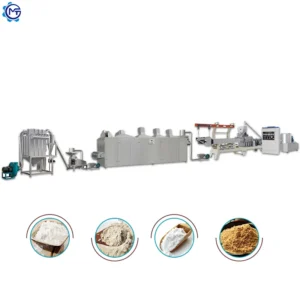
Automatic Deep Processing Machine – Food Grade Modified & Pregelatinized Starch Manufacturing Line
¥65.00 Select options This product has multiple variants. The options may be chosen on the product page