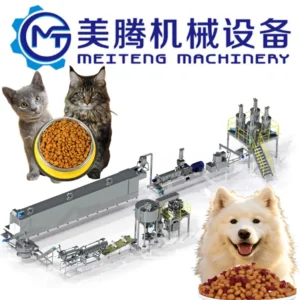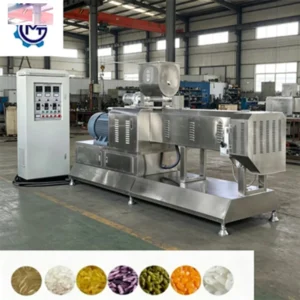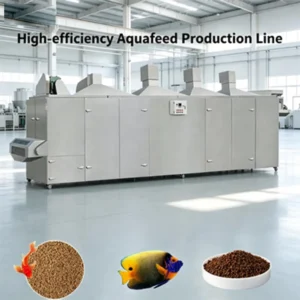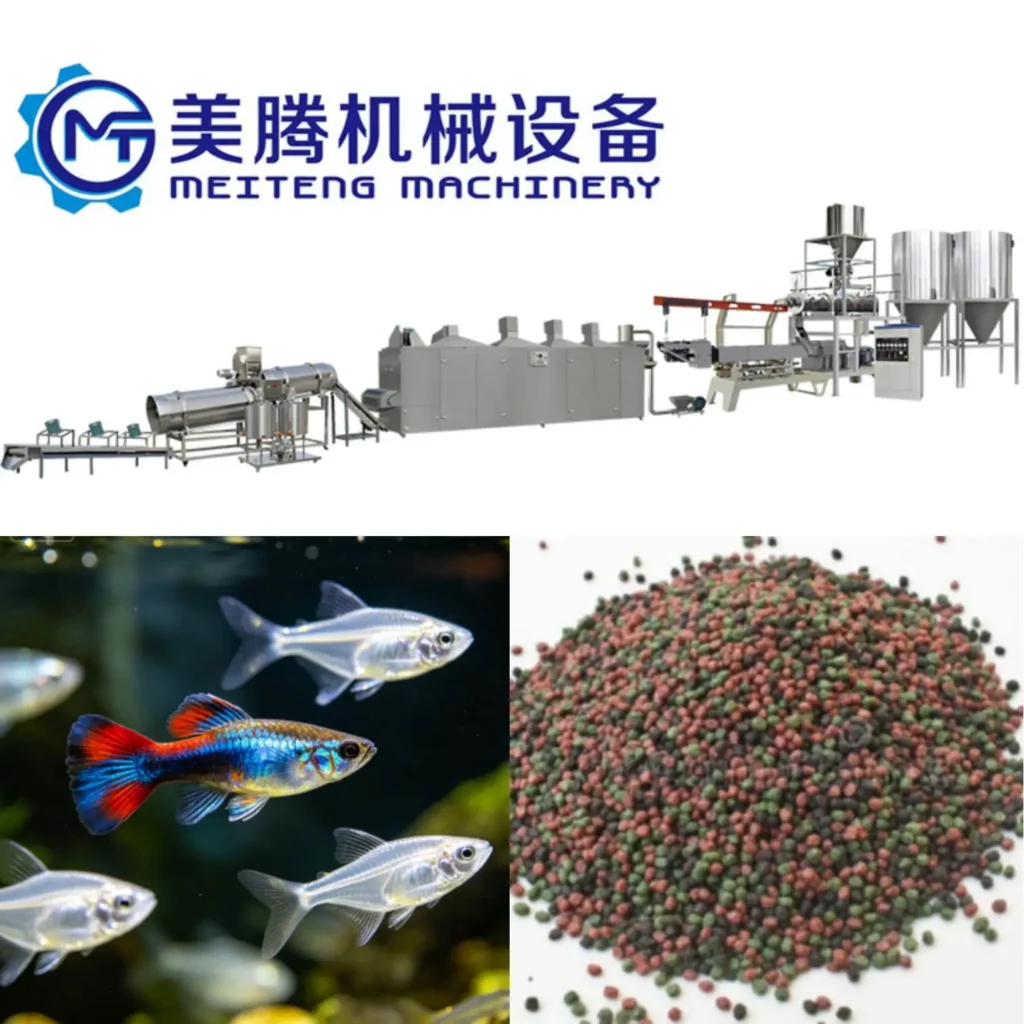


Fish Feed Extrusion Production Line, Twin-Screw, 304 Stainless Steel, PLC/MCC Control — configured for floating and sinking pellet targets across trout, salmon, catfish, tilapia and shrimp applications. Screw and die geometry is matched to your raw material formulation and moisture profile, ensuring pellet density and float rate meet market specification. Every station from batching through drying, flavouring, cooling to packing is throughput-matched under one supplier, eliminating bottlenecks and density drift across the line. Trial runs on your own raw material are completed in-house before shipment, with a full report documenting output rate, pellet behaviour and configuration records.
Description
Throughput-Matched Layout — Every station from batching through extrusion to packing is calculated against your specific raw material formulation, so the line holds its rated output without one unit choking the next.
Technical Specifications
| Parameter | Value |
|---|---|
| Product Type | Fish Feed Extrusion Production Line |
| Output Capacity | Up to 300 kg/h (basis not stated in source — confirm raw material formulation, moisture content and pellet size) |
| Extruder Type | Twin-screw extruder |
| Construction Material | 304 stainless steel for food-grade contact parts |
| Control System | PLC and MCC control (verify against quotation) |
| Line Stations | Batching, mixing, extrusion, drying, flavouring/coating, cooling, packing |
| Screw and Die Configuration | Matched to raw material and target pellet density (floating or sinking) |
| Voltage & Frequency | To be confirmed for target market |
| Certification | CE, ISO (manufacturer-level; confirm unit-level declaration) |
Application Suitability
| Application | Material or Output |
|---|---|
| Floating pellet production for tilapia and catfish | Corn, soybean meal, fish meal, wheat flour blends at controlled moisture |
| Sinking pellet production for trout and salmon | High-protein formulations with elevated fish meal and oil content |
| Shrimp feed extrusion | Fine-ground compound feeds requiring dense, water-stable pellets |
| Multi-species aquaculture operations | Switching between floating and sinking targets by reconfiguring screw and die |
Why "300 kg/h" Means Nothing Without the Raw Material
Capacity claims are only valid against a defined formulation, moisture level, and pellet diameter.
I have watched buyers sign contracts based on a headline number, only to find that their actual recipe — perhaps higher in fat or fibre than the seller’s test blend — cannot physically push through the barrel at that rate. A fish feed production line turnkey package must specify what raw material the capacity was measured on, or the figure is marketing rather than engineering. When the formulation deviates, throughput drops, pellet density drifts, and float rates fall outside what the market demands [NEED_CITE: aquaculture feed pellet density standards by species].
Screw Configuration Determines Whether Pellets Float or Sink
The distinction between floating and sinking aquatic feed is not a post-extrusion adjustment — it is decided inside the barrel by how the screw elements shear, compress, and gelatinise the starch matrix. A fish feed production line turnkey system must ship with screw elements selected for the buyer’s target pellet buoyancy, because swapping configurations after commissioning costs downtime and wasted material.
Barrel Temperature Profile and Moisture Control
Starch gelatinisation in aquaculture feed requires precise barrel zone temperatures and controlled steam or water injection. If the profile is too cool, the pellet will not expand and sinks when it should float. If moisture is too high, the pellet dries unevenly and cracks during storage. The PLC and MCC control system on this line maintains these variables within defined bands, so pellet behaviour stays consistent from the first hour of a shift to the last.
What the Specs Actually Mean for Your Output
The twin-screw design provides the shear intensity needed to process high-protein, high-fat formulations that a single-screw unit would struggle to gelatinise fully. The 304 stainless steel contact surfaces resist corrosion from the salts and oils common in fish meal blends, extending service intervals in wet-zone components. The screw and die configuration is not a generic assembly — it is documented against the buyer’s formulation, meaning the same machine can produce a low-density floating pellet for catfish on one run and a dense sinking pellet for shrimp on the next, provided the correct screw profile and die aperture are installed. The PLC records barrel temperatures and screw speeds per zone, giving operators a repeatable recipe rather than a manual guess [NEED_CITE: twin-screw extrusion parameters for aquatic feed gelatinisation].
The Hidden Cost of Unmatched Station Capacity
When the dryer cannot keep pace with the extruder, wet pellets queue up and begin to clump before they enter the drying bed. When the flavouring drum is undersized, coating distribution becomes uneven and pellets reach the market with inconsistent palatability. These bottlenecks are invisible on a quotation that lists each machine separately without a throughput calculation tying them together. I have seen lines where the extruder was correctly sized but the cooling conveyor was too short, causing pellets to bag while still warm and inviting mould growth within weeks [NEED_CITE: post-extrusion cooling requirements for aquaculture feed shelf stability].
Why Source This Line Here
Every station — batching, mixing, extrusion, drying, coating, cooling, packing — is supplied by one entity, so throughput calculations are internally consistent rather than assembled from different vendors’ claims. The screw and die configuration is specified against your raw material, not copied from a generic build. Trial runs happen in an in-house testing workshop on your actual formulation before the line ships, so pellet density and float rate are verified with data rather than promises. Documentation covers the full engineering chain from layout drawings through electrical schematics. The same team that configures the line handles on-site installation, commissioning, and operator training, eliminating the handoff gaps that delay production ramp-up.
Documentation & Verification
- Line layout and throughput calculation matched to your raw material and target pellet density
- Trial run report on your formulation documenting output rate, pellet float and sink behaviour
- Screw and die configuration record specific to your species and pellet diameter
- Electrical schematic with voltage and frequency confirmed for your facility
- CE declaration of conformity and ISO certificate at manufacturer level
- Operation and maintenance manual with wear parts list and replacement intervals
Installation, Commissioning & Support
- Foundation and utility plan based on the line footprint and total connected load of the twin-screw extruder and dryer
- Voltage and frequency confirmed pre-production to match local supply, avoiding motor rewinds on arrival
- Barrel zone temperature calibration and screw speed validation during on-site commissioning
- Operator training covering PLC recipe recall, die changeover, and screw element inspection
- Wear parts list specifying screw segments, die plates, and cutter bearings with reorder intervals
- Scheduled maintenance protocol for gearbox oil, barrel liner checks, and dryer belt tension
What to Provide with Your Inquiry
Share the raw material formulation you intend to run, including protein and fat percentages, along with the target pellet diameter and whether the end product must float or sink. Specify your local voltage and frequency, preferred control language, and the daily output you need the line to sustain. If you have existing upstream or downstream equipment that this line must integrate with, include those details so the layout accounts for connection points and material flow.
Frequently Asked Questions
Q: How is the 300 kg/h capacity verified, and on which raw material formulation?
A: The output figure is valid only against a defined formulation, moisture content, and pellet size. Before quotation, we run your actual raw material in our testing workshop and document the sustained throughput, pellet density, and float or sink rate. The trial report accompanies the shipment so you have a baseline for commissioning.
Q: How do you configure screw and die to guarantee floating or sinking pellet density?
A: Screw element sequence and die aperture are selected based on your target species and required buoyancy. High-expansion floating pellets need a different shear and compression profile than dense sinking pellets. The configuration is recorded and shipped with the line, and we validate pellet behaviour during the in-house trial run.
Q: What voltage, frequency, and control language options are available?
A: Voltage and frequency are confirmed before production begins to match your facility’s supply. The PLC interface language is specified at the same stage. Late changes after production starts can delay shipment, so we request this information during the quotation phase.
Q: Can I see a trial run on my own raw material before shipment?
A: Yes. Our testing workshop runs your formulation through the configured extruder and documents output rate, pellet density, moisture content after drying, and float or sink behaviour. The trial run report is shared before the line is packed, and adjustments are made if results fall outside your specification.
Related products
-
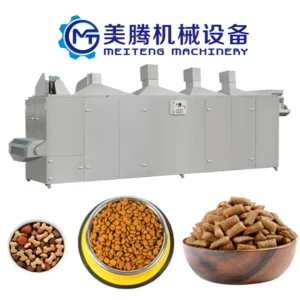
MT85 500kg/h Multi-Purpose Pet Food Processing Line for Dogs Cats Birds Fish & More-380V 50Hz Three Phase 45KW
¥65,000.00 Select options This product has multiple variants. The options may be chosen on the product page -
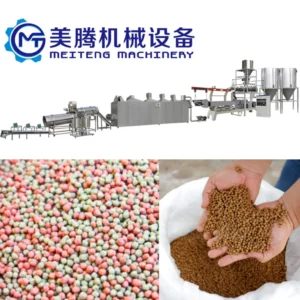
Línea de procesamiento de alimentos para peces de alta capacidad de 2-3t/h para producir alimento para peces
¥55,000.00 Select options This product has multiple variants. The options may be chosen on the product page -
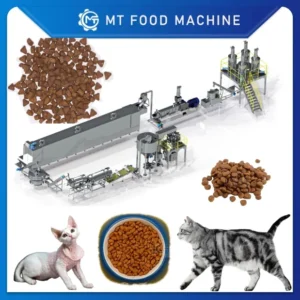
Marca Línea de Procesamiento de Comida para Gatos Multiespecies Controlada por PLC de 1.5-2.0t/h¥45,000.00
Select options This product has multiple variants. The options may be chosen on the product page -
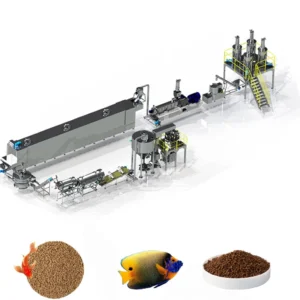
Máquina de Línea de Producción de Alimento para Peces Automática Fabricación de Pellets Flotantes y Hundidos Diseño de Alta Capacidad y Ahorro de Energía
¥9,500.00 Select options This product has multiple variants. The options may be chosen on the product page