

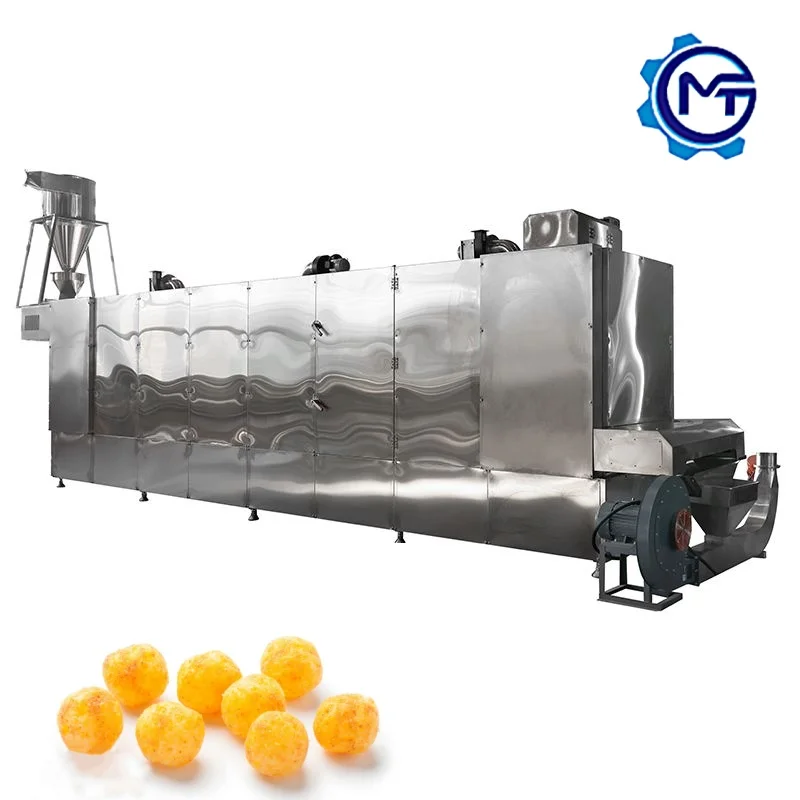
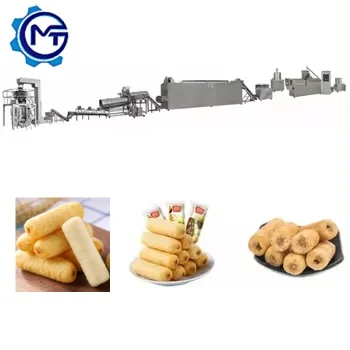
MT65 / MT70 / MT85 / MT100 Twin Screw Extruder for Puffed Snack Production Line, 130–240 kW installed power, interchangeable die system — engineered for complete extrusion projects where every station from batching through drying, flavouring and packing must be throughput-matched. Screw configuration and die design are specified to your flour blend, moisture content and target product density, with dryer heating configurable to electric, steam or gas.
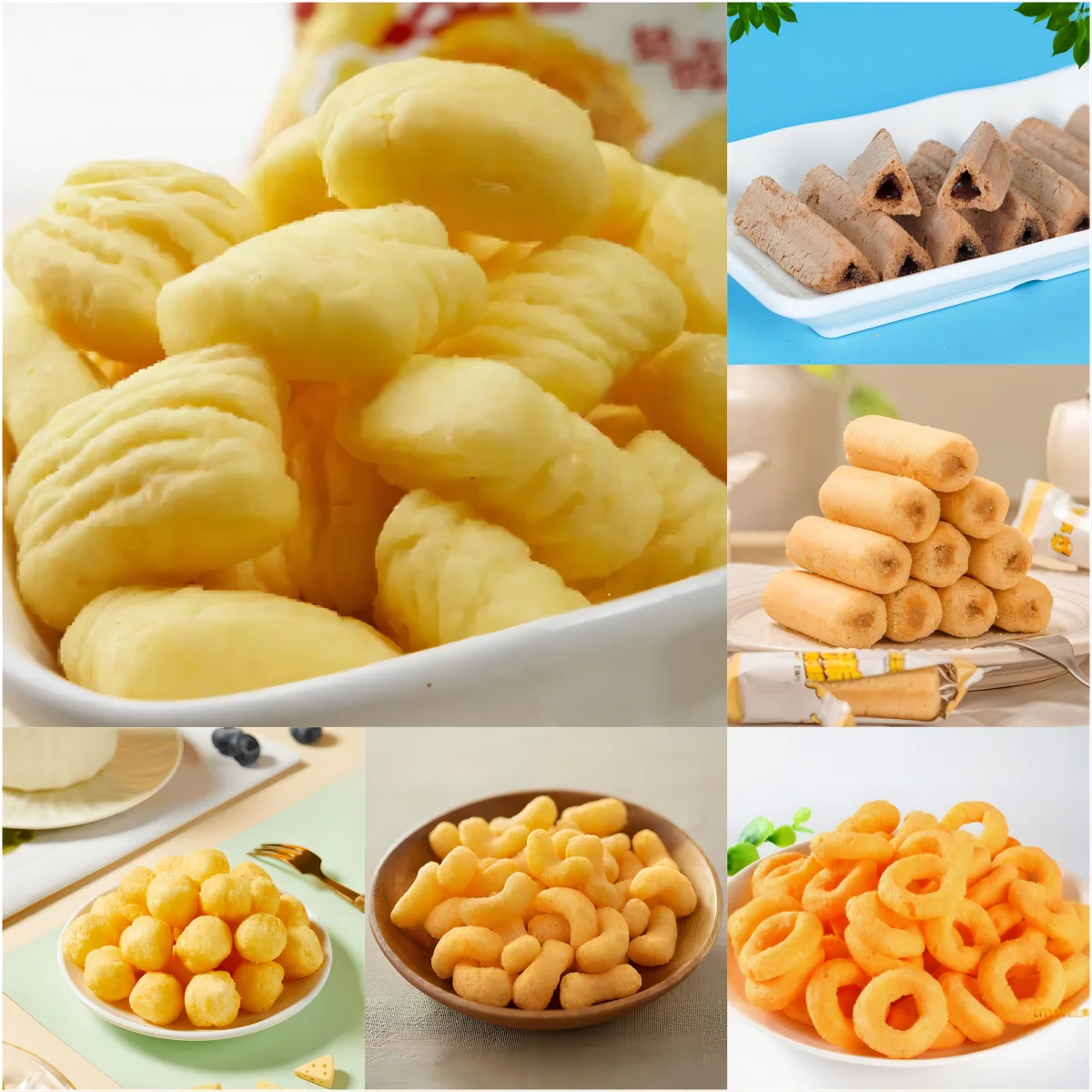
- Twin-screw extrusion with automatic lubricating and cooling supports continuous operation across cheese balls, rings, sticks, fruit loops and core-filled formats
- Line layout, capacity calculation and electrical schematic confirmed before production, with in-house trial run on your actual raw material before shipment
Description
Turnkey Throughput Matching — Every station from batching to packing is sized against the extruder output on your specific flour blend, preventing the dryer or flavouring drum from bottlenecking the puffed snack extrusion production line turnkey project.
Technical Specifications
| Parameter | Value |
|---|---|
| Product Type | Twin Screw Extruder for Puffed Snack Production Line |
| Model | MT65 / MT70 / MT85 / MT100 |
| Screw Type | Twin-screw |
| Installed Power (MT65) | 130 kW |
| Installed Power (MT70) | 180 kW |
| Installed Power (MT85) | 220 kW |
| Installed Power (MT100) | 240 kW |
| Real Consumption (MT65) | 95 kW |
| Real Consumption (MT70) | 120 kW |
| Real Consumption (MT85) | 130 kW |
| Real Consumption (MT100) | 160 kW |
| Output Capacity (MT65) | 120–150 kg/h (basis not stated in source — confirm raw material / moisture / die configuration) |
| Output Capacity (MT70) | 200–300 kg/h (basis not stated in source — confirm raw material / moisture / die configuration) |
| Output Capacity (MT85) | 300–500 kg/h (basis not stated in source — confirm raw material / moisture / die configuration) |
| Output Capacity (MT100) | 600–800 kg/h (basis not stated in source — confirm raw material / moisture / die configuration) |
| Control System | Frequency speed controlling system |
| Lubrication | Automatic lubricating system |
| Cooling | Automatic cooling system |
| Die Configuration | Interchangeable dies for multiple shapes |
| Raw Materials | Corn, rice, wheat, oat, barley flour |
| Dryer Heating Source | Electric, steam, or gas (configurable) |
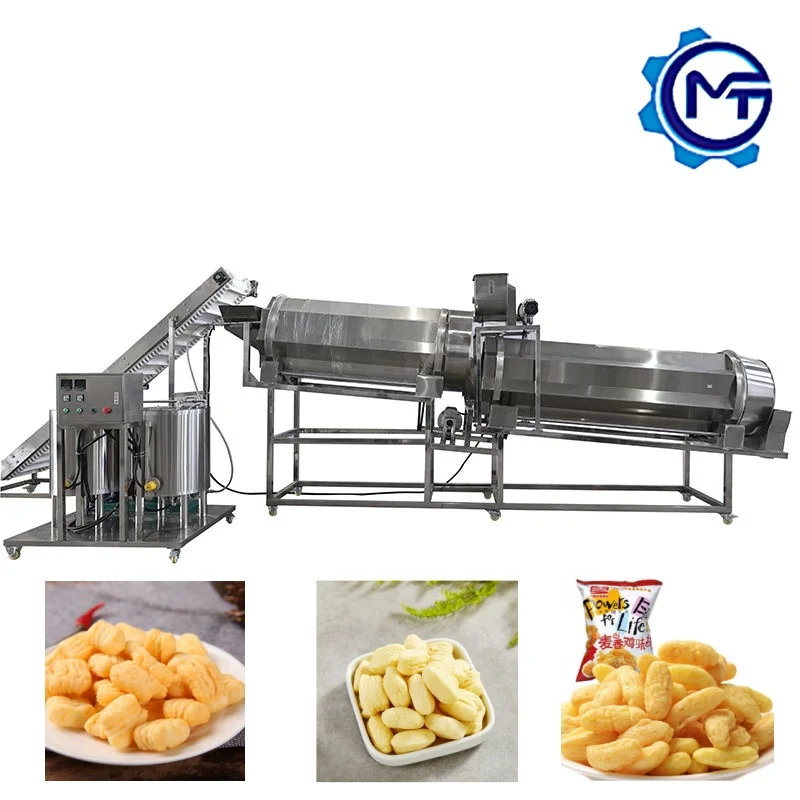
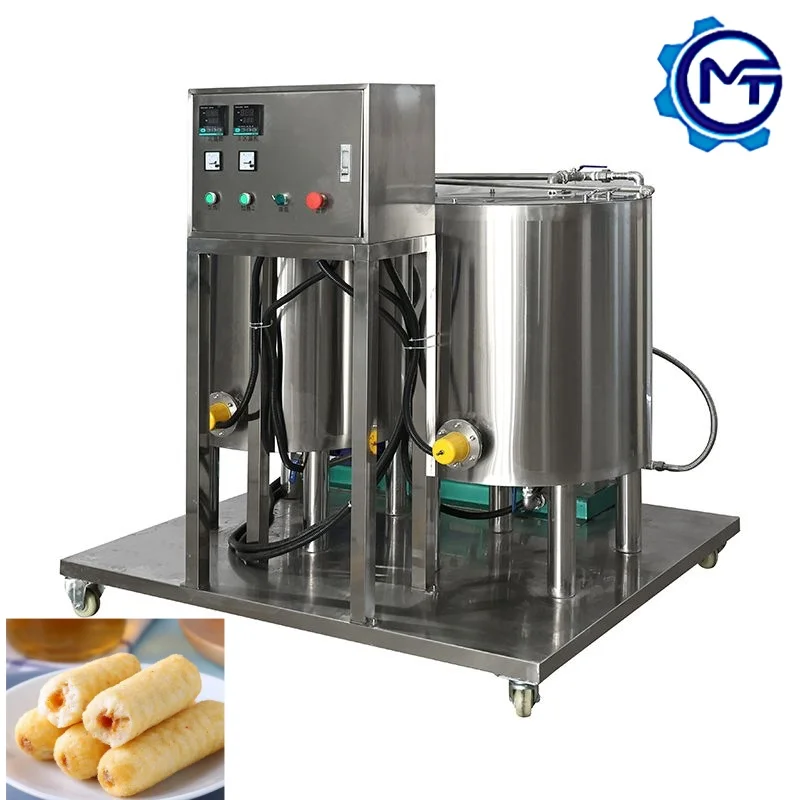
| Flavouring System | Double drum with sugar melting and spraying nozzle |
| Core Filling Option | Available with added co-extrusion and cutting station |
| Standards | CE, ISO |
| Warranty | 1 year |
Application Suitability
| Application | Material or Output |
|---|---|
| Cheese balls and corn puffs | Corn flour, rice flour blends |
| Extruded rings, sticks, tubes | Wheat, oat, barley flour mixes |
| Fruit loops and star shapes | Multi-grain flour combinations |
| Core-filled snacks | Cereal flour with cream or chocolate filling |
| Breakfast cereals (ring and flake) | Corn grits, natural and sugar-coated formats |
Why Nominal Capacity Means Nothing Without Your Raw Material
A quoted kg/h figure is only valid on the exact flour blend, moisture level, and die configuration used during testing.
I remember commissioning a cheese puff line for a Southeast Asian producer. The factory trial ran perfectly on standard corn flour. Once we arrived on site and they switched to their local mixed-grain recipe, the expansion collapsed and density went out of spec. We spent three days reworking the screw combination and moisture settings before the puffed snack extrusion production line turnkey stabilized. That kind of mismatch is more common than buyers realize, and it happens because the capacity number was never tied to the buyer’s actual material [NEED_CITE: raw material variability effects on twin-screw extrusion output].
Screw Configuration Dictates What You Actually Produce
The twin-screw design handles a wider range of flour blends than single-screw alternatives because the intermeshing screws create a self-wiping action that manages sticky or high-moisture doughs. On this puffed snack extrusion production line turnkey, the screw elements are arranged in sections — conveying, kneading, and reverse elements — and the sequence determines shear intensity and residence time. Change one kneading block position and the expansion ratio shifts, altering the crunch and bulk density of the final snack.
Die Geometry Sets Shape, Texture, and Downstream Behaviour
Interchangeable dies on this platform support shapes from cheese balls to fruit loops, but the die opening diameter and land length do more than define geometry. They control backpressure inside the barrel, which directly affects starch gelatinisation and the cell structure of the extrudate. A short-land die may produce a lighter, more fragile puff that breaks during coating, while a longer land delivers a denser piece that survives the flavouring drum [NEED_CITE: die land length influence on extrudate cell structure].
Reading the Power and Capacity Figures
The installed power ranges from 130 kW on the MT65 to 240 kW on the MT100, but real consumption sits considerably lower — 95 kW to 160 kW respectively — because the main motor rarely runs at full load during steady-state extrusion. Output capacity spans from 120–150 kg/h to 600–800 kg/h across the model range, though these figures carry a basis-to-be-confirmed note: the actual throughput depends on raw material composition, feed moisture, and die selection. The automatic lubricating and cooling systems maintain barrel temperature stability across long production runs, reducing the chance of surging or uneven expansion between batches.
The Hidden Cost of Ignoring Utility and Peripheral Matching
When the dryer is undersized relative to extruder output, product exits the drying chamber with residual moisture that causes sogginess or mould during storage. I have walked into plants where the flavouring drum could only handle half the extruder throughput, forcing the operator to run the screw at reduced speed and waste the installed capacity. Voltage mismatches are another silent problem — arriving on site to find the local supply is 380V/60Hz when the motor was wound for 415V/50Hz means the extruder will not start without a transformer or a rewind [NEED_CITE: voltage and frequency standards by export market].
Why This Line Holds Up During Commissioning
Every station — mixing, extruding, drying, flavouring, cooling, packing — is throughput-matched within the same supply scope, so no single unit chokes the others. Screw configuration and die design are documented against your raw material before production begins. The in-house testing workshop runs your actual flour blend before the equipment ships, generating a trial report that captures the screw arrangement, moisture settings, and product density. Dryer heating sources are configurable to electric, steam, or gas depending on your local utility infrastructure. Pre-sales layout engineering through on-site commissioning and operator training keeps the same technical team involved from first drawing to first production shift.
Documentation & Verification
- Line layout and capacity calculation matched to your flour blend and target snack shape
- Screw and die configuration record documenting element arrangement before production
- Electrical schematic with voltage and frequency confirmed to your site supply
- Trial run report on your raw material covering expansion, density, and moisture
- CE declaration of conformity and ISO certificate included with shipping documents
- Wear parts list identifying screw segments, dies, and seals for reorder planning
Installation, Commissioning & Support
- Foundation and floor space planning based on the selected model’s footprint and weight
- Dedicated power circuit sized for the real consumption figure of your chosen extruder
- Frequency speed controlling system calibrated during on-site commissioning for your recipe
- Automatic lubricating and cooling systems verified before the first production run
- Operator training on die changes, screw cleaning, and barrel temperature profiles
- Spare screw elements and dies shipped with the line to cover the first replacement cycle
What to Prepare Before Requesting a Quotation
Share your target product shape, flour blend composition, and expected moisture range so the screw configuration can be matched before the build begins. Confirm your local voltage, frequency, and preferred control language to avoid commissioning delays. Provide workshop dimensions and ceiling height so the line layout accounts for dryer length and conveying runs. If you have existing upstream mixers or downstream packing machines, note their capacity so the puffed snack extrusion production line turnkey integrates without redundant equipment.
Frequently Asked Questions
Q: How is output capacity verified before the line is finalized?
A: Each capacity figure is tied to a specific raw material, moisture level, and die configuration. We confirm your flour blend and target product density first, then run a trial in our testing workshop. The resulting report documents actual throughput, expansion ratio, and product weight per piece, giving you a verified number rather than a generic estimate.
Q: Can the screw and die setup be adjusted to my flour blend?
A: Yes. Screw element arrangement — conveying, kneading, and reverse sections — is specified to your recipe before production. Die geometry is selected for your target shape and bulk density. Both are recorded in the configuration document that ships with the line, so replacements match the original setup.
Q: What electrical details are confirmed before production starts?
A: Voltage, frequency, and control panel language are confirmed during the specification stage. The electrical schematic reflects your site supply, and the frequency speed controlling system is programmed in your preferred language. This prevents the common problem of motors wound for the wrong voltage arriving on site [NEED_CITE: CE machinery directive requirements for industrial equipment].
Q: Is a trial run performed on my material before shipment?
A: Every line undergoes a trial using your raw material in our testing workshop. The trial report covers screw configuration, barrel temperature profile, moisture settings, product expansion, and density. This ensures the line produces your target snack specification before it leaves the factory, not after installation.
Q: How is throughput balanced across the entire line?
A: The dryer, double drum flavouring system, and packing station are each sized to the extruder output for your product. This prevents bottlenecks where one station forces the extruder to run below capacity. The line layout document shows the rated throughput at every station for your review.
Related products
-

Máquina para hacer copos de maíz de cereal de desayuno crujiente y inflado.
¥1,000.00 Select options This product has multiple variants. The options may be chosen on the product page -

Línea de procesamiento de puff de maíz con mezclador, freidora, horno de horneado, máquina automática de alta productividad para la fabricación de productos de grano y snacks.
¥8,300.00 Select options This product has multiple variants. The options may be chosen on the product page -

Máquina de Sazonado de Snacks Inflados Sabor Extrusora de Alimentos de Doble Tornillo para Puff de Maíz
¥8,355.00 Select options This product has multiple variants. The options may be chosen on the product page -

Máquina de extrusión de alimentos de bocadillos de maíz inflado totalmente automática para la fabricación de barras de bocadillos de maíz inflado
¥8,500.00 Select options This product has multiple variants. The options may be chosen on the product page


