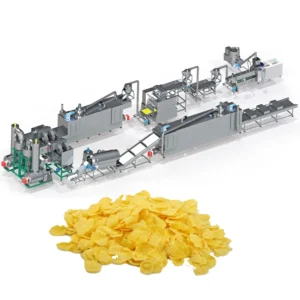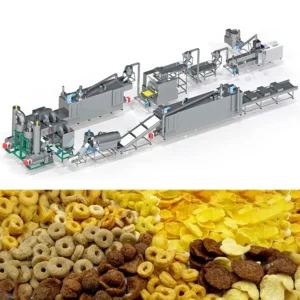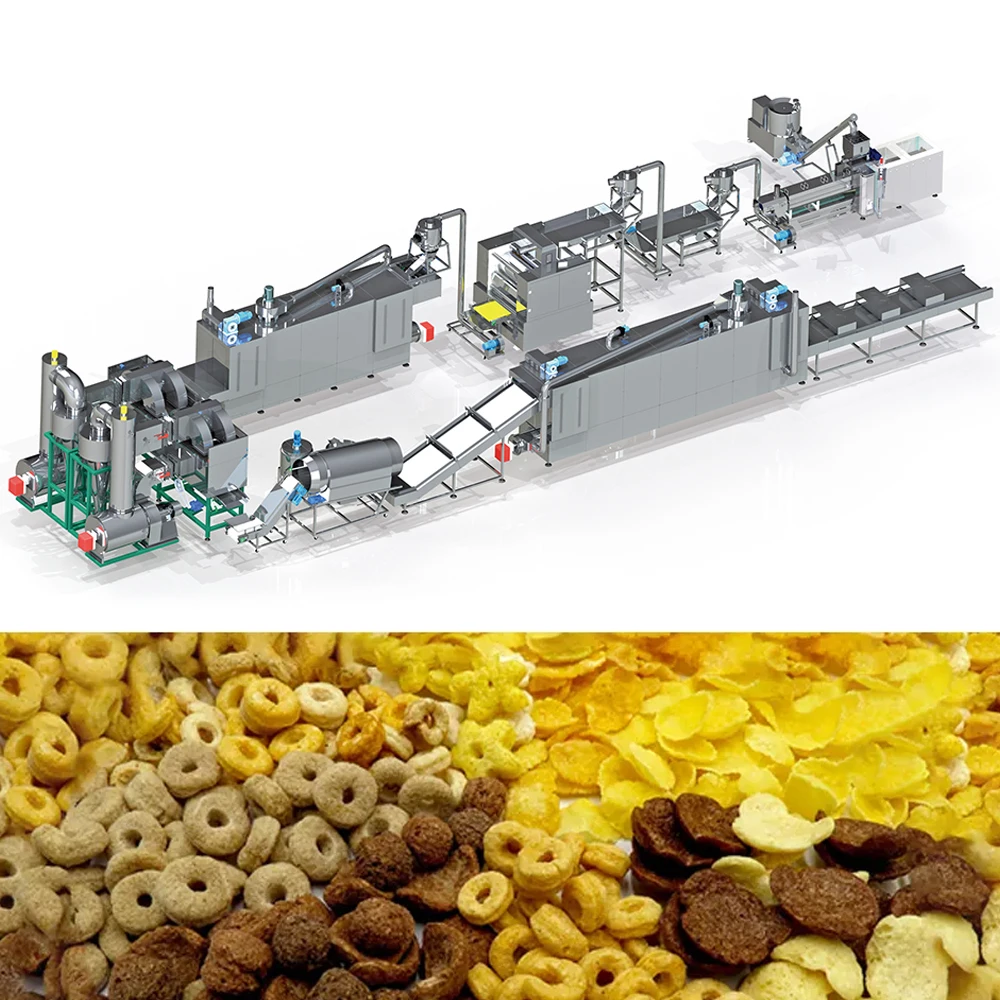
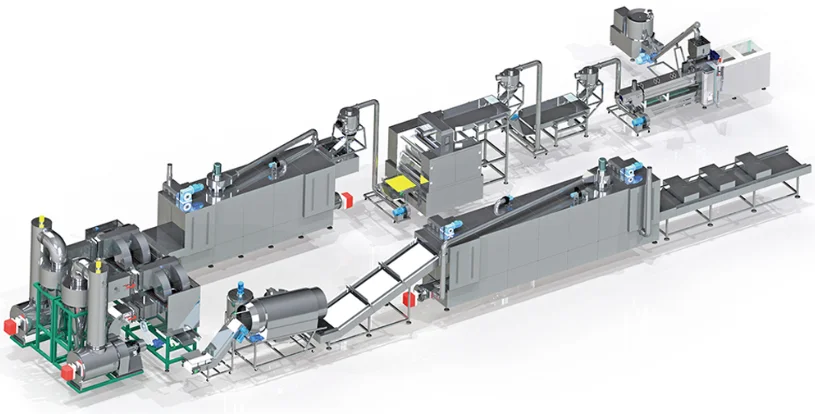


MT70 / MT85 / MT75 Corn Flakes Production Line, Twin-Screw Extruder, PLC Control — engineered as a complete turnkey project from mixing through extrusion, flaking, drying, roasting, coating and packing. Each station is throughput-matched to your raw material and target output, with hydraulic flaking rollers and hot air roasting for consistent flake quality.
- Natural and sugar-coated corn flakes, plus extruded shapes via die changes
- Voltage confirmed to your site supply before production begins
- In-house trial runs on your raw material validate texture and density before shipment
Description
Integrated throughput engineering — every station from the batching mixer to the packing conveyor is sized against your raw material flow rate, not a generic catalogue number, so the extruder never starves the flaking rolls or floods the roasting oven.
Technical Specifications
| Parameter | Value |
|---|---|
| Model | MT70 / MT85 / MT75 |
| Product Type | Corn Flakes and Breakfast Cereals Extrusion Production Line |
| Installed Power | MT70: 160 kW; MT85: 190 kW; MT75: 210 kW |
| Power Consumption | MT70: 120 kW; MT85: 140 kW; MT75: 150 kW |
| Output Capacity | MT70: 150–200 kg/h (basis to be confirmed); MT85: 300–400 kg/h (basis to be confirmed); MT75: 300–500 kg/h (basis to be confirmed) |
| Overall Dimensions (L×W×H) | MT70: 41 × 1.5 × 2.2 m; MT85: 43 × 1.5 × 3.2 m; MT75: 45 × 1.5 × 3.5 m |
| Screw Type | Twin Screw |
| Control System | PLC control with automated line sequencing |
| Flaking Machinery | Hydraulic double-roller system, separate motor drives, infrared sensor temperature control |
| Dryer Heating Source | Gas or Electric |
| Roasting Oven | Hot air circulation with two fans, conciliation burner, cyclone dust removal |
| Coating System | Double tumble sugar melter, elevator, coating drum, spraying nozzle |
| Voltage Options | 415V 50/60Hz; 440V 50/60Hz; 220V 60Hz (customized to site supply) |
| Assembly State | Complete turnkey production line |
| Standards | CE, ISO certified |
Application Suitability
| Application | Material or Output |
|---|---|
| Natural corn flakes for breakfast cereal market | Corn grits or corn flour, flaked, roasted, uncoated |
| Sugar-coated corn flakes | Corn base with sugar syrup glazing and secondary drying |
| Extruded cereal shapes | Rice, wheat, oat, barley blends formed into balls, tubes, rings, stars, wheels via die changes |
| Fortified breakfast cereals | Grain powders blended with nutritional additives for institutional or retail packaging |
| Snack-format crossover products | Same extrusion platform producing fruit loops, sticks, and flower shapes for snack channels |
Why Quoted Line Capacity Rarely Survives First Contact With Your Grain
A corn flakes production line turnkey is only as fast as its slowest station once your specific flour hits the screws. I have stood on factory floors where the extruder was rated to push out product well beyond what the downstream flaking rolls could actually press. The result is not a minor shortfall — it is a line that never hits nameplate output, with operators constantly throttling the feeder back to prevent dough pile-ups at the roller mill. The bottleneck simply shifts from one end of the plant to another depending on the season and the moisture content of the incoming grain [NEED_CITE: throughput matching across sequential food processing stations].
When the supplier treats each machine as a standalone sale rather than stations in a single engineered line, the dryer is too short, the roasting oven cannot hold temperature at full belt load, and the coating drum overflows before the syrup sets. These mismatches do not show up in the brochure. They surface during commissioning, when the contractor has already left the site and the buyer is staring at a production schedule that no longer fits the order book. A properly engineered corn flakes production line turnkey resolves these conflicts at the layout stage, not on the factory floor.
Station-by-Station Throughput Balancing
Designing a corn flakes production line turnkey starts with working backward from the packing station. The packing speed defines the required output of the cooling conveyor, which in turn dictates how much roasted product the oven must release per hour. That oven load determines the dryer capacity upstream, and the dryer intake locks the flaking roll throughput, which finally sets the actual extruder output requirement. Every station is calculated against the same material flow figure, adjusted for the moisture loss at each thermal stage.
This sequential balancing is where lines assembled from separate vendors fall apart. Each supplier sizes their machine to a generic duty point, and the gaps accumulate along the chain. When one supplier engineers the entire sequence, the corn flakes production line turnkey can be modeled as a single mass-balance calculation, with each station’s capacity matched to the real shrinkage and dwell time of your recipe.
Layout Engineering Against Your Factory Footprint
The physical arrangement of stations matters as much as their individual capacity. A 45-meter line running straight through a narrow bay requires different utility routing than one that folds back on itself in a wider building. Steam extraction from the dryer and roasting oven must be ducted without crossing product flow paths, and electrical cabinets need to be positioned so that PLC panels remain accessible when the line is running [NEED_CITE: food plant layout standards for thermal processing zones].
Utility planning — gas lines for the roaster, compressed air for the hydraulic flaking system, chilled water for barrel cooling, extraction ducting for the cyclone — is mapped onto the floor plan before steel is cut. Phased installation sequencing is built into the project schedule so that foundation work, utility rough-ins, and machine positioning happen in a logical order rather than requiring rework once the extruder is bolted down.
Reading the Spec Sheet Like a Process Engineer
The twin-screw configuration on the MT70, MT85, and MT75 is the core reason these lines handle corn, rice, wheat, oat, and barley blends without constant recipe compromise. Twin-screw extrusion generates higher shear than single-screw designs, which means starch gelatinisation happens more completely at lower barrel temperatures — a critical factor when you need the dough to hold together through the flaking rolls without tearing at the edges.
The hydraulic double-roller flaking system with separate motor drives for each roll allows the gap and pressure to be adjusted independently, giving consistent flake thickness across the full width of the sheet. Infrared sensor temperature control on the flaking machinery prevents the dough from sticking to hot rolls or shattering on cold ones — a problem I have seen shut down lines for entire shifts when the sensor was missing or poorly calibrated.
The hot air roasting oven uses two separate circulating fans and a conciliation burner to maintain uniform temperature across the vibrating pan. Corn flakes require precise surface blistering without scorching the interior, and uneven air distribution creates a mix of pale, under-roasted flakes and dark, bitter ones in the same batch. The cyclone dust removal device keeps fine particles from recirculating through the oven and contaminating the product stream.
Installed power ranges from 160 kW on the MT70 to 210 kW on the MT75, but actual consumption during steady-state running is lower — 120 kW to 150 kW respectively. This gap matters for utility planning: the electrical supply must handle peak startup loads across all motors simultaneously, not just the running average.
The Hidden Cost of Skipping the Trial Run
I once spent two weeks on-site re-tuning screw speed and roller gap because the corn flour the customer sourced locally was noticeably coarser than the material used during the factory test. The flakes came off the rolls with curled edges and uneven thickness — acceptable as a snack chip, but not as a breakfast cereal flake. That kind of mismatch is entirely preventable with a pre-shipment trial on the buyer’s actual raw material [NEED_CITE: raw material variability impact on extrusion product quality].
When there is no in-house testing workshop, product development begins after installation, using your production time and your raw material budget as the learning curve. Screw configuration and die design specified generically produce generic output — texture and density drift outside what your target market expects, and you discover this only after the first container has shipped to a retailer who rejects it.
Why This Line Is Engineered Differently
Every station from batching to packing is supplied under one responsibility, which means throughput matching is calculated once and guaranteed across the entire chain rather than negotiated between separate vendors pointing blame downstream.
Screw configuration and die design are specified against your raw material and target product format before production begins, not copied from a generic build that happened to be on the shop floor.
The in-house testing workshop runs your actual corn, rice, or oat flour through the extruder and flaking rolls before shipment, producing a trial run report that documents flake thickness, density, and surface quality on your material.
Layout drawings, utility connection schedules, and installation sequencing are delivered as part of the project package, so your contractor knows exactly where gas, water, compressed air, and electrical drops need to be before the machines arrive.
Operator training covers PLC parameter adjustment, flaking roll gap calibration, and roasting oven temperature profiling, not just which button starts the line.
Documentation & Verification
- Line layout and capacity calculation matched to your corn or oat flour moisture content and target flake weight
- Screw and die configuration record documenting the exact profile specified for your cereal format
- Trial run report produced on your raw material in the testing workshop before dispatch
- Electrical schematic and voltage confirmation sheet matching your site frequency and control language
- Factory test record covering every station from mixer to packing conveyor under load
- Operation and maintenance manual with flaking roll and roasting oven service intervals
Installation, Commissioning & Support
- Foundation requirements calculated against the MT75’s 45-meter overall length and 210 kW installed power distribution
- Dedicated electrical circuits specified for each station’s motor group to prevent voltage drop during extruder startup
- Phased assembly sequence from extruder positioning through flaking roll alignment to roasting oven ducting connection
- PLC control language and HMI labels configured to your operator team’s language before the line powers on
- On-site flaking roll gap calibration and roasting oven temperature profiling against your first production batch
- Wear parts inventory — screws, dies, roller surfaces, spray nozzles — sized to your first scheduled changeover
What We Need to Engineer Your Line
To size a corn flakes production line turnkey correctly, we need your target hourly output along with the specific grain or grain blend you plan to process, including typical moisture content at intake. Share your factory floor dimensions, ceiling height, and the location of existing utility drops so the layout can be drafted against real constraints rather than assumptions.
Confirm your local voltage and frequency, and whether you need gas or electric heating on the dryer — these decisions lock the electrical and mechanical design early and prevent costly rework during commissioning. If you have a target flake thickness or coating percentage, include those specifications so the flaking machinery and coating drum can be matched accordingly.
Frequently Asked Questions
Q: How is line throughput verified before shipment?
A: We run your actual raw material through the extruder, flaking rolls, dryer, and roasting oven in our testing workshop. The trial run report documents flake thickness, density, surface blister quality, and throughput at steady state. This means product development happens on our time and our floor, not during your commissioning window.
Q: How do you prevent bottlenecks between the extruder and downstream stations?
A: Each station is sized through a single mass-balance calculation that accounts for moisture loss at the dryer and roasting oven. The flaking roll throughput, dryer belt length, oven capacity, and coating drum volume are all derived from the same target output figure, so no station limits the line below its engineered rate.
Q: What voltage and frequency options are available?
A: The line is configurable for 415V 50/60Hz, 440V 50/60Hz, or 220V 60Hz, matched to your site supply. Control system language, PLC labels, and electrical schematics are confirmed during the specification stage so there are no surprises when the cabinets are wired on your factory floor.
Q: Can the layout fit a factory with limited length?
A: Yes. The line can be arranged in straight, L-shaped, or folded configurations depending on your building dimensions. Utility routing — steam extraction, gas supply, compressed air, electrical drops — is mapped onto your floor plan before production begins, with phased installation sequencing built into the project schedule.
Q: What does on-site commissioning include?
A: Our team handles machine positioning, flaking roll gap calibration, roasting oven temperature profiling, and PLC parameter tuning against your first production batch. Operator training covers recipe adjustment, screw speed changes, roller maintenance, and roasting cycle programming so your team can run independently after handover.
Related products
-
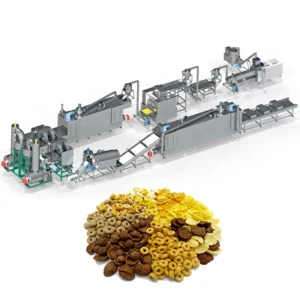
Small Scale Breakfast Cereal Manufacturing Machine for Corn Flakes Process Line
¥45,000.00 Select options This product has multiple variants. The options may be chosen on the product page -
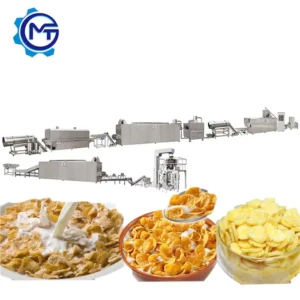
Automatic 500kg/h Corn Flakes Making Machine New Condition High Productivity Sweet Breakfast Cereal Processing Line From Factory
¥8,500.00 Select options This product has multiple variants. The options may be chosen on the product page -
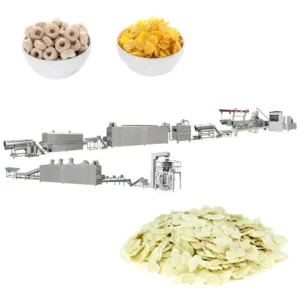
200kg/h Breakfast Cereal Extruder Making Machine Hot Sale Corn Flake Production Line
¥30,000.00 Select options This product has multiple variants. The options may be chosen on the product page -
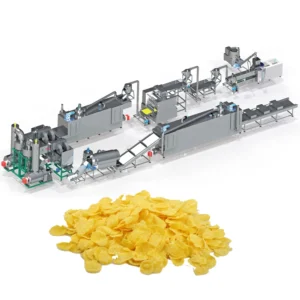
Intelligent Corn Flakes Production Line Twin Screw Extruder to Make Corn Flakes amd Morning Cereals
¥30.00 Select options This product has multiple variants. The options may be chosen on the product page