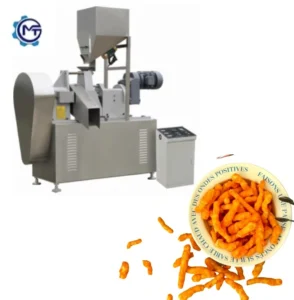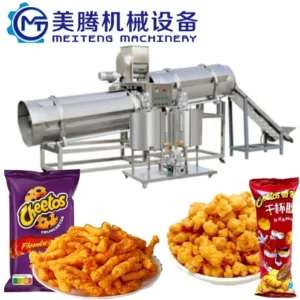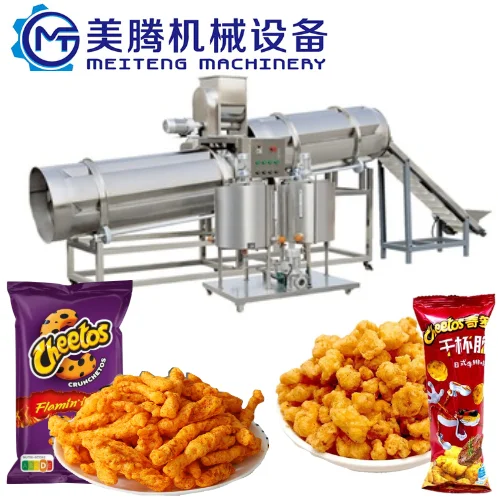
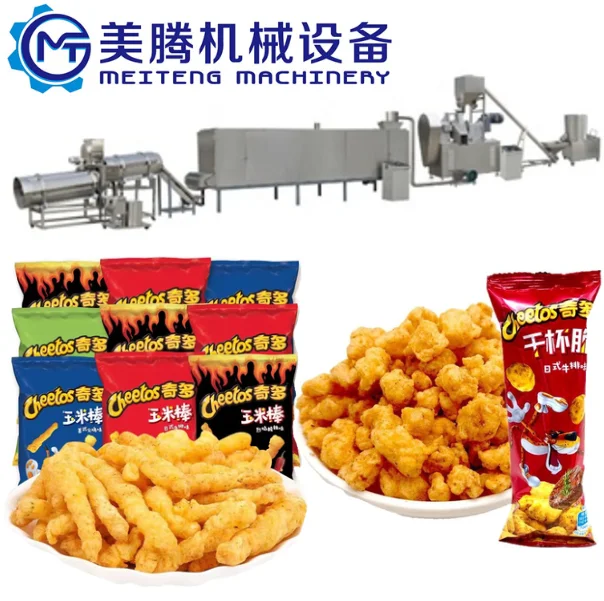

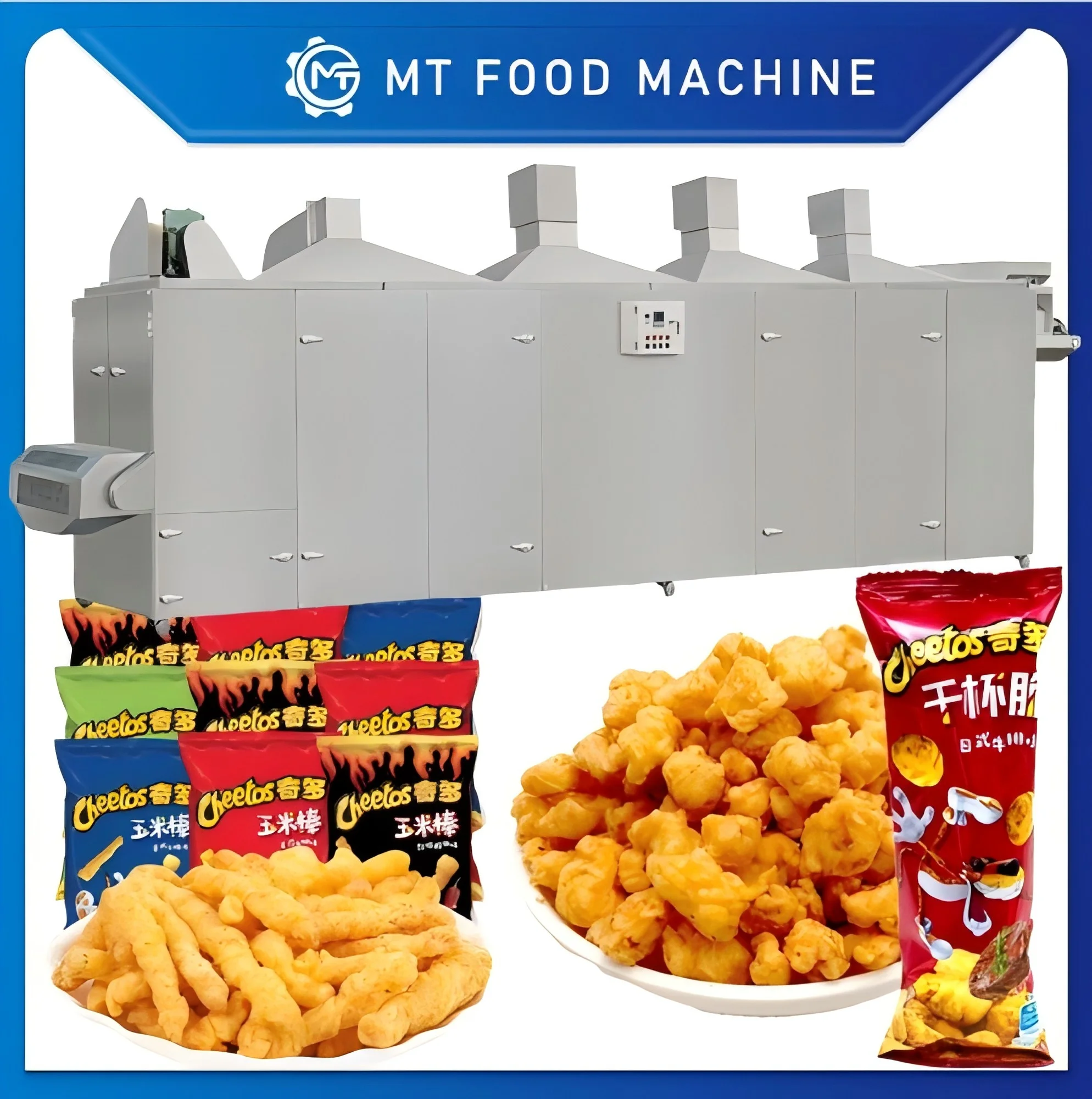


Cheetos Kurkure Processing Line, 304 Stainless Steel, Fully Automatic — engineered as a complete turnkey project where every station from batching through extrusion, frying or baking, flavouring and packing is throughput-matched to eliminate line bottlenecks.
- Screw configuration and die design specified to your raw material formulation and target snack texture
- In-house testing workshop validates production parameters on your actual material before shipment
- Automated control architecture maintains consistent expansion, density and moisture across all stages
Layout, capacity calculation and trial run report delivered with every project, backed by on-site installation, commissioning and operator training from a single supplier.
Description
Turnkey integration — Every station on the Cheetos Kurkure processing line is sized to the same throughput target before leaving the factory, eliminating mid-line bottlenecks that appear once extrusion meets a mismatched dryer or flavouring drum.
Technical Specifications
| Parameter | Value |
|---|---|
| Product Type | Cheetos / Kurkure Snack Production Line |
| Output Capacity | 120-350 kg/h (basis not stated in source — confirm raw material formulation and moisture content) |
| Heating Method | Electric heat source |
| Construction Material | 304 Stainless Steel (food-grade contact surfaces) |
| Automation Level | Fully Automatic |
| Certification | CE, ISO |
| Application | Extruded and fried / baked corn-based snacks (Kurkure, Cheetos formats) |
Application Suitability
| Application | Material or Output |
|---|---|
| Kurkure-style extruded snacks | Corn grits, corn flour, maize blends |
| Cheetos-format puffed snacks | Corn meal, rice grits, composite grain formulations |
| Fried extruded snack production | Corn-based dough with oil frying and seasoning |
| Baked extruded snack production | Corn-based dough with hot-air drying and flavouring |
Why Capacity Claims Collapse After Installation
A rated output means nothing unless every downstream station can sustain the same throughput on your exact raw material.
I have watched snack lines stall within hours of startup because the extruder pushed product faster than the dryer could handle. Moisture built up, texture went flat, and operators spent the first week running at half speed to keep scrap rates manageable. The problem is rarely the extruder itself — it is the gap between extrusion capacity and the drying, frying, or flavouring stages that follow. When each station comes from a different vendor, nobody owns the throughput match [NEED_CITE: throughput balancing in multi-vendor food processing lines]. The extruder supplier quotes one number, the dryer supplier quotes another, and the buyer absorbs the loss. This Cheetos Kurkure processing line turnkey approach addresses that gap by sizing every station — batching, extrusion, frying or baking, flavouring, cooling, and packing — against the same production target before any equipment ships.
Throughput Matching Across Every Station
The Cheetos Kurkure processing line turnkey configuration requires each stage to be calculated against the others. If the extruder delivers at a given rate, the dryer must remove moisture at a matching pace, and the flavouring drum must tumble and coat the product without backlog. This balance is specified during the line layout phase, not adjusted on the factory floor after installation.
Screw and Die Selection for Kurkure Texture
Kurkure and Cheetos formats demand a specific expansion profile and surface roughness that depends heavily on screw configuration and die geometry. The screw arrangement and die opening are chosen based on the buyer’s raw material blend and the target product density. A generic screw build copied from a standard catalogue will produce the wrong bite and mouthfeel, which is why configuration records are tied to each buyer’s formulation before production begins [NEED_CITE: twin-screw extrusion die design for expanded snacks].
Reading the Specification Sheet
The stated output of 120-350 kg/h requires confirmation against the buyer’s actual formulation, since corn moisture content and the ratio of corn grits to other grains directly affect expansion rate and line speed. Electric heating provides consistent barrel temperature zones, which matters for starch gelatinisation — uneven heat leads to partial expansion and inconsistent crunch. Food-grade 304 stainless steel on contact surfaces meets hygiene expectations for direct-consumption snack products. The fully automatic control architecture keeps extrusion speed, barrel temperature, and downstream conveyor rates synchronised, reducing batch-to-batch variation that manual adjustment introduces.
The Cost of Skipping the Trial Run
Buyers who accept shipment without a trial run on their actual raw material often discover formulation issues weeks into commissioning. In one case in South Asia, a snack producer added legume flour to the corn base to reduce cost, which lowered expansion and dropped effective output well below the rated range. Every parameter had to be reconfigured on site, delaying commercial production. An in-house test on the buyer’s own material before dispatch prevents this [NEED_CITE: raw material variability in extruded snack production].
Why Procurement Happens Here
Line layout and capacity calculations are produced for each project so every station matches the target output rather than arriving as disconnected machines. Screw and die configurations are documented against the buyer’s specific raw material, not selected from a generic build sheet. A testing workshop runs the buyer’s actual formulation before shipment, catching formulation surprises early. Electrical schematics confirm voltage, frequency, and control language to the destination market before the cabinet is wired. Pre-sales consultation carries through to on-site installation, commissioning, and operator training so the line reaches stable production under the buyer’s own team.
Documentation & Verification
- Line layout drawing with throughput calculations for each station matched to target output
- Screw and die configuration record tied to your corn formulation and target Kurkure density
- Trial run report produced in the testing workshop on your raw material before dispatch
- Electrical schematic confirming voltage, frequency, and control panel language for your market
- Operation and maintenance manual with wear parts list specific to your line configuration
- CE declaration of conformity and ISO certificate included with customs documentation support
Installation, Commissioning & Support
- Foundation and utility planning based on the full line footprint, including electrical load for the electric heating system
- Power circuit specification confirmed to local voltage and frequency before cabinet fabrication
- Equipment shipped in matched sets with assembly sequence documentation for phased installation
- First-run parameter setting performed on site using buyer’s raw material to replicate trial run results
- Operator training covering extruder controls, dryer temperature management, and flavouring drum operation
- Wear parts inventory including screws, dies, and drum liners stocked and available for reorder after commissioning
Preparing Your Inquiry
A useful enquiry for a Cheetos Kurkure processing line turnkey project should include the raw material formulation you plan to use, the target hourly output you need, and the electrical standards at your facility. If you have an existing factory floor plan or a building under construction, sharing the available footprint and ceiling height allows the layout to be adapted before equipment enters production. Specify whether frying or baking is your preferred finishing method, and note any local language requirements for the control interface.
Frequently Asked Questions
Q: How is the output capacity of the line verified before shipment?
A: Output is verified during a trial run in the testing workshop using your actual raw material. This run checks expansion rate, product density, and whether each downstream station keeps pace with extrusion speed. The results are documented in a trial run report shared before dispatch, so any formulation adjustments happen at the factory rather than on your floor.
Q: Which stations are included in the turnkey scope, and how is throughput balanced?
A: The scope covers batching, extrusion, frying or baking, flavouring, cooling, and packing. Each station is sized during the layout phase so throughput matches across the entire line. If the extruder runs at a given rate, the dryer and flavouring drum are specified to handle that same rate without creating bottlenecks.
Q: Can the line layout fit an existing factory footprint?
A: The layout is adapted to your available floor space, ceiling height, and utility connection points. Electric heating requirements and ventilation needs are mapped against your facility’s electrical capacity. A phased installation sequence is planned so equipment can be positioned and connected according to your construction schedule.
Q: What does the commissioning schedule look like on site?
A: Commissioning follows a sequence from mechanical assembly through electrical connection, empty-run testing, and production trials with your raw material. Operators receive training on the control system, temperature management, and product changeover procedures. Spare wear parts are reviewed so you know what to reorder and when.
Related products
-
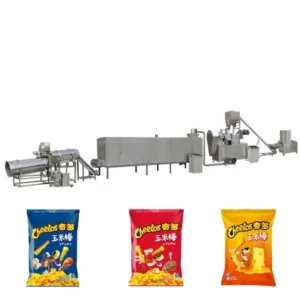
Turnkey Solution Cheetos Kurkure Production Line – 304 Stainless Steel
Read more -
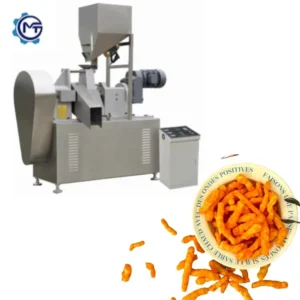
Turnkey Solution Kurkure Cheetos Nik Naks Corn Snacks Extruder Making Machine
Read more -
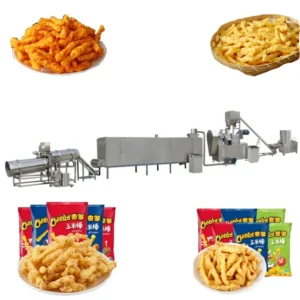
Fried Snack Cheetos Kurkure Making Machine – Turnkey Solution
Read more -
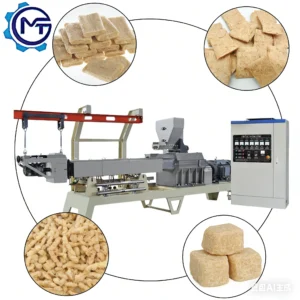
High Moisture Vegetarian Meat Extrusion Machine Production Line – Turnkey Solution
Read more