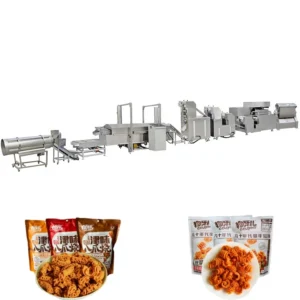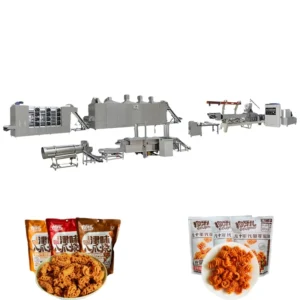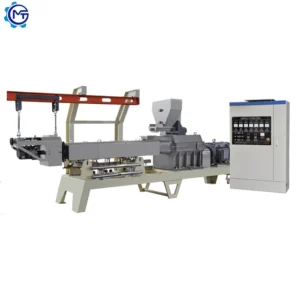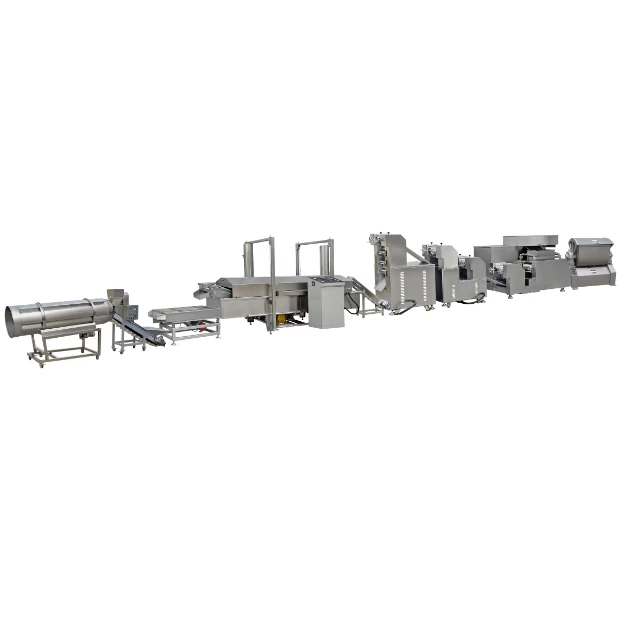

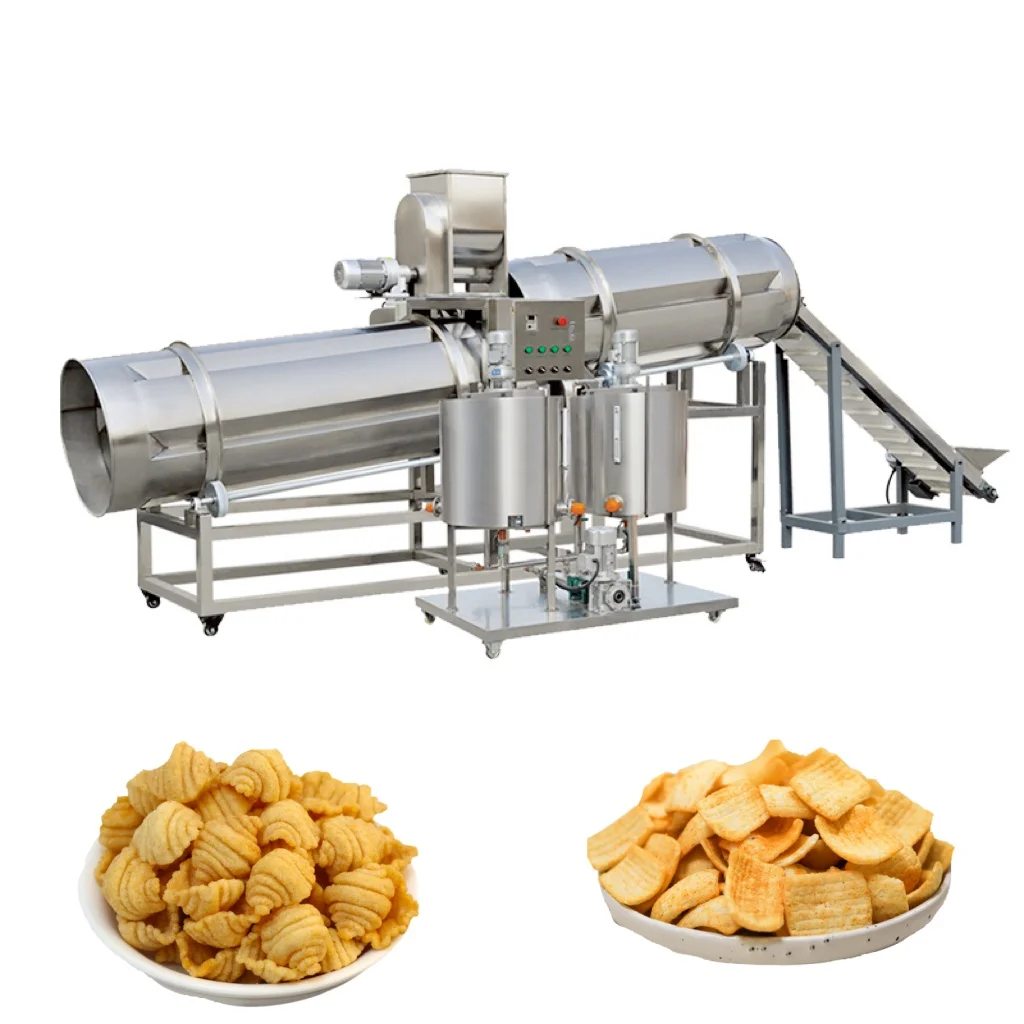
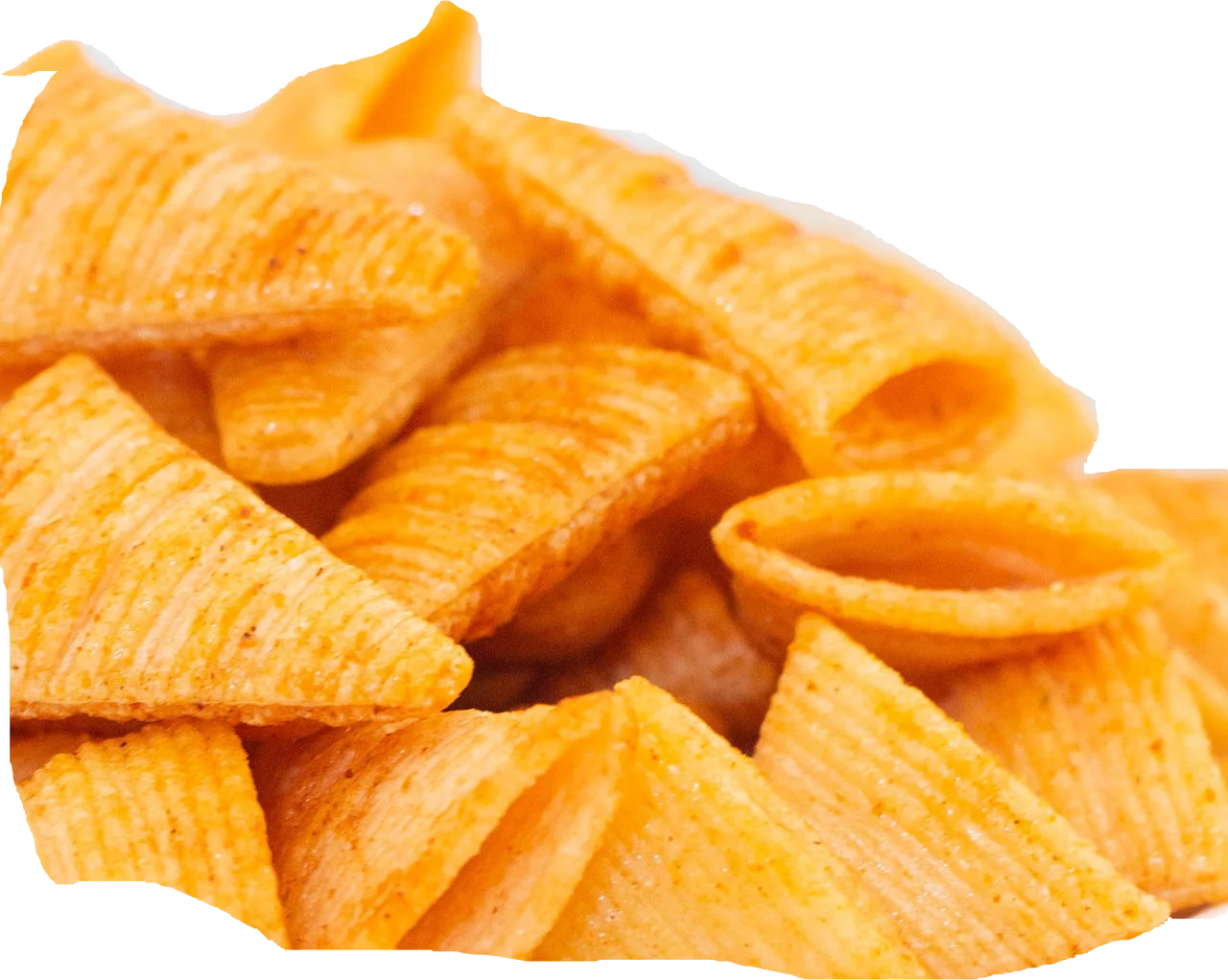
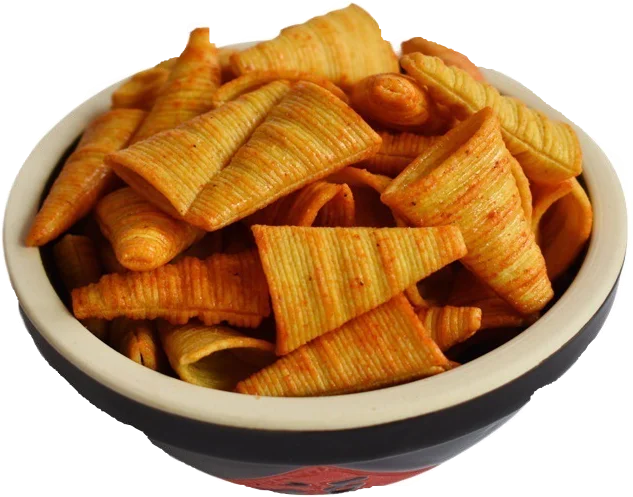
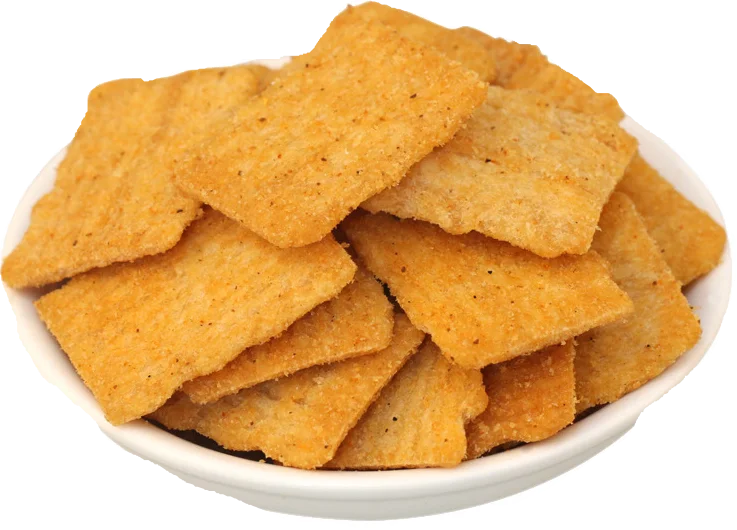
3D Pellet Fried Chips Production Line, Twin-Screw Extrusion, Gas/Electric/Diesel Drying — configured for snack manufacturers producing bugles, corn chips, and wavy pellet formats from corn, wheat, or potato-based formulations.
- Co-rotating twin-screw extruder with sectional modules and interchangeable dies enabling shape changeover across sticks, tubes, waves, and pillow profiles on one platform
- Fryer station features 600mm stainless steel belt with automatic temperature control and adjustable speed, balanced with extruder output and dryer throughput to prevent line bottlenecks
Layout planning and utility matching delivered as one integrated project, with in-house trial runs on buyer’s raw material before shipment to verify actual output against formulation and moisture content.
Description
Throughput-Matched Line Design — Every station from batching to packing is engineered around your actual raw material and target pellet density, not generic nominal figures.
Technical Specifications
| Parameter | Value |
|---|---|
| Product Type | 3D Pellet Fried Chips Production Line |
| Screw Type | Twin screw, co-rotating sectional modules |
| Extruder Construction | Carbon steel frame; food-grade stainless steel contact parts |
| Main Motor Power | 100 kW (MT-65) / 130 kW (MT-70) / 185 kW (MT-75) / 180 kW (MT-85) / 280 kW (MT-95) |
| Output Capacity | 120–150 kg/h (MT-65) / 200–250 kg/h (MT-70) / 400–500 kg/h (MT-75) / 300–500 kg/h (MT-85) / 800–1000 kg/h (MT-95) — basis not stated in source, confirm raw material formulation and moisture content |
| Mixer Power Options | 4 kW / 7.5 kW / 15 kW |
| Drying Method | Gas / Electric / Diesel heating |
| Fryer Belt Width | 600 mm stainless steel belt |
| Fryer Energy Options | Electricity / Fuel / Gas |
| Fryer Features | Automatic temperature control, adjustable belt speed, roller feeding |
| Cutting Machine Power | 1.47 kW |
| Die Configuration | Interchangeable dies and rollers for multiple shapes |
| Voltage & Frequency | Customizable (e.g., 3ph 380V 50Hz, 3ph 415V 60Hz, 3ph 220V 60Hz) |
| Control System | PLC or MCC control availability to be confirmed at inquiry |
| Warranty | 1 year complete warranty, lifetime maintenance service |
| Assembly State | Complete line: mixing → extrusion → cutting → drying → frying → flavouring → packing |
| Certification | CE |
Application Suitability
| Application | Material or Output |
|---|---|
| 3D corn bugles pellet chips | Corn powder, corn starch, potato starch |
| Fried wavy and diamond chips | Wheat flour, potato powder, corn starch blends |
| Extruded tube and shell snacks | Corn and potato starch formulations |
| Pillow and screw-shaped fried pellets | Compound starch and flour blends |
| Square sheet rib chips | Corn grits and wheat flour mixes |
Why "Rated Capacity" Means Nothing Without Your Raw Material
A 3D pellet fried chips production line turnkey is only as reliable as the trial run performed on your exact formulation before it ships.
I learned this the hard way. We shipped a fried pellet line to a European snack plant last year. On our standard corn flour, the trial ran flawlessly. Then their local supplier delivered grit that was coarser and carried a different moisture profile. The first production batch came out dense with almost no puff. We spent three days on-site re-tuning screw speed, barrel temperature zones, and fryer dwell time to reach the crunch texture their retail market demanded [NEED_CITE: starch gelatinisation sensitivity to moisture variation in twin-screw extrusion]. Now we require a raw material sample from every buyer before we finalise the line layout or confirm capacity figures.
How Screw Configuration Determines Pellet Density
On a 3D pellet fried chips production line turnkey, the twin-screw extruder does the critical work of gelatinising starch under controlled shear and pressure. The co-rotating sectional screw modules allow the configuration to be adjusted for different raw material blends — higher potato starch content, for instance, demands a different compression ratio than pure corn flour. The die design then controls the pellet’s expansion profile as it exits the barrel. Getting this combination wrong means pellets that either collapse during drying or fail to puff properly once they hit the fryer oil.
Throughput Matching Across Every Station
An extruder producing at full output is worthless if the downstream dryer cannot handle the volume. On this line, the mixer capacity, extruder output, dryer throughput, and fryer belt speed are calculated as one integrated system. The 600 mm stainless steel fryer belt runs at an adjustable speed with automatic temperature control and roller feeding, so frying dwell time stays consistent even when extruder output fluctuates within its operating range. The dryer offers gas, electric, or diesel heating options, selected to match the buyer’s utility infrastructure and energy cost structure [NEED_CITE: industrial dryer energy source selection for snack food plants].
Reading the Spec Sheet Like a Process Engineer
The main motor power options — ranging from 100 kW to 280 kW across the model range — directly reflect the mechanical energy available for starch gelatinisation and dough expansion inside the barrel. A higher motor rating supports denser formulations and higher moisture inputs, both of which increase torque demand on the screws. The food-grade stainless steel contact parts are not just a hygiene requirement; they resist the corrosive effect of salt and acidic flavour compounds that may be present in certain formulations. Voltage customisation across multiple three-phase configurations matters because installing a 50 Hz machine on a 60 Hz supply alters motor speeds across every station, shifting extruder output and fryer belt calibration simultaneously.
The Hidden Cost of Mismatched Stations
When a line is assembled from separate vendors, each supplier quotes their own station at peak capacity. The extruder vendor promises a certain output, the dryer vendor quotes a different figure, and the fryer is sized based on yet another assumption. The result is a bottleneck that surfaces only after installation — typically at the dryer or fryer, where the line stalls, product accumulates, and moisture content drifts outside specification [NEED_CITE: throughput mismatch consequences in multi-vendor food processing lines]. On a 3D pellet fried chips production line turnkey, this risk is eliminated because one supplier is responsible for every station’s throughput calculation.
What Buying Here Actually Gets You
The screw configuration and die design are specified to your raw material and target product shape, not copied from a generic build. Every line goes through an in-house testing workshop where trial runs are performed on the buyer’s actual raw material before shipment, catching formulation issues before they become on-site emergencies. The complete production line from batching through extrusion, cutting, drying, frying, flavouring, and packing comes under one supplier, so throughput is matched at every station. The documentation package includes screw and die configuration records, electrical schematics with confirmed voltage, and trial run reports. On-site installation, commissioning, and operator training are part of the delivery scope, not an optional extra.
Documentation & Verification
- Line layout and capacity calculation matched to your raw material formulation
- Trial run report on your actual starch and flour blend before dispatch
- Screw and die configuration record for your target pellet shape
- Electrical schematic with voltage and frequency confirmation for your facility
- CE declaration of conformity for customs and regulatory clearance
- Operation and maintenance manual with wear parts list
Installation, Commissioning & Support
- Foundation and floor space planning based on the full line footprint and model selected
- Dedicated electrical circuit sizing confirmed against total motor load across all stations
- Extruder barrel zones and fryer temperature calibrated during on-site commissioning
- Operator training covering die changeover, screw speed adjustment, and fryer belt speed tuning
- Wear parts inventory recommendation covering screws, dies, and fryer belt segments
- Post-commissioning maintenance schedule aligned with your production shift pattern
What We Need to Start Your Layout
To prepare a line configuration that reflects your real production conditions, we need your raw material formulation and typical moisture content, your target daily output in kilograms, the pellet shapes you plan to produce, and your facility’s voltage and frequency. If you can also share your available floor space and ceiling height, the layout can account for dryer length and fryer placement from the first draft.
Frequently Asked Questions
Q: How is the output capacity verified against my specific raw material formulation and moisture content?
A: We run your actual raw material through the extruder in our in-house testing workshop before the line ships. The trial run confirms pellet density, expansion behaviour, and frying response under your formulation. The results are documented in a trial run report, and any screw or die adjustments needed are recorded before final assembly.
Q: What line layout and utility planning is provided before installation?
A: You receive a complete line layout drawing showing every station from mixer to packing, along with utility connection points for water, electricity, gas, and drainage. Floor space and ceiling height requirements are calculated based on the dryer length and fryer dimensions specific to your selected configuration.
Q: How is throughput matched between the extruder, dryer, and fryer to prevent bottlenecks?
A: Each station’s capacity is calculated against the extruder’s confirmed output on your raw material. The dryer’s residence time and the 600 mm fryer belt speed are set so that product flows continuously without accumulation or starvation at any transfer point between stations.
Q: What does the commissioning schedule look like, and is operator training included?
A: Our engineers arrive on-site for installation and run the line through production-grade trials. Operator training covers extruder screw speed adjustment, die and roller changeover for different shapes, fryer temperature and belt speed tuning, and daily maintenance routines. Training duration depends on line complexity and crew size.
Q: How are spare wear parts supplied for the first few years of operation?
A: The delivery includes a recommended spare parts list covering screws, dies, cutting blades, and fryer belt segments. We supply these parts directly and keep configuration records on file so replacements match your exact screw and die setup without requiring new engineering work.
Related products
-
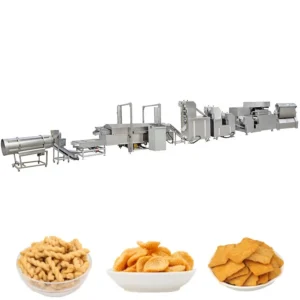
Frying Crispy 3D Corn Bugles Pellets Fried Chips Snacks Food Machine Production Line Bugles Making Extruder
¥100.00 Select options This product has multiple variants. The options may be chosen on the product page -
Orion TURTLE CHIPS Snack Puffing Machinery Internet Celebrity Puffed Four-layer Crispy Production Line
¥65.00 Select options This product has multiple variants. The options may be chosen on the product page -
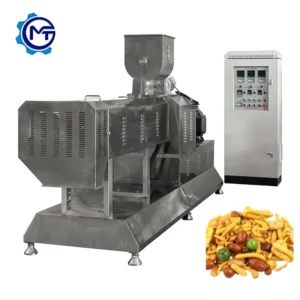
New Automatic Traditional Fried Nimko Making Machine High Productivity Large Capacity Stainless Steel Production Line
¥8,575.00 Select options This product has multiple variants. The options may be chosen on the product page -
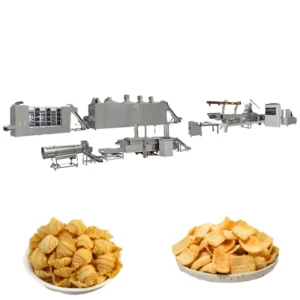
Hot Selling Puffed Ball Snacks Food Processing Line Fried Snacks Processing Line Corn Puff Snacks Machine
¥100.00 Select options This product has multiple variants. The options may be chosen on the product page