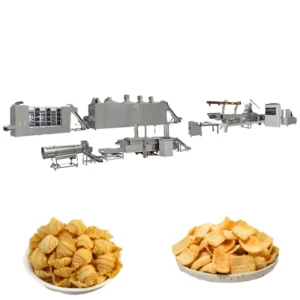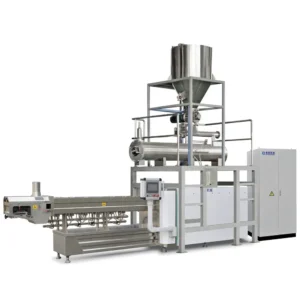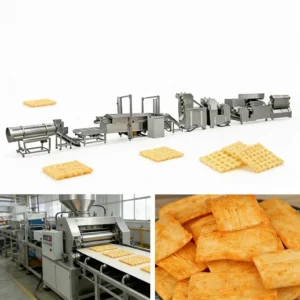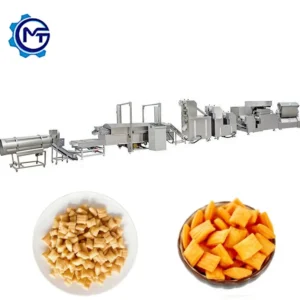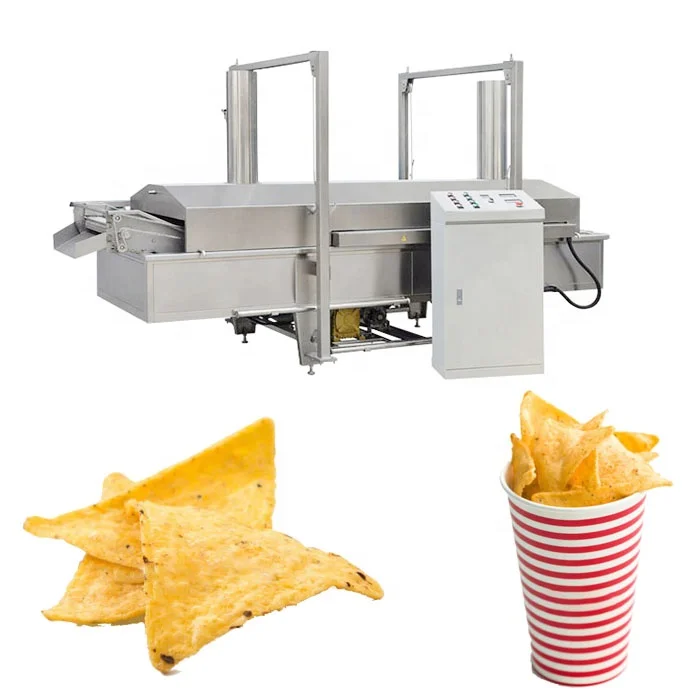
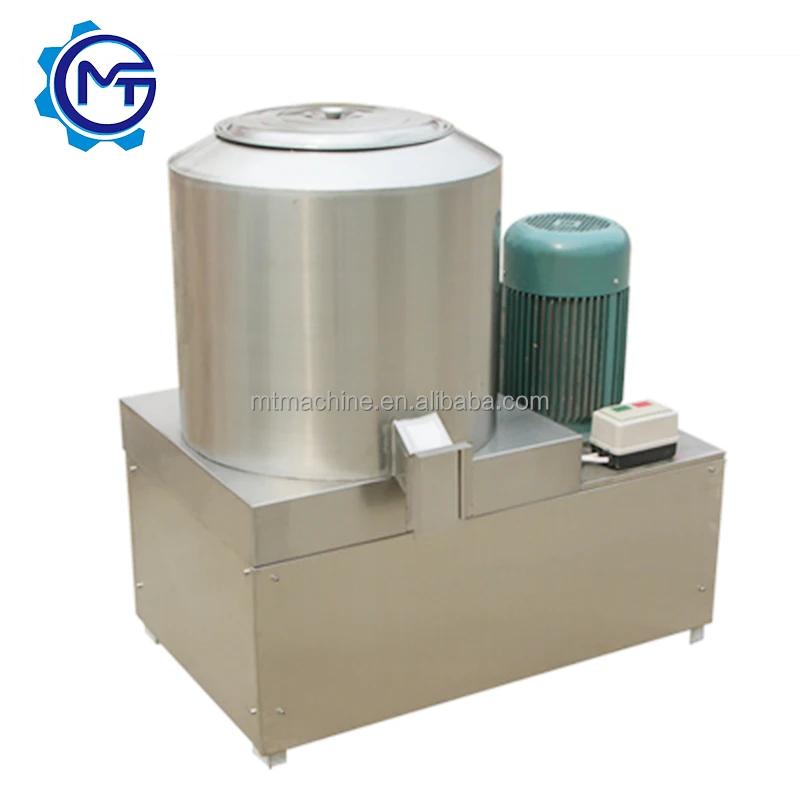
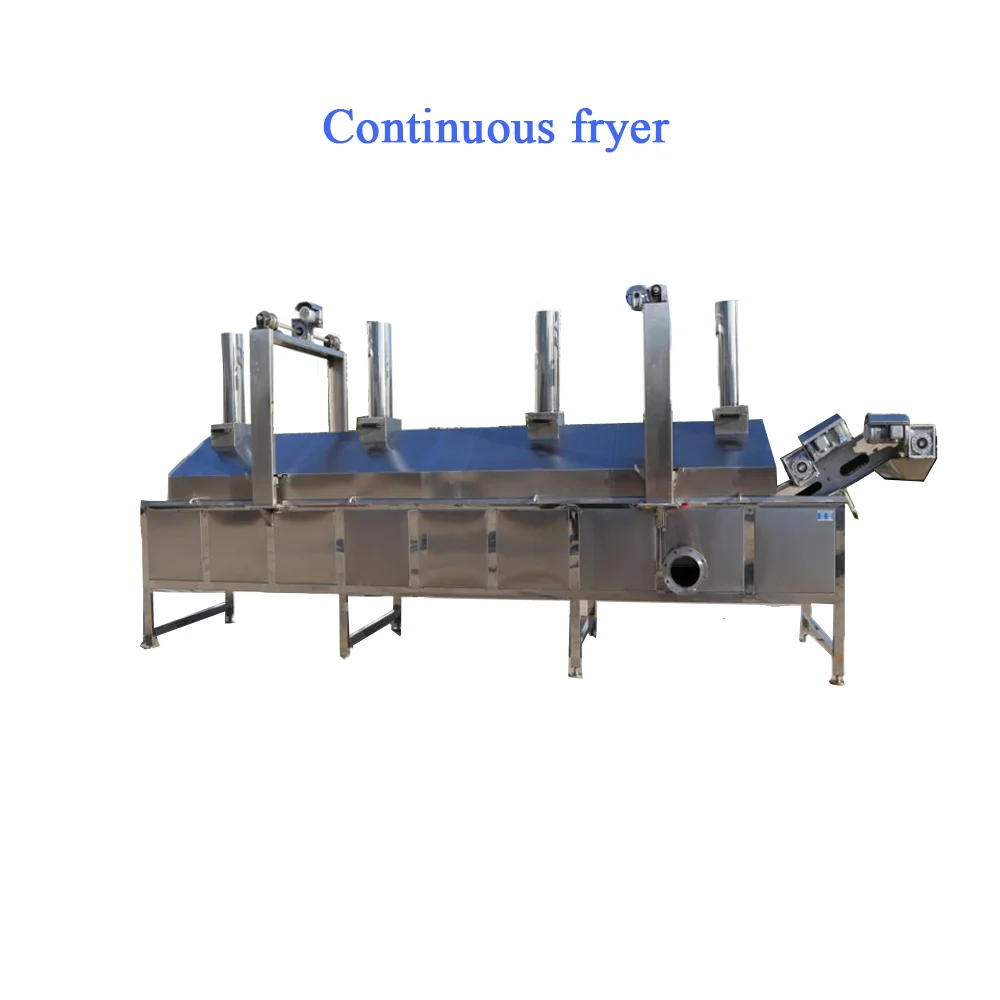


MT65 / MT70 / MT85 / MT75 / MT95 Frying Chips Production Line, Twin-Screw Extruder, 304 Stainless Steel — integrated from batching to packing with throughput matched across every station.
- Screw configuration and die design specified to your raw material formulation and target shape
- Fryer temperature range 0–260 °C with capacity aligned to extruder output
- Supports Bugles, tortilla chips, rice crust and custom 2D/3D puffed snack formats
In-house testing workshop runs trial batches on your actual flour blend before shipment, with full layout, electrical schematic and screw record delivered for turnkey commissioning.
Description
Integrated Line Throughput Matching — Every station from powder mixing to flavoring is sized against the extruder’s actual output on your specific formulation, preventing bottlenecks that idle downstream capacity.
Technical Specifications
| Parameter | Value |
|---|---|
| Product Type | Frying Snack Production Line (Bugles / Tortilla Chips) |
| Available Models | MT65, MT70, MT85, MT75, MT95 |
| Extruder Type | Twin Screw |
| Installed Power Range | 142 kW (MT65) to 370 kW (MT95) |
| Actual Power Range | 100 kW (MT65) to 280 kW (MT95) |
| Output Capacity | 120–150 kg/h (MT65) to 800–1000 kg/h (MT95) (basis not stated in source — confirm raw material formulation, moisture content, product shape) |
| Fryer Temperature Range | 0–260 °C |
| Fryer Capacity | 200–300 kg/h (basis not stated in source — confirm product shape, moisture, oil type) |
| Powder Mixer Tank Volume | 150 kg |
| Powder Mixer Rotary Speed | 385 rpm |
| Main Contact Material | 304 Stainless Steel |
| Overall Line Dimensions | 22000 × 1200 × 2200 mm (MT65) to 30000 × 1500 × 2800 mm (MT95) |
| Control System | PLC / MCC (confirm requirement) |
| Voltage & Frequency | Configurable to target market (confirm before production) |
| Standards | CE, ISO |
Application Suitability
| Application | Material or Output |
|---|---|
| Bugles and corn chip production | Corn flour, corn grits, masa harina blends |
| Tortilla chip and triangle snack lines | Corn and wheat flour formulations with moisture conditioning |
| Rice crust and puffed snack manufacturing | Rice flour, starch blends, and cereal mixes |
| 2D and 3D shaped fried snacks | Die-cut extrudates including fish, gourd, duck, and tree shapes |
| Non-fried puffed snack variants | Extruded and dried products bypassing the fryer station |
Why Nominal Line Capacity Fails at Commissioning
A Frying Chips Production Line turnkey quoted on nameplate output rarely holds that rate once your actual flour blend enters the extruder.
Snack manufacturers frequently discover during commissioning that the extruder cannot sustain the quoted throughput on their specific corn or wheat formulation. The fryer then runs half-empty, the flavoring drum operates below its coating threshold, and the entire line settles at a fraction of the paid-for capacity. The disconnect usually traces back to a quotation built on generic screw configurations and standard moisture assumptions rather than a trial against the buyer’s raw material [NEED_CITE: extrusion throughput variance across raw material formulations]. I have seen lines sit idle for days while engineers swapped screw elements and adjusted barrel zones just to approach the promised output.
Screw Configuration Dictates Product Density and Expansion
The twin-screw extruder at the heart of this Frying Chips Production Line turnkey is configured with screw elements and die geometry matched to the target snack shape and raw material behavior. Corn-based bugles require a different compression ratio and shear profile than wheat-based tortilla chips, and the screw arrangement directly controls how much the product expands before it reaches the fryer. Getting this wrong produces chips that either absorb too much oil or emerge too dense for the market specification.
Matching Fryer and Flavoring Stations to Extruder Output
A common failure in assembled lines is the fryer running at partial load because the extruder cannot feed it, or the flavoring drum coating unevenly because product flow is inconsistent. Each station in this line is specified together so that the powder mixer batch cycle, the extruder throughput, the fryer dwell time, and the flavoring drum rotation align. This throughput matching means the line reaches steady-state production faster during commissioning and maintains consistent product quality across shifts [NEED_CITE: line balancing principles in snack food manufacturing].
Reading the Power and Dimension Data
The installed power figures across the MT65 through MT95 models represent peak connected load, while actual power reflects typical running consumption during steady-state extrusion and frying. The gap between these values matters for electrical infrastructure planning — undersizing the transformer or dedicated circuit to the actual power figure risks tripping during startup surges. The overall line dimensions, reaching up to 30 meters in length for the MT95, determine the workshop bay requirement and must account for operator walkways and raw material staging areas alongside the equipment footprint. The 304 stainless steel construction across main contact components addresses the food safety requirement for corrosion resistance in environments where oil, moisture, and seasoning dust are constant. The fryer’s 0–260 °C range covers the typical 170–200 °C operating window for corn and tortilla chip frying while allowing margin for different oil types and product moisture levels.
The Cost of Skipping Pre-Shipment Verification
When a line ships without a trial run on the buyer’s actual raw material, the first production run becomes the trial — conducted on the factory floor with installation crews still on site and market deadlines pressing. Screw elements may need replacement, barrel zone temperatures require recalibration, and die geometry adjustments delay the entire ramp-up schedule. I recall one project where the absence of spare frying mesh belts and flavoring drum liners from the initial shipment meant ten days of complete downtime when the first wear-out occurred. That experience reshaped how I approach every turnkey project specification [NEED_CITE: spare parts planning for continuous food processing lines].
Why This Line Configuration Works
Every station is specified under one supplier, so the mixer batch size, extruder throughput, fryer capacity, and flavoring drum output are calculated together rather than assembled from separate vendors who each optimize for their own equipment. The screw configuration and die design are matched to the buyer’s raw material and target product shape before production begins. An in-house testing workshop runs trial production on the customer’s actual flour formulation before shipment, generating a report that confirms achievable throughput and product characteristics. The twin-screw extrusion platform handles the range from corn-based bugles to wheat-based tortilla chips and starch-based rice crusts within a single equipment family. Documentation covers the full chain from line layout through electrical schematics to wear parts lists, so the maintenance team has what they need from day one.
Documentation & Verification
- Line layout drawing with throughput matched across mixing, extrusion, frying, and flavoring stations
- Screw and die configuration record specifying your target product shape and expansion ratio
- Electrical schematic with voltage and frequency confirmed to your facility supply
- Trial run report on your raw material confirming output rate and product density before dispatch
- Factory test record documenting steady-state run conditions prior to crating
- CE declaration of conformity and ISO certificate for customs and local regulatory filing
Installation, Commissioning & Support
- Overall dimensions up to 30000 × 1500 × 2800 mm require a clear bay with overhead crane access for station placement
- Installed power up to 370 kW demands a dedicated transformer circuit with startup surge margin confirmed before energization
- Line arrives in sectioned assemblies requiring on-site mechanical joining and electrical interconnection between stations
- First-run commissioning includes barrel temperature profiling and fryer thermostat calibration against your product moisture target
- Operator training covers screw element inspection intervals and die changeover procedures for shape switching
- Wear parts list specifies frying mesh belts, flavoring drum liners, and screw elements with recommended stocking quantities
Preparing Your Project Inquiry
To move from a general inquiry to a configured line proposal, share your target product shape, raw material formulation with moisture content, and daily production target. Include your facility voltage and frequency, the available workshop length and ceiling height, and any existing upstream or downstream equipment the new line must integrate with. If you have a specific flour supplier or a formulation still in development, note that as well — it determines whether the trial run can happen before shipment or must be scheduled as a post-installation product development session.
Frequently Asked Questions
Q: How is line throughput verified against my specific flour formulation and moisture content?
A: Before shipment, the testing workshop runs your actual raw material through the configured extruder and records output rate, product density, and expansion ratio. The trial run report documents these results so you know the achievable throughput before the line arrives at your facility, eliminating guesswork during commissioning.
Q: What voltage, frequency, and control language are confirmed before the line enters production?
A: The electrical schematic and control panel configuration are finalized after your facility supply details and operator language preference are confirmed. This prevents the common delay where a shipped line sits unpowered while transformers are sourced or PLC interfaces are rewritten to match local requirements.
Q: How are the extruder, fryer, and flavoring stations sized to avoid bottlenecks?
A: Each station capacity is calculated against the extruder’s verified output on your formulation, not against generic nameplate ratings. The fryer belt speed, oil volume, and dwell time are matched so product enters and exits at the rate the extruder sustains, and the flavoring drum coating rate is set to that same flow.
Q: What does the phased installation and commissioning schedule look like for a complete line?
A: Installation proceeds station by station — mechanical placement, electrical interconnection, then individual station testing before the full line runs together. Commissioning includes screw configuration fine-tuning, fryer temperature profiling, and flavoring rate adjustment, typically spanning multiple weeks depending on line model and product range complexity.
Q: Can a trial run be done on my raw material before shipment, and what does the report include?
A: Yes. The in-house testing workshop runs your supplied raw material through the configured screw and die setup. The report covers output rate, product dimensions, density, expansion behavior, and any recommended adjustments to moisture or formulation, giving you a verified baseline before the line leaves the factory.
Related products
-
Frying Crispy 3D Corn Bugles Pellets Fried Chips Snacks Food Machine Production Line Bugles Making Extruder
¥100.00 Select options This product has multiple variants. The options may be chosen on the product page -
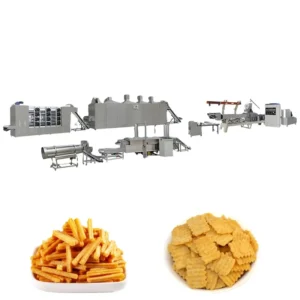
Fried Bugles Chips Production Line Fried Doritos Tortilla Snack Food Extruder
¥100.00 Select options This product has multiple variants. The options may be chosen on the product page -
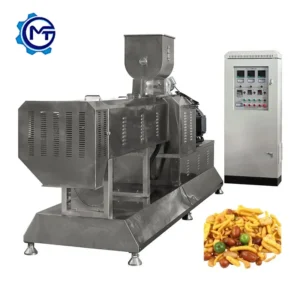
New 100-200kgh Automatic Fried Nimko Extruder Machine Food Grade Stainless Steel for High Productivity Fried Snacks Processing
¥8,575.00 Select options This product has multiple variants. The options may be chosen on the product page -
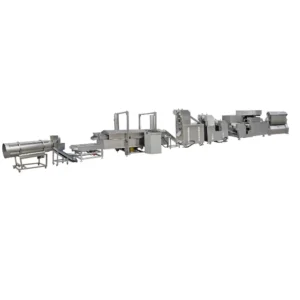
Frying Crispy 3D Corn Bugles Pellets Fried Chips Snacks Food Machine Production Line Bugles Making Extruder
¥100.00 Select options This product has multiple variants. The options may be chosen on the product page