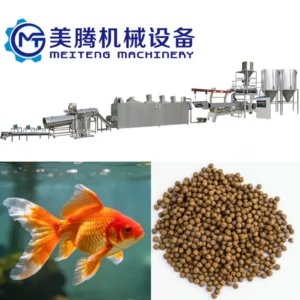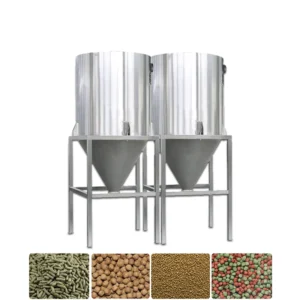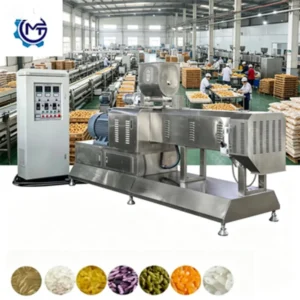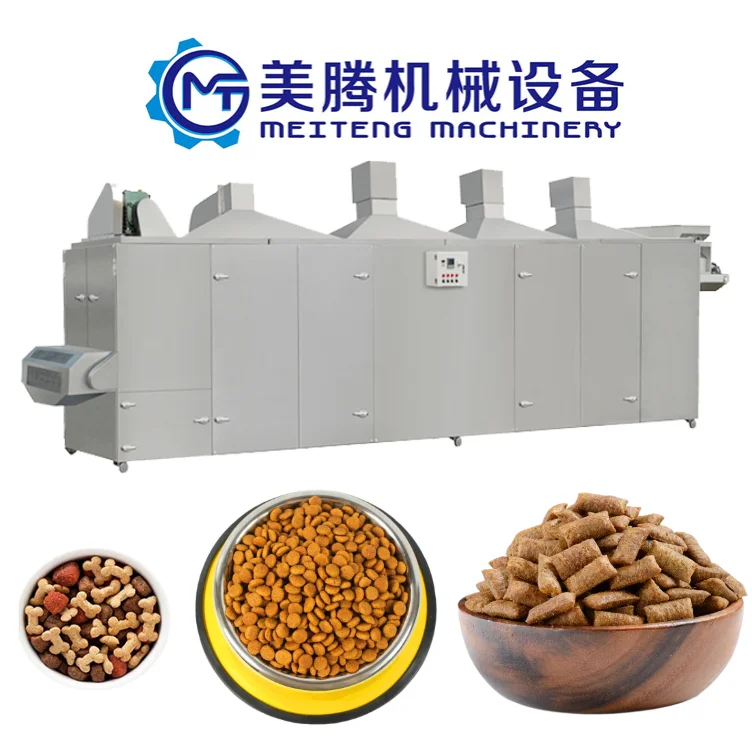


MT85 Twin-Screw Pet Food Processing Line, 500kg/h Output, 45KW — engineered as a fully integrated turnkey project where every station from raw material mixing through extrusion to drying and packaging is throughput-matched to eliminate bottlenecks.
- Screw configuration and die design specified to your formula and target kibble density, not copied from a generic build.
- Full PLC and MCC automation ensures uniform batch-to-batch quality across dry kibble, semi-moist, and treat formats.
- Food-grade contact materials throughout with modular components for quick cleaning and reduced downtime.
Line layout, capacity calculation, and in-house trial run report on your actual raw material provided before shipment, with on-site installation and operator training included.
Description
Integrated Line Throughput — Every station from batching to packing specified under one layout, preventing the dryer or coater from choking an extruder that runs faster than the downstream equipment can handle.
Technical Specifications
| Parameter | Value |
|---|---|
| Product Type | Multi-Purpose Pet Food Processing Line |
| Output Capacity | 500 kg/h (basis not stated in source — confirm raw material / moisture / kibble size) |
| Voltage & Frequency | 380V 50Hz Three Phase |
| Rated Power | 45 kW |
| Control System | PLC and MCC automated control |
| Automation Level | Full Automation |
| Screw Configuration | Twin-screw extruder |
| Line Stations | Raw material mixing, extrusion, drying, packaging |
| Recipe Adaptability | Dry kibble, semi-moist, treats |
| Contact Materials | Food-grade materials throughout |
Application Suitability
| Application | Material or Output |
|---|---|
| Dry kibble for dogs and cats | Corn, meat meal, poultry by-product, vitamin premix |
| Semi-moist pet food | High-moisture meat blends, glycerol-based binders |
| Aquatic feed (floating / sinking) | Fish meal, soy protein, starch carriers |
| Pet treats and dental chews | Gelatin, starch, glycerol, functional additives |
Why Nominal Capacity Figures Mislead Buyers
A line rated at a fixed output number tells you nothing until you define the raw material, moisture content, and target kibble geometry.
I have watched pet food manufacturers sign off on a throughput figure, then discover during commissioning that their actual recipe — often heavier on meat meal and protein than the test grain — drops production by a third or more. The extruder barrel fills differently, the die pressure shifts, and the drying cycle has to extend. When the pet food processing line turnkey supplier has only quoted a headline number, none of this gets caught before the container ships [NEED_CITE: twin-screw extrusion throughput dependency on protein-to-starch ratio].
Matching Extrusion Output to Downstream Drying Capacity
The MT85 extrusion stage is the heart of the system, but an extruder running at full screw speed produces wet extrudate faster than an undersized dryer can handle. When every station — mixing, conveying, extrusion, drying, flavouring, packing — is specified under a single pet food processing line turnkey project, the throughput calculation accounts for the slowest link. This prevents the common scenario where kibble exits the dryer still above target moisture, forcing either a line speed reduction or a quality rejection.
Recipe Flexibility Without Rebuilding the Screw Stack
A twin-screw platform adapts to formula changes by adjusting screw element sequencing, moisture injection, and barrel temperature zones. The MT85 configuration supports dry kibble, semi-moist formats, and treat shapes from the same base hardware. When a producer shifts from a poultry-based recipe to a fish-based aquatic feed, the changeover involves re-staging modular screw elements and swapping the die plate — not replacing the extruder [NEED_CITE: twin-screw element reconfiguration for feed formula changes].
Reading the Specs That Actually Matter for Kibble Density
The 45 kW main drive on the MT85 determines how much shear energy the screws can deliver into the dough mass. Higher protein recipes demand more torque to gelatinise starch fully, and insufficient motor power results in under-cooked extrudate that collapses after exiting the die. The PLC and MCC control system manages barrel temperature zones and screw speed in tandem, maintaining consistent expansion ratio across batches. For floating aquatic feed, the die geometry and moisture profile must be tuned so that the kibble traps enough internal steam to stay buoyant — a parameter set during the in-house trial run, not guessed at the factory floor.
The Cost of Skipping Pre-Shipment Recipe Trials
When a line ships without a trial run on the buyer’s actual raw material, the first week of production becomes an expensive experiment. Screw configurations copied from a generic build may produce kibble that is too dense for the target market or too fragile to survive packaging and transport. Downstream bottlenecks — a flavouring drum that cannot keep pace, a cooler that leaves residual heat in the bag — surface only after installation, when corrective lead times stretch into weeks [NEED_CITE: commissioning delays from untested raw material runs].
Why Procure the Full Line from One Engineering Source
The MT85 line is specified as a single integrated project, meaning the mixing station delivers batch weight at a cadence the extruder can absorb, and the dryer length matches the moisture load leaving the die. Screw configuration and die design are documented against the buyer’s formula, not pulled from a catalogue default. An in-house testing workshop runs the customer’s raw material before dispatch, generating a trial report that locks in the screw element sequence and barrel temperature profile. Electrical schematics confirm voltage, frequency, and control language for the destination market before the panel is wired. Wear parts lists itemise every screw element, die insert, and seal so the first replacement order is placed before the original parts reach end of life.
Documentation & Verification
- Line layout drawing with throughput calculation matched to your recipe and target kibble size
- Screw and die configuration record specified to your raw material, not a generic template
- Trial run report from in-house testing workshop on your actual formula before shipment
- Electrical schematic with voltage, frequency, and PLC language confirmed for your market
- CE declaration of conformity and ISO certificate for customs and regulatory clearance
Installation, Commissioning & Support
- Foundation layout provided for the full 45 kW line footprint, including dryer and conveyor runs
- Dedicated three-phase 380V 50Hz circuit with MCC panel and motor protection specified per station
- Modular station delivery allows phased assembly if workshop access or ceiling height is restricted
- First-run parameter logging on PLC captures screw speed, barrel temperatures, and moisture setpoints
- Operator training covers screw element changeover, die swap procedures, and daily sanitation protocols
- Wear parts kit with spare screw elements, die plates, and seals shipped with the initial order
What to Include in Your Project Enquiry
To size the pet food processing line turnkey layout accurately, share your target recipe with ingredient percentages, the kibble dimensions and density you need, and your daily production target in tonnes. Confirm your workshop’s available voltage and frequency, the control language your operators read, and whether you plan to send a raw material sample for a pre-shipment trial run. If an existing mixer or packaging station will remain in service, provide its throughput rating so the new line can be matched to it.
Frequently Asked Questions
Q: How is the 500 kg/h output capacity verified for my specific recipe?
A: The rated figure must be validated through a trial run using your actual raw material in the in-house testing workshop. Protein content, moisture level, and kibble size all influence real throughput. A trial report documents the achievable output and the screw configuration required, forming the basis of the final line specification.
Q: Can the twin-screw configuration handle both dry kibble and semi-moist treats?
A: Yes. The modular screw elements and interchangeable die plates allow the MT85 to shift between formats. Dry kibble demands higher expansion and lower final moisture, while semi-moist products require gentler shear and precise glycerol dosing. Both are achievable by re-staging the screw stack and adjusting the PLC recipe file.
Q: How do you ensure the dryer does not bottleneck the extruder?
A: Every station is specified under one layout calculation. The dryer length, airflow, and belt speed are matched to the moisture load exiting the die at the extruder’s confirmed throughput. This eliminates the common mismatch where wet kibble piles up ahead of an undersized drying section.
Q: What happens if my local voltage or frequency differs from 380V 50Hz?
A: The electrical schematic is confirmed before the MCC panel is built. Motor ratings, heating elements, and PLC power supplies are selected for your site voltage and frequency. Control interface language is also locked in at this stage so operators can read the HMI from day one.
Q: Is operator training included with on-site installation?
A: Yes. The commissioning schedule includes hands-on training covering daily start-up, screw element changeover, die replacement, sanitation procedures, and PLC recipe selection. A wear parts list and maintenance manual are handed over so your team can plan consumable replacement intervals independently.
Related products
-
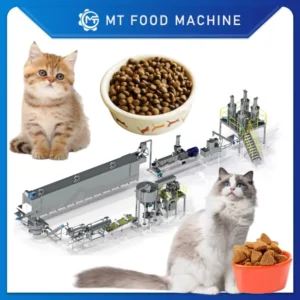
MT Brand 450-550kg/h PLC Controlled Multi-Species Pet Food Processing Line
¥40,000.00 Select options This product has multiple variants. The options may be chosen on the product page -
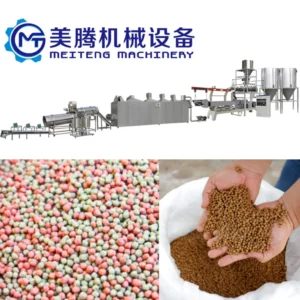
2-3t/h High Capacity Multi-Species Fish Feed Processing Line to Produce Fish Food
¥55,000.00 Select options This product has multiple variants. The options may be chosen on the product page -
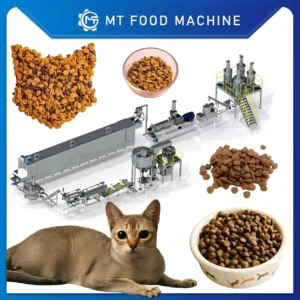
200-250kg/h Capacity PLC Controlled Multi-Species Dog Food Processing Line with MT-70 Extruder
¥35,000.00 Select options This product has multiple variants. The options may be chosen on the product page -
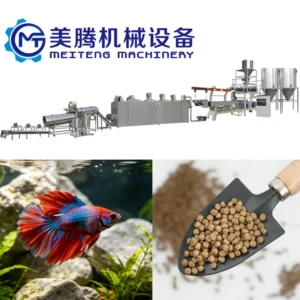
1.0-1.2t/h High Capacity Multi-Species Fish Feed Processing Line to Produce Fish Food
¥45,000.00 Select options This product has multiple variants. The options may be chosen on the product page