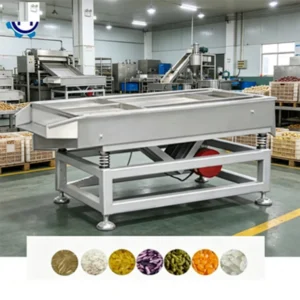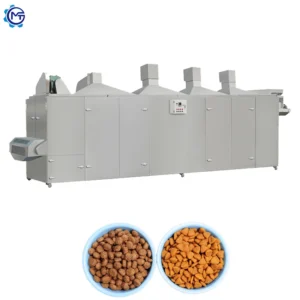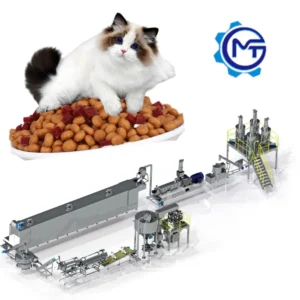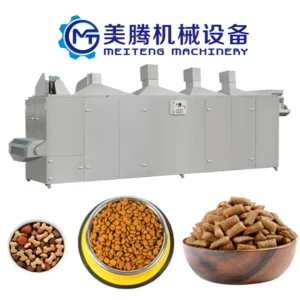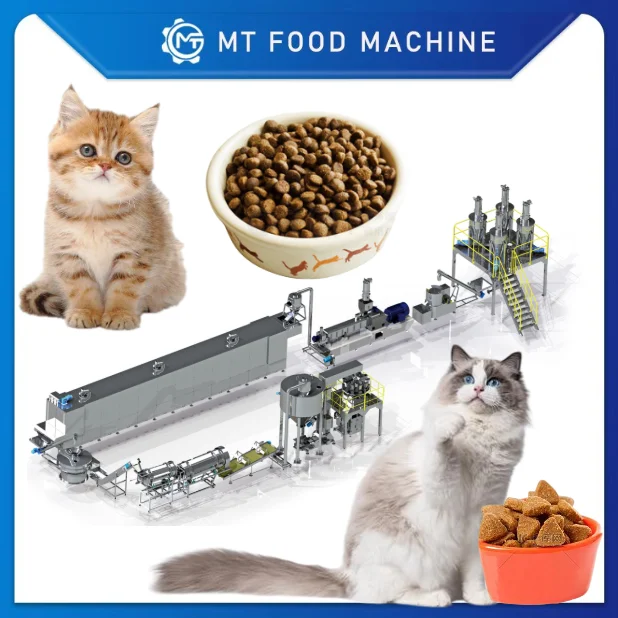


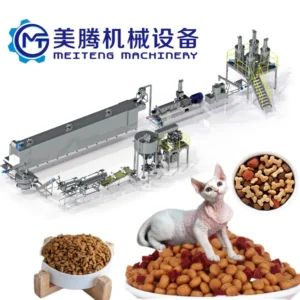
Multi-Species Pet Food Production Line, PLC Controlled, Twin-Screw Extrusion, 450-550 kg/h — configured for cat, dog, fish, bird, and cattle feed with matched throughput across every station from batching to packing.
- Screw and die configuration specified to your raw material and target product density, ensuring consistent expansion and texture across production batches.
- Complete turnkey integration under one supplier eliminates bottleneck risk between extruder output and downstream dryer or coating capacity.
Line layout, capacity calculation, and trial run report on your actual raw material provided before shipment, with on-site installation and operator training included.
Description
Turnkey Line Integration — Throughput is matched across every station from batching to packing, eliminating the bottleneck risk of assembling from separate vendors.
Technical Specifications
| Parameter | Value |
|---|---|
| Product Type | Multi-Species Pet Food Processing Line |
| Output Capacity | 450-550 kg/h (basis not stated in source — confirm raw material type, moisture content, and product format) |
| Control System | PLC Controlled |
| Screw Type | Twin-screw |
| Application Scope | Cat, dog, fish, bird, and cattle feed production |
| Line Stations | Batching, extrusion, drying, flavoring/coating, cooling, packing |
| Assembly State | Complete processing line (turnkey configuration) |
| Technical Support | Video technical support, online after-sales service |
Application Suitability
| Application | Material or Output |
|---|---|
| Dry kibble for dogs and cats | Poultry meal, corn flour, bone meal, fish meal |
| Floating and sinking aquatic feed | Soybean meal, shrimp head meal, wheat starch |
| Bird and cattle feed pellets | Grain blends, vitamin-fortified premixes |
| Multi-species production runs | Flexible formulation switching on shared line |
Why the Extruder Output Means Nothing Without the Dryer
A pet food processing line turnkey project succeeds or fails based on the weakest station in the chain, not the nameplate capacity of the extruder.
I once saw a Southeast Asian kibble producer lose entire batches because the dryer could not keep pace with the extruder output. The extruder pushed material through at a steady rate, but moisture levels in the finished product drifted outside specification by the time pellets reached the packing station. The root cause was simple: the line had been assembled from separate vendors who never calculated throughput as a single system. When you specify a pet food processing line turnkey solution, every downstream station must absorb the upstream output without creating a queue or forcing the extruder to idle. [NEED_CITE: throughput matching principles in continuous extrusion lines]
Matching Stations from Batching Through Packing
The core engineering challenge in a complete feed line is balancing residence time and capacity at each station. The batching system must deliver consistent premix batches at intervals that match the extruder feed rate. The dryer must have sufficient belt length and airflow to reduce pellet moisture to target levels before the product reaches the flavoring drum. If any station falls short, the entire pet food processing line turnkey configuration operates below its intended output, regardless of what the extruder can theoretically produce.
Screw and Die Configuration for Each Target Species
Different species demand different pellet densities, textures, and shapes. Floating aquatic feed for catfish requires a specific screw profile and die geometry that promotes high expansion and low bulk density. Dry kibble for dogs needs a denser, harder pellet that survives handling and shipping without excessive breakage. The screw configuration and die design must be specified against the buyer’s actual raw material formulation, not copied from a generic build. Switching between species on the same line involves changing screw elements and dies, which is why having a documented configuration record for each product type is essential for repeatable results. [NEED_CITE: twin-screw extrusion parameters for varying feed densities]
What the Control System Actually Manages
The PLC control system governs barrel temperature zones, screw speed, feed rate, and cutter speed in coordinated sequences. For a multi-species line, this coordination becomes critical because each product recipe demands a different thermal and mechanical profile. The operator interface stores recipe parameters so that changeovers between cat kibble and floating fish feed follow a repeatable sequence rather than relying on manual adjustments. Consistent parameter control across production batches is what separates a line that holds its specification from one that drifts after the first shift.
The Cost of an Unmatched Line
When the coating drum cannot handle the extruder output, seasoned pellets accumulate and cool unevenly, causing fat migration and rancidity issues in stored product. When the cooling conveyor is undersized, warm pellets enter the packing station and generate condensation inside sealed bags, shortening shelf life. These downstream failures are rarely blamed on the line design — they show up as quality complaints months after commissioning. Every mismatch between stations compounds into waste, rework, and customer returns that erode the margin the line was supposed to deliver. [NEED_CITE: post-extrusion handling defects from throughput imbalance]
Why Procure This Line as a Single Project
Throughput calculations are performed across every station before the line is quoted, so the extruder, dryer, and coater are specified as matched components rather than independent purchases. Screw and die configurations are documented against the buyer’s raw material and target product specification before production begins. An in-house testing workshop conducts trial runs on the buyer’s actual formulation, generating a test report before the line ships. Electrical schematics confirm voltage, frequency, and control language to match the installation site, preventing commissioning delays. On-site installation includes operator training on recipe changeover procedures specific to each species the line will produce.
Documentation & Verification
- Line layout drawing with throughput calculation for every station in the sequence
- Screw and die configuration record matched to your raw material formulation
- Trial run report from in-house testing workshop on your actual feed ingredients
- Electrical schematic confirming voltage, frequency, and PLC interface language
- Factory test record documenting extruder output and downstream station performance
- CE declaration of conformity with applicable machinery directive standards
Installation, Commissioning & Support
- Foundation plan showing load points and utility connections for the PLC-controlled extruder and dryer
- Dedicated power circuit specification matching confirmed voltage and frequency for all line motors
- Modular station delivery allowing phased assembly in facilities with restricted access
- First-run parameter setting for each species recipe stored in the PLC memory
- Operator training on screw changeover and die replacement for multi-species production
- Wear parts inventory list covering screws, dies, and cutter blades for initial operating period
What We Need to Build Your Line Proposal
To configure a line that holds its rated output on your material, we need your target species list, raw material formulation with moisture content, desired pellet size and density for each product, daily production volume target, workshop floor dimensions and ceiling height, and your site voltage and frequency. If you are replacing an existing line, share the current bottleneck station so we can address it directly in the new layout.
Frequently Asked Questions
Q: How is the 450-550 kg/h capacity verified against specific raw material and product format?
A: The stated range requires confirmation against your raw material type, moisture content, and target pellet format. Before the line ships, we run a trial in our testing workshop using your actual formulation and document the achieved output in a test report. This ensures the quoted capacity reflects your production reality, not a generic benchmark.
Q: What screw and die configuration is specified for floating aquatic feed versus dry kibble?
A: Floating feed requires a screw profile that maximizes expansion and a die geometry that produces low-density pellets. Dry kibble uses a configuration that yields higher density and structural hardness. We document a separate screw and die record for each product type your line will produce.
Q: How is throughput balanced between extruder output and downstream dryer or coating capacity?
A: Each station is sized during the layout phase based on the extruder’s confirmed output on your material. The dryer belt length, airflow, and coating drum volume are calculated so no station creates a queue or forces the extruder to reduce speed during continuous operation.
Q: What trial run is performed on my raw material before the line ships?
A: We conduct a production trial in our in-house testing workshop using the raw material formulation you supply. The trial covers extrusion parameters, pellet density, and downstream drying behavior. A full report with product samples is provided before shipment approval.
Q: What voltage, frequency, and control language options are available for international installation?
A: Electrical specifications are confirmed during the proposal stage to match your site utility supply. The PLC interface language is configured to your operator preference. The electrical schematic and voltage confirmation document are included in the delivery package to prevent commissioning delays.
Related products
-
1.0-1.5t/h High Capacity Multi-Species Fish Feed Processing Line to Produce Fish Food
¥45,000.00 Select options This product has multiple variants. The options may be chosen on the product page -
2-3t/h High Capacity Multi-Species Fish Feed Processing Line to Produce Fish Food
¥55,000.00 Select options This product has multiple variants. The options may be chosen on the product page -
250-300kg/h Capacity PLC Controlled Multi-Species Cat Food Processing Line
¥35,000.00 Select options This product has multiple variants. The options may be chosen on the product page -
MT70 100-200kg/h Dog & Cat Pet Food Processing Line with 380V 50Hz Three Phase Power
¥35,000.00 Select options This product has multiple variants. The options may be chosen on the product page