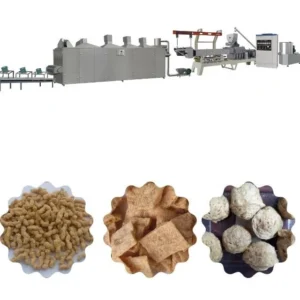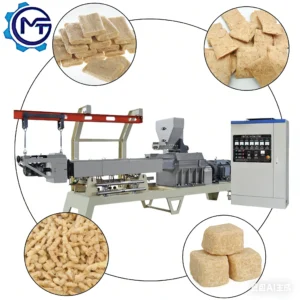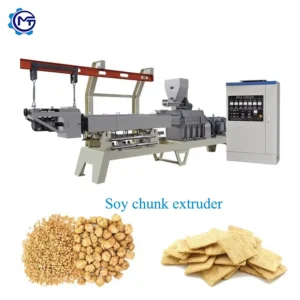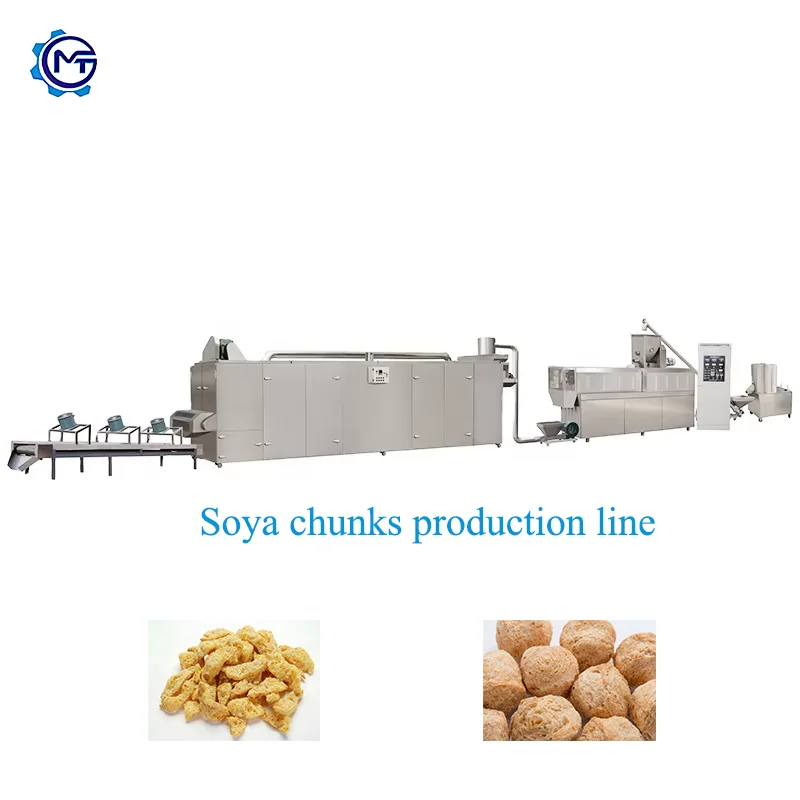

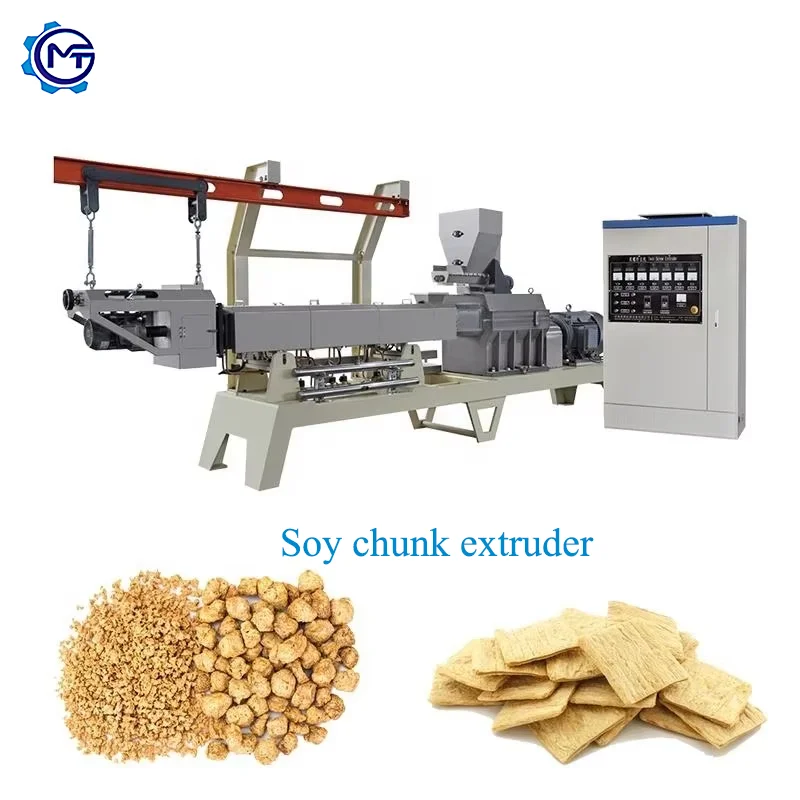
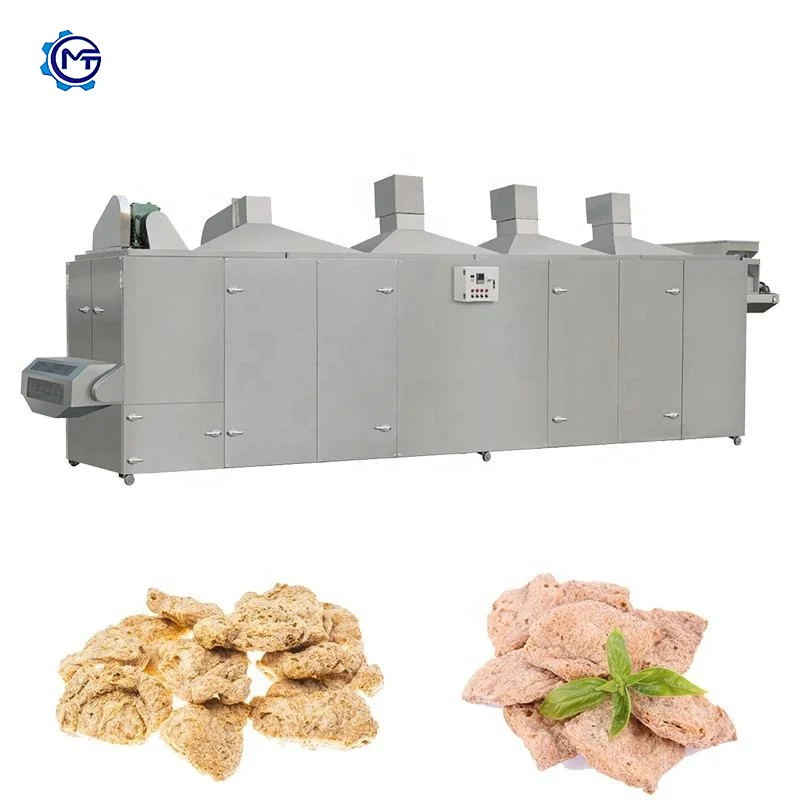


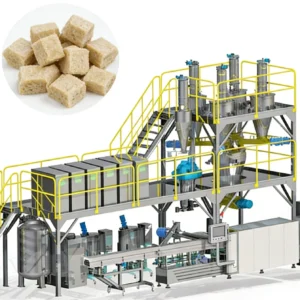
Plant Based Meat Soy Chunk Production Line, Twin-Screw Extrusion, PLC & MCC Control — engineered for consistent texturized vegetable protein output from batching through packing.
- Screw configuration and die design specified to your soy protein formulation and target chunk density
- In-house trial runs on your actual raw material verify texture, expansion and density before shipment
- Throughput-matched stations across extrusion, drying and cooling eliminate single-point bottlenecks
Complete turnkey TVP line with layout, capacity calculation and phased commissioning schedule delivered under one supplier for full accountability.
Description
Integrated Extrusion-to-Packing Integration — Our testing workshop runs your specific soy protein batch through the configured screw and die set before the line ships, confirming chunk texture and density against your spec.
Technical Specifications
| Parameter | Value |
|---|---|
| Product Type | Textured Vegetable Protein (Soy Chunk) Extrusion Production Line |
| Extruder Configuration | Twin-screw extrusion platform |
| Process Control | PLC and MCC automated control |
| Contact Surfaces | Food-grade stainless steel in all product zones |
| Standard Certifications | CE (since 2014), ISO certified |
| Line Sequence | Batching and mixing → Extrusion → Drying → Cooling → Packing |
| Output Capacity | Basis to be confirmed on buyer’s raw material and target chunk size |
| Electrical Supply | Voltage and frequency configurable to buyer’s market |
| Control Interface Language | Configurable options available |
| Screw and Die Setup | Matched to soy formulation and target chunk geometry |
Application Suitability
| Application | Material or Output |
|---|---|
| Soy chunk and TVP production for retail and food service | Defatted soy flour and soy protein concentrate |
| Plant-based meat alternative ingredient processing | Soy isolate blended with starch and fiber |
| Fortified protein ingredient for nutrition programmes | Soy and pulse protein blends |
| Industrial texturized protein supply | High-proportion soy meal with varying fiber content |
Why the Nominal Capacity Figure Misleads TVP Buyers
A textured vegetable protein production line turnkey rated on one soy formulation will perform very differently on yours.
We learned this the hard way. A client ordered a soy protein line based on the sample capacity we quoted, but the soy meal they sourced locally had lower protein content than the trial material. The extrudate lost its fibrous structure, the chunks fell apart after drying, and actual throughput dropped sharply [NEED_CITE: impact of raw material protein variability on twin-screw extrusion output]. The entire first production run was scrapped. That failure reshaped how we now scope every TVP project: no capacity figure goes into a contract until your actual raw material has run through our testing workshop.
Matching Screw Geometry to Soy Protein Behavior
The fibrous, meat-like structure that defines a quality soy chunk comes from how the twin-screw extruder handles shear, temperature, and residence time. Screw element sequence and pitch determine how thoroughly the protein unfolds and re-aligns under heat and pressure. A textured vegetable protein production line turnkey configured for one soy isolate brand may produce dense, rubbery chunks when switched to another, because the moisture absorption and gelatinization window shifts.
Die Design and Post-Extrusion Handling
The die plate shapes the extrudate and controls expansion rate as the material exits the barrel. Chunk size, internal porosity, and surface texture all trace back to die orifice geometry and the pressure drop at the face. After extrusion, the dryer must remove moisture at a rate that preserves the fibrous network without case-hardening the exterior. If dryer capacity does not match extruder output, chunks accumulate, cool unevenly, and develop internal cracks that weaken the final texture [NEED_CITE: moisture gradient effects on texturized protein structure].
Reading the Specs That Matter for TVP
The twin-screw platform gives process engineers more independent variables to adjust than a single-screw design — barrel zones, screw speed, and feed rate can all be tuned without changing hardware. This flexibility matters when soy formulations vary between batches or when a buyer wants to run both coarse chunks and fine mince on the same line. PLC control locks in the recipe parameters once they are established during trial runs, so operators reproduce the same barrel temperature profile and screw speed every shift. The MCC panel manages power distribution across the extruder drive, dryer heaters, and cooling fans, preventing voltage drops on one station from disrupting another. Food-grade contact surfaces throughout the line mean no compromise on hygiene standards when producing protein destined for human consumption.
The Cost of Skipping Line-Level Throughput Balancing
When extruder output exceeds dryer capacity, the bottleneck does not just slow the line — it degrades product. Wet chunks pile on the conveyor, stick together, and develop surface marring that ruins visual quality. Buyers who sourced the extruder and dryer from separate vendors often discover this mismatch only during commissioning [NEED_CITE: throughput imbalance consequences in multi-station food processing lines]. The extruder is already paid for, the dryer is already installed, and the only fix is adding capacity or accepting reduced output.
Why Procurement From a Single Line Builder Changes the Equation
Every station in our TVP line is specified against the same production target, so the extruder, dryer, and cooler are sized to each other from the first engineering drawing. Screw and die configurations are not pulled from a generic catalog — they are developed during a trial run on your soy material in our testing workshop. Pre-sales consultation covers layout and utility planning, and that same engineering team follows through to on-site installation and operator training. The trial run report travels with the shipment, giving your production crew a documented baseline of temperatures, screw speeds, and moisture levels to replicate from day one. CE certification and ISO standards apply across the line, not just the extruder.
Documentation & Verification
- Line layout and throughput calculation balanced across every station
- Screw and die configuration record tied to your soy formulation
- Trial run report on your raw material confirming chunk density and texture
- Electrical schematic with voltage and frequency locked to your facility
- Factory test record and packing photographs before dispatch
- Operation and maintenance manual with wear parts list
Installation, Commissioning & Support
- Floor space and utility planning based on the full line footprint from batching to packing
- Dedicated power circuit sizing confirmed against PLC and MCC total connected load
- Modular station delivery with on-site assembly sequence and rigging plan
- First-run parameter setup referencing the trial run report from our testing workshop
- Operator training on PLC interface, recipe storage, and daily screw and die inspection
- Wear parts supply chain for screws, dies, and dryer belts with lead times confirmed at order
Before You Request a Quote
To scope a line that holds its rated output on your material, we need your soy protein source and typical formulation ratios, the chunk size and density your market expects, and the daily production volume you plan to run. Share your facility voltage and frequency, available floor area, and whether you have existing upstream mixing or downstream packing equipment. If you can send a sample of your soy material, we will run it in our testing workshop and return a trial report before any order commitment.
Frequently Asked Questions
Q: How is line capacity verified on actual soy protein raw material rather than nominal figures?
A: We require a sample of your soy material and run it through the proposed screw and die configuration in our testing workshop. The trial run produces actual chunk samples and a documented report covering throughput, texture, density, and moisture content. Only then do we commit a capacity figure in the proposal.
Q: How are screw configuration and die design selected for different soy chunk sizes and densities?
A: The screw element sequence and pitch are adjusted to control shear and residence time for your specific protein content and target fiber structure. Die orifice diameter and geometry are chosen to produce the chunk shape and internal porosity your market requires, validated during the pre-shipment trial run.
Q: What is the phased installation and commissioning schedule for a complete turnkey TVP line?
A: Stations arrive in a planned sequence matching the line layout. Mechanical installation precedes electrical connection to the MCC panel, followed by PLC programming and dry testing. Commissioning runs your raw material through the full sequence from batching to packing, with operators trained on the verified recipe parameters.
Q: How is throughput balanced between extruder, dryer and cooling stations to prevent bottlenecks?
A: Each station is sized against the same production target during the engineering phase. The extruder output rate, dryer belt length and heat input, and cooling conveyor capacity are calculated together so no single station accumulates backlog or forces the line to run below its verified rate.
Related products
-
High Moisture Vegetarian Meat Extrusion Machine
¥9,500.00 Select options This product has multiple variants. The options may be chosen on the product page -
Meat Taste Textured Soybean Protein Processing Machine Vegetable Protein Soy Meat Making Machine
¥8,650.00 Select options This product has multiple variants. The options may be chosen on the product page -
CE Certified Vegetarian Meat Processing Machine
¥9,500.00 Select options This product has multiple variants. The options may be chosen on the product page -

Vegetarian Meat Floss Production Line with Twin Screw
¥9,500.00 Select options This product has multiple variants. The options may be chosen on the product page