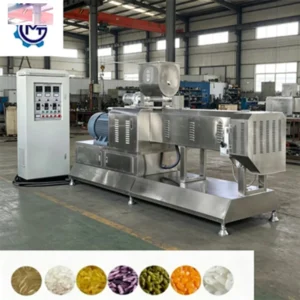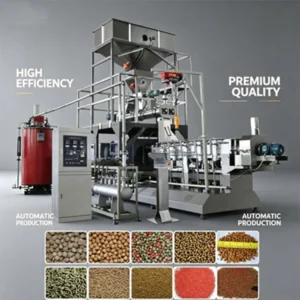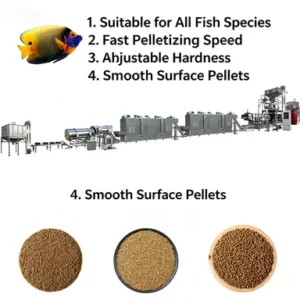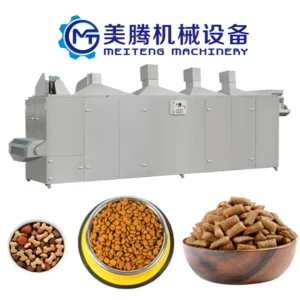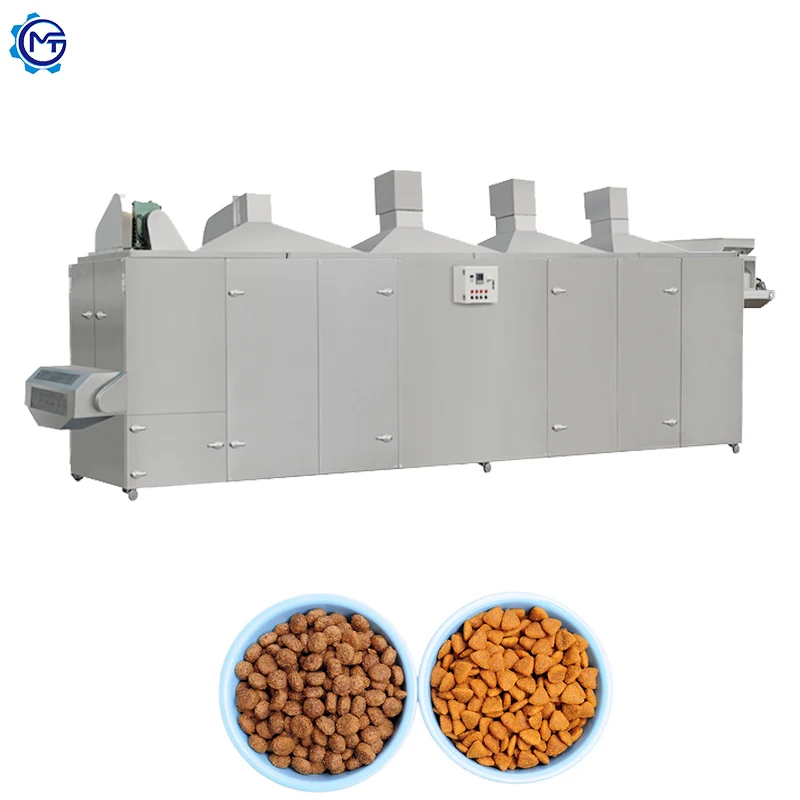


Pet Food Making Machine Production Line, Twin-Screw Extruder, PLC & MCC Control — designed as a complete turnkey project from batching through extrusion, drying, coating, cooling, and packing.
- Delivered as one integrated line with every station throughput-matched to your formulation and target kibble density
- Screw configuration and die design specified to your raw material, validated via in-house trial runs before shipment
Backed by single-supplier accountability across layout design, phased installation, and operator training to ensure the line performs as engineered.
Description
Throughput-Matched Line Architecture — Every station from batching to packing is engineered under one project scope to prevent wet kibble pile-ups and downstream bottlenecks on your actual formulation.
Technical Specifications
| Parameter | Value |
|---|---|
| Product Type | Twin Screw Pet Food Extrusion Production Line |
| Output Capacity | Up to 3 tons per hour (basis not stated in source — confirm raw material formulation, moisture content, and kibble size) |
| Screw Configuration | Twin-screw |
| Control Architecture | PLC and MCC control |
| Process Scope | Complete line: batching, mixing, extrusion, drying, flavouring, coating, cooling, packing |
| Construction | Food-grade contact materials throughout |
| Certification | CE, ISO |
| Warranty | 1-year comprehensive |
Application Suitability
| Application | Material or Output |
|---|---|
| Dry dog kibble production | Corn, meat meal, bone meal, vitamin premix blends |
| Dry cat kibble production | Fish meal, poultry by-product, taurine-enriched formulations |
| Floating aquatic feed | Soybean meal, starch-rich binders for low-density pellet expansion |
| Sinking aquatic feed | High-protein formulations requiring controlled densification |
Why "Rated Capacity" Means Nothing Without a Line-Wide Throughput Check
A pet food making machine production line quoted at a headline output figure is worthless if the dryer, coater, or cooler downstream cannot absorb that volume on your specific recipe.
I have watched premium extrusion lines where the twin-screw extruder pushed full speed while the dryer belt loaded with wet kibble that simply sat there, absorbing moisture in humid workshop air instead of losing it. The product spoiled before it ever reached the coating drum. That mismatch is not a commissioning glitch — it is a project-level planning failure. When throughput is balanced across every station against the real bulk density and moisture profile of your formulation, the line holds its rate without product piling up anywhere. [NEED_CITE: throughput balancing in continuous food processing lines]
Layout Engineering That Treats the Line as One System
A turnkey pet food extrusion line is not a collection of standalone machines bolted together. The physical layout determines how product moves between stations, how operators access maintenance points, and how utility lines route through the facility. Our layout proposals start with your workshop dimensions and ceiling height, mapping every conveyor run, dryer exhaust duct, and electrical cabinet position before a single machine is built. This prevents the common scenario where an extruder is delivered and the dryer physically will not fit in the allocated space.
Commissioning Phases and Operator Readiness
Phased installation means the batching and mixing section can be commissioned and validated before the extrusion and downstream stations arrive, reducing the total on-site disruption window. Operator training runs parallel to the final commissioning phase, so your team learns the PLC interface, recipe changeover procedures, and emergency stop sequences on live product rather than in a classroom. This approach means the pet food making machine production line is producing saleable output within days of final handover, not weeks. [NEED_CITE: phased installation schedules in food plant projects]
Reading the Specifications That Actually Matter
The twin-screw configuration handles formulations with high fat or meat-meal content that would stall a single-screw extruder, because the intermeshing screws create positive conveying and self-wiping action. The PLC and MCC control architecture means every station — mixer, extruder, dryer, coater, cooler — shares a unified control language, so a recipe change at the batching stage automatically adjusts extruder barrel temperature zones and dryer belt speed. Food-grade contact materials across all product-touching surfaces are non-negotiable for pet food and aquatic feed destined for regulated markets. The 1-year comprehensive warranty covers the full line scope, not just the extruder in isolation.
The Hidden Cost of Undersized Downstream Equipment
An extruder that outpaces its dryer creates more than a product quality problem. Wet kibble accumulating on conveyor transfers attracts insects and microbial growth in warm climates, turning a throughput advantage into a food safety incident. Undersized coating drums leave uneven fat and palatant distribution, causing retailers to reject entire batches for inconsistent colour and aroma. These failures trace back to a line that was quoted station-by-station instead of engineered as one system. [NEED_CITE: microbial contamination risks in wet intermediate pet food products]
What Single-Supplier Project Accountability Changes
Every station in this pet food making machine production line is throughput-matched against the next, so the dryer capacity, cooling conveyor length, and coating drum volume are all calculated from the same formulation data. Screw configuration and die design are specified to your raw material and target kibble density before production begins. The in-house testing workshop runs trial production on your actual ingredients before shipment, generating a documented report you review before the machines leave the factory. Electrical schematics confirm voltage, frequency, and control language for your market before wiring starts. Pre-sales engineering, on-site installation, commissioning, and ongoing maintenance all sit under one supplier’s responsibility, so there is no finger-pointing between vendors when a station underperforms.
Documentation & Verification
- Line layout and capacity calculation showing matched throughput across every station
- Trial run report produced on your raw material in the testing workshop before dispatch
- Screw and die configuration record tied to your formulation and target kibble specification
- Electrical schematic with voltage, frequency, and control language confirmed for your facility
- Factory test record covering the full line sequence from batching through packing
Installation, Commissioning & Support
- Foundation and floor-load planning matched to the extruder motor weight and dryer span
- Dedicated power circuit specification aligned with PLC and MCC control panel draw requirements
- Assembly sequencing so the batching section commissions before downstream stations arrive
- Live-product trial runs during commissioning to validate barrel temperature profiles and die selection
- Operator training on recipe changeover, screw wear inspection, and emergency stop procedures
- Wear parts inventory plan listing screws, dies, and barrel sleeves with reorder intervals
What We Need to Build Your Line Proposal
Send us your target product type — kibble size, shape, and density range — along with the raw material formulation you intend to run. Include your facility floor plan with ceiling height and column positions, the local voltage and frequency standard, and whether your operators require a specific control language. If you have upstream milling or downstream packing equipment already in place, share those specifications so the new line throughput can be matched to your existing stations.
Frequently Asked Questions
Q: How is line throughput verified across every station against my specific raw material?
A: We run your actual formulation through the in-house testing workshop before shipment. The trial covers the full sequence — mixing, extrusion, drying, and coating — and generates a documented report showing real throughput at each station. This eliminates the risk of a dryer or cooler that cannot keep pace with the extruder on your recipe.
Q: What does the turnkey installation timeline look like from site preparation to commissioning?
A: Phased installation begins with foundation and utility rough-in guided by our layout drawings. Station delivery and assembly follow a sequenced schedule so upstream sections commission first. Operator training runs during final commissioning on live product, typically bringing the line to stable production within days of mechanical completion.
Q: How are utility requirements planned for the complete line at my facility?
A: The line proposal includes a utility schedule covering electrical load per station, steam demand for the dryer and conditioner, compressed air for pneumatic gates, and water for the batching system. These figures are calculated from your confirmed formulation and target output, not generic estimates.
Q: What documentation accompanies the full line delivery?
A: You receive a line layout with capacity calculations, electrical schematics with confirmed voltage and frequency, screw and die configuration records matched to your product, a trial run report on your raw material, operation manuals for every station, and a wear parts list with reorder guidance.
Q: How is ongoing maintenance and spare parts supply handled after commissioning?
A: The wear parts list identifies screws, dies, and barrel sleeves with expected replacement intervals based on your formulation abrasiveness. Spare parts are supplied directly, and our technical support team provides remote diagnostics through the PLC interface when line performance drifts from the validated baseline.
Related products
-
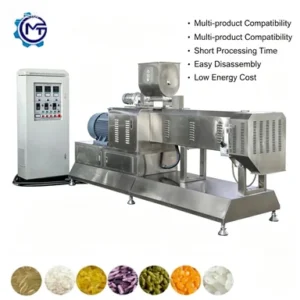
Durable Stainless Steel Twin Screw Extruder Floating Sinking Aquatic Fish Feed Processing Production Equipment
¥65.00 Select options This product has multiple variants. The options may be chosen on the product page -
Premium Pet Food Processing Equipment Dog Cat Feed Making Machine
¥9,500.00 Select options This product has multiple variants. The options may be chosen on the product page -
MT70 200-250kg/h Dog Cat Pet Food Processing Line 380V 50HZ Three Phase 45KW
¥35,000.00 Select options This product has multiple variants. The options may be chosen on the product page -
Energy Saving Automatic Twin Screw Extruder Floating Sinking Aquatic Fish Feed Industrial Production Processing Line
¥65.00 Select options This product has multiple variants. The options may be chosen on the product page