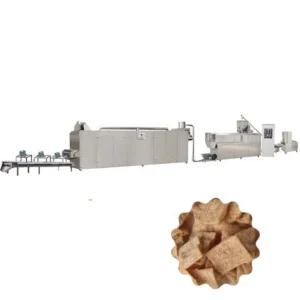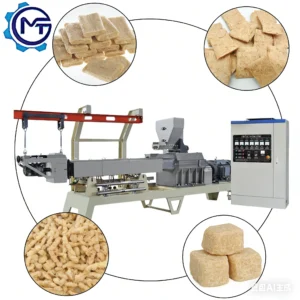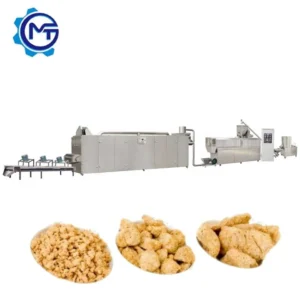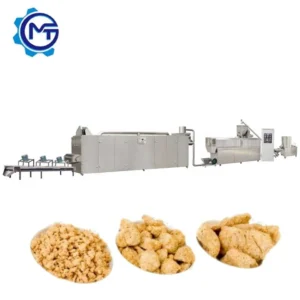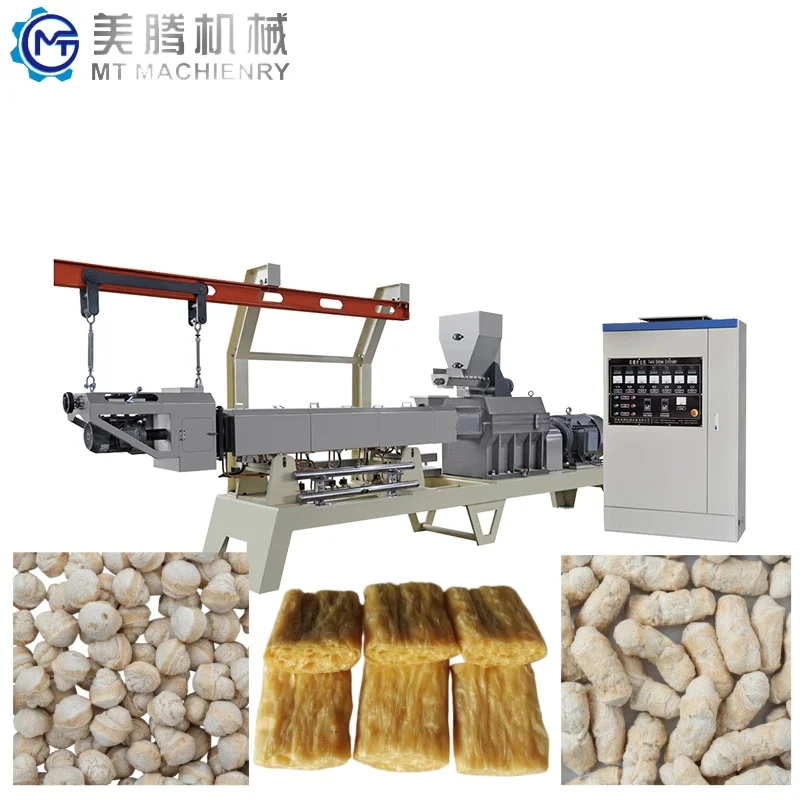

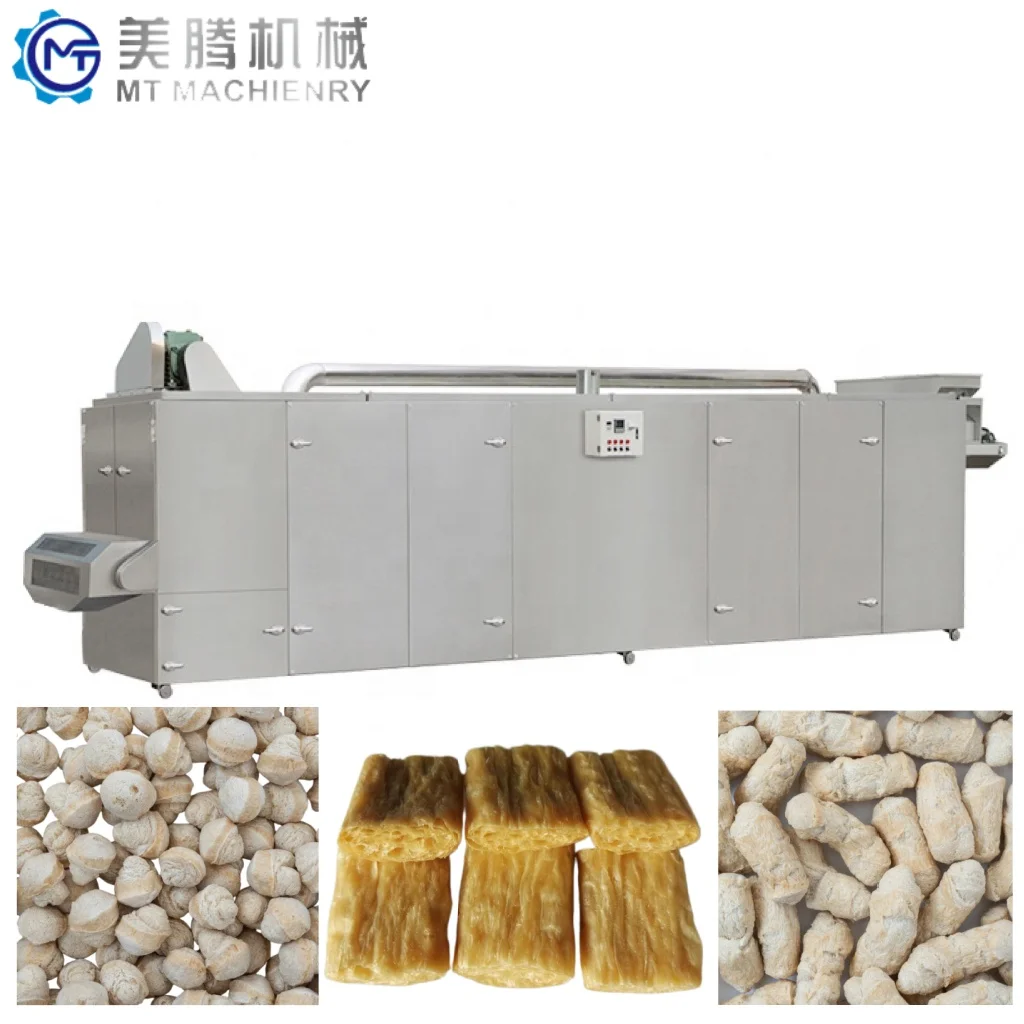
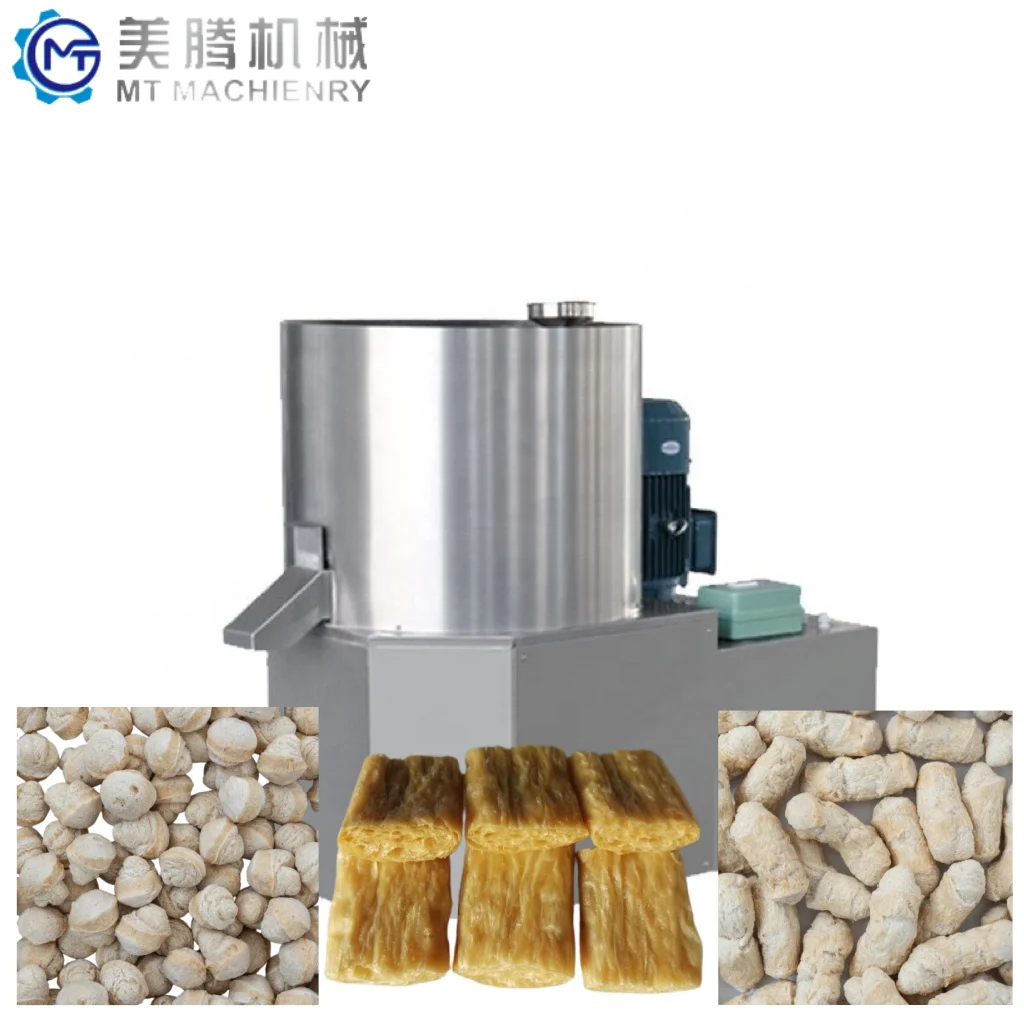

MT65 / MT70 / MT85 Textured Soy Protein Production Line, Twin-Screw Extruder, CE Certified — complete turnkey layout from batching through extrusion, drying, and packing.
- Twin-screw extrusion restructures protein molecules into fibrous, meat-like textures under controlled high-temperature, high-pressure, and high-shear conditions
- Every station — mixer, extruder, roaster, cooler — specified to synchronized throughput, eliminating bottlenecks across the line
- Multiple model options scale capacity to your project requirements
Line layout and capacity calculation provided to verify throughput match across all stations, with trial runs on your raw material performed before shipment.
Description
Integrated Line Engineering — Every station from batching through extrusion to packing is throughput-matched under one turnkey project scope, preventing the dryer and cooler from idling while the extruder chokes on mismatched feed rates.
Technical Specifications
| Parameter | Value |
|---|---|
| Model | MT65 / MT70 / MT85 |
| Product Type | Textured Soy Protein Production Line |
| Extruder Configuration | Twin-screw (double screw) |
| Line Process Stages | Raw material preparation → Mixing → Conveying → Extrusion → Conveying → Drying → Cooling → Packing |
| Output Capacity (MT65) | 150–200 kg/h (basis not stated in source — confirm raw material / moisture content) |
| Output Capacity (MT70) | 200–300 kg/h (basis not stated in source — confirm raw material / moisture content) |
| Output Capacity (MT85) | 600–800 kg/h (basis not stated in source — confirm raw material / moisture content) |
| Installed Power (MT65 / MT70 / MT85) | 85 kW / 120 kW / 195 kW |
| Actual Operating Power (MT65 / MT70 / MT85) | 65 kW / 90 kW / 165 kW |
| Overall Dimensions (MT65 / MT70 / MT85) | 18000 × 1300 × 2300 mm / 20000 × 1500 × 2400 mm / 24000 × 3500 × 4300 mm |
| Extruder Main Motor Power | 30 kW |
| Powder Mixer Tank Volume | 150 kg |
| Powder Mixer Mixing Time | 10 min per batch |
| High-temperature Roaster Effective Belt Length | 3.5 m |
| High-temperature Roaster Gas Consumption | 6.8 m³/h |
| Cooling Machine Capacity | 200–300 kg/h (basis not stated in source — confirm raw material / moisture content) |
| Voltage & Frequency | Configurable — confirm before order |
| Control System | PLC or MCC available — confirm before order |
| Warranty | 1 year |
| Certification | CE |
Application Suitability
| Application | Material or Output |
|---|---|
| Textured soy protein (TSP / TVP) production | Defatted soy flour, soy protein concentrate, soy protein isolate |
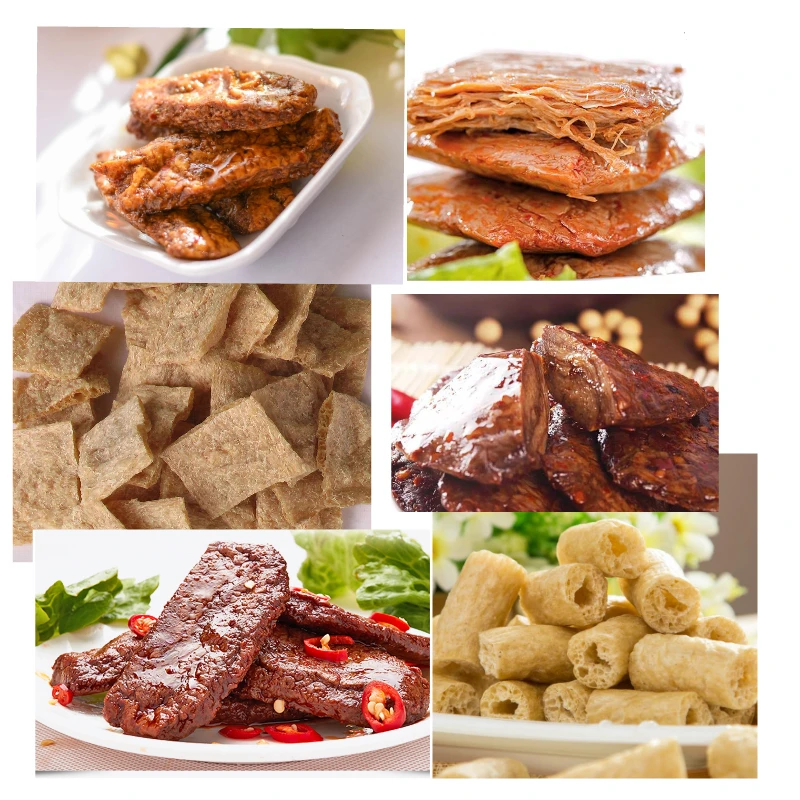
| Plant-based meat alternatives and vegetarian meat substitutes | TSP chunks, strips, and granules mimicking muscle-fiber texture |
| Ham and sausage analogues for further processing | Fibrous extrudate rehydrated and bound into formed products |
| Canned and quick-frozen vegetarian foods | Shelf-stable or frozen TVP portions for institutional and retail channels |
| Fast-food plant-based protein items | Rehydrated TVP patties, nuggets, and filling bases |
What Synchronized Capacity Means for a Textured Soy Protein Production Line Turnkey
A line only produces as much as its slowest matched station, and the extruder is rarely the bottleneck.
In plant-based protein projects, buyers often specify the extruder first and then add downstream equipment as an afterthought. The roaster, cooler, and packing stations end up waiting for material that never arrives at the expected rate, or they overflow because the extruder pushes more than the dryer can handle. This mismatch wastes energy, degrades product consistency, and turns commissioning into a troubleshooting marathon [NEED_CITE: consequences of throughput mismatch in continuous food processing lines]. When sourcing a textured soy protein production line turnkey, every station must be calculated against the same raw material throughput assumption before any equipment is built.
Line Throughput Matching Across Every Station
Each station in the textured soy protein production line turnkey is sized so that material flow remains continuous. The powder mixer batches are timed to feed the extruder without interruption, the conveyor transfer rates match extruder discharge, and the high-temperature roaster belt speed is set so residence time achieves target moisture removal. The cooling machine then brings product temperature down before packing without creating a queue. This synchronized design eliminates the partial-load operation that inflates per-kilogram energy cost.
Phased Installation and Commissioning for Plant-Based Protein Facilities
Deploying a complete line involves more than placing machines on a floor plan. Utility connections for the 3.9 kW × 24 heater array in the roaster, gas supply at 6.8 m³/h, and dedicated circuits for the extruder main motor must all be staged before mechanical assembly. Installation proceeds in phases — base positioning, utility tie-in, mechanical alignment, then electrical integration — followed by a commissioning schedule that includes operator training on the specific control interface confirmed for the facility [NEED_CITE: industrial food line commissioning best practices]. This reduces the gap between mechanical completion and first commercial batch.
Interpreting Core Specifications for Soy Protein Extrusion
The twin-screw configuration is fundamental to textured soy protein production because intermeshing screws generate the shear and residence time necessary to restructure globular protein molecules into fibrous strands. The roaster’s 3.5 m effective belt length determines how long product remains under heat, directly influencing final moisture content and shelf stability. Actual operating power figures — 65 kW for MT65, 90 kW for MT70, 165 kW for MT85 — reflect real energy draw during steady-state extrusion of soy-based formulations, not just installed motor nameplate ratings. The powder mixer’s 10-minute batch cycle and 150 kg tank volume set the batching rhythm that upstream supply must sustain to keep the extruder continuously fed.
The Hidden Cost of Unconfirmed Raw Material Behavior
Soy protein concentrate, isolate, and defatted flour each behave differently inside the extruder barrel. Particle size, fat residue, and fiber content alter how material feeds into the screw flights and how it responds to shear and temperature. When the screw configuration and die design are chosen from a generic template rather than matched to the buyer’s specific raw material, the extruder may only deliver a fraction of its nominal output. Downstream, the roaster and cooler run at full power processing less material than designed, wasting thermal energy and accelerating belt wear without generating proportional revenue [NEED_CITE: raw material variability in extrusion processing].
Why Source This Line from a Single Turnkey Supplier
Throughput calculations are owned by one engineering team, so the mixer batch rate, extruder screw speed, roaster belt length, and cooler airflow are all derived from the same production target rather than negotiated across separate vendors. Screw and die configurations are specified to the buyer’s actual soy protein raw material and validated in an in-house testing workshop before the line ships. Electrical schematics confirm voltage, frequency, and control language for the destination market, reducing delays during on-site energization. Documentation covers the entire line under one set of records — layout, capacity calculation, trial run report, and wear parts list — so there is no ambiguity about which supplier is responsible when stations interface.
Documentation & Verification
- Line layout and capacity calculation showing throughput match across mixer, extruder, roaster, and cooler
- Screw and die configuration record matched to your soy protein raw material particle size and composition
- Trial run report on your actual raw material conducted in the testing workshop before shipment
- Electrical schematic confirming voltage, frequency, and control language for your facility
- Operation and maintenance manual covering all line stations with wear parts list
Installation, Commissioning & Support
- Foundation layout provided for MT85 line footprint (24000 × 3500 × 4300 mm) including utility trench locations
- Dedicated circuit planning for extruder 30 kW main motor and roaster 93.6 kW total heater load
- Mechanical assembly sequence from base frame through conveyor alignment to roaster belt tensioning
- Commissioning run with screw speed, barrel temperature, and roaster belt speed tuned to your raw material
- Operator training on PLC or MCC interface covering start-up, shutdown, and emergency procedures
- Wear parts inventory plan covering screws, dies, and roaster belt sections for first-year operation
Preparing Your Line Inquiry
Share your raw material specification — whether soy protein concentrate, isolate, or defatted flour — along with particle size distribution and target product form. Indicate your daily output target, available workshop dimensions and ceiling height, and the local voltage and frequency standard. Specify your preferred control language and whether the line will connect to existing upstream batching or downstream packing equipment.
Frequently Asked Questions
Q: How is capacity verified and what raw material information is required for each model?
A: Capacity is confirmed through a trial run using your actual soy protein raw material in the testing workshop. We need particle size distribution, moisture content, protein percentage, and fat residue data. The trial produces a report documenting achievable throughput, screw configuration used, and product texture achieved, forming the basis for the final line specification before production begins.
Q: How is throughput matched between the extruder, roaster, and cooler to prevent bottlenecks?
A: Each station is calculated against the same raw material throughput assumption. The roaster belt speed and 3.5 m effective length are set so residence time achieves target drying at the extruder discharge rate. The cooler capacity is then matched to roaster output. This ensures no station idles or overflows during continuous operation.
Q: What voltage, frequency, and control options are confirmed before production?
A: Voltage, frequency, and control language are confirmed during the specification phase before manufacturing starts. PLC or MCC control systems are available depending on your facility standard. Electrical schematics are issued reflecting the confirmed configuration so that on-site energization proceeds without rewiring delays.
Q: Is a trial run performed on our raw material before shipment, and what does the report cover?
A: Yes, a trial run is conducted in the in-house testing workshop using your supplied soy protein raw material. The report documents the screw and die configuration tested, barrel temperature profile, product texture and density achieved, and measured throughput. This report accompanies the shipment and serves as the commissioning baseline.
Q: What does the on-site installation and commissioning process include?
A: Installation follows a phased schedule covering base positioning, utility connection, mechanical assembly, and electrical integration. Commissioning includes tuning extruder screw speed, roaster temperature, and cooler airflow to your raw material. Operator training covers daily start-up, shutdown, and basic maintenance, with a wear parts list provided for planning first-year spares procurement.
Related products
-
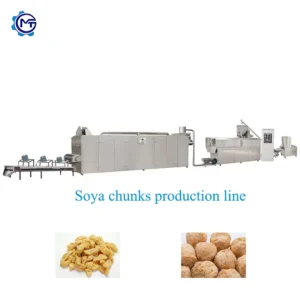
Soybean Protein Making Machine Automatic Soy Chunk Production Line
¥30.00 Select options This product has multiple variants. The options may be chosen on the product page -
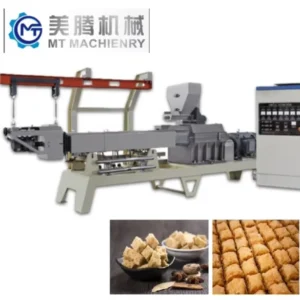
Vegetarian Beef Substitute Making Machine with Twin Screw Extruder
¥9,500.00 Select options This product has multiple variants. The options may be chosen on the product page -
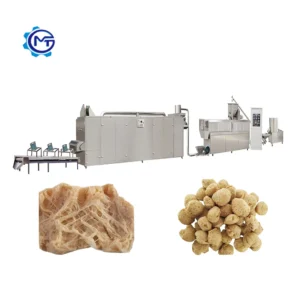
High Productivity New Soy Protein Automated Production Line Meat Substitute Processing Line
¥30.00 Select options This product has multiple variants. The options may be chosen on the product page -
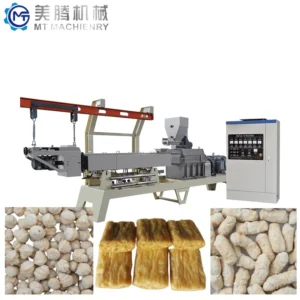
Small Multifunctional Textured Soy Protein Machine – Soy Protein Production Line – Vegetarian Meat Processing Equipment
¥65.00 Select options This product has multiple variants. The options may be chosen on the product page