

6141
Description
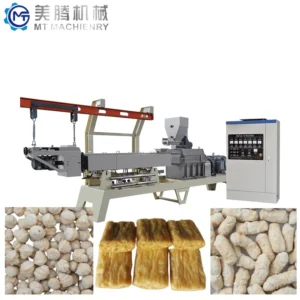
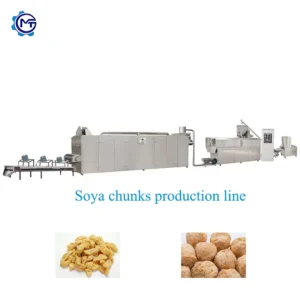
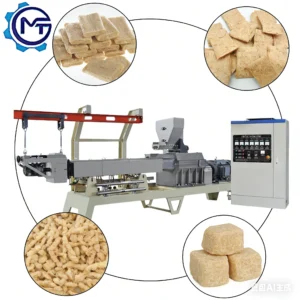
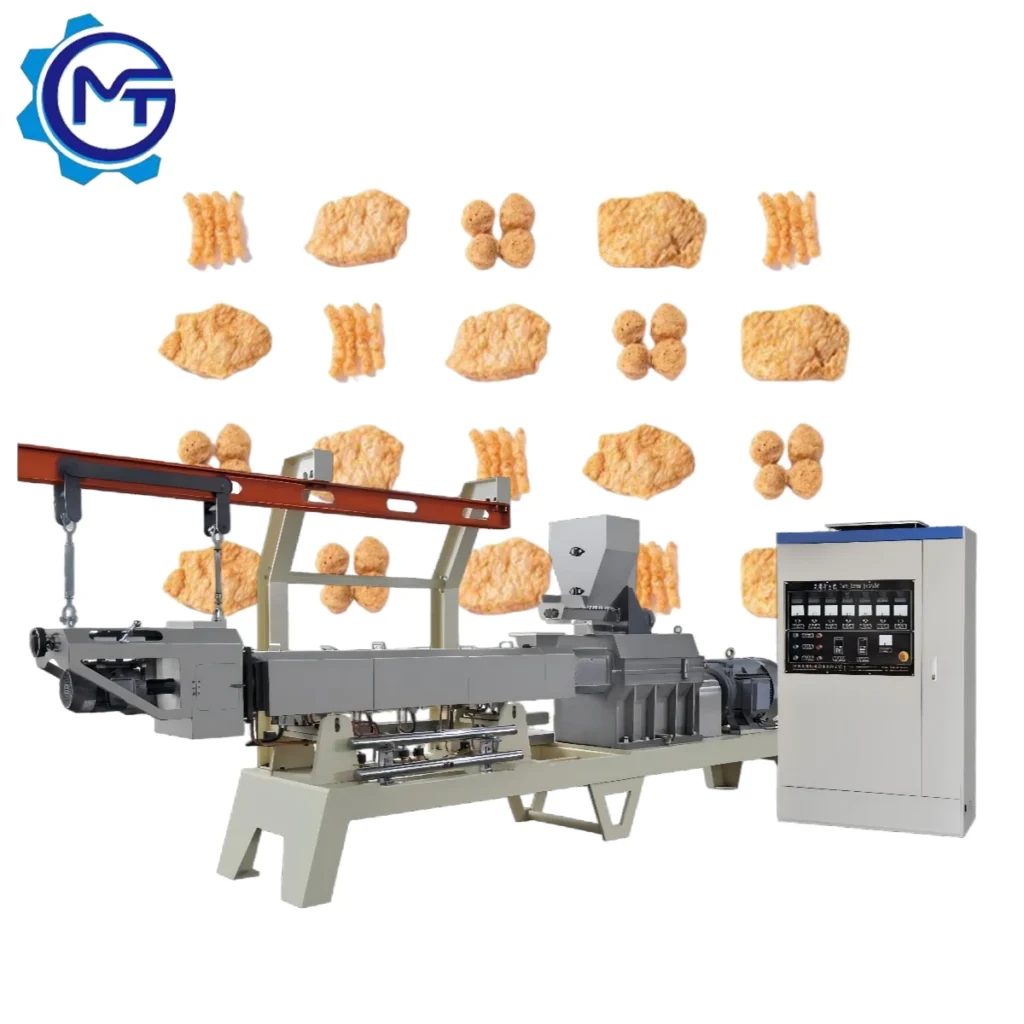
Thermomechanical profiling per feedstock — Every screw element and barrel zone is matched to the buyer’s protein isolate or concentrate rheology before a textured soy protein production line turnkey is shipped.
Technical Specifications
| Parameter | Value |
|---|---|
| Product Type | Textured Soy Protein Production Line |
| Screw Type | Twin-screw |
| Control System | PLC intelligent control |
| Output Capacity | basis not stated in source — confirm block format / material / thickness |
| Line Stations | basis not stated in source — confirm block format / material / thickness |
| Raw Material Compatibility | Soy protein isolate, soy protein concentrate, defatted soy flour |
| Equipment Service Life | Long service life (specific years not stated in source) |
| Certification | CE |
Application Suitability
| Application | Material or Output |
|---|---|
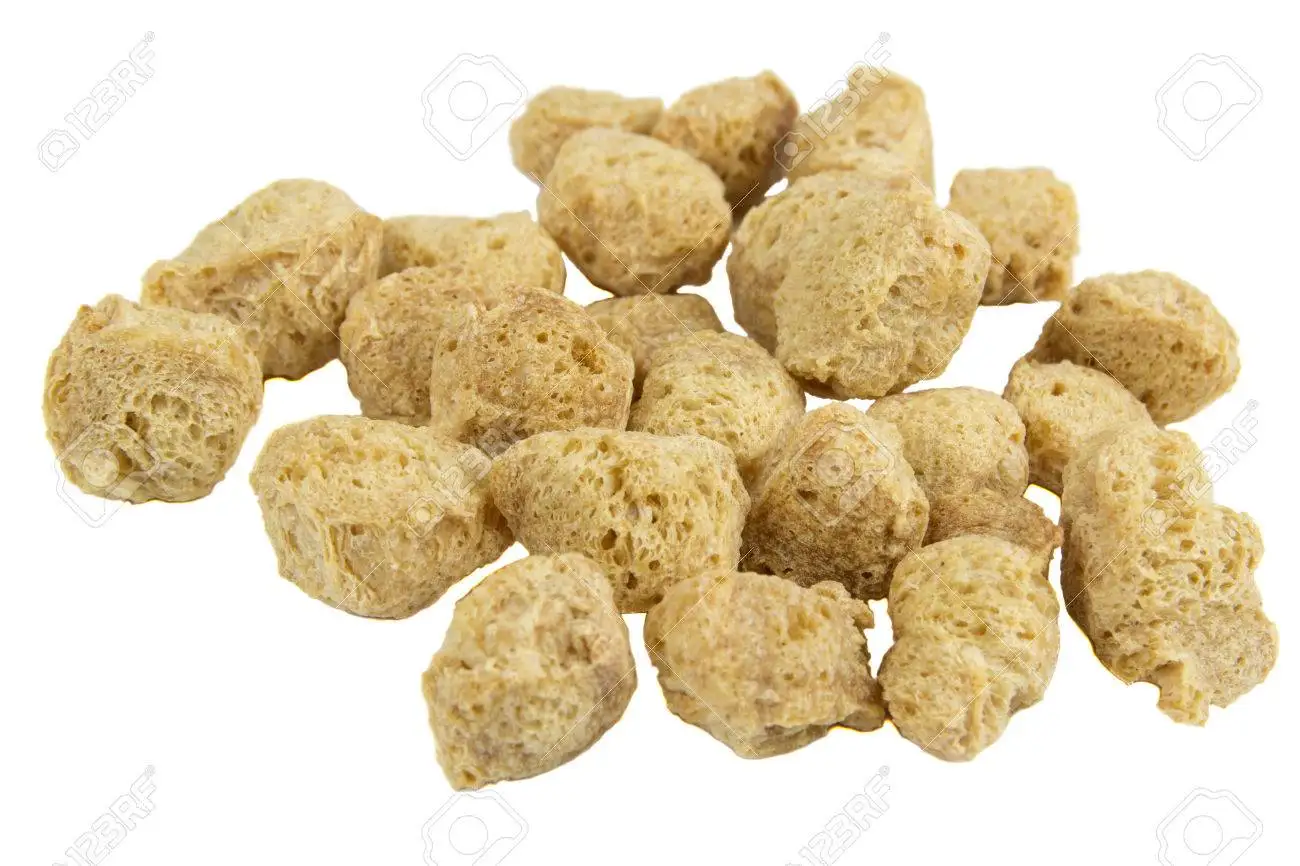
| Vegetarian meat nugget manufacturing | Textured soy protein from soy isolate or concentrate |
| Plant-based patty and strip processing | High-moisture extruded soy protein with fibrous structure |
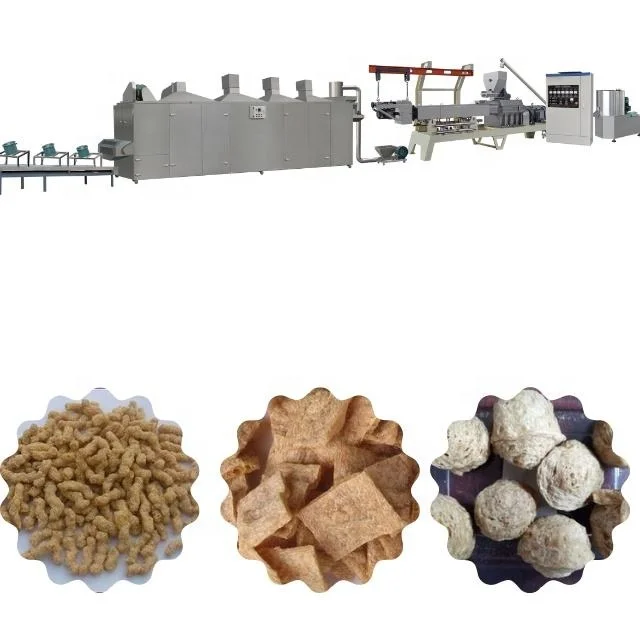
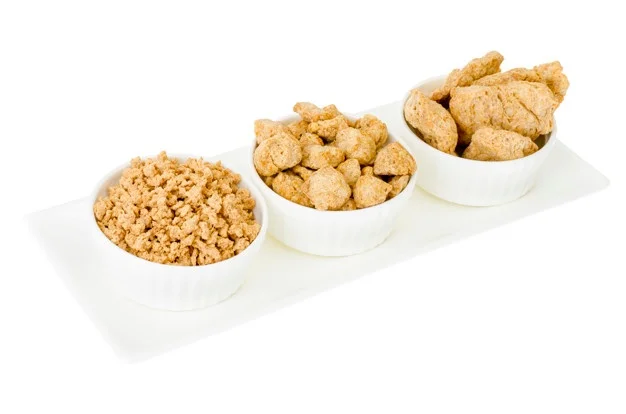
| Meat alternative ingredient supply | Textured vegetable protein in flake, granule, or chunk format |
| Fortified food programme inputs | Soy-based protein extender for institutional nutrition products |
Why Your Raw Material Report Must Come Before the Line Configuration
A textured soy protein production line turnkey configured without your actual protein content analysis will fail to develop the fibrous meat-like structure your market demands.
I was on a commissioning site in West Africa when a customer presented locally sourced defatted soy flour that tested well below the protein percentage we had used during workshop trials. The extrudate lost its laminar structure entirely — what should have pulled apart in distinct fibres crumbled into loose granules. Reconfiguring the screw profile and adjusting barrel zone temperatures resolved the issue, but only after days of lost production and frustrated operators. That gap between assumed feedstock and actual feedstock is where most plant-based protein line installations stall [NEED_CITE: variability in commercial soy flour protein content across sourcing regions].
Screw Geometry That Builds Fibre, Not Just Pressure
The twin-screw configuration on this textured soy protein production line turnkey is specified element by element. Conveying sections, kneading blocks, and reverse-screw elements are sequenced so that protein molecules unfold under controlled shear and then re-align as the melt passes through the die. The die geometry itself — land length, orifice count, and exit angle — determines whether the extrudate exits as dense chunks suitable for nuggets or thinner sheets that can be sliced into strips.
Barrel Temperature Zones and Protein Denaturation Control
Each barrel section carries independent heating and cooling circuits managed by the PLC system. Protein denaturation occurs within a narrow thermal window; too little heat leaves the structure underdeveloped and weak, while excessive heat scorches the soy and introduces bitter off-notes that downstream flavouring cannot mask. The PLC logs temperature deviation at each zone so that any drift during a shift is traceable to a specific barrel segment [NEED_CITE: thermal denaturation range for soy glycinin and beta-conglycinin fractions].
Reading the Specs That Actually Matter
The twin-screw designation means two intermeshing screws rotate co-directionally, providing the mixing intensity that single-screw extruders cannot achieve with high-protein feedstocks. Moisture content at the preconditioner directly controls expansion ratio — higher injection yields denser, meat-like texture while lower moisture produces lighter puffed granules. The PLC intelligent control system maintains these moisture and temperature setpoints across production batches, which is essential because manual adjustment cannot compensate for the thermal lag that accumulates over a continuous run. Die selection interacts with screw speed: a high-orifice-count die requires slower screw rotation to maintain residence time, while a simpler die allows higher throughput at the same motor load.
What Happens When Stations Are Mismatched
An extruder running at full output into an undersized dryer creates a backlog that forces operators to reduce feed rate, which then alters the moisture and temperature equilibrium inside the barrel. The fibrous texture developed during extrusion collapses when wet product sits too long before drying begins. Similarly, a coating drum that cannot keep pace means seasoned product queues up, absorbing ambient humidity and losing the surface crispness that end customers expect. These are not theoretical failures — they show up on every line assembled from vendors who size each station independently [NEED_CITE: throughput balancing principles in continuous food processing lines].
Why Buyers Source This Line Here
Every station from the batching system through extrusion, drying, flavouring, and packing is engineered as one integrated project, so throughput is balanced before the first drawing is released. Screw and die configurations are specified against your protein formulation, not copied from a generic build. The in-house testing workshop runs your actual raw material before shipment, producing a trial report that documents the texture, density, and moisture of the extrudate. CE certification accompanies every line, and documentation packages include the electrical schematics with voltage confirmed to your destination market. Twin-screw extrusion expertise across pet food, aquatic feed, and plant-based protein categories means the engineering team recognises feedstock behaviour patterns rather than learning on your installation.
Documentation & Verification
- Line layout drawing showing station-by-station throughput balance for your target output
- Trial run report from testing workshop using your soy protein formulation
- Screw element sequence and die specification record matched to your product format
- Electrical schematic with voltage, frequency, and control language confirmed to your market
- Operation and maintenance manual with wear parts replacement intervals
- Packing photographs and customs documentation support for your port of entry
Installation, Commissioning & Support
- Foundation plan reflecting the full line footprint including dryer and cooling conveyor length
- Electrical supply specification listing PLC panel requirements and motor circuit loads
- Modular shipment breakdown enabling phased assembly within standard workshop clearances
- First-run parameter logging against trial report benchmarks during on-site commissioning
- Operator training covering screw changeover, die cleaning, and PLC alarm response
- Wear parts list identifying screws, dies, and cutter blades with reorder lead times
What We Need to Build Your Line
Send us your soy protein source — isolate, concentrate, or defatted flour — along with the protein percentage from your supplier’s certificate of analysis. Specify the end product format you are targeting, whether nuggets, patties, strips, or granules, and the daily output you need to justify the investment. Confirm your facility’s voltage and frequency, and let us know the available floor space and ceiling height so the layout fits your building before steel is cut.
Frequently Asked Questions
Q: How is line capacity verified against my specific soy protein raw material before shipment?
A: Your raw material is run in our testing workshop using the exact screw configuration and die specified for your order. The resulting extrudate is measured for density, moisture, and fibrous structure, and a trial report is issued. Only after you approve the trial output does the line proceed to final assembly and dispatch.
Q: What does the turnkey installation and commissioning schedule look like for a complete TVP line?
A: Installation follows a phased sequence from extruder placement through dryer, cooler, and packing station alignment. Commissioning begins with individual station dry runs, progresses to wet trials with your feedstock, and concludes with continuous production runs logged against the original trial report benchmarks.
Q: How is throughput matched between the extruder, dryer, and packing stations to prevent bottlenecks?
A: Each station is sized during the layout phase so that its maximum throughput exceeds the extruder output by a defined margin. The dryer belt length, cooling conveyor speed, and packing machine cycle rate are all calculated from the same capacity model rather than selected from standard catalogues.
Q: What screw configuration and die design is specified for achieving meat-like fibrous texture?
A: Kneading block angle, element spacing, and reverse-screw placement are chosen based on your protein content and target moisture level. The die land length and orifice geometry are then matched so the extrudate exits with aligned protein fibres rather than random granular structure.
Q: What operator training and ongoing maintenance support is included with the turnkey project?
A: On-site training covers daily startup and shutdown procedures, screw and die changeover for product format changes, PLC parameter adjustment, and fault diagnosis. A wear parts list with reorder codes is provided, and ongoing technical support addresses configuration questions as you introduce new feedstock sources.
Related products
-
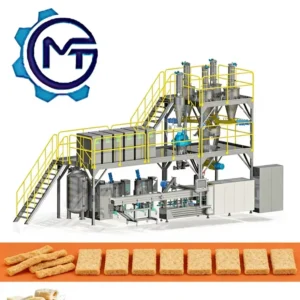
High Capacity Soy Protein Vegetarian Meat Processing Line
¥9,500.00 Select options This product has multiple variants. The options may be chosen on the product page -
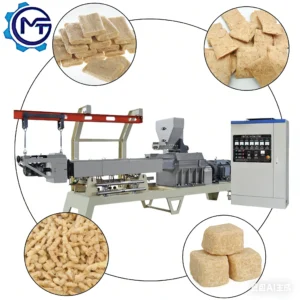
Automatic Vegetarian Meat Production Line with Twin Screw Extruder
¥9,500.00 Select options This product has multiple variants. The options may be chosen on the product page -
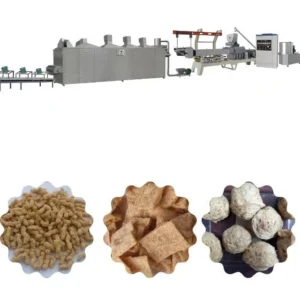
Vegetable Meat Making Machine Textured Soybean Protein Maker
¥30.00 Select options This product has multiple variants. The options may be chosen on the product page -
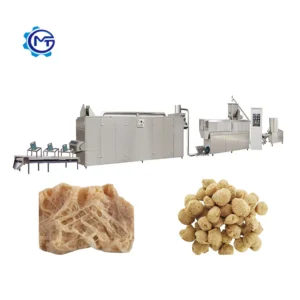
New High Efficiency Protein Production Line Plant Protein Equipment for Artificial Vegetarian Meat Processing Food Grade
¥65.00 Select options This product has multiple variants. The options may be chosen on the product page