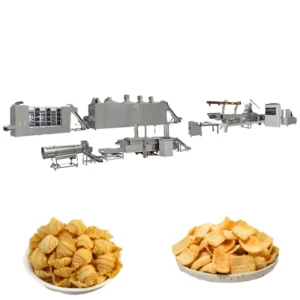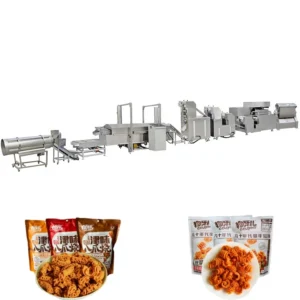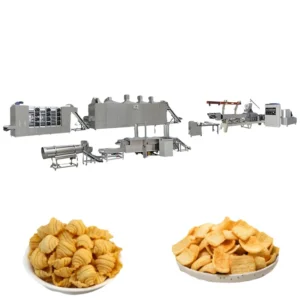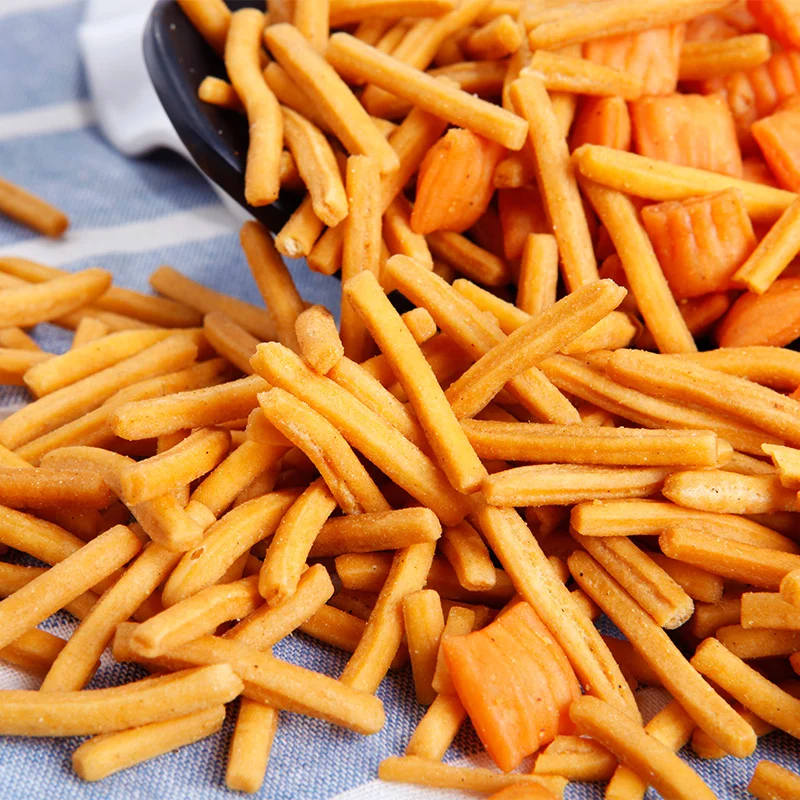

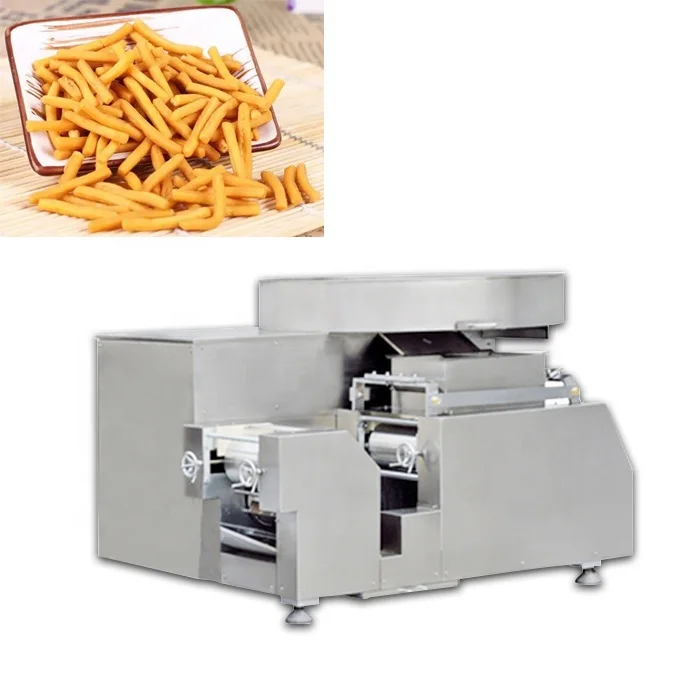
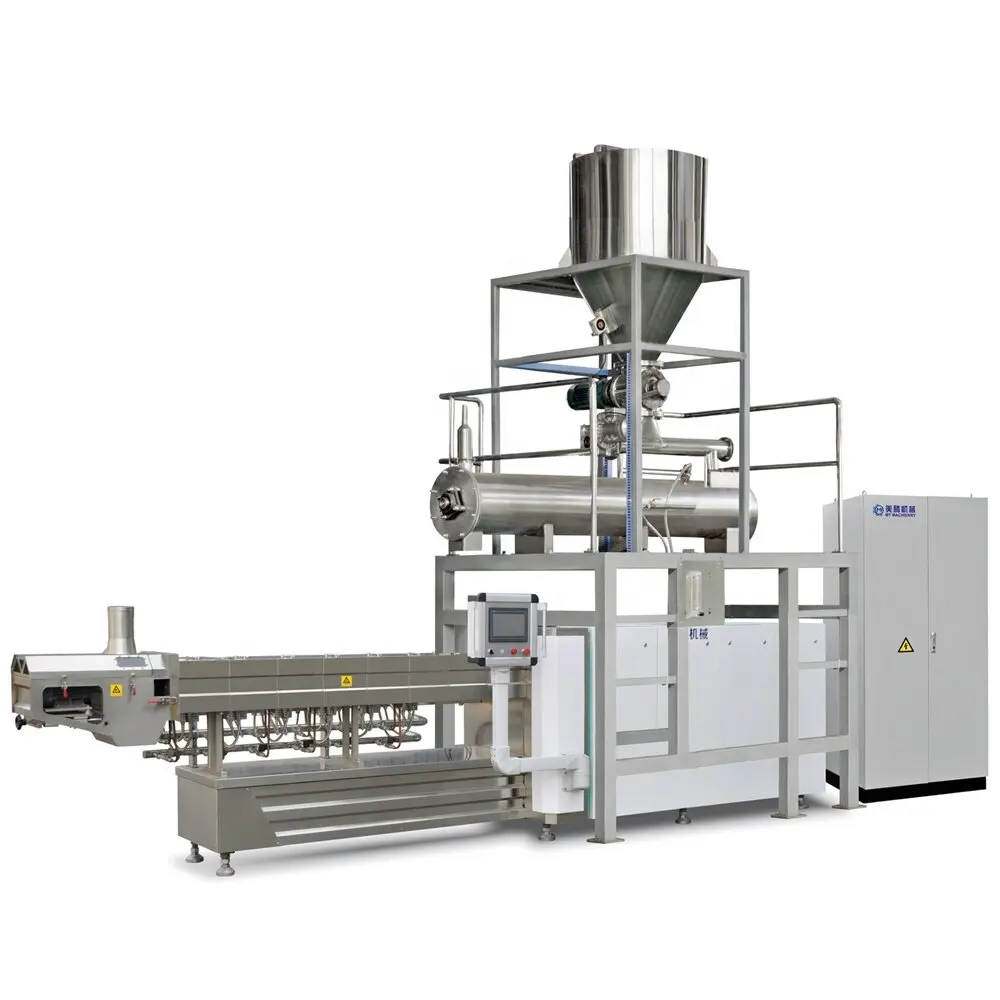

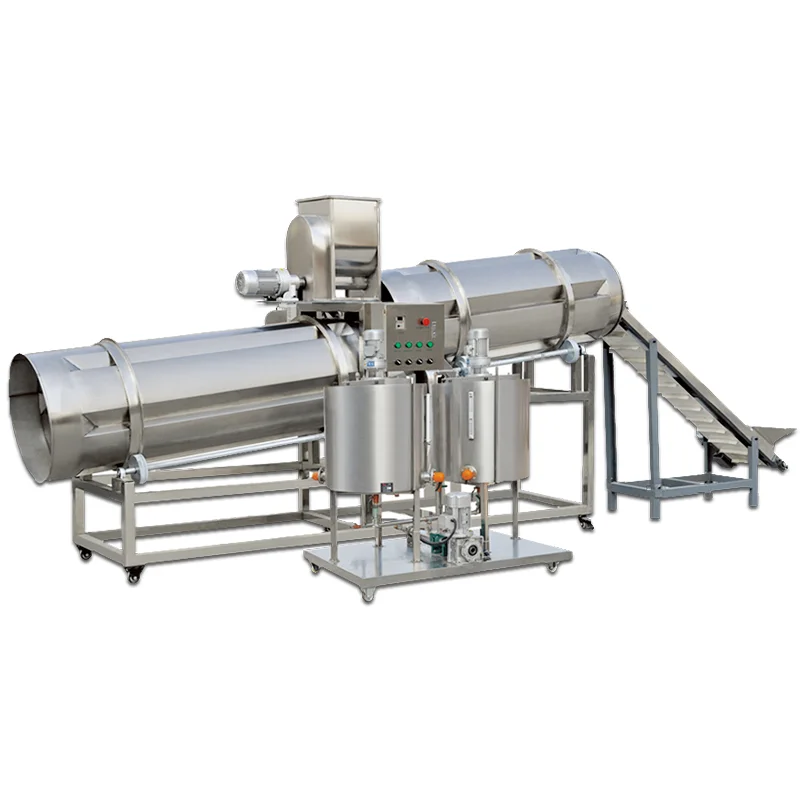
Fried Snack Food Production Line, 100-1000 kg/h, PLC Control, 304 Stainless Steel — engineered as a complete turnkey project from batching through extrusion, continuous frying, and packing. Every station’s throughput is matched to eliminate bottlenecks, with the continuous deep fryer featuring double-layer mesh belt and oil filtration for stable output. Screw and die configuration specified to your raw material, verified through in-house trial runs before shipment.
- Frequency conversion stepless speed regulation for precise frying time control
- 380V/50HZ electric or gas heating with customized voltage options for target markets
- Line layout, capacity calculation, and electrical schematic confirmed before production
Description
Throughput-Matched Engineering — Every station from extrusion through continuous frying to packing is sized to the buyer’s actual raw material and target output, eliminating the bottleneck effect that plagues fragmented lines.
Technical Specifications
| Parameter | Value |
|---|---|
| Product Type | Fried Snack Food Production Line |
| Capacity | 100–1000 kg/h (basis not stated in source — confirm raw material type, moisture content, and product format) |
| Voltage & Frequency | 380V / 50Hz (configurable to target market) |
| Fryer Heating Tube Power | 60 kW |
| Fryer Oil Capacity | 320 L |
| Overall Dimensions (L×W×H) | 6700 × 2200 × 1200 mm |
| Net Weight | 2000 kg |
| Power Source | Electric / Gas (selectable) |
| Control System | PLC |
| Construction Material | Food-grade 304 Stainless Steel |
| Frying System | Continuous deep fryer with automatic belt conveying, lifting, oil filling, filtering, and temperature control |
| Mesh Belt | Upper and lower double-layer belt to prevent product floating |
| Speed Regulation | Frequency conversion stepless speed regulation |
| Oil Filtration | Continuous oil circulation filtration system |
| Slag Discharge | Bottom-equipped slag discharge system |
| Warranty | 1 Year (including core components) |
| Assembly State | Complete line |
Application Suitability
| Application | Material or Output |
|---|---|
| Extruded fried stick production | Wheat flour, corn starch blends, and composite grain formulations |
| Puffed snack deep frying | Extruded pellets, 2D/3D shapes, and core-filled snack pieces |
| Fried wheat flour snack lines | High-gluten flour mixed with corn starch at varying moisture levels |
| Continuous fried seasoning snacks | Post-extrusion products requiring uniform oil immersion and color |
| Turnkey snack factory projects | Food and beverage factories scaling into fried snack categories |
What "100–1000 kg/h" Actually Means on Your Shop Floor
A capacity range printed on a brochure tells you nothing until it is tested against your specific flour blend, moisture content, and target product density.
I have stood in factories where a line rated for a certain throughput on standard wheat flour dropped noticeably when the operator switched to a high-gluten flour and corn starch mix. The extruder screw speed, barrel temperature profile, and fryer dwell time all shifted, and nobody had planned for it. That is the gap between a quoted number and a working fried snack food production line turnkey installation. The only reliable way to close that gap is a trial run on the buyer’s actual raw material before the equipment leaves the factory [NEED_CITE: importance of pre-shipment material trials in extrusion line procurement].
Matching Extruder Output to Fryer Residence Time
The extruder and the fryer must agree on throughput, and that agreement depends on more than motor power. When the extruder pushes product faster than the fryer belt can carry it through the oil bath at the correct temperature, product piles up at the fryer inlet, moisture content drops unevenly, and the final texture misses specification. This fried snack food production line turnkey configuration sizes the fryer belt length, oil volume, and heating capacity to the extruder’s verified output on your material.
The Oil Filtration Loop That Protects Product Consistency
During continuous frying of wheat flour snacks, fine particles and degraded oil compounds accumulate steadily. The continuous oil circulation filtration system on this line removes sediment in real time, reducing the acid value rise that otherwise forces operators to drain and replace oil more often. The bottom slag discharge works alongside the filtration loop so that heavier carbonized particles settle out before they can adhere to the next batch of product [NEED_CITE: edible oil degradation rates in continuous deep frying operations].
Reading the Specs That Matter for Fried Snack Lines
The 60 kW heating tube power on the fryer section determines how quickly the oil recovers temperature after cold product enters the bath. A lower recovery rate means the first portion of each batch fries at a different temperature than the last, creating color and moisture variation across the run. The 320 L oil capacity provides enough thermal mass to buffer these fluctuations when running at steady state. The double-layer mesh belt solves a problem specific to low-density extruded snacks: without the upper belt holding product submerged, pieces float to the surface and fry only on one side. The frequency conversion stepless speed regulation lets the operator fine-tune belt speed without stopping the line, which is critical during the first hours of a new product run when optimal dwell time is still being dialed in. Food-grade 304 stainless steel construction throughout the fryer and conveying sections meets the hygiene expectations of food safety audits in most export markets.
The Hidden Cost of a Mismatched Fryer Downstream
When the fryer capacity is smaller than what the extruder actually delivers, the entire line slows to the fryer’s pace. Operators reduce extruder speed, which changes shear and temperature inside the barrel, which changes product texture — and now the snack no longer matches the sample the buyer approved. I have seen this loop repeat across multiple installations until someone resized the fryer or reconfigured the extruder screw profile. None of those fixes are cheap once the line is bolted to the floor [NEED_CITE: throughput mismatch consequences in multi-stage snack lines].
Why Source This Line as a Single Turnkey Project
Every station — batching, extrusion, drying, frying, flavoring, cooling, packing — is specified by the same engineering team, so belt widths, motor ratings, and control logic are coordinated before fabrication begins. The in-house testing workshop runs your raw material through the extruder and fryer before shipment, producing a trial report that documents actual throughput, product density, and fryer settings. Screw configuration and die design are matched to your flour formulation and target snack geometry, not copied from a generic build. PLC and MCC control panels are wired to your facility’s confirmed voltage and frequency, and the HMI language is set before the crate closes. CE certification and ISO documentation are provided as part of the standard deliverable package, not as an afterthought.
Documentation & Verification
- Line layout and capacity calculation confirming extruder-to-fryer throughput match
- Trial run report on your wheat flour or corn starch formulation before dispatch
- Screw and die configuration record matched to your target snack geometry
- Electrical schematic with voltage and frequency confirmed to your facility standard
- CE declaration of conformity and ISO certificate included with shipment
- Factory test record documenting oil temperature profile and belt speed settings
Installation, Commissioning & Support
- Foundation plan accounts for the 6700 × 2200 mm fryer footprint and 2000 kg net weight
- Dedicated 380V / 50Hz circuit sized for the 60 kW fryer heating load plus extruder motors
- Modular assembly allows fryer, extruder, and downstream stations to arrive in sequence
- First-run commissioning includes screw speed and barrel temperature mapping to your flour blend
- Operator training covers PLC parameter adjustment and oil filtration system maintenance
- Wear parts list identifies screws, dies, and mesh belt sections for initial spare stock
Before You Send an Inquiry
To size this fried snack food production line turnkey project accurately, share your raw material formulation including flour type and moisture percentage, your target daily output in kilograms, and the specific snack shape or format you intend to produce. Include your facility’s available floor space, ceiling height, and local voltage and frequency standard so that the electrical design matches from day one.
Frequently Asked Questions
Q: How is the line capacity of 100–1000 kg/h verified, and on what raw material is it based?
A: That range is a nominal envelope. Actual throughput depends on your flour blend, moisture content, and product geometry. We verify real output by running your specific raw material through the extruder and fryer in our testing workshop and documenting the result in a trial report before the line ships.
Q: How do you match extruder output to fryer capacity to avoid bottlenecks?
A: Both stations are specified together during the layout phase. We calculate the extruder’s verified mass output on your material, then size the fryer belt length, oil volume, and heating power so the fryer can absorb that output without product queuing or temperature drop.
Q: What voltage and control language options are confirmed before shipment?
A: We confirm your facility’s voltage, frequency, and preferred HMI language during the specification stage. The PLC panel is wired and programmed to those parameters, and an electrical schematic is provided so your local electrician can verify the connection on arrival.
Q: Can you run a trial production on my specific wheat flour formulation before shipping?
A: Yes. Our in-house testing workshop runs your actual raw material through the extruder and fryer, recording screw speed, barrel temperatures, oil temperature, and belt speed. You receive a trial run report documenting the product texture, density, and verified throughput.
Q: What does the installation and commissioning schedule look like for a complete line?
A: A typical multi-week schedule covers foundation preparation, station-by-station placement, utility connection, cold runs, and hot commissioning with your raw material. Operator training runs in parallel with the final commissioning phase so your team is confident at handover.
Related products
-
Automatic Fried Crispy Bugles Snacks Food Making Machines Wheat Flour Sala Food Extruder
¥100.00 Select options This product has multiple variants. The options may be chosen on the product page -
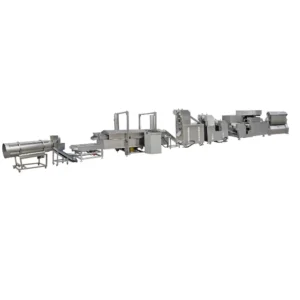
Frying Crispy 3D Corn Bugles Pellets Fried Chips Snacks Food Machine Production Line Bugles Making Extruder
¥100.00 Select options This product has multiple variants. The options may be chosen on the product page -
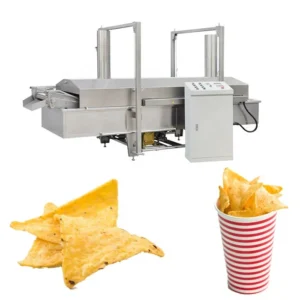
New Fully Automatic Large Capacity 304 Stainless Steel Savory Frying Snack Production Line Crisp Bugles Chips Processing Machine
¥30.00 Select options This product has multiple variants. The options may be chosen on the product page -
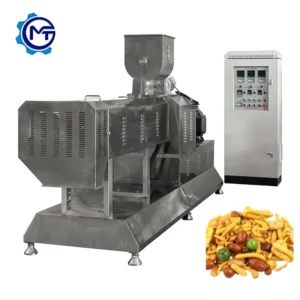
New Automatic Traditional Fried Nimko Making Machine High Productivity Large Capacity Stainless Steel Production Line
¥8,575.00 Select options This product has multiple variants. The options may be chosen on the product page