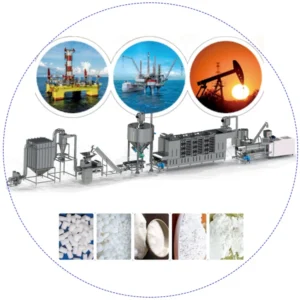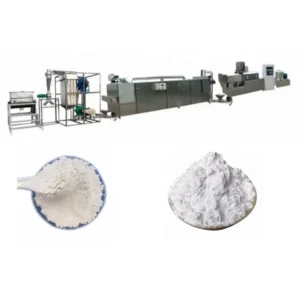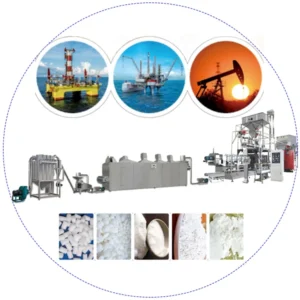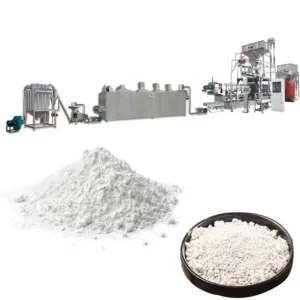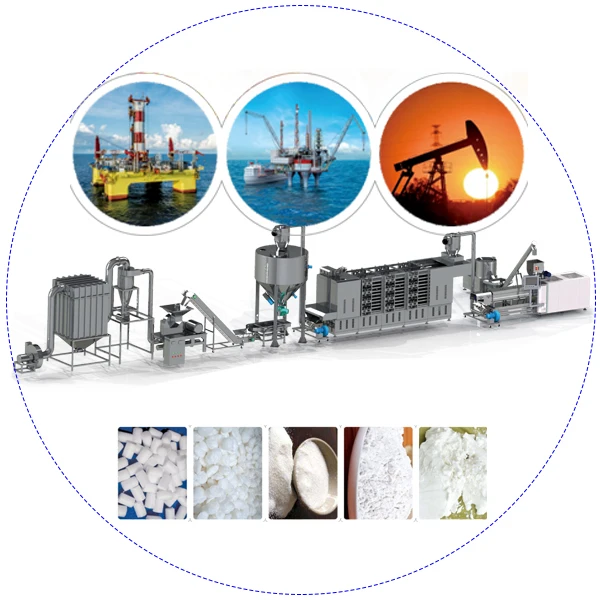
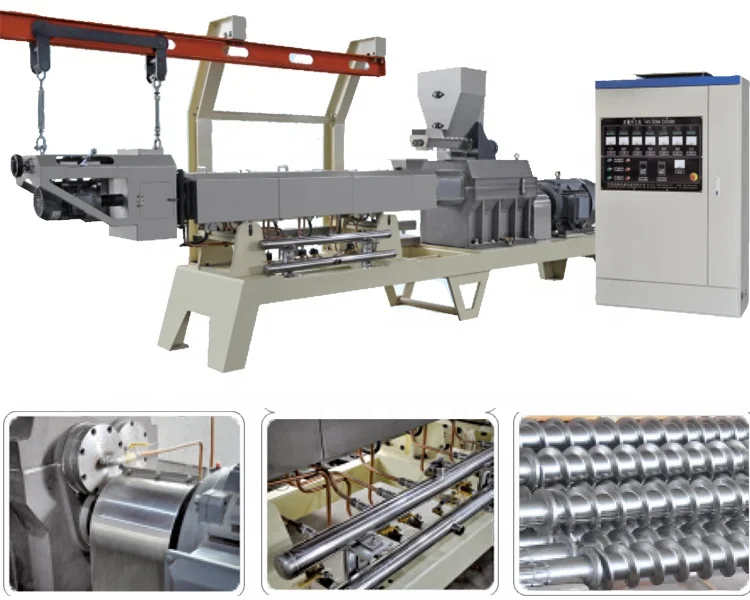


Modified Starch Processing Line, Twin Screw Extruder, PLC Control, 220-440V Tri-Phase — configured for continuous extrusion, cooling, and grinding across oil drilling, food, and paper applications. Delivered as a turnkey project with layout planning, throughput matching between every station, and utility integration sized to your site conditions. Screw configuration and die design are specified to your starch formulation and target modification degree before production begins. Trial runs on your raw material are completed in our testing workshop prior to shipment, with full documentation provided.
- Output range spans pilot to industrial scale based on confirmed raw material and moisture content
- Multi-fuel options for process heating: gas, diesel, electricity, steam
- CE and ISO certified with electrical schematics confirmed to your local voltage and frequency
- On-site installation, commissioning, and operator training included
Description
Screw Configuration Matched to Starch Type — Our twin-screw profiles and die designs are specified to your raw material and target modification degree, verified on your actual starch before shipment.
Technical Specifications
| Parameter | Value |
|---|---|
| Product Type | Twin Screw Extruder Modified Starch Processing Line |
| Rated Power | 45–200 kW |
| Voltage & Frequency | 220–440V, tri-phase (Hz to be confirmed per market) |
| Control System | PLC controlled (configurable per line setup) |
| Output Capacity | 100–1500 kg/h (basis not stated in source — subject to raw material and moisture confirmation) |
| Net Weight | 1000–5000 kg (varies by configuration) |
| Screw Type | Twin screw |
| Processable Materials | Corn starch, wheat flour, rice flour, soybean flour, potato starch |
| Line Stations | Twin screw extruder, cooling conveyor, pulse grinder |
| Fuel Options for Heating | Gas, diesel, electricity, steam |
| Standards | CE, ISO certified production |
Application Suitability
| Application | Material or Output |
|---|---|
| Oil drilling fluid additives | Thermally stable modified starch with controlled viscosity from corn or potato starch |
| Pregelatinised starch for food | Instant-thickening starch for bakery, sauces, and convenience foods from wheat or corn starch |
| Paper and corrugated sizing | Cationic or oxidised starch for wet-end and surface sizing from various starch sources |
| Industrial adhesive base | Cross-linked starch for corrugating and packaging adhesives |
Why Nominal Capacity Fails on Your Actual Starch
A modified starch processing line turnkey rated at 1500 kg/h on corn grits may stall at half that rate when you run cassava or waxy maize.
Capacity claims on modified starch lines are often based on generic benchmark materials, not the raw material you will actually feed into the hopper. Different starch sources have distinct gelatinisation temperatures, amylose-to-amylopectin ratios, and moisture absorption profiles. When the screw configuration and barrel temperature profile are set for one starch type but the line receives another, torque spikes, barrel blockages, and inconsistent modification degrees follow. I once saw a drilling-grade starch line in Colombia shut down for two weeks because the trial was run on corn starch while the customer’s feedstock was cassava [NEED_CITE: starch gelatinisation temperature variance across botanical sources]. The screw combination had to be redesigned from scratch on site.
Matching Screw Geometry to Starch Behaviour
The twin-screw extruder sits at the heart of every modified starch processing line turnkey installation. Screw element arrangement — kneading blocks, reverse elements, and conveying sections — determines shear intensity, residence time, and the degree of starch modification achieved. Waxy maize starch requires gentler shear and lower peak temperatures than standard corn starch to avoid over-degradation, while potato starch demands higher moisture input and longer dwell in the gelatinisation zone. Specifying screw configuration against the buyer’s actual formulation is the difference between consistent viscosity output and constant rework.
Dryer and Cooler Throughput Alignment
The extruder is only one station; downstream equipment must keep pace. A modified starch processing line turnkey must balance cooling conveyor speed, pulse grinder feed rate, and dryer capacity against the extruder’s actual throughput on your specific material. If the cooling conveyor cannot handle the extrudate volume, product backs up, moisture migrates unevenly, and the grinder receives material outside its design specification. Throughput matching across every station prevents the bottleneck effect that turns a rated industrial line into a batch operation [NEED_CITE: throughput balancing in multi-station extrusion lines].
What the Specs Actually Mean for Starch Modification
The rated power range of 45–200 kW reflects the drive requirements across different line sizes, where higher modification degrees and tougher starch types demand more torque at the screw shaft. Twin-screw architecture allows independent control of shear and residence time — critical when producing pregelatinised starch that must rehydrate instantly in cold water, versus cross-linked starch for drilling mud that must resist thermal breakdown. The PLC control system maintains barrel temperature zones and screw speed within tight bands, ensuring batch-to-batch consistency that manual adjustment cannot hold. Multi-fuel heating options — gas, diesel, electricity, steam — let the dryer and conditioning stages adapt to local utility infrastructure without redesigning the thermal profile.
The Cost of Skipping the Trial Run
Lines shipped without a trial run on the buyer’s actual starch formulation carry hidden commissioning costs. Screw combinations that work on the manufacturer’s test material may generate excessive torque or insufficient gelatinisation on your feedstock, requiring weeks of on-site reconfiguration. Die designs optimised for one expansion ratio may produce extrudate too dense or too porous for your grinder. Voltage and frequency mismatches discovered after arrival delay commissioning further while replacement electrical components are sourced [NEED_CITE: common commissioning delays in international machinery projects]. These are not warranty issues — they are specification gaps that a pre-shipment trial would have caught.
Why This Line Stands Behind Its Specifications
Throughput calculations for this modified starch processing line turnkey are based on matched station capacities, not the extruder’s standalone peak. Screw configuration and die design are specified to your starch source and target modification type, documented in a configuration record before production begins. An in-house testing workshop runs your actual raw material before shipment, generating a trial run report that confirms modification degree, viscosity, and throughput on your formulation. Electrical schematics include confirmed voltage and frequency for your facility, preventing the commissioning delays that arise from mismatched power supply. CE and ISO certified production underpins documentation for customs clearance and regulatory compliance in your market.
Documentation & Verification
- Line layout and capacity calculation matching extruder, cooler, and grinder throughput for your starch type
- Screw and die configuration record tied to your raw material and target modification degree
- Trial run report on your actual starch formulation before shipment
- Electrical schematic with confirmed voltage and frequency for your target market
- CE declaration of conformity and ISO certificate for customs and regulatory clearance
- Operation and maintenance manual with wear parts list specific to your line configuration
Installation, Commissioning & Support
- Foundation and utility planning based on your confirmed line footprint and PLC cabinet location
- Power supply verification against the 220–440V tri-phase specification before electrical connection
- Phased commissioning sequence from extruder warm-up through dryer calibration to grinder tuning
- Operator training on screw speed, barrel temperature zones, and moisture adjustment for your starch type
- Wear parts inventory recommendation covering screws, dies, and grinder screens for your production volume
- Ongoing technical support for screw reconfiguration when raw material sources or product specs change
What We Need to Size Your Line
Provide your starch source and current moisture content, the modification type you produce (pregelatinised, cross-linked, oxidised, or cationic), and your target daily output. Confirm your facility’s voltage, frequency, and available fuel type for the dryer station. Share your workshop dimensions and any existing upstream or downstream equipment so the line layout integrates with your current production flow. If your formulation is proprietary or unusual, arrange to ship a sample batch for a pre-shipment trial run in the testing workshop.
Frequently Asked Questions
Q: How is output capacity verified against my specific starch formulation and moisture content?
A: Output capacity is confirmed through a trial run using your actual raw material in the testing workshop before shipment. The trial run report documents achievable throughput, modification degree, and product quality on your specific starch type and moisture level, so the capacity figure you receive reflects your formulation rather than a generic benchmark material.
Q: What screw configuration and die design is matched to my target modification type?
A: Screw element arrangement and die geometry are specified to your starch source and the modification you need — pregelatinised, cross-linked, oxidised, or cationic. The configuration record documents kneading block placement, reverse element position, and die opening size chosen to achieve the required shear, residence time, and expansion for your product specification.
Q: How do you ensure throughput is matched across extruder, cooler, and grinder stations?
A: Each station is sized based on the extruder’s confirmed output on your material, not a standalone peak rating. The line layout and capacity calculation document shows throughput at every station — extruder, cooling conveyor, and pulse grinder — so no single point restricts overall production flow.
Q: What is the installation footprint, and can you provide a phased commissioning schedule?
A: The line layout includes exact dimensions for every station, utility connection points, and operator access clearances. Commissioning follows a phased sequence: extruder barrel heating and screw run-in, dryer temperature profiling, cooling conveyor speed calibration, then grinder tuning, with each stage documented before moving to the next.
Q: Do you conduct trial runs on my raw material before shipment, and what documentation is provided?
A: Yes. Your raw material is run through the configured line in the testing workshop before dispatch. You receive a trial run report covering throughput, product modification degree, viscosity readings, and the confirmed screw and die configuration used, so commissioning at your facility starts from a validated baseline.
Related products
-
Automatic Industrial Adhesive Starch Modification Production Line – Pre-Gelatinization Extrusion Equipment
¥65.00 Select options This product has multiple variants. The options may be chosen on the product page -
Pre-gelatinized Starch Production Line – Modified Starch Integrated Puffing Equipment
¥65.00 Select options This product has multiple variants. The options may be chosen on the product page -
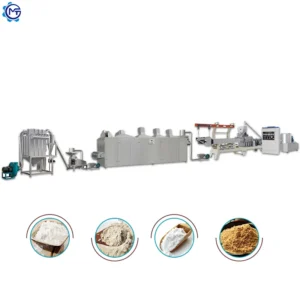
Automatic Deep Processing Machine – Food Grade Modified & Pregelatinized Starch Manufacturing Line
¥65.00 Select options This product has multiple variants. The options may be chosen on the product page -
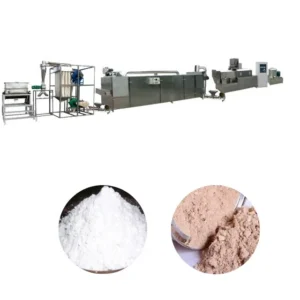
Big Capacity Modified Starch Industrial Use and Food Additives
¥50.00 Select options This product has multiple variants. The options may be chosen on the product page