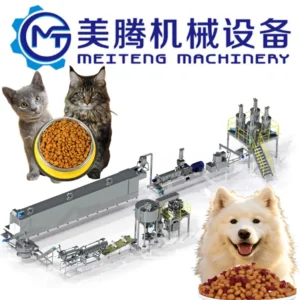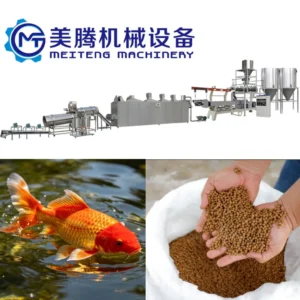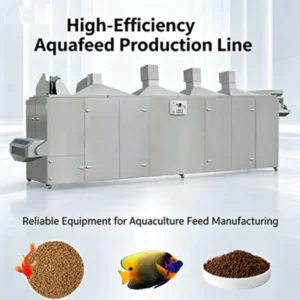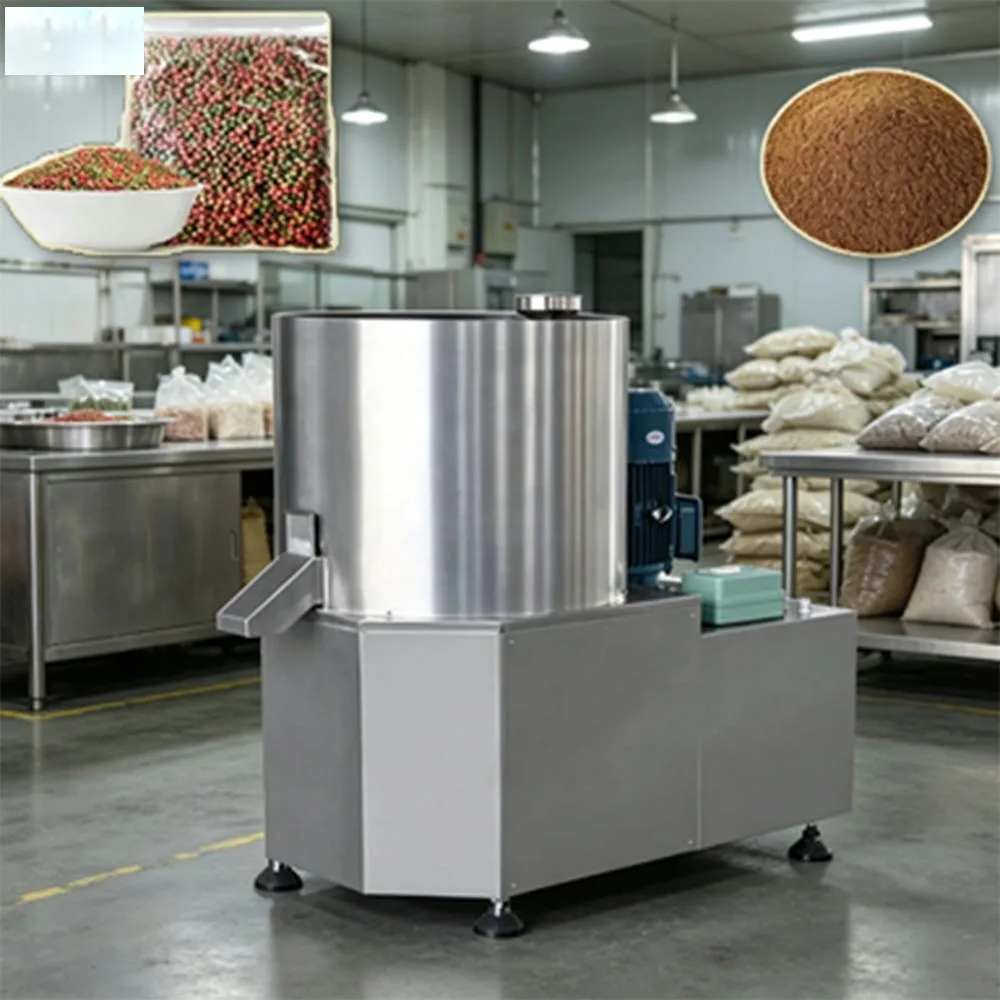


Twin Screw Extrusion Production Line, 500 kg/h Capacity, 0.5-12mm Pellet Range — fully automatic continuous processing system with stainless steel construction and integrated feeding, mixing, extruding, and pelletizing stations.
Twin-screw configuration and die design are specified to your raw material formulation and target pellet density, whether floating or sinking aquatic feed. The screw-barrel interaction controls moisture, shear, and starch gelatinization to achieve consistent expansion across 0.5mm starter feed through 12mm grow-out pellets.
Factory trial runs on your actual raw material verify line performance before shipment, with throughput matched across every station from batching to packing.
- Adjustable die selection covers multiple pellet specifications
- Stainless steel food-contact parts ensure hygiene compliance
- Single-supplier accountability for complete turnkey installation
Description
Matched Throughput Across Every Station — Every feeding, mixing, extruding, drying, and packing module in this line is calculated against the same target output, so no single station becomes a bottleneck once the extruder reaches its verified rate.
Technical Specifications
| Parameter | Value |
|---|---|
| Product Type | Twin Screw Extrusion Production Line for Floating Fish Feed and Pet Food |
| Output Capacity | 500 kg/h (basis not stated in source — confirm raw material formulation, moisture content, pellet size) |
| Screw Type | Twin-screw |
| Pellet Size Range | 0.5 mm – 12 mm (adjustable via die change) |
| Control System | Simple control panel (PLC/MCC option available upon confirmation) |
| Line Stations | Feeding, mixing, extruding, pelletizing, drying, coating, packing |
| Construction Material | Stainless steel on food-contact parts |
| Assembly State | Fully automatic continuous production line |
| Operation Mode | Continuous, low manual supervision |
| Energy Profile | Low energy consumption with matched power distribution (rated values to be confirmed per project) |
Application Suitability
| Application | Material or Output |
|---|---|
| Floating aquaculture feed | Catfish, tilapia, and shrimp formulations with varied protein and starch ratios |
| Dry pet food and kibble | Corn, meat meal, poultry by-product, and vitamin premix blends |
| Starter feed pellets | 0.5 mm – 2 mm micro-pellets for fry and juvenile fish stages |
| Grow-out feed pellets | 4 mm – 12 mm pellets for adult fish and medium-to-large breed pets |
Why Nominal Capacity Numbers Mislead Turnkey Line Buyers
A twin screw extrusion production line turnkey proposal quoting 500 kg/h means little unless that figure was measured on your actual formulation at your target moisture level.
I spent years doing on-site support across West Africa and South Asia, and the most common failure pattern was always the same: the extruder ran fine on the factory’s test formula, then choked or produced off-spec density once the buyer loaded their own locally sourced ingredients. Screw combinations that worked on a 30% protein mix failed entirely on a 45% protein blend, and entire lines sat idle waiting for replacement parts. [NEED_CITE: twin screw extrusion behavior across varying protein and starch formulations] The lesson was that capacity is not a machine spec — it is a machine-and-material combination spec. That is why trial runs on the buyer’s actual raw material, before the line ships, are the only honest way to confirm what a line will actually produce on your factory floor.
How Screw Configuration Locks Pellet Density Before You Ship
The twin-screw extrusion system in this line is configured after the buyer’s raw material formulation and target pellet density are confirmed. Screw element arrangement — kneading blocks, conveying sections, and reverse-flight segments — directly controls residence time, shear intensity, and melt temperature inside the barrel. For floating fish feed, the screw profile must generate enough expansion at the die face to trap air cells inside each pellet. For sinking aquatic feed or dense kibble, the same extruder receives a different screw stack that compresses rather than expands the melt. Die geometry works in tandem: hole diameter, land length, and face pattern all shape the final pellet. This is not a catalogue selection — it is a calculation tied to your specific formulation.
Throughput Matching Between Extruder, Dryer, and Coating Drum
A twin screw extrusion production line turnkey project succeeds or fails on whether every downstream station handles the exact output the extruder delivers. If the dryer is undersized, wet pellets accumulate and degrade before moisture reaches safe storage levels. If the coating drum runs slower than the extruder output, uncoated product piles up and oil or flavoring application becomes uneven. On this line, each station — feeding, mixing, extruding, drying, flavoring, and packing — is sized against the same verified throughput figure so material flows continuously without buffer overflows or idle gaps. [NEED_CITE: material flow balance in continuous extrusion lines]
What the Spec Sheet Actually Means for Your Production
The 0.5 mm to 12 mm pellet range is achieved through die plate changes, not machine adjustment — operators swap die plates to shift between fry feed and grow-out pellets or between small-breed and large-breed kibble. Stainless steel on all food-contact surfaces resists corrosion from high-moisture formulations and acidic vitamin premixes, which matters when a line runs different recipes back-to-back with only a water flush between batches. The continuous operation mode with low manual supervision assumes upstream batching is consistent; any variation in raw material feed rate will show up as density fluctuation at the die. The simple control panel governs barrel temperature zones and screw speed, though PLC and MCC control options are available when project scope requires automated recipe management.
The Hidden Cost of an Unmatched Line Configuration
When the dryer or coating station is sourced from a different vendor than the extruder, nobody takes responsibility for the gap between them. Wet pellets sitting on a conveyor for twenty minutes lose surface integrity before they even enter the dryer, and oil coating applied to product that has cooled below the absorption threshold simply drips off. [NEED_CITE: post-extrusion moisture management in aquatic feed production] I watched a South Asian tilapia operation lose an entire production run because the coating drum speed was set for a different pellet size than what the extruder was actually producing that shift. The cost was not just the wasted material — it was the two days spent recalibrating every station independently before the line ran as a single system again.
Why Source This Line From One Supplier
Throughput matching across every station eliminates the blame-shifting that happens when equipment from three different vendors fails to synchronize on your floor. The in-house testing workshop runs your actual raw material through the complete extrusion, drying, and coating sequence before the line ships, so screw configuration and die selection are validated against your formulation rather than a generic test recipe. Screw and die records are documented and retained, so when replacement wear parts are needed six months later, the exact configuration ships without re-engineering. Electrical schematics confirm voltage, frequency, and control language before production starts, avoiding the commissioning delays I saw repeatedly on sites where control panels arrived with labels in the wrong language. Pre-sales engineering covers layout, utility planning, and phased installation scheduling, so the line arrives as a coordinated project rather than a container of disconnected machines.
Documentation & Verification
- Line layout drawing showing station-by-station throughput calculation against your target output
- Trial run report on your raw material conducted in the testing workshop before dispatch
- Screw and die configuration record matched to your target pellet density and size range
- Electrical schematic with confirmed voltage, frequency, and control panel language
- Factory test record documenting run parameters and pellet sample measurements
- CE declaration of conformity and ISO certificate documentation per project requirements
Installation, Commissioning & Support
- Foundation requirements calculated from line footprint and extruder vibration profile
- Dedicated power circuit sizing based on confirmed total connected load and voltage
- Modular station delivery allowing phased uncrating and alignment in restricted workshop spaces
- First-run commissioning with screw speed, barrel temperature, and die gap set to trial-run parameters
- Operator training covering die change procedure across the full 0.5 mm to 12 mm pellet range
- Wear parts inventory list specifying screw elements, die plates, and cutter assemblies for first reorder
What We Need to Prepare Your Line Proposal
To build an accurate layout and capacity calculation, share your target raw material formulation including protein percentage and starch source, the pellet sizes you need across your product range, and your local voltage and frequency standards. If you have existing upstream batching or downstream packing equipment that this line must integrate with, provide those specifications as well. Let us know whether you want a factory trial run on your material before shipment — this is how we lock the screw and die configuration before production begins.
Frequently Asked Questions
Q: How is line capacity verified on my specific raw material formulation before shipment?
A: We conduct a trial run using your actual raw material in our in-house testing workshop. The extruder runs your formulation through the complete sequence — extrusion, drying, and coating — and we measure pellet density, expansion ratio, and moisture at each stage. The results are documented in a trial run report that ships with your line, confirming the capacity and screw configuration matched to your recipe.
Q: How do you ensure throughput is matched across extruder, dryer, and coating stations?
A: Each station is calculated against the same target output during the layout design phase. We do not select stations from a catalogue based on nominal ratings — we match dryer belt area, coating drum volume, and conveyor speed to the verified extruder output on your specific formulation. This prevents material bottlenecks and idle gaps across the entire line.
Q: What screw and die configuration process ensures correct pellet density for floating feed?
A: Screw element arrangement and die geometry are selected after reviewing your formulation’s protein-to-starch ratio and target pellet buoyancy. Kneading block placement controls melt shear and expansion at the die face. We validate the configuration during the trial run, measuring float rate and density, and adjust the screw stack if results fall outside your market specification before the line ships.
Q: What voltage, frequency, and control language options are confirmed before commissioning?
A: Electrical schematics are reviewed and confirmed with you before production begins. We document your local voltage, frequency, and preferred control panel language so the line arrives ready to connect. This prevents the commissioning delays that occur when control systems are configured for the wrong regional standard.
Q: What does the phased installation and commissioning schedule look like for a complete turnkey line?
A: Stations are delivered in modular sections aligned with your workshop readiness. Installation follows a sequenced plan — extruder positioning first, then upstream feeding and mixing, then downstream drying and packing. Commissioning begins with single-station checks, progresses to linked dry runs, and concludes with full continuous production using your raw material and confirmed parameters.
Related products
-
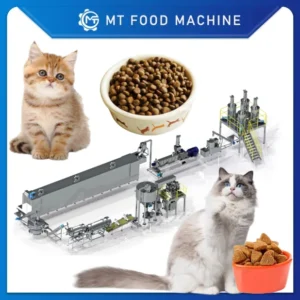
MT135 Brand 2.5-3.0t/h PLC Controlled Multi-Species Cat Food Processing Line
¥55,000.00 Select options This product has multiple variants. The options may be chosen on the product page -
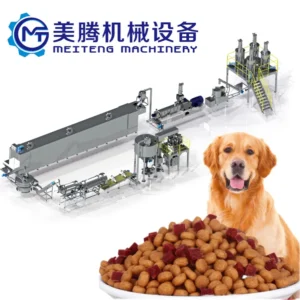
High Capacity Pet Food Extrusion Production Line Suitable for Dog. Cat. Bird. Fish and Cattle Feed
¥9,500.00 Select options This product has multiple variants. The options may be chosen on the product page -
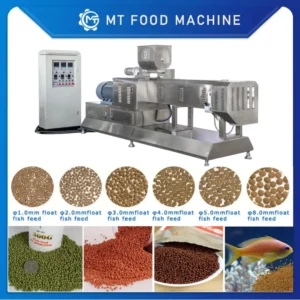
4-5t/h High Capacity Multi-Species Fish Feed Processing Line to Produce Fish Food
¥65,000.00 Select options This product has multiple variants. The options may be chosen on the product page -
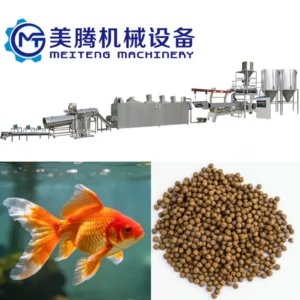
300-600kg/h Capacity Multi-Species Fish Feed Processing Line to Produce Fish Food
¥45,000.00 Select options This product has multiple variants. The options may be chosen on the product page