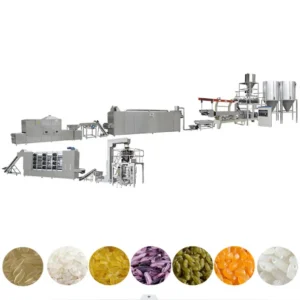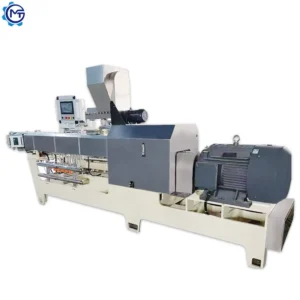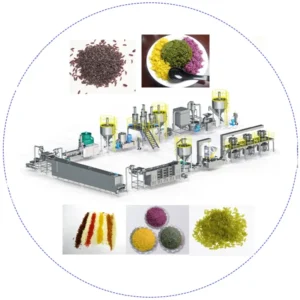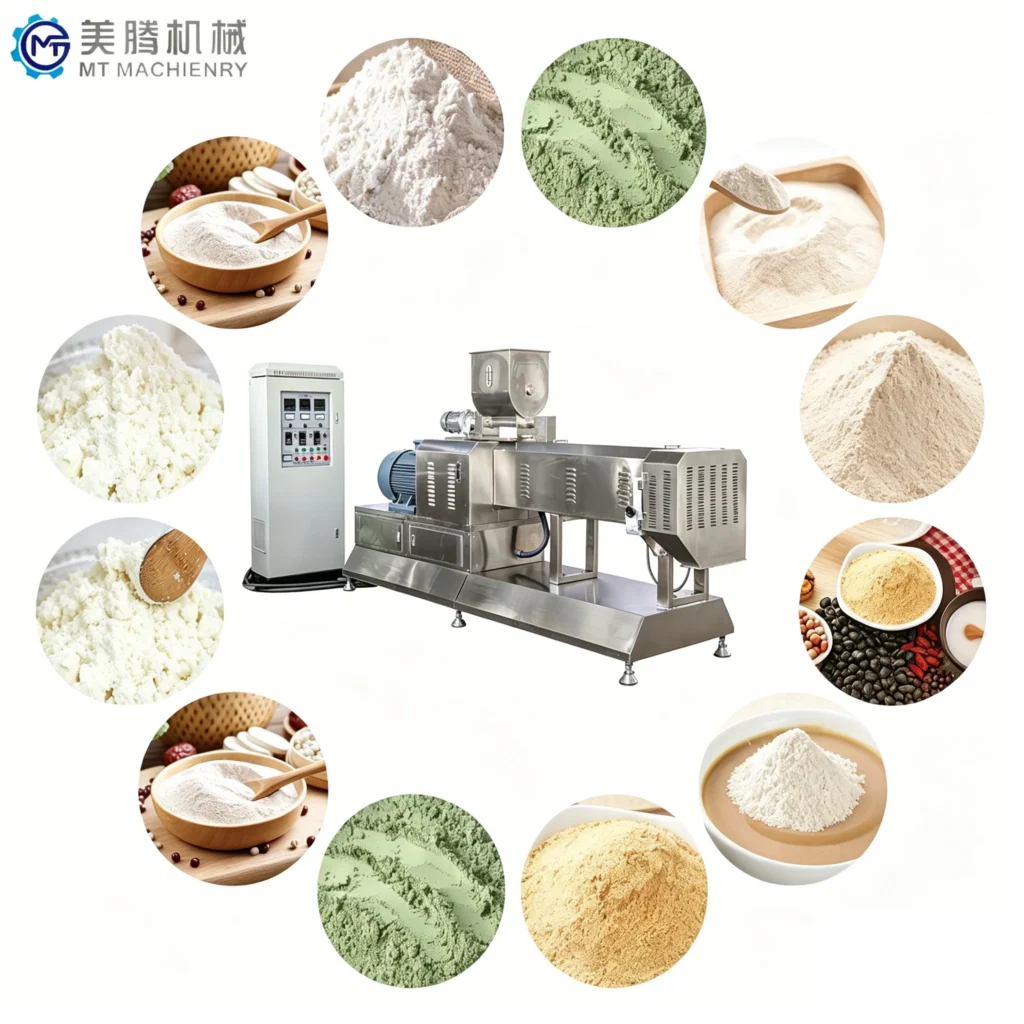


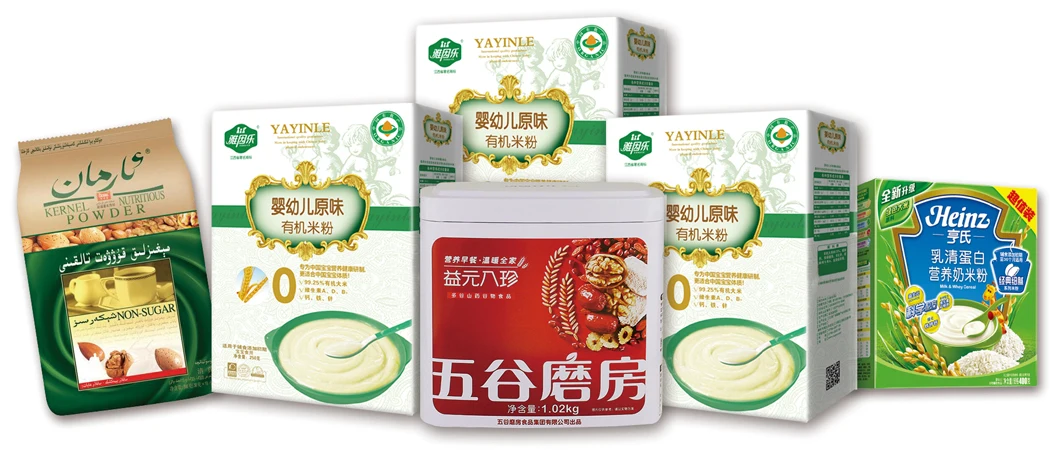
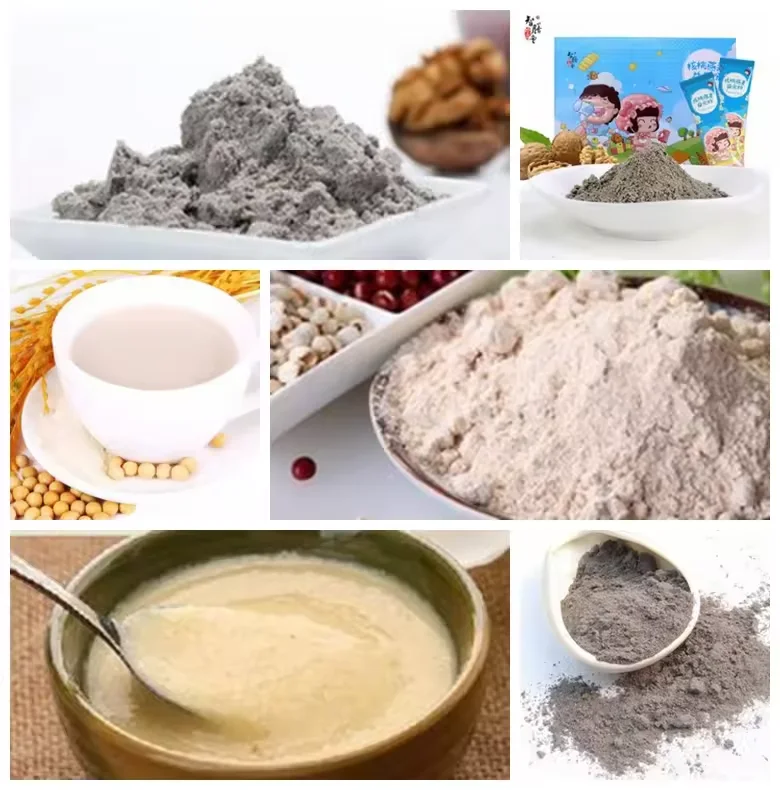
MT65 / MT70 / MT75 / MT85 Nutrition Powder Processing Line, Twin-Screw, PLC Control — complete turnkey system from batching through extrusion, drying and pulse grinding. Screw configuration and die design are matched to your raw material formulation and target mesh size, ensuring consistent gelatinisation and powder density. Every station is throughput-matched under one supplier, backed by in-house trial runs on your actual recipe before shipment.
Description
Throughput-Matched Line Integration — Every station from mixing to pulse grinding is calculated against your specific nutritional powder formulation, so the extruder, dryer and grinder sustain the same output without bottlenecking.
Technical Specifications
| Parameter | Value |
|---|---|
| Product Type | Nutrition Powder & Baby Rice Flour Processing Line |
| Models Available | MT65, MT70, MT75, MT85 |
| Screw Type | Twin-screw |
| Installed Power (MT65) | 84 kW |
| Power Consumption (MT65) | 59 kW |
| Output Capacity (MT65) | 120–150 kg/h (basis not stated in source — confirm raw material, moisture content and target powder mesh size) |
| Overall Dimensions (MT65) | 20000 × 1500 × 2200 mm |
| Installed Power (MT70) | 160 kW |
| Power Consumption (MT70) | 120 kW |
| Output Capacity (MT70) | 150–200 kg/h (basis not stated in source — confirm raw material, moisture content and target powder mesh size) |
| Overall Dimensions (MT70) | 21000 × 1500 × 2200 mm |
| Installed Power (MT75) | 190 kW |
| Power Consumption (MT75) | 140 kW |
| Output Capacity (MT75) | 200–250 kg/h (basis not stated in source — confirm raw material, moisture content and target powder mesh size) |
| Overall Dimensions (MT75) | 23000 × 1500 × 3200 mm |
| Installed Power (MT85) | 210 kW |
| Power Consumption (MT85) | 150 kW |
| Output Capacity (MT85) | 300–400 kg/h (basis not stated in source — confirm raw material, moisture content and target powder mesh size) |
| Overall Dimensions (MT85) | 25000 × 1500 × 3500 mm |
| Voltage | 380 V / 50 Hz, Three Phase (other options available on request) |
| Contact Materials | Stainless steel 304 (food-grade) |
| Control System | PLC / MCC |
| Mixer Power Options | 4 kW / 7.5 kW / 15 kW |
| Mixer Batch Capacity Options | 20–30 kg / 70–80 kg / 170–180 kg per batch |
| Pulse Grinder Power | 11 kW |
| Pulse Grinder Dimensions | 3000 × 900 × 2200 mm |
| Dryer Options | Multi-layer; fuel, gas or electric heating; adjustable temperature and drying time |
| Line Stations | Mixing → Screw Conveying → Twin-screw Extruding → Air Conveying → Drying → Air Conveying → Pulse Grinding |
| Warranty | One year |
| Standards | CE (since 2014), ISO certified |
Application Suitability
| Application | Material or Output |
|---|---|
| Infant and baby rice flour production | Rice, corn, oat and blended cereal bases with added vitamins and minerals |
| Nutritional and therapeutic food powders | High-protein blends including whey, soy isolate and micronutrient premixes |
| Fortified staple food programmes | Maize, wheat, sorghum or cassava fortified with iron, zinc and vitamin A |
| Modified and pregelatinised starch | Tapioca, potato, corn and waxy maize starch bases |
| Functional and health-care food powders | Dietary fibre, plant protein and composite nutritional blends |
Why "Rated Capacity" Means Nothing Without Your Recipe
Capacity figures only matter when tied to the raw material formulation and target powder mesh you will actually run.
I have watched factory managers sign off on a nutrition powder processing line turnkey quotation that promised a specific hourly output, only to discover during commissioning that the number was based on plain rice flour — not the high-whey, high-micronutrient blend their product required. The extruder ran, but the powder density and gelatinisation were off, and the grinder could not keep up with the actual throughput. Two weeks of on-site re-tuning followed before the line met specification. That mismatch between quoted capacity and real-world recipe behaviour is one of the most common disputes in this equipment category [NEED_CITE: common commissioning disputes in food extrusion turnkey projects].
Phased Layout Planning for a Complete Extrusion Line
A nutrition powder processing line turnkey project begins with a floor plan that respects the physical sequence — mixing, screw conveying, twin-screw extruding, air conveying, drying, air conveying and pulse grinding — while leaving maintenance access at every station. For the larger models such as the MT85, the overall footprint extends to 25 metres in length, which means ceiling height, column spacing and utility drop points must be confirmed before any steel is cut. We produce a line layout document that maps each station’s position, utility connection and operator walkway so the contractor can prepare the building shell in parallel with machine fabrication.
Throughput Matching Across Every Station
The extruder is only one link in the chain. If the mixer batches 170 kg but the dryer cannot handle the moisture load that volume produces, the line stalls. Each station is sized against the others using your target capacity and raw material moisture profile. The pulse grinder, rated at approximately 200 kg/h, must align with the dryer discharge rate; otherwise ground powder accumulates or the grinder runs under-loaded, both of which affect particle size consistency [NEED_CITE: throughput balancing methodology in food powder processing lines]. This cross-station calculation is documented before the quotation is issued, so you see exactly where each number comes from.
What the Specifications Actually Mean for Your Process
Twin-screw extrusion gives operators independent control over shear, residence time and barrel temperature profile — variables that directly determine starch gelatinisation degree and, ultimately, the solubility and mouthfeel of the finished powder. The four available models span installed power from 84 kW to 210 kW, meaning a small-batch infant cereal producer and a mid-volume fortified flour supplier can each select a frame that matches their daily output target without over-sizing the motor and wasting energy at partial load. Stainless steel 304 contact surfaces throughout the line prevent iron contamination that could interfere with added mineral premixes. The PLC and MCC control architecture allows recipe parameters — screw speed, barrel zone temperatures, feeder rates — to be stored and recalled, which is essential when a single line runs multiple nutritional powder formulations across shifts. Dryer heating can be specified as fuel, gas or electric, and the multi-layer configuration gives enough residence time for the moisture reduction that the downstream pulse grinder requires to achieve a consistent mesh.
The Hidden Cost of Skipping a Real-Material Trial Run
When the factory trial uses a standard starch base instead of the buyer’s actual formulation — one loaded with whey protein concentrates, lipid-coated vitamins or heat-sensitive probiotics — the extrusion parameters validated at the factory become irrelevant on site. Barrel temperature zones that worked for simple rice flour may scorch a high-protein blend, and screw element spacing tuned for low-fat material can fail to plastify a lipid-rich recipe. The result is weeks of on-site re-commissioning, raw material waste and delayed market launch, costs that far outweigh a sample shipment of your actual ingredients sent for pre-shipment testing [NEED_CITE: cost of post-installation commissioning delays in food extrusion projects].
Why Buyers Source This Line from One Supplier
The entire sequence from batching to grinding is engineered under a single responsibility, which eliminates the blame-shifting that occurs when a dryer from one vendor cannot keep pace with an extruder from another. Screw configuration and die geometry are documented specifically against your raw material blend and target powder mesh, not copied from a generic build. Before shipment, your formulation is trial-run in the in-house testing workshop, producing a written report that travels with the machine. Pre-sales consultation covers line layout, utility planning and phased installation scheduling, and the same engineering team that designs the line supports on-site commissioning and operator training. Post-startup, wear parts lists and maintenance intervals are provided so that replacement screws and dies are ordered before they are needed, not after a production stoppage.
Documentation & Verification
- Line layout and capacity calculation showing throughput at every station for your recipe
- Screw and die configuration record matched to your raw material and target mesh
- Trial run report produced on your actual formulation before dispatch
- Electrical schematic with voltage, frequency and HMI language confirmed to your facility
- CE declaration of conformity and ISO certificate included with shipping documents
- Operation and maintenance manual with wear parts list and replacement intervals
Installation, Commissioning & Support
- Floor loading and anchor plan provided based on the selected model’s overall dimensions and weight
- Dedicated electrical circuit sized to the installed power of the chosen extruder model
- Stations shipped in modular sections to fit standard container loading and site door clearances
- Barrel temperature zones and screw speed profiles calibrated on your raw material during on-site commissioning
- Operator training covers PLC recipe storage, dryer temperature adjustment and grinder screen changes
- Wear parts list identifies screw elements, dies and grinder screens with recommended replacement intervals
What to Prepare Before Requesting a Quotation
To size a nutrition powder processing line turnkey project accurately, we need your raw material formulation — including protein, fat, fibre and micronutrient ratios — along with the target powder mesh size and daily output requirement. Share your facility’s available floor length, ceiling height, existing utility supply voltage and frequency, and preferred control language. If you have upstream storage silos or downstream packing equipment already installed, provide their connection points so the line layout can integrate with them. Sending a representative sample of your actual blend allows us to conduct a trial run in the testing workshop and validate process parameters before the quotation is finalised.
Frequently Asked Questions
Q: How is line capacity verified against my specific raw material formulation and nutritional additive ratios?
A: We run your actual formulation — including whey, vitamin premixes or fibre blends — through the testing workshop before shipment. Screw speed, barrel temperature profile and dryer settings are adjusted until the target powder mesh and solubility are met. A written trial run report documenting these parameters is included with the machine documentation so commissioning on site starts from validated baselines rather than generic settings.
Q: What is the phased installation and commissioning schedule for a complete nutrition powder turnkey line?
A: Installation follows a station-by-station sequence — extruder positioning, dryer assembly, air conveying ductwork, grinder placement — typically spanning several weeks depending on model size and site readiness. Commissioning then begins with empty-run checks, progresses to water trials and finishes with production runs on your raw material. Operator training runs in parallel during the final production-run phase.
Q: How do you match throughput between the extruder, dryer and pulse grinder to prevent bottlenecks?
A: Each station’s capacity is calculated from the extruder’s output on your specific recipe, accounting for moisture addition during mixing and moisture removal in the dryer. The pulse grinder is then selected or adjusted so its hourly throughput aligns with the dryer discharge rate. This cross-station calculation is documented in the line layout proposal before the order is confirmed.
Q: What voltage, frequency and control language confirmations are completed before production begins?
A: Your facility’s electrical specification — voltage, phase and frequency — is confirmed in writing and reflected in the electrical schematic. The PLC and MCC control panels are configured accordingly, and the HMI language is set to match your operators’ preference. These details are locked in during the specification confirmation stage, before fabrication starts.
Q: Can the line be expanded or reconfigured to add new powder formats or change capacity in the future?
A: The modular station layout allows individual components — such as the mixer, dryer or grinder — to be replaced or supplemented as product range or volume requirements evolve. Screw and die configurations can be changed to accommodate different formulations, and additional barrel sections or dryer layers can be specified if future capacity increases are anticipated during the initial line design.
Related products
-
Compact Automatic Baby Cereal Nutrition Powder Production Line with 500kg/h Capacity and PLC Control
¥9,500.00 Add to cart -
High Productivity New Condition Safe Healthy and Nutritious Baby Food Meal Replacement Powder Production Line
¥30.00 Select options This product has multiple variants. The options may be chosen on the product page -
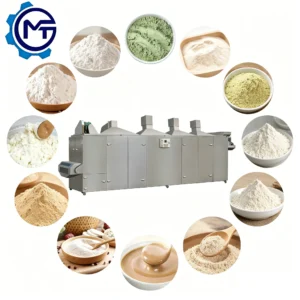
Small Scale MT Brand Automatic Baby Food Nutrition Powder Rice Flour Making Machine with 500kg/h Production Capacity PLC Control
¥9,500.00 Add to cart -
Commercial Stainless Steel Baby Rice Powder Grinding Mixing Machine
¥8,238.27 Select options This product has multiple variants. The options may be chosen on the product page