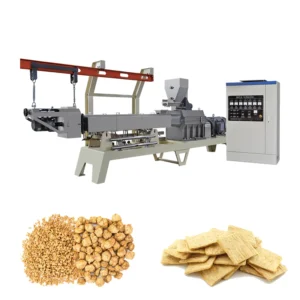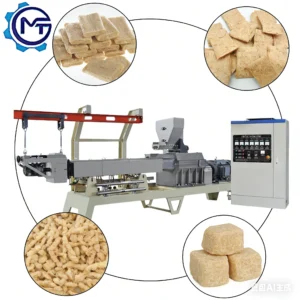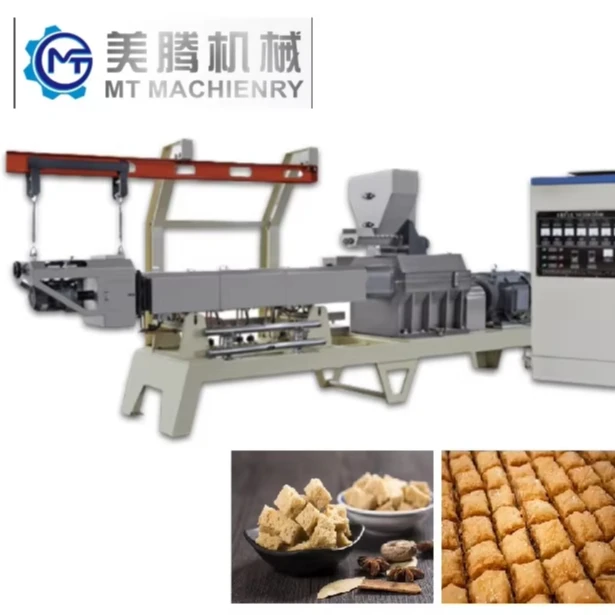
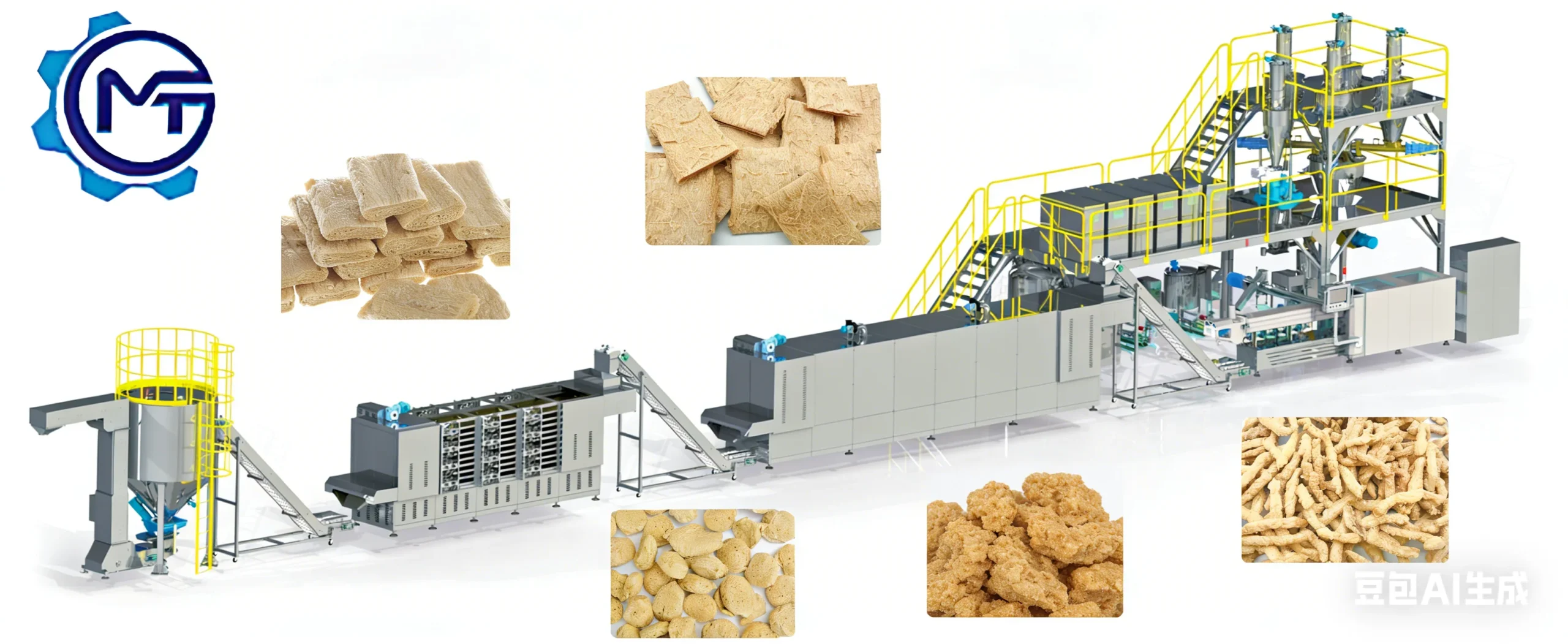
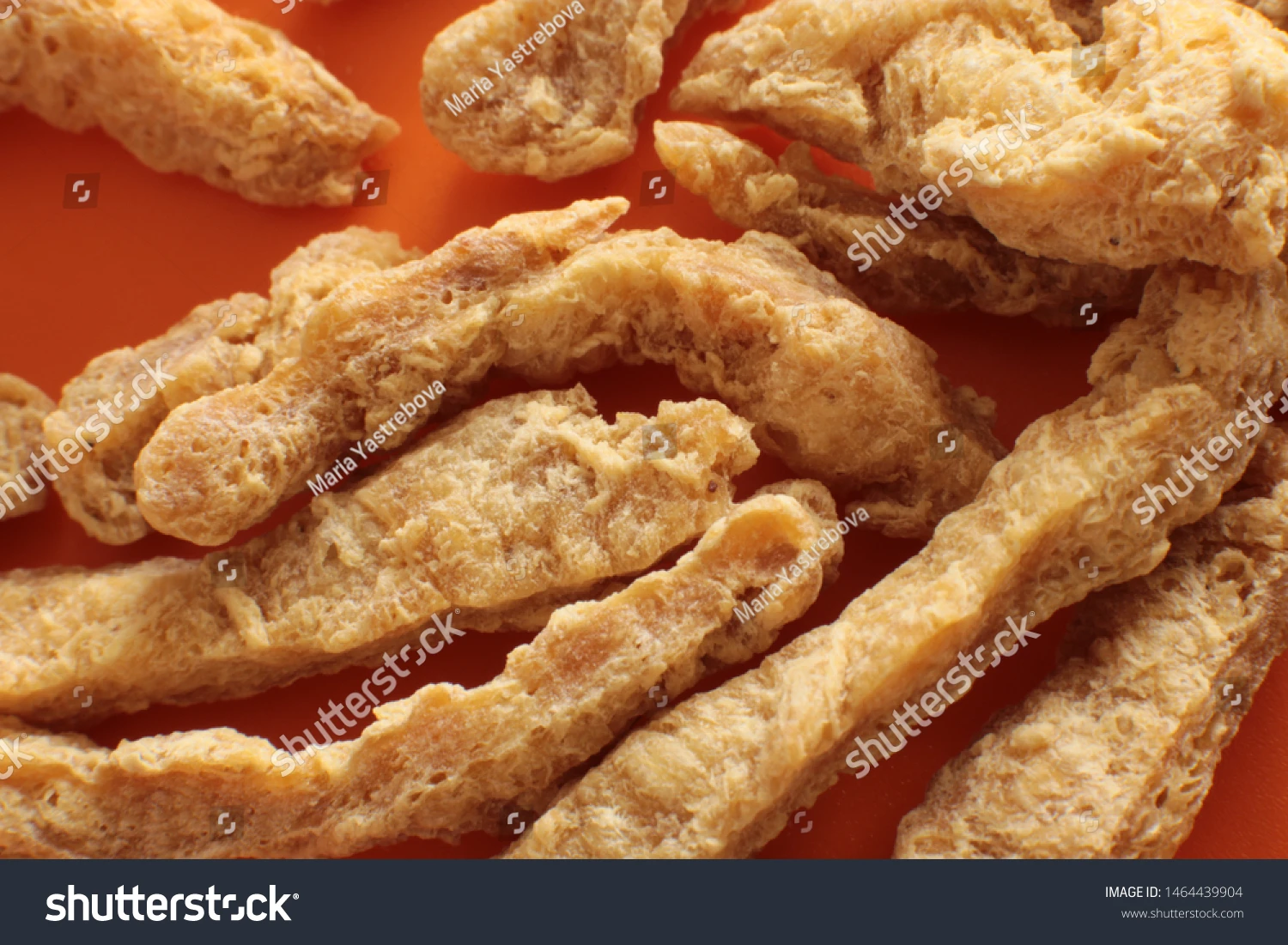
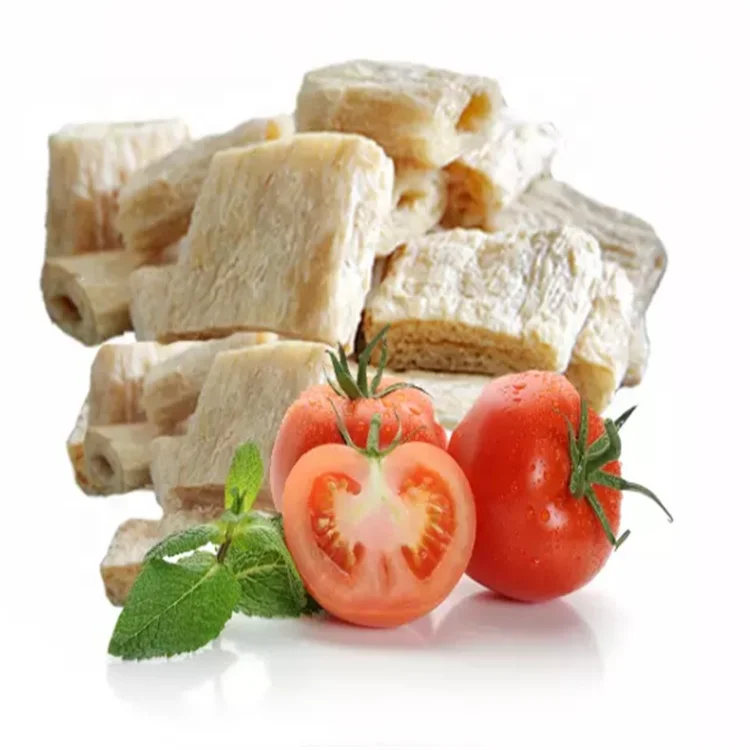
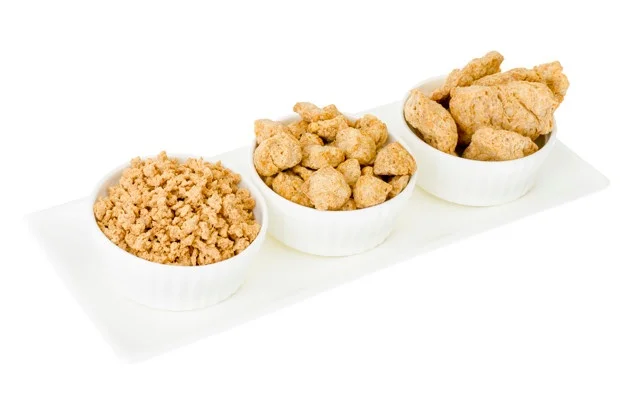
MT65 / MT70 / MT75 / MT85 Twin Screw TVP Extrusion Line, 84–210 kW Installed Power, Multi-layer Dryer — configured for texturized vegetable protein, soya chunks and plant-based meat blocks with layered fibre structure. Die and screw configuration matched to raw material behaviour, controlling moisture, shear and expansion for target density and texture. Throughput balanced across every station under one turnkey project, with in-house trial runs before shipment.
- CE certified, complete line from batching to cooling
- Voltage and control language confirmed before production
- Operator training and wear parts support included after commissioning
Description
Turnkey throughput matching — every station from mixer to cooling machine is balanced on paper before the line is built, so the extruder never outpaces the dryer.
Technical Specifications
| Parameter | Value |
|---|---|
| Product Type | Texturized Vegetable Protein (TVP) Extrusion Line |
| Screw Type | Twin Screw |
| Models Available | MT65 / MT70 / MT75 / MT85 |
| Installed Power | 84 kW (MT65) / 160 kW (MT70) / 190 kW (MT75) / 210 kW (MT85) |
| Power Consumption | 59 kW (MT65) / 120 kW (MT70) / 140 kW (MT75) / 140 kW (MT85) |
| Output Capacity | 100–150 kg/h (MT65, basis not stated in source) / 150–200 kg/h (MT70, basis not stated in source) / 150–200 kg/h (MT75, basis not stated in source) / 250–300 kg/h (MT85, basis not stated in source) |
| Overall Dimensions (L×W×H) | 40000×1200×2200 mm (MT65) / 41000×1500×2200 mm (MT70) / 43000×1500×3200 mm (MT75) / 45000×1500×3500 mm (MT85) |
| Main Motor Power | 22 kW / 30 kW / 45 kW (model-dependent) |
| Rotary Cutting Motor Power | 0.75 kW |
| Feeding Motor Power | 0.75 kW |
| Pump Motor Power | 0.37 kW |
| Heating Power | 10 kW / 14 kW (model-dependent) |
| Screw Length | 1050 mm / 1520 mm (model-dependent) |
| Mixer Capacity | 20–30 kg / 70–80 kg / 170–180 kg (model-dependent) |
| Mixer Power | 4 kW / 7.5 kW / 15 kW |
| Mixer Contact Material | Stainless Steel 304 |
| Dryer Type | Multi-layer, fuel / gas / electricity heat source options |
| Dryer Drive | Double pitch roller chain |
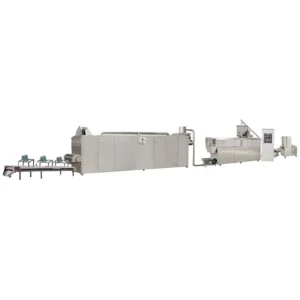
| Line Sequence | Mixer → Screw Conveyor → Twin Screw Extruder → Air Conveyor → Multi-layer Dryer → Cooling Machine |
| Die Configuration | Adjustable moulds for soya nuggets, TVP/TSP, soya chunks |
| Raw Materials | Defatted soya flour, low temperature soya flakes, soybean dregs, peanut dregs |
| Assembly State | Complete line, turnkey configuration |
| Standards | CE, ISO |
| Lead Time | 15–35 working days after deposit (verify against current schedule) |
Application Suitability
| Application | Material or Output |
|---|---|
| TVP and TSP continuous production | Defatted soya flour, low temperature soya flakes |
| Soya nuggets and soya chunks | Defatted soya flour, soybean dregs |
| Vegetarian meat analogues with layered fibre | Defatted soya flour, low temperature soya flakes |
| Plant-based meat blocks for downstream processing | Defatted soya flour, peanut dregs |
| Textured protein ingredients for frozen food | Soya flour blends |
| Secondary cereal and snack formats (screw adjustment) | Cereal and snack raw materials |
Why Nominal Line Capacity Fails on Real Raw Material
The number on the quotation rarely survives first contact with the buyer’s actual protein source.
A TVP production line turnkey project lives or dies by how well the extrusion parameters match the raw material that actually arrives at the factory door. I spent weeks on a Middle East soya line where the defatted soymeal showed up with protein content noticeably lower than our trial samples, and the fibre structure simply would not form [NEED_CITE: protein content variability in commercial defatted soymeal batches]. The extruder ran, the die formed shapes, but the layered fibre texture that defines acceptable plant-based meat was absent. That delayed commissioning by weeks. Since then, every TVP production line turnkey layout I work on starts with a raw material report before any screw configuration is locked in.
Screw Configuration Drives Fibre Structure
The twin screw extruder is the heart of any TVP production line turnkey installation, but the screws themselves are interchangeable elements arranged in a specific sequence. For soya-based texturized protein, the screw profile must generate enough shear and residence time to denature the globular proteins and realign them into fibrous strands as the melt exits the die. Changing the arrangement of conveying, kneading, and reverse elements alters that shear history directly. This is why the screw length options — 1050 mm and 1520 mm — matter: longer barrels allow more graduated temperature and shear zones, giving the operator finer control over fibre formation across different raw material grades.
Die Design Determines Product Format and Density
Downstream of the barrel, the die plate defines whether the output emerges as small nuggets, large chunks, or continuous sheets for slicing into plant-based meat blocks. Adjustable moulds across the soya nugget, TVP, and soya chunk formats mean a single extruder can serve multiple product lines. The die opening geometry interacts with the melt temperature and moisture content to control expansion ratio — too much expansion yields a pumice-like texture that rehydrates poorly, while too little produces a dense mass without the expected bite [NEED_CITE: expansion ratio effects on TVP rehydration and mouthfeel]. The die specification is therefore not a catalogue choice but a calculation based on the buyer’s target product.
Reading the Power and Capacity Figures
The installed power range from 84 kW to 210 kW across the four models reflects motor size, heating zones, and auxiliary drives combined. Power consumption figures sit noticeably lower — 59 kW to 140 kW — because heaters cycle and motors rarely run at full load continuously. For a plant engineer sizing the electrical supply, it is the installed power that determines transformer and cable capacity, while consumption informs operating cost projections. The mixer power steps from 4 kW to 15 kW in line with batch capacity, ensuring that wetting and blending keep pace with the extruder feed rate. If the mixer cannot prepare batches fast enough, the extruder starves and the entire TVP production line turnkey output drops regardless of its rated capacity.
What Happens When Stations Are Mismatched
When the dryer capacity falls behind the extruder output, product piles up with residual moisture that invites spoilage before it reaches the cooling stage. A multi-layer dryer with selectable heat source — fuel, gas, or electricity — gives flexibility, but its belt speed and layer count must be calculated against the extruder’s actual throughput on the buyer’s specific raw material [NEED_CITE: moisture content targets for shelf-stable TVP storage]. Similarly, if the cooling machine cannot bring product temperature down before packing, condensation inside bags creates a mould risk that may not appear until the shipment reaches the buyer’s warehouse. These are not theoretical failures; they are the most common complaints on lines assembled from separate vendors without an overall throughput calculation.
Why Procurement Through a Single Line Supplier Matters
Every station from the stainless steel 304 mixer through the screw conveyor, twin screw extruder, air conveyor, multi-layer dryer, and cooling machine is specified together, so throughput is calculated end to end rather than hoped for after assembly. The screw and die configuration is set based on the buyer’s raw material certificate of analysis, not copied from a generic build. An in-house testing workshop runs trial batches on that actual raw material before the line ships, catching protein content or moisture surprises early. Pre-sales layout work covers utility planning and phased installation scheduling so that the site is ready when the equipment arrives. Ongoing support covers operator training, wear parts such as replacement screws and die plates, and maintenance intervals matched to the line’s duty cycle.
Documentation & Verification
- Line layout and throughput calculation showing matched capacity across mixer, extruder, dryer, and cooler
- Screw and die configuration record specified to your raw material protein content and target product format
- Trial run report on your actual defatted soya flour or flakes conducted in the testing workshop before dispatch
- Electrical schematic with voltage and frequency confirmed against your site utility supply
- Factory test record documenting run-in parameters and product samples for your approval
- Operation and maintenance manual with wear parts list covering screws, dies, and dryer chain components
Installation, Commissioning & Support
- Floor plan layout based on line dimensions up to 45000×1500×3500 mm with utility connection points marked
- Electrical supply sized to installed power up to 210 kW with dedicated circuits for main motor and heating zones
- Equipment delivered in component modules for on-site assembly and alignment by the installation team
- First-run commissioning with screw speed, barrel temperature, and dryer dwell time tuned to your raw material
- Operator training covering die changes between nugget, chunk, and fibre block formats
- Wear parts inventory list for screws, die plates, and dryer chain with recommended replacement intervals
What to Share When Starting an Enquiry
To move from a general TVP production line turnkey enquiry to a workable layout proposal, the most useful starting information is your raw material specification — protein content, moisture, and particle size of the defatted soya flour or flakes you plan to use. Alongside that, your target product format (nuggets, chunks, or sliced fibre blocks) and expected daily output drive the model selection from MT65 through MT85. Finally, your site voltage, frequency, and preferred dryer heat source need to be confirmed early so the electrical design and dryer specification match what is actually available on the factory floor.
Frequently Asked Questions
Q: How is line capacity verified on the buyer’s actual raw material before shipment?
A: Raw material samples are run through the twin screw extruder in the in-house testing workshop using the specified screw and die configuration. The trial produces actual product samples and a written report documenting throughput, fibre structure, and moisture content at the dryer exit. Any adjustments to screw arrangement or temperature profile are made during this stage, not after installation at your site.
Q: What utility planning is required for the target installation site?
A: The electrical supply must cover installed power up to 210 kW at the confirmed local voltage and frequency. The multi-layer dryer heat source — fuel, gas, or electricity — must be selected based on what is available and economical at your location. Water supply and drainage connections are needed for the mixer and cleaning, and floor loading must accommodate the full line footprint.
Q: How is the phased installation and commissioning schedule structured?
A: The line arrives in modules that are positioned according to the pre-agreed layout drawing. Mechanical assembly and alignment come first, followed by electrical connection and control system check-out. Dry commissioning verifies motor rotation and conveyor tracking before wet commissioning begins with your raw material. Temperature profiles and screw speeds are tuned over several production runs until product quality meets the agreed specification.
Q: How is throughput balanced between the extruder, dryer, and cooling stations?
A: Each station’s capacity is calculated during the layout phase based on the extruder output expected from your specific raw material. The multi-layer dryer belt speed and layer count are set so that residence time achieves the target moisture without product backlog. The cooling machine is sized to bring product to packing temperature at the same rate, preventing bottlenecks at any point in the sequence.
Q: What operator training and wear parts support is included after commissioning?
A: On-site training covers daily start-up and shutdown procedures, die and screw changes for different product formats, and routine maintenance checks on the dryer chain and conveyor drives. A wear parts list identifies screws, die plates, and other consumables with expected replacement intervals. Spare parts ordering and technical support remain available for ongoing production needs.
Related products
-

Vegetarian Meat Floss Production Line with Twin Screw
¥9,500.00 Select options This product has multiple variants. The options may be chosen on the product page -

Customized Vegetarian Meat Production Line for Food Factory
¥9,500.00 Select options This product has multiple variants. The options may be chosen on the product page -
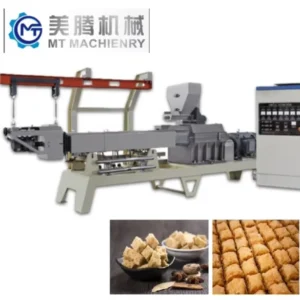
Vegetarian Beef Substitute Making Machine with Twin Screw Extruder
¥9,500.00 Select options This product has multiple variants. The options may be chosen on the product page -
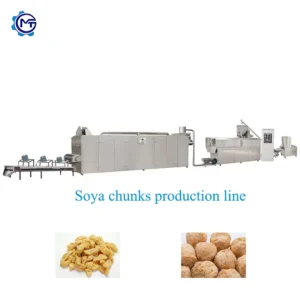
Soybean Protein Making Machine Automatic Soy Chunk Production Line
¥30.00 Select options This product has multiple variants. The options may be chosen on the product page