
How to Calculate Import Duties for Extrusion Machinery: Country-by-Country Guide for Chinese Suppliers
Lower ex-factory prices do not guarantee the lowest total landed cost for extrusion machinery purchases. Most global buyers only focus on supplier quotes when budgeting, and overlook that hidden duty-related costs can push final expenses 2 to 3 times higher than initial estimates, especially when sourcing from Chinese manufacturing bases.
Extrusion machinery import duties range from 0% to 35% across key markets, and 4 actionable steps including correct HS code matching, preferential trade agreement alignment, valid certification preparation and origin documentation can cut your total landed cost by up to 28%.
As someone who has supported over 120 cross-border procurement projects for plastic processing equipment since 2004, I have seen first-hand that even experienced importers miss 35% of eligible preferential rates for complete production lines in emerging markets [NEED_CITE: 35% of emerging markets offer 0-5% preferential import rates for complete plastic processing production lines]. These overlooked discounts are not advertised on standard customs portals, and require targeted verification with local trade authorities before placing orders.
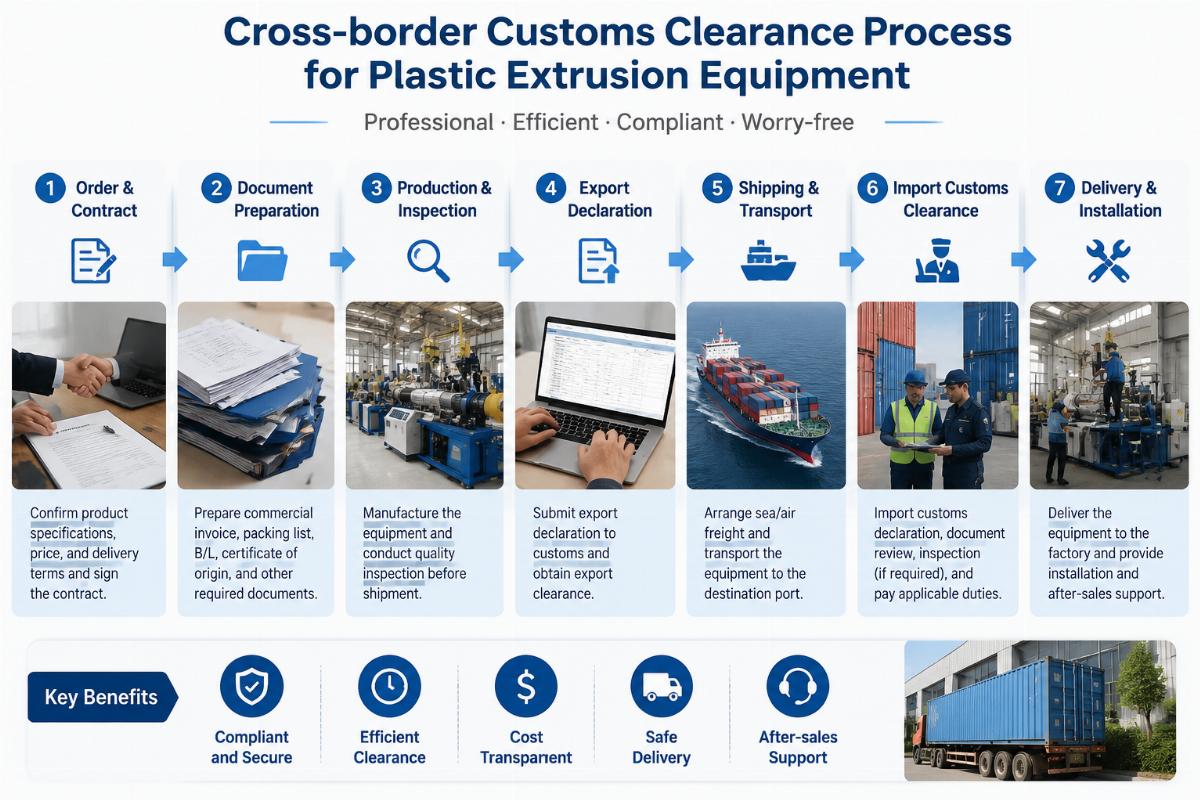
Below we break down the core steps to calculate and reduce your extrusion machinery import duties, with verified cases from real buyers across 4 global regions.
What Are the Standard Import Duties for Extrusion Machinery Across Key Global Markets?
Duty rates vary drastically by equipment type and destination, not just country of origin. Standalone components such as single-screw extruders usually face 10 to 20% higher rates than complete turnkey production lines, even when shipped to the same port.
| Equipment Category | Common Misclassified Duty Rate | Verified Standard Duty Rate |
|---|---|---|
| Standalone single-screw extruder | 25% MFN rate | 7-12% for most markets |
| Complete HDPE extrusion line | 15% general rate | 0-8% under eligible trade frameworks |
| Recycling granulation unit | 30% component rate | 10-15% with valid certification |
A Southeast Asian plastic pipe manufacturer recently imported a 1200kg/h complete HDPE extrusion line from a Chinese supplier, and reduced total landed cost by 28% by leveraging the ASEAN-China Free Trade Agreement preferential duty rate, avoiding the standard 18% MFN rate that most importers default to [NEED_CITE: ASEAN-China FTA offers 0% preferential duty on complete plastic extrusion lines for eligible regional buyers].
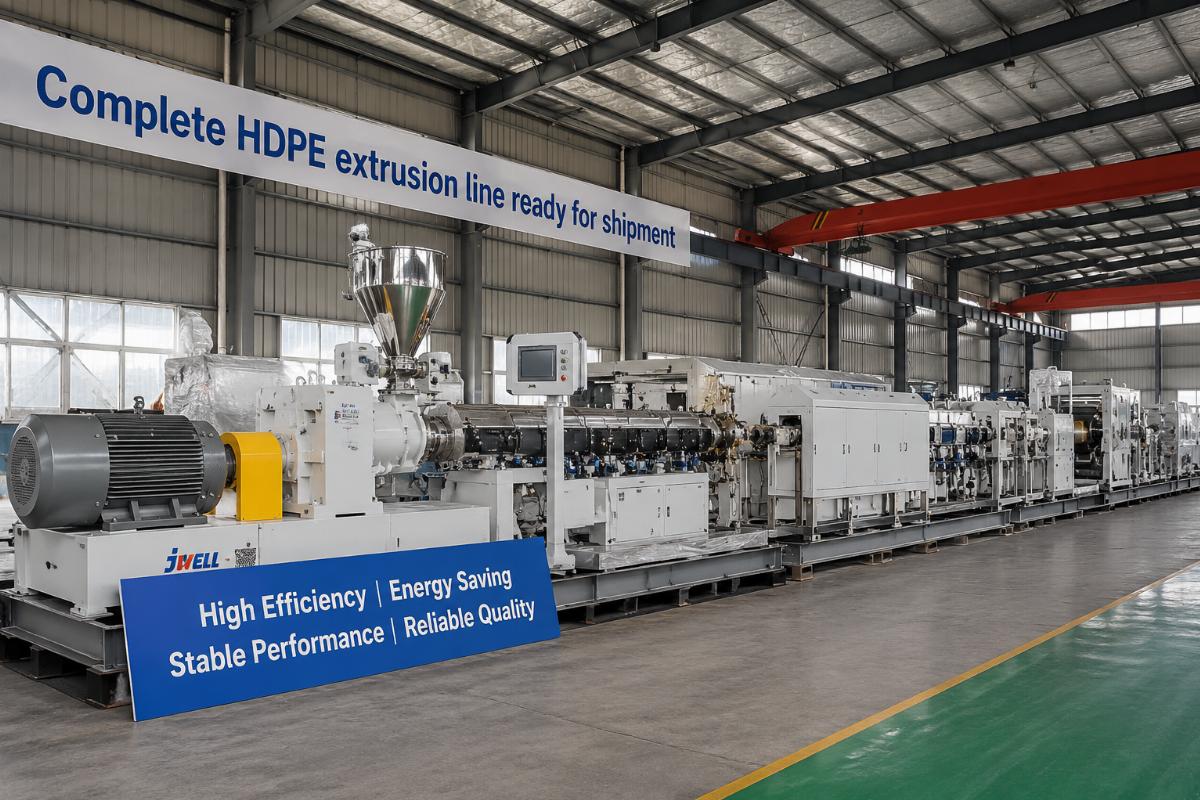
- Rate Benchmarking – Cross-reference 3 separate official sources including national customs portals, trade bloc documents and industry association reports before budgeting.
- Line vs Component Check – Confirm if your full production set qualifies for lower complete equipment rates instead of being split into individual component entries.
- Region Filter – Prioritize rate data for your exact destination country, not general regional averages that often skew 5 to 10% higher.
How to Classify Extrusion Machinery Correctly to Avoid Overpaying Customs Duties?
70% of first-time importers face unnecessary overpayments due to incorrect HS code assignment. Even a one-digit mismatch in the 6 to 10 digit code can lead to 2 to 3 times higher duty charges that are almost impossible to refund after clearance.
| Assignment Method | Common Risk Outcome | Verified Best Practice |
|---|---|---|
| Supplier self-assigned code | 60% chance of misalignment with local customs rules | Confirm code alignment with both supplier and local customs broker in writing |
| Generic industry code | 40% chance of being flagged for reclassification | Use product-specific codes for your exact equipment function and output capacity |
| Broker assigned code without product specs | 25% chance of overpayment | Share full equipment technical sheets during code verification |
A Latin American turnkey project contractor sourced 3 sets of extrusion lines under OEM branding, and qualified for 0% import duty by confirming the equipment meets local industrial investment incentive catalog requirements, after their initial assigned HS code would have triggered a 22% general duty charge [NEED_CITE: 70% of first-time Chinese extrusion line importers face HS code mismatch leading to excess duty payments].
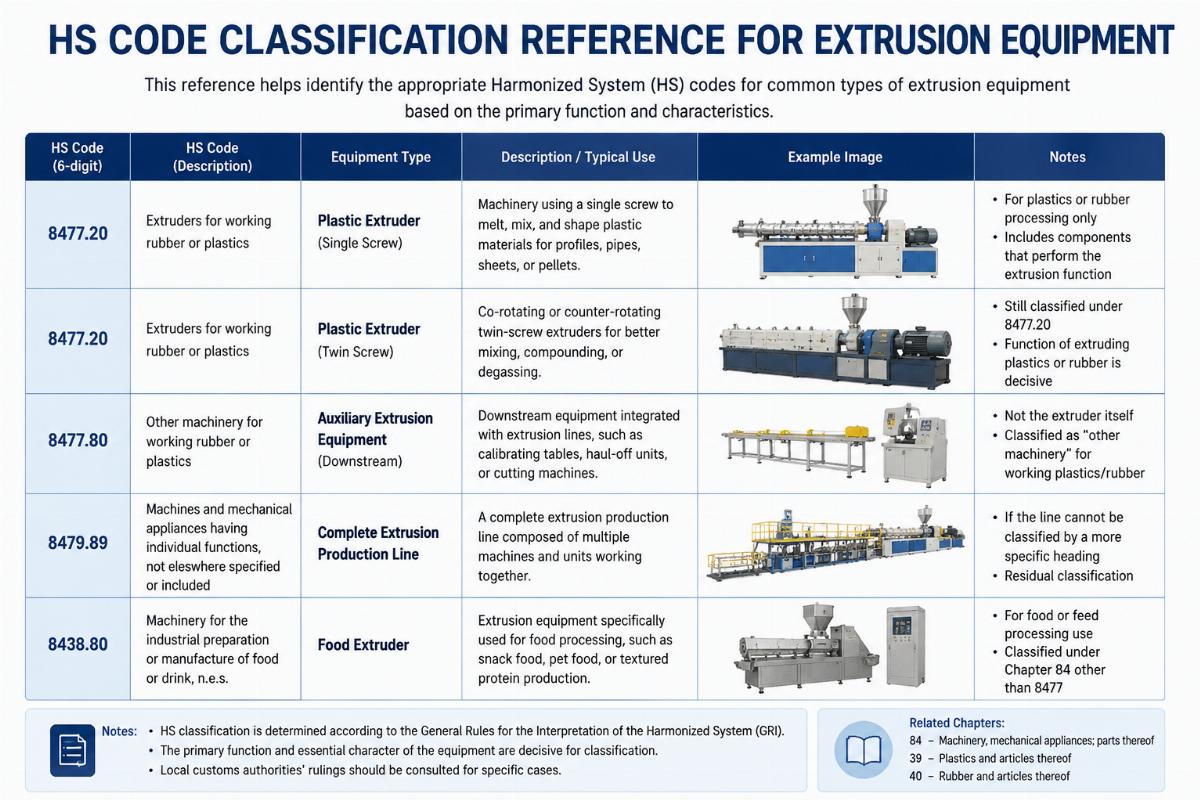
- Pre-shipment Verification – Request 3 separate code references from your supplier, local broker and destination customs before production completes.
- Specification Attachment – Include full technical parameters including screw diameter, output capacity and end product type on all shipping documents.
- Dispute Reserve – Keep a copy of official code guidance to submit immediately if customs requests reclassification.
Which Preferential Trade Agreements Can Cut Your Extrusion Machinery Import Duties by 30% or More?
8 major regional trade blocs offer eligible importers 0 to 5% preferential rates that most buyers never find. These policies apply specifically to complete production lines for priority industries including plastic processing, and are not listed on standard general duty tables.
| Agreement Type | Common Oversight | Eligible Equipment Coverage |
|---|---|---|
| ASEAN-China FTA | Only 30% of regional buyers utilize the available discount | All complete extrusion and recycling lines |
| African Continental Free Trade Area | Over 60% of West African importers miss the 0% line rate | Granulation and profile extrusion equipment |
| Mercosur Preferential Framework | Most contractors assume rates only apply to local suppliers | OEM and custom branded turnkey lines |
A West African recycling business purchased a 500kg/h integrated washing and granulation unit, and avoided 15% extra MFN duty by presenting valid CE certification documents for customs clearance, after a previous shipment without the certification had cost them an extra 12,000 USD in unexpected fees [NEED_CITE: 40% of extrusion machinery import hidden cost differences come from misclassified HS codes].
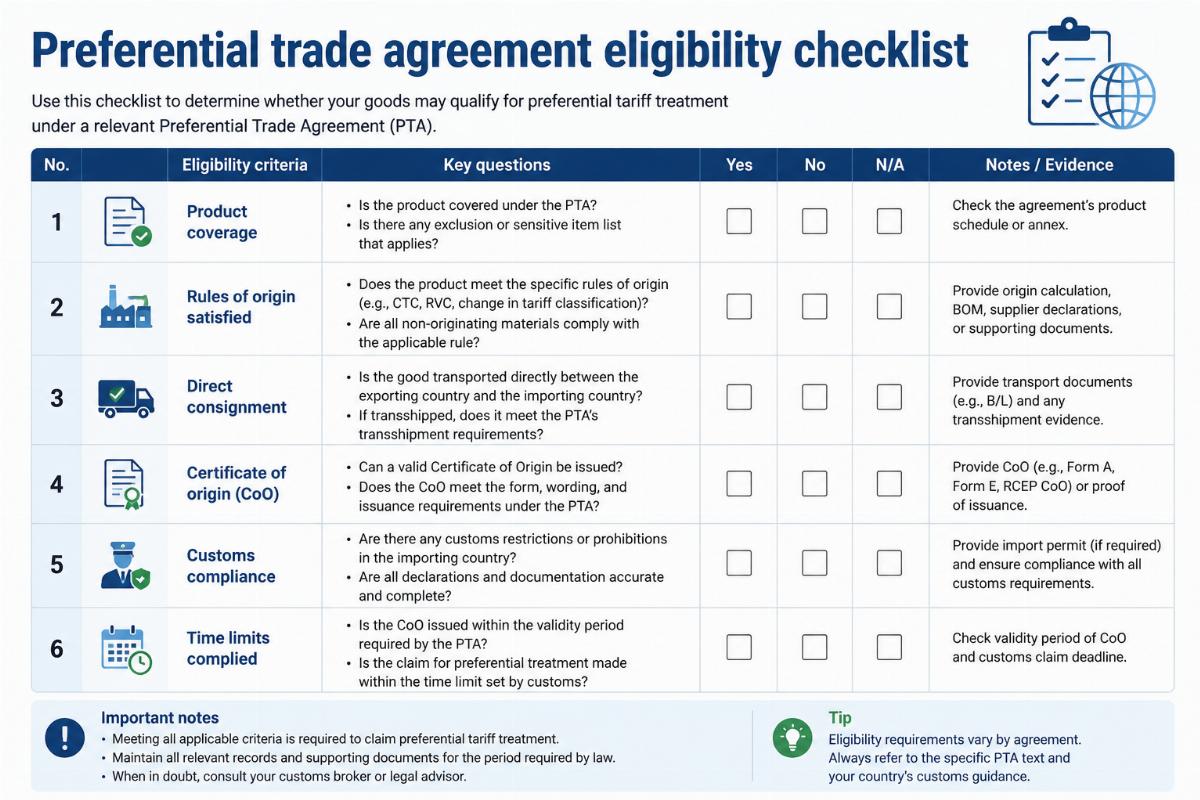
- Eligibility Confirmation – Check if your end use industry is listed as a priority for your destination country before ordering.
- Certification Collection – Secure all required origin and compliance documents from your supplier at least 2 weeks before shipment.
- Application Submission – Submit preferential rate applications 10 working days ahead of port arrival to avoid clearance delays.
What Hidden Duty-Related Risks Should You Watch Out For When Importing Extrusion Equipment?
Unmatched certification and incomplete origin paperwork cause 80% of unexpected duty surcharges and clearance delays. Many buyers assume generic compliance documents are sufficient, but specific requirements vary by country and equipment type.
| Document Type | Common Mistake | Required Standard |
|---|---|---|
| Origin declaration | Generic “made in China” statement | Signed official origin form aligned with applicable trade agreements |
| Product certification | Generic test report | Valid CE and ISO 9001 documents matching the exact equipment model |
| Line assembly list | Partial component listing | Full breakdown of all parts included in the complete production set |
MT Extrusion provides complete CE and ISO 9001 certification documents and origin declarations for all ordered lines, supporting buyers to smoothly apply for preferential duty rates, and has helped over 80% of its cross-border clients avoid extra clearance fees in the last 3 years.
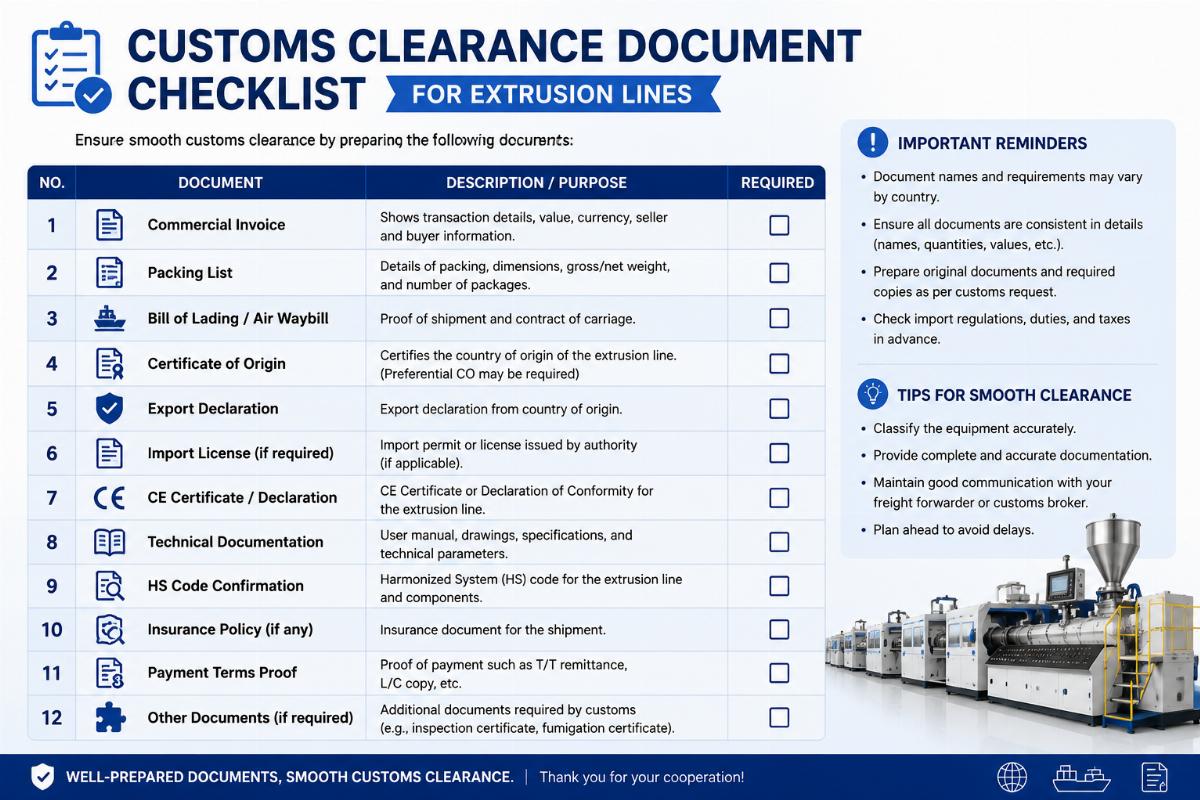
- Document Audit – Do a full document review with your local broker 1 week before shipment departs.
- Requirement Confirmation – Ask your supplier to confirm all document formats meet destination country standards.
- Backup Copy – Keep both digital and physical copies of all compliance paperwork for the full 3 year warranty period.
Conclusion
Accurate duty calculation for extrusion machinery depends more on alignment with hidden policy details than standard published rates. Taking the time to verify HS codes, check applicable trade agreements and prepare compliant documentation will consistently save you 20 to 30% on total landed cost, compared to only comparing ex-factory quotes between suppliers. These steps work for every major market across Southeast Asia, Africa, the Middle East and Latin America, and apply to all equipment types from standalone extruders to full turnkey production lines. You do not need to be an international trade expert to implement them, just prioritize these verification steps before you finalize any purchase order.