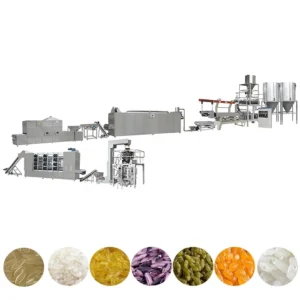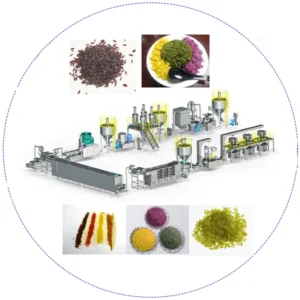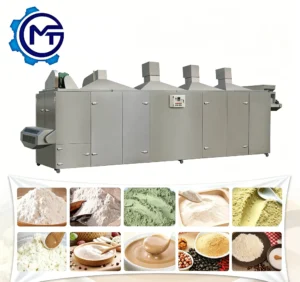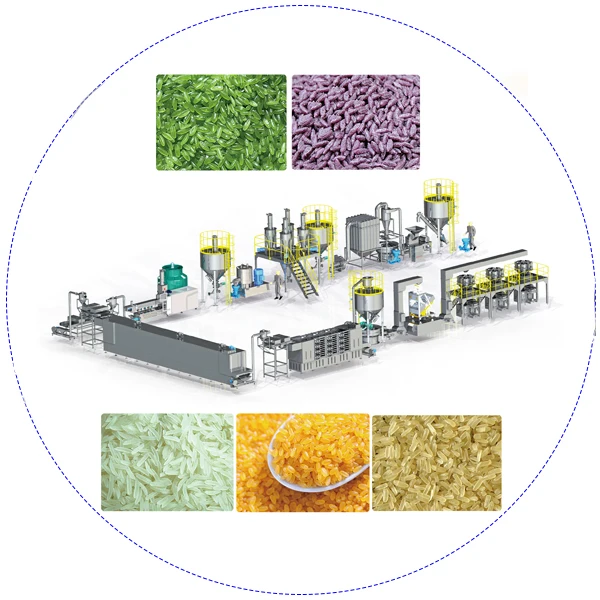
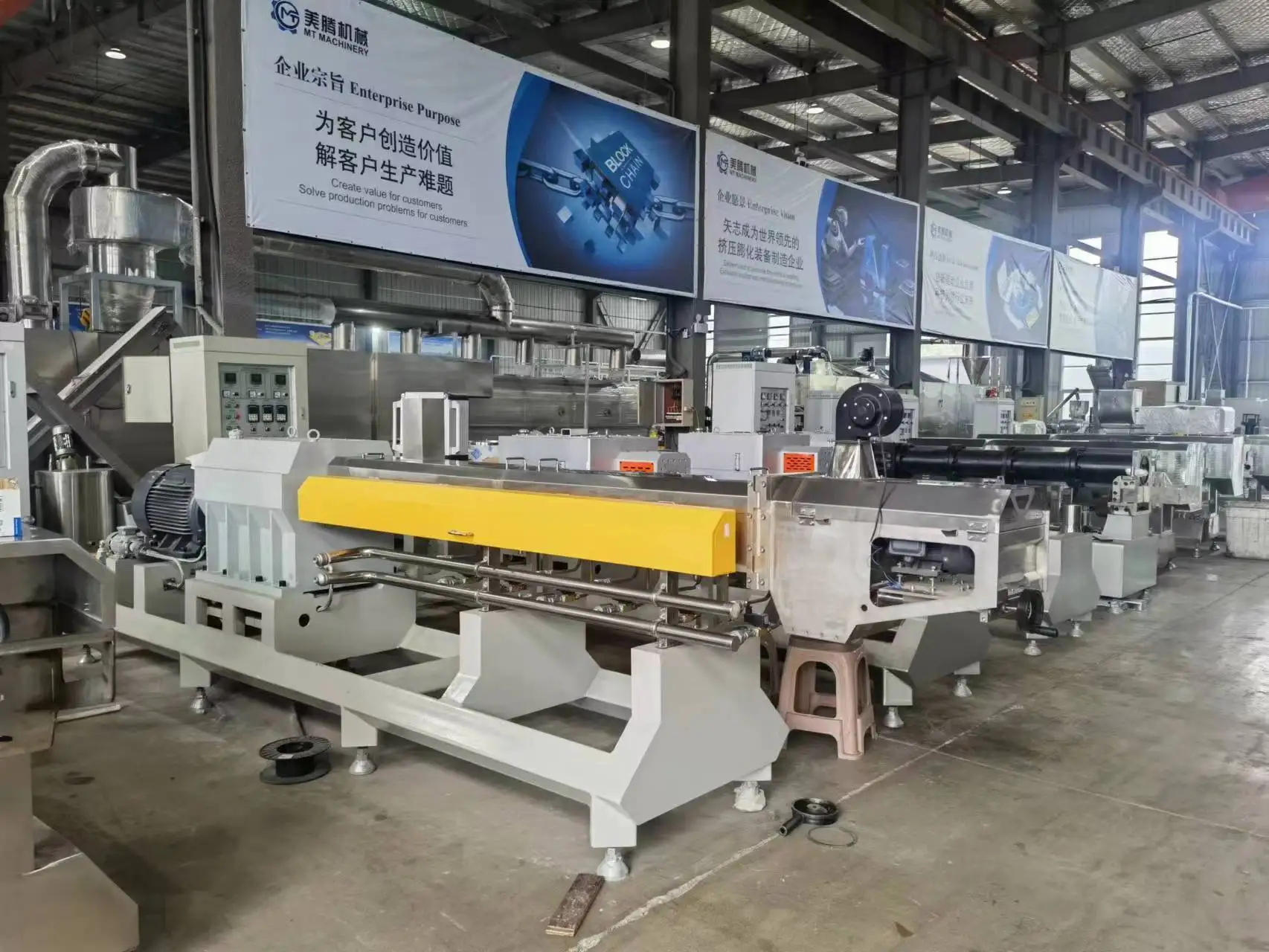
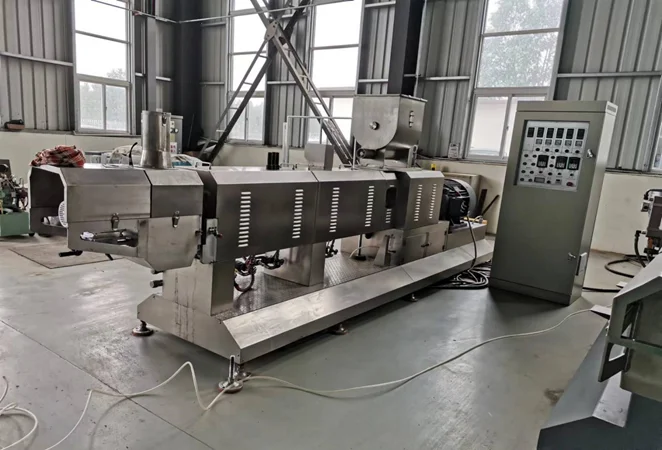
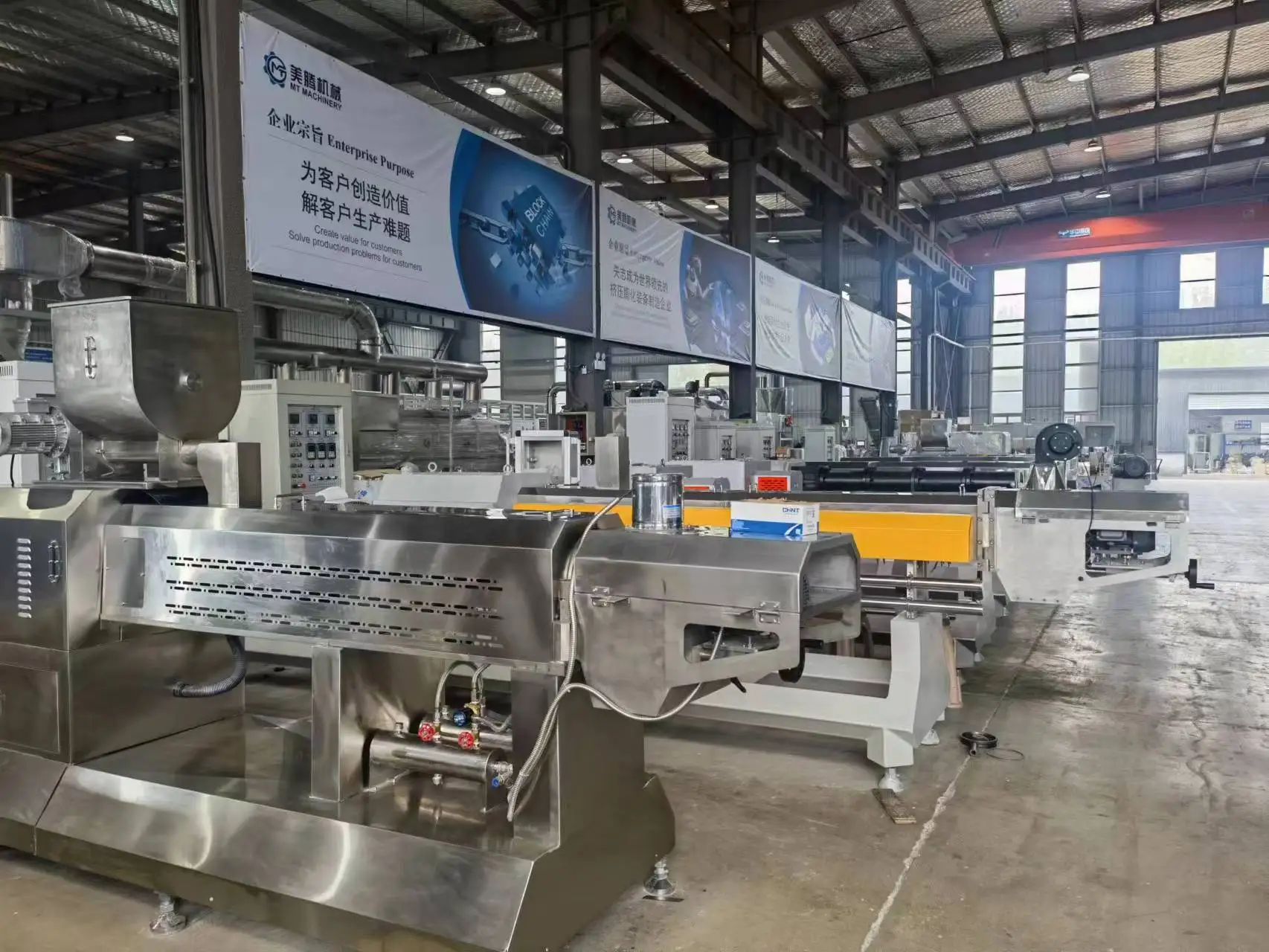
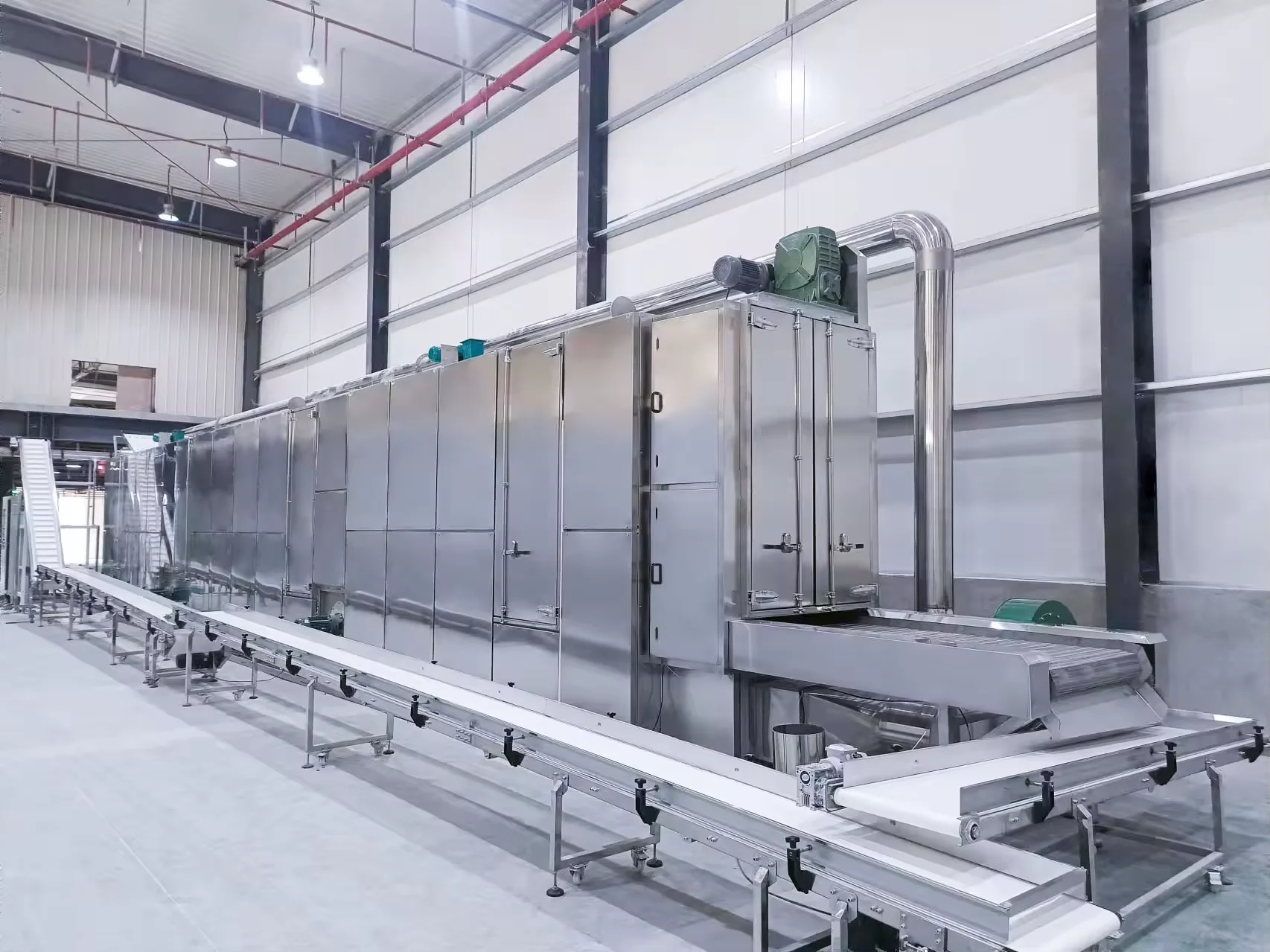
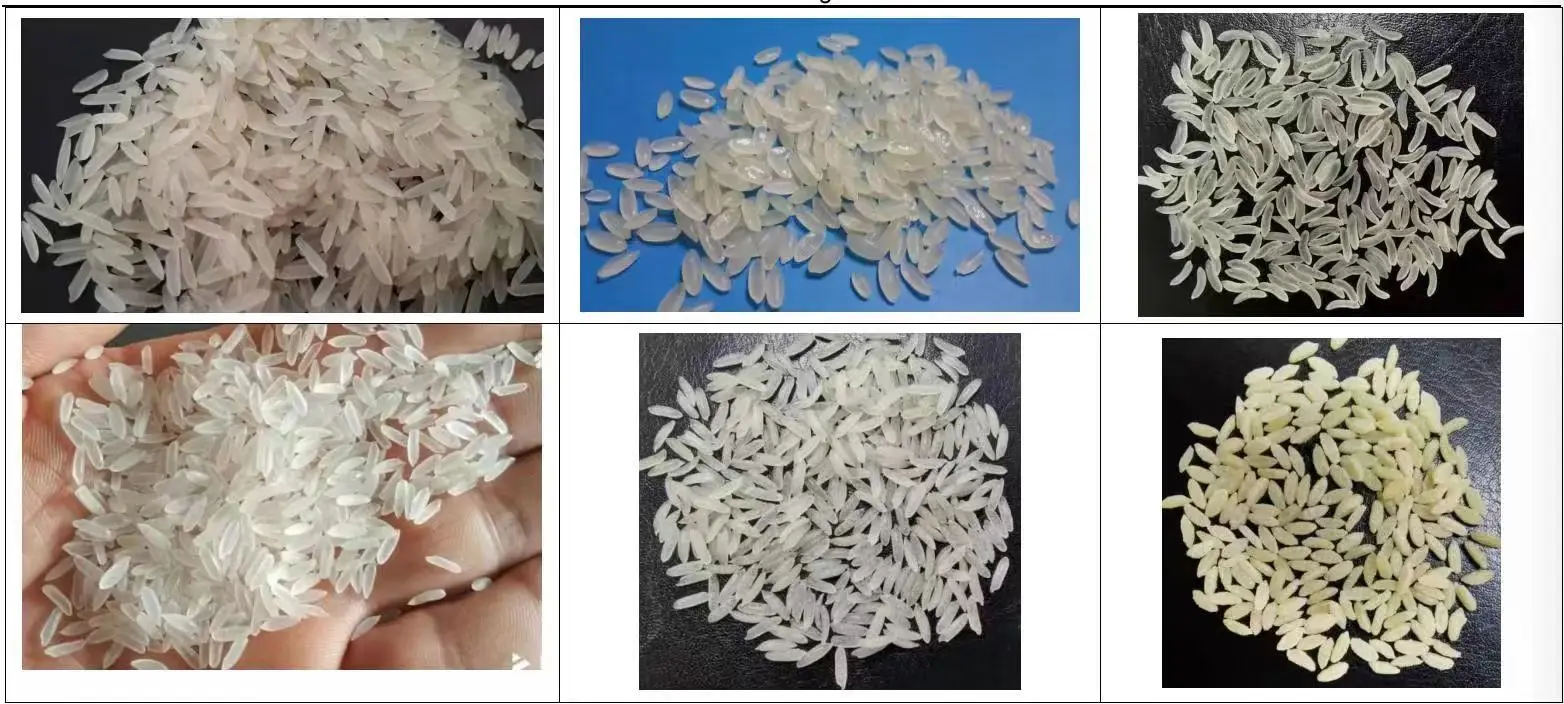
MT65 / MT70 / MT85 / MT75 / MT95 Artificial Nutrition Fortified Rice Kernel Production Line, Twin-Screw Extrusion, Electric/Gas Drying — complete turnkey system from mixing through extrusion, vibrating, low-temperature drying, cooling, high-temperature roasting to packing. Screw configuration and die design matched to your raw material blend of broken rice, corn, millet and vitamin premix to achieve target kernel density and texture. Frequency-controlled mesh belt dryer ensures moisture uniformity before roasting.
- Line layout and capacity calculation with throughput matched across every station under one supplier
- In-house trial runs on your specific formulation verify real output before shipment
- Electrical schematic with voltage and frequency confirmed to your market utility supply
Description
Throughput matching across every station — the extruder, dryer, roaster, and packing line are sized together on your raw material blend, so no single station becomes the bottleneck once production starts.
Technical Specifications
| Parameter | Value |
|---|---|
| Model | MT65 / MT70 / MT85 / MT75 / MT95 |
| Product Type | Artificial Nutrition Fortified Rice Kernel Production Line |
| Installed Power | 85 kW (MT65) / 120 kW (MT70) / 235 kW (MT85) / 180 kW (MT75) / 260 kW (MT95) |
| Power Consumption | 60 kW (MT65) / 85 kW (MT70) / 165 kW (MT85) / 135 kW (MT75) / 195 kW (MT95) |
| Output Capacity | 80–100 kg/h (MT65) / 100–120 kg/h (MT70) / 200–300 kg/h (MT85) / 300–500 kg/h (MT75) / 800–1000 kg/h (MT95) (basis to be confirmed — depends on raw material blend, moisture content, kernel size) |
| Voltage & Frequency | 220V / 380V (frequency to be confirmed per market) |
| Overall Dimensions (L×W×H) | 28 × 1.2 × 2.2 m (MT65) / 30 × 1.5 × 2.2 m (MT70) / 34 × 3.5 × 4.3 m (MT85) / 32 × 3.5 × 4.3 m (MT75) / 36 × 3.5 × 4.3 m (MT95) |
| Screw Type | Twin-screw extruder |
| Feeding System | Single or double screw feeding, selectable per material |
| Control System | Frequency speed control, high automation |
| Heating Source (Dryer) | Electric or gas |
| Dryer Feature | Circulation drying process, frequency motor controls mesh belt speed |
| Lubrication | Automatic lubricating and cooling system |
| Production Procedure | Mixing → Extruding → Vibrating → Low temperature drying → Cooling → High temperature roasting → Cooling → Packing |
| Material Contact | Stainless steel |
| Warranty | 1 Year |
| Assembly State | Complete line |
| Machinery Test Report | Provided |
| Video Outgoing Inspection | Provided |
| Certification | CE, ISO |
Application Suitability
| Application | Material or Output |
|---|---|
| Fortified rice kernels (FRK) for nutrition programmes | Broken rice and rice flour base with vitamin and mineral premix |
| Artificial rice from grain by-products | Rice bran, corn, millet, wheat, oats blended with micro-nutrients |
| High-nutrition grain kernels | Buckwheat, bean, and starch base with added fortification |
| Government and NGO feeding programme supply | FRK at 1:50 to 1:200 blending ratio with natural rice |
| Value-added rice processing | Broken rice converted into uniform fortified kernels |
What "800 kg/h" Really Means When Your Formula Changes
Capacity is only meaningful when tied to the exact raw material blend, moisture level, and kernel geometry you plan to run.
I learned this the hard way on a fortified rice project years back. We sized the line around standard rice flour, and everything looked right on paper. Then the client’s actual formula included whey protein isolate and a trace mineral premix. The material behaved completely differently inside the barrel — expansion dropped, kernel density shifted, and the dryer could not keep up with the moisture load. We spent an extra half month on-site reworking parameters that should have been locked down before the machine left the factory. A fortified rice kernel production line turnkey rated at a certain throughput on plain starch may deliver considerably less on a protein-heavy or mineral-loaded blend. [NEED_CITE: raw material composition effects on twin-screw extrusion output]
Matching the Barrel to Your Fortification Premix
The twin-screw configuration on this fortified rice kernel production line turnkey allows operators to adjust screw element sequence — conveying, kneading, and reverse-flight sections — based on how the raw material responds to shear and heat. A formulation heavy in broken rice flour requires a different shear profile than one loaded with buckwheat and bean starch. Getting this wrong means inconsistent gelatinisation, which shows up as kernels that crack during drying or fail the density test.
Why Dryer and Roaster Sizing Cannot Be an Afterthought
The circulation dryer uses a frequency-controlled mesh belt to regulate residence time, and the low-temperature drying stage must pull moisture from the kernel interior without case-hardening the surface. If the dryer is undersized relative to extruder output, kernels arrive at the roaster with uneven moisture — some scorch, others remain too soft for packing. The entire line throughput then drops to whatever the dryer can handle, regardless of what the extruder nameplate says. [NEED_CITE: moisture management in multi-stage grain kernel drying]
Reading the Specification Sheet Beyond the Nameplate
The installed power range across the five models — from 85 kW to 260 kW — reflects motor capacity, not energy cost. Actual power consumption sits lower, between 60 kW and 195 kW depending on the model, because the extruder, dryer, and roaster do not all draw peak load simultaneously. The automatic lubricating and cooling system on the extruder gearbox reduces thermal stress during extended runs, which matters when you are running fortified formulations that demand longer barrel residence times. Stainless steel contact surfaces throughout the line prevent iron contamination that could interact with the mineral premix and alter kernel colour or shelf life.
The Hidden Cost of Skipping the Trial Run
When a line ships without a trial run on your specific formula, every parameter — screw speed, barrel temperature, die pressure, dryer belt speed — becomes a guess. On-site commissioning then turns into product development, burning raw material and labour while the installation team extends their stay. Buyers absorb hotel costs, extended visas, and delayed revenue while the line sits idle waiting for the right settings. [NEED_CITE: on-site commissioning overruns in food extrusion projects]
Why Source the Full Line from One Supplier
Every station on this line — mixer, twin-screw extruder, vibrating screen, circulation dryer, roaster, cooling conveyor, and packing interface — is specified together so throughput aligns. Screw configuration and die geometry are selected for your raw material blend, not copied from a generic build. The in-house testing workshop runs your actual formula before dispatch, generating a trial run report that locks in parameters. Electrical schematics confirm voltage and frequency before production begins, avoiding commissioning delays caused by mismatched motors or control components. CE and ISO documentation accompanies the shipment for customs and regulatory clearance in your market.
Documentation & Verification
- Line layout showing throughput calculation across mixer, extruder, dryer, and roaster for your kernel size
- Trial run report on your fortified rice formulation conducted in the testing workshop
- Screw and die configuration record matched to your specific raw material blend
- Electrical schematic with voltage, frequency, and control language confirmed for your facility
- Machinery test report and video outgoing inspection provided before dispatch
- Operation and maintenance manual covering all stations from batching to packing
Installation, Commissioning & Support
- Foundation and floor space planning based on the specific model footprint, up to 36 m line length
- Dedicated electrical circuit sizing per the model’s installed power requirement, up to 260 kW
- Full line arrives in shipping sections; on-site assembly covers mechanical and electrical connections
- First-run parameter tuning on your raw material with screw speed, barrel temperature, and dryer belt adjustment
- Operator training on frequency drive controls, automatic lubrication system, and daily maintenance checkpoints
- Wear parts list for screws, dies, and dryer mesh belt with recommended replacement intervals
What We Need to Configure Your Line
To build an accurate proposal, share your base material — broken rice, corn, millet, or a blend — along with the vitamin and mineral premix composition and target kernel dimensions. We also need your facility voltage and frequency, available floor space with ceiling height, and whether your existing packing line has specific throughput requirements the new line must match.
Frequently Asked Questions
Q: How is line capacity verified on my specific raw material blend before shipment?
A: We run your actual fortified rice formulation — including the vitamin and mineral premix — through the extruder in our testing workshop. The trial run records screw speed, barrel temperature profile, die pressure, and resulting kernel density. Those parameters are documented in a report that ships with the line, so commissioning starts from proven settings rather than baseline assumptions.
Q: How do you match throughput between the extruder, dryer, and roaster to avoid bottlenecks?
A: Each station is sized based on the moisture load and residence time your specific kernel geometry requires. The extruder output determines the dryer belt width and length, and the roaster capacity is set to handle the dried kernel volume. The line layout document shows the calculated throughput at every stage so no single station constrains the others.
Q: What voltage, frequency, and control language options are confirmed before production?
A: Before manufacturing begins, we confirm your facility supply — 220V or 380V and the local frequency — and match all motors, heating elements, and control components accordingly. Control panel labels and PLC interface language are set to your operator requirements so the line is ready to run upon installation without rewiring or reprogramming.
Q: How are screw and die configurations selected for different fortified rice formulations?
A: Screw element arrangement — the ratio of conveying, kneading, and reverse-flight sections — is chosen based on how your raw material blend responds to shear and moisture. Die geometry determines kernel shape and density. A high-protein formulation needs a different screw profile than a pure starch base, and the configuration is recorded in your documentation package for future reference and reordering.
Q: What does on-site installation, commissioning, and operator training cover?
A: Our team handles mechanical assembly, electrical connection, and initial run-up on your raw material at your facility. Operators learn to adjust frequency drives, monitor the automatic lubrication system, manage dryer belt speed, and perform routine screw and die inspections. A wear parts list with replacement intervals is provided so your maintenance team can plan consumable orders in advance.
Related products
-
Hygienic Stainless Steel Infant Rice Powder Processing Line Automatic 500kg/h Capacity PLC Controlled
¥9,500.00 Add to cart -
Organic Gluten Free Baby Rice Nutrition Powder Automatic 500kg/h Production Processing Line
¥8,238.27 Add to cart -
Small Scale MT Brand Automatic Baby Food Nutrition Powder Rice Flour Making Machine with 500kg/h Production Capacity PLC Control
¥9,500.00 Add to cart -

High Precision Automatic 500kg/h Baby Food Nutrition Powder Rice Extrusion Processing Line
¥9,500.00 Add to cart