

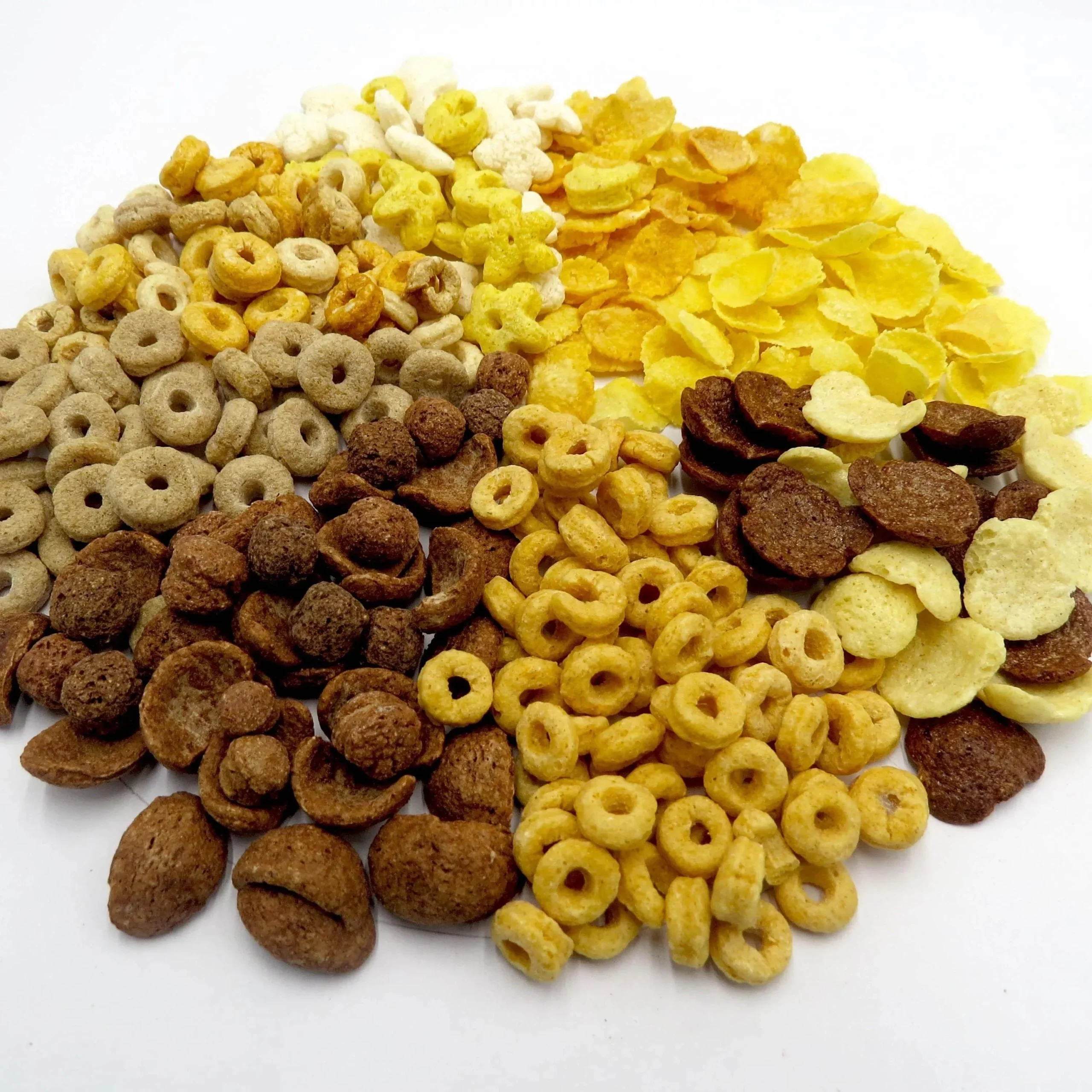
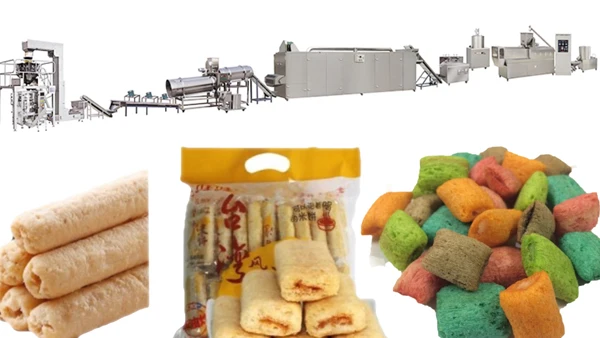



Breakfast Cereals Production Line, Twin-Screw Extruder, PLC Controlled, Integrated Flaking & Coating — configured as a complete turnkey project from mixing through packaging with throughput balanced across every station. Twin-screw extrusion delivers precise temperature and pressure control for consistent starch gelatinization, while adjustable flaking thickness, extrusion speed and coating volume allow multiple cereal formats on a single line. Trial runs on your raw material are conducted in our in-house testing workshop before shipment, with screw configuration and die design matched to your specific formulation.
- Hot air circulation drying and roasting for uniform crispness
- Electrical schematic, voltage and PLC language confirmed before production
- On-site installation, commissioning and operator training included
- Wear parts list and ongoing maintenance support provided
Description
Complete Line Integration — throughput is balanced across mixing, extrusion, flaking, drying, roasting, coating and packaging so no station bottlenecks the breakfast cereals production line turnkey project.
Technical Specifications
| Parameter | Value |
|---|---|
| Product Type | Breakfast Cereals Production Line |
| Extruder Type | Twin-screw extruder |
| Control System | PLC controlled |
| Automation Level | Fully automatic integrated processing |
| Line Stations | Mixing → Extrusion → Flaking → Drying → Roasting → Coating → Packaging |
| Extrusion Control | Precise temperature and pressure control for gelatinization and expansion |
| Coating System | Chocolate and sugar coating device with adjustable coating volume |
| Drying & Roasting Method | Hot air circulation system with even heating |
| Flaking Adjustment | Adjustable flaking thickness |
| Extrusion Speed | Adjustable |
| Drying Temperature | Adjustable |
| Food Contact Material | Food-grade stainless steel |
| Output Capacity | (basis to be confirmed with supplier based on raw material and target product) |
| Voltage & Frequency | (to be confirmed per target market requirements) |
| Certifications | CE and ISO certified manufacturing |
Application Suitability
| Application | Material or Output |
|---|---|
| Crispy corn flakes production | Maize grits, corn flour |
| Maize chocos production | Corn-based formulation with cocoa integration |
| Cocoa cereals production | Cereal base with chocolate coating application |
| Sugar-coated extruded breakfast cereals | Grain mixture with adjustable sugar glazing |
| Diversified cereal formats | Multiple recipes on a single line configuration |
What a Nominal Capacity Rating Leaves Out on Your Breakfast Cereals Production Line Turnkey
A quoted tonnage means nothing if the dryer cannot hold the extruder’s output on your actual maize formulation.
I have watched lines where the twin-screw extruder pushed product at full rate, but the hot air circulation dryer downstream could not reduce moisture fast enough. The result was a backlog of half-dried flakes sitting on the conveyor, losing crispness before they ever reached the roasting stage. This mismatch does not show up on a spec sheet; it only appears during commissioning, when the buyer is already committed. Running your specific corn grits through the testing workshop before shipment reveals where the real constraint sits [NEED_CITE: throughput balancing methodology for multi-station food processing lines].
How Gelatinization Control Shapes Flake Consistency
The twin-screw extruder applies precise temperature and pressure to drive starch gelatinization inside the barrel. This step determines how the maize matrix expands when it exits the die. Uneven gelatinization produces flakes that shatter during roasting or turn soggy after milk contact. The PLC control system maintains barrel zone temperatures within a narrow band, so batch-to-batch texture stays consistent whether you are running a standard corn flakes recipe or a cocoa-enriched formulation.
Why Drying and Roasting Must Be Designed as One Sequence
Drying removes surface and internal moisture to prepare flakes for the roasting stage. If drying is incomplete, roasting creates a hard shell over a damp core. The hot air circulation system here moves heated air evenly across the bed depth, which matters when flake thickness varies across the conveyor width. Roasting then develops color and crispness through Maillard reactions that depend on residual moisture being within a specific range [NEED_CITE: Maillard reaction moisture thresholds in cereal roasting]. Both stages share adjustable temperature profiles managed through the central PLC, so operators can tune the sequence without manual overrides at each station.
Reading the Specs That Actually Affect Your Output
Twin-screw extrusion handles a wider range of particle sizes and fat contents than single-screw designs, which matters when buyers blend maize grits with minor ingredients like salt, sugar, or malt extract directly at the extruder feed. Adjustable extrusion speed lets the operator match throughput to what the flaking rolls can accept without tearing the sheet. Flaking thickness adjustment determines final flake density and how the product behaves in the bowl. The coating device accepts both chocolate and sugar mediums with adjustable volume, so switching between a glazed chocos SKU and a plain corn flakes SKU requires a recipe change on the PLC rather than a hardware swap. Food-grade stainless steel across all contact surfaces meets the hygiene expectations of export markets with strict food safety standards [NEED_CITE: food contact material regulations for cereal manufacturing equipment].
The Cost of Undersizing the Coating Station
When the coating drum is specified to a smaller diameter than the upstream throughput, coated flakes pile up and receive uneven coverage. Some pieces leave with a thick glaze that hardens into clumps, while others pass through nearly bare. Retail buyers reject inconsistent appearance, and the rework cost compounds across every production run. I have seen contractors replace an entire coating section months after installation because the original quote treated it as an accessory rather than a capacity-critical station [NEED_CITE: common post-installation line modification causes in breakfast cereal plants].
Why Buyers Source This Line from a Single Integration Point
Every station from mixing through packaging is configured under one supplier, so the extruder output rate, dryer residence time, and coating drum speed are calculated together before fabrication. Screw and die configurations are specified to your maize variety and target flake density rather than pulled from a generic template. The in-house testing workshop runs your raw material before shipment, generating a trial report that confirms actual throughput. Electrical schematics, voltage ratings, and PLC language are confirmed before production starts, avoiding commissioning delays on site. Pre-sales engineering, on-site installation, and operator training are handled by the same team that designed the layout.
Documentation & Verification
- Line layout and capacity calculation matched to your maize formulation and target SKU mix
- Screw and die configuration record specific to your corn flakes or chocos recipe
- Trial run report on your raw material conducted before shipment
- Electrical schematic with voltage, frequency, and PLC language confirmed per destination market
- CE declaration of conformity and ISO certificate for export documentation
- Operation and maintenance manual with wear parts list for the extruder and flaking rolls
Installation, Commissioning & Support
- Foundation and floor space planned around the full station sequence from mixer to packaging
- Electrical supply sized for PLC-controlled twin-screw extruder motor and hot air circulation heaters
- Equipment shipped in modular sections for assembly on your production floor
- First-run commissioning includes gelatinization, flaking, and roasting parameter tuning on your recipe
- Operator training covers PLC recipe management and daily cleaning of food-grade stainless steel surfaces
- Wear parts supply for screws, dies, and flaking roll surfaces available for ongoing production
Preparing Your Inquiry
Send your maize or corn formulation details, target flake dimensions, and the daily output you need to plan around. Include your facility voltage and frequency, the PLC interface language your operators require, and any existing upstream or downstream equipment the line must connect to. If you want a trial run on your own raw material before shipment, state that in the initial inquiry so the testing workshop schedule can be reserved.
Frequently Asked Questions
Q: How is line capacity verified on my specific raw material and recipe?
A: Your maize formulation is run through the in-house testing workshop before shipment. The trial covers extrusion, flaking, drying, and roasting on your actual ingredients, producing a report that documents real throughput rather than a nominal rating.
Q: How are extruder screw configuration and die design matched to the target cereal format?
A: The screw profile and die geometry are selected based on your corn grits particle size, moisture content, and target flake density. This configuration is recorded and kept on file so replacement parts match the original specification.
Q: What voltage, frequency and PLC language options are confirmed before production?
A: Your destination market electrical standards and operator language preferences are confirmed during the specification stage. The electrical schematic reflects these choices before fabrication begins, preventing delays during on-site commissioning.
Q: How is throughput balanced between extrusion, flaking, drying and coating stations?
A: Each station is sized based on the extruder output rate calculated for your recipe. The dryer residence time, flaking roll feed rate, and coating drum capacity are all matched so no single station limits the breakfast cereals production line turnkey output.
Q: What does on-site installation, commissioning and operator training cover?
A: The team handles equipment positioning, utility connections, and first-run parameter tuning. Training covers PLC recipe entry, daily cleaning procedures for food-grade contact surfaces, and wear part replacement intervals for screws and flaking rolls.
Related products
-

New Condition Automatic Corn Puff Snacks Food Extruder Cheese Ball Making Machine Plant
¥100.00 Select options This product has multiple variants. The options may be chosen on the product page -

Automatic Puff Corn Snack Stick Production Line Equipment New Condition Machines
¥100.00 Select options This product has multiple variants. The options may be chosen on the product page -

Hot Sale Corn Snack Extruder Puffed Snacks Production Machine Corn Puffs Making Machine
¥20,000.00 Select options This product has multiple variants. The options may be chosen on the product page -

Crunchy Puffed Snack Breakfast Cereal Corn Flakes Making Machine
¥1,000.00 Select options This product has multiple variants. The options may be chosen on the product page


