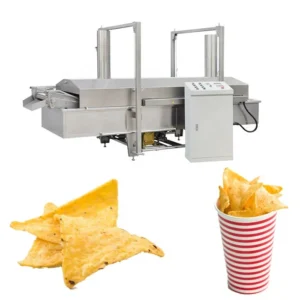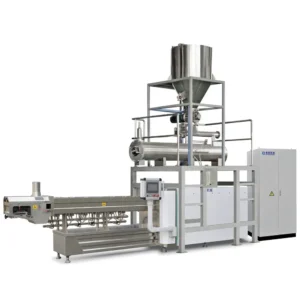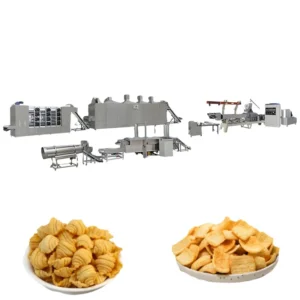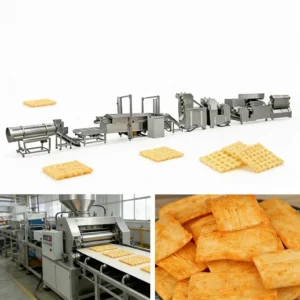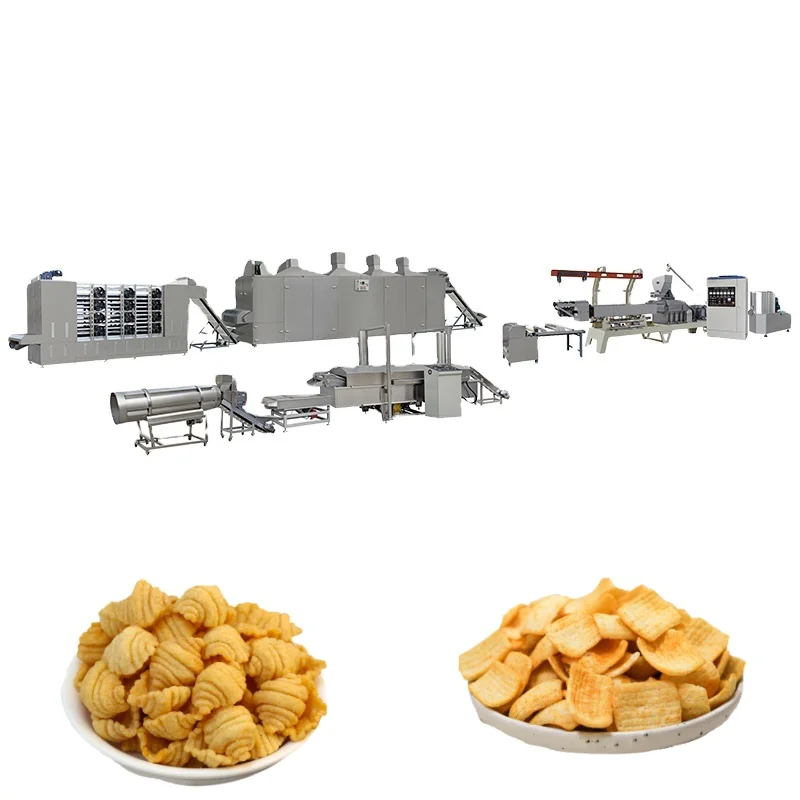
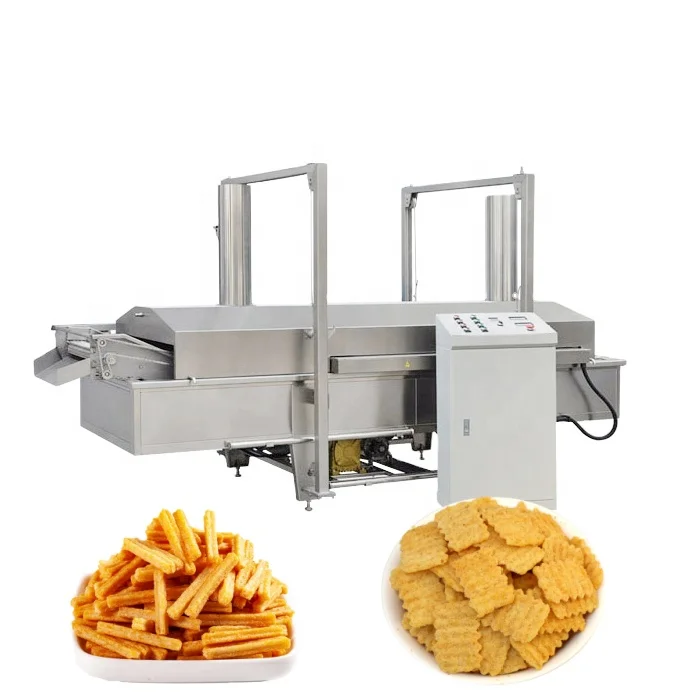
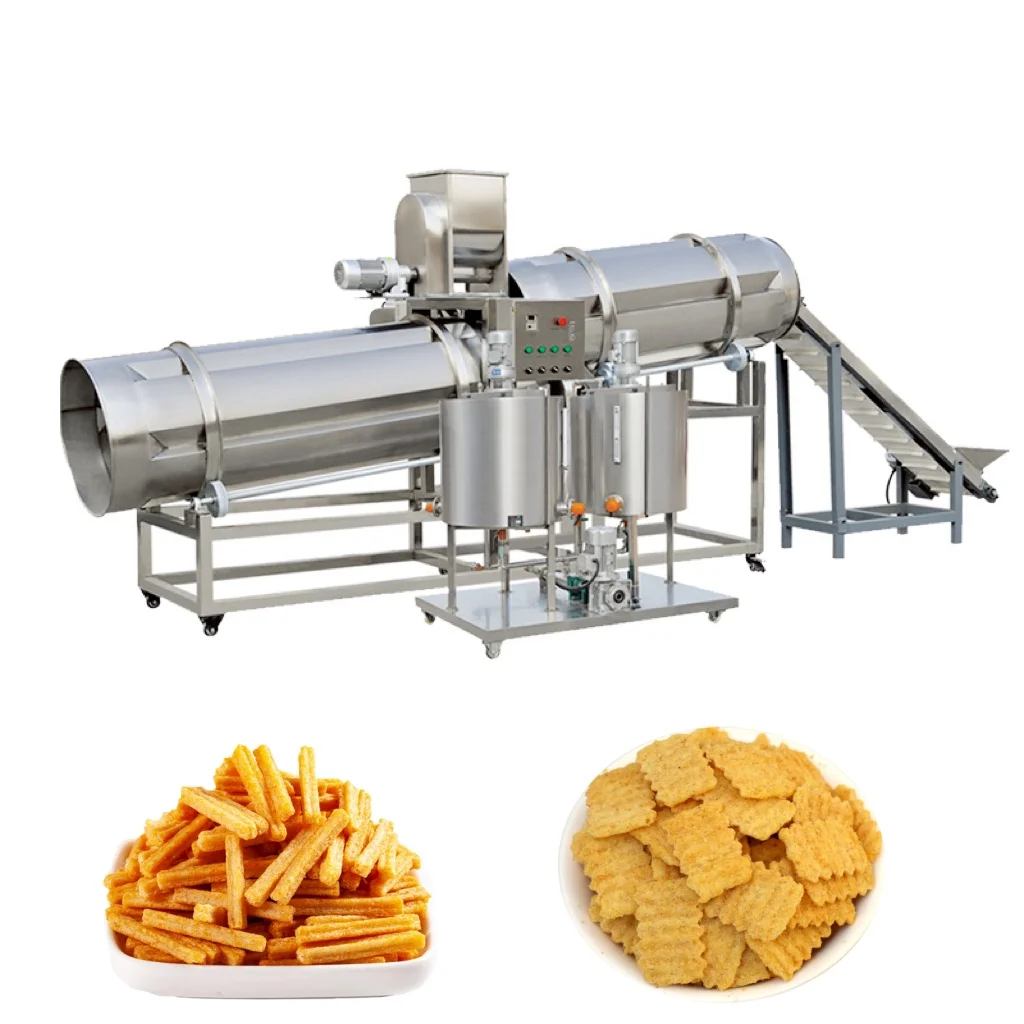
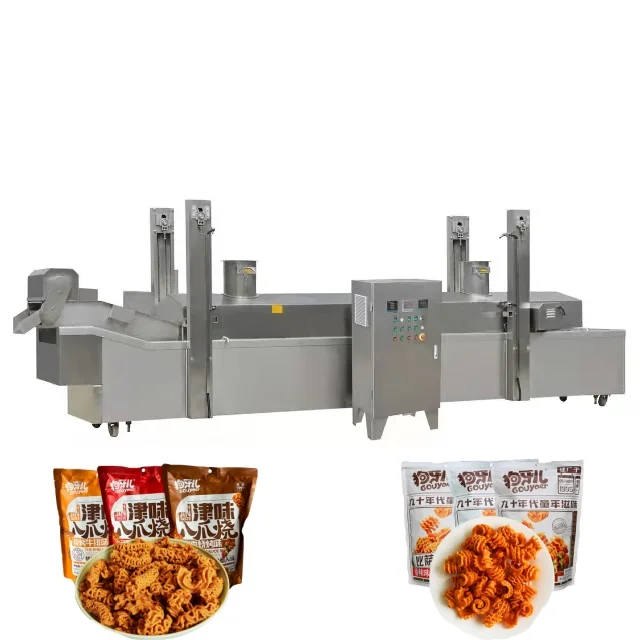
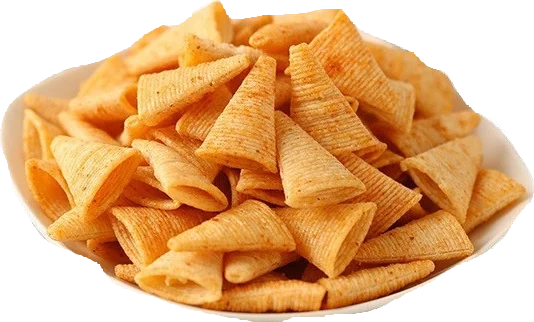
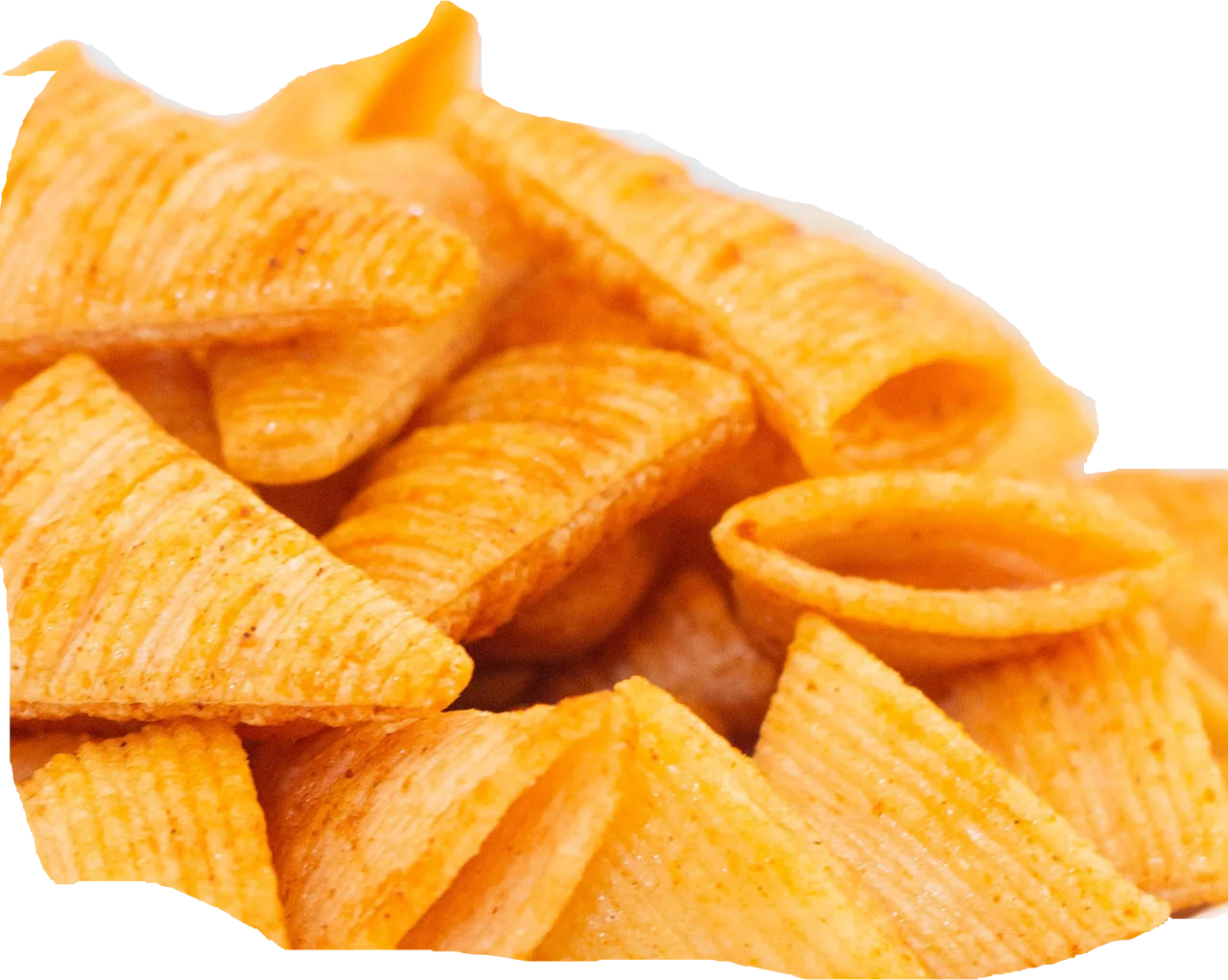
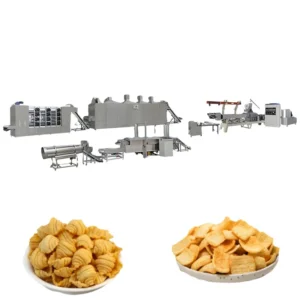
Fried Snack Food Extrusion Production Line, Twin-Screw, PLC & MCC Control, CE/ISO Certified — engineered as a complete turnkey project from batching through extrusion, frying and packing. Screw configuration and die design are matched to your raw material and target product density, with co-rotating sectional modules controlling gelatinisation, expansion and final texture. Throughput across mixer, dryer and fryer is balanced so no station bottlenecks output. – In-house trial runs on your actual raw material before shipment confirm real capacity – Single-supplier accountability for layout, commissioning and operator training – Electrical schematics with voltage and frequency verified to your plant supply
Description
Turnkey Line Accountability — Every station from batching through extrusion to packing is engineered as a single project, so throughput is matched and the line delivers its rated output without bottlenecks.
Technical Specifications
| Parameter | Value |
|---|---|
| Product Type | Fried Snack Food Extrusion Production Line |
| Models Available | MT-65 / MT-70 / MT-85 / MT-75 / MT-95 |
| Main Motor (MT-65) | 100 kW |
| Main Motor (MT-70) | 130 kW |
| Main Motor (MT-85) | 180 kW |
| Main Motor (MT-75) | 185 kW |
| Main Motor (MT-95) | 280 kW |
| Output Capacity (MT-65) | 120–150 kg/h (basis to be confirmed on raw material and moisture) |
| Output Capacity (MT-70) | 200–250 kg/h (basis to be confirmed on raw material and moisture) |
| Output Capacity (MT-85) | 300–500 kg/h (basis to be confirmed on raw material and moisture) |
| Output Capacity (MT-75) | 400–500 kg/h (basis to be confirmed on raw material and moisture) |
| Output Capacity (MT-95) | 800–1000 kg/h (basis to be confirmed on raw material and moisture) |
| Screw Type | Twin screw, co-rotating, sectional modules |
| Mixer Power Options | 4 kW / 7.5 kW / 15 kW |
| Cutting Machine Power | 1.47 kW |
| Cutting Machine Dimension | 2500 × 600 × 1100 mm |
| Fryer Belt Width | 600 mm stainless steel belt |
| Fryer Energy Options | Electricity / Fuel / Gas |
| Drying Method | Gas / Electric / Diesel heating options |
| Control System | PLC and MCC |
| Voltage & Frequency | Customizable (e.g., 3ph 380V 50Hz, 3ph 415V 60Hz, 3ph 220V 60Hz) |
| Overall Dimensions (MT-65 line) | 22000 × 1200 × 2200 mm |
| Overall Dimensions (MT-70 line) | 24000 × 1500 × 2200 mm |
| Assembly State | Complete turnkey line (mixer → extruder → cutting → dryer → fryer → flavouring → packing) |
| Warranty | 1 year complete warranty with lifetime maintenance |
| Standards | CE certified, ISO certified |
Application Suitability
| Application | Material or Output |
|---|---|
| Fried pellet snacks (bugles, corn chips) | Corn flour, wheat flour, corn starch |
| Crispy shells and screws | Potato starch, potato powder, wheat flour |
| Wave and pillow shapes | Corn flour, potato starch, modified starches |
| Square and round tubes | Wheat flour, corn starch, blended cereal bases |
Why Nominal Capacity Fails When the Line Actually Starts
Matching throughput across every station is the only way a fried snack food extrusion production line turnkey project holds its output.
A line quoted on a single headline number often hides the real constraint. The extruder may push material faster than the dryer can remove moisture, or the fryer belt may not keep pace with the cutting roller. When this happens, half-formed product piles up on conveyors, and operators spend their shifts clearing jams rather than running production. I have walked through snack workshops in South Asia where the front-end extruder and the back-end fryer were sized by different suppliers, and the result was a bottleneck that never let the line reach its nameplate capacity [NEED_CITE: throughput matching between extrusion and frying stations in snack lines]. The fix is not buying a bigger extruder — it is engineering the entire sequence as one system.
Sizing Each Station to the Actual Raw Material
The twin-screw extruder at the heart of this fried snack food extrusion production line turnkey uses sectional screw modules, which means the screw configuration can be rebuilt to match the starch behaviour of corn flour, potato starch, or a blended cereal base. Barrel temperature zones and moisture feed are set against the gelatinisation point of the specific flour in use. A corn-dominant recipe behaves very differently from a potato-starch-heavy mix, and the screw profile must account for that difference to hold consistent expansion.
Matching Dryer and Fryer to Extruder Output
The dryer and fryer are not generic add-ons — their belt speed, heating capacity and dwell time are calculated against the extruder’s actual discharge rate. If the extruder delivers a continuous flow of cut shapes, the fryer’s 600 mm stainless steel belt must carry that volume through the oil at a speed that achieves the target colour and crispness without overloading. Multiple heating options — electricity, fuel gas, or diesel — allow the fryer to match the energy infrastructure of the installation site rather than forcing a retrofit.
Reading the Specification Sheet Against Your Production Target
Motor power across the model range scales from 100 kW on the MT-65 to 280 kW on the MT-95, reflecting the energy required to drive higher-volume twin-screw extrusion. Output figures listed for each model are nominal and must be validated against the buyer’s specific raw material, moisture content and target product format before the line is built. The PLC and MCC control system manages barrel temperature profiles, screw speed and feeder rates to hold batch consistency once those parameters are established during the pre-shipment trial [NEED_CITE: PLC control parameters for twin-screw food extrusion consistency]. Voltage and frequency are confirmed against the buyer’s plant supply — options such as 3ph 380V 50Hz or 3ph 415V 60Hz are locked in before production starts so there is no rewiring delay at commissioning.
The Cost of Skipping the Trial Run
Lines that ship without a trial run on the buyer’s actual raw material often need weeks of on-site adjustment. Screw and die configurations copied from a generic build may produce the wrong texture or density, and operators are left guessing until the product meets market expectations. When floating and sinking behaviour, colour, or crispness falls outside specification, the entire batch schedule slips [NEED_CITE: snack extrusion trial run protocols before shipment]. A pre-shipment test in a dedicated machine testing workshop catches these mismatches early and lets the screw profile and die design be corrected before the line leaves the factory.
Engineering the Whole Line as One Project
Every station — mixer, extruder, cutting roller, dryer, fryer, flavouring drum, cooling conveyor and packing interface — is specified under one supplier so that throughput is matched rather than assembled from independent vendors. The in-house testing workshop runs the buyer’s raw material through the configured line before dispatch, generating a trial run report that documents actual output and product quality. Screw and die configuration records are written to the specific product format, not pulled from a generic template. Electrical schematics confirm voltage, frequency and control language before production begins. The CE and ISO-certified build is supported with a full documentation package, from line layout drawings to wear parts lists, so commissioning starts with clarity rather than guesswork.
Documentation & Verification
- Line layout and capacity calculation matching your target fried snack format
- Trial run report on your corn flour or potato starch blend before dispatch
- Screw and die configuration record specific to your product shape
- Electrical schematic confirming your plant voltage and frequency
- Factory test record with dimensional and weight checks on output
- Wear parts list covering screws, dies and cutting rollers for first replacement
Installation, Commissioning & Support
- Foundation and floor space planned against the full line length up to 30 m
- Dedicated electrical circuit sized for the main motor up to 280 kW
- Modular station assembly with conveyor links aligned on site
- First-run parameter setting on your raw material during commissioning
- Operator training on PLC screen navigation and screw speed adjustment
- Initial spare screw and die modules shipped with the line for first replacement
What We Need to Scope Your Line
To engineer a fried snack food extrusion production line turnkey that matches your actual output target, share your primary raw material blend and moisture range, your target daily volume, and the product shapes you plan to run. We also need your plant’s available floor length and ceiling height, plus the local voltage and frequency. If you have existing upstream mixers or downstream packing equipment, let us know so the new line integrates cleanly at both ends.
Frequently Asked Questions
Q: How is line capacity verified on my actual raw material before shipment?
A: We run your specific corn flour, potato starch, or blended cereal base through the configured extruder and downstream stations in our in-house testing workshop. The trial run produces actual product samples and a written report documenting throughput, moisture levels and product dimensions. Any screw or die adjustments needed are made before the line is packed for dispatch.
Q: How do you match throughput between extruder, dryer and fryer so no station bottlenecks the line?
A: Each station’s capacity is calculated against the extruder’s discharge rate on your material. The dryer’s belt speed and heating output are sized to handle the moisture load, and the fryer’s 600 mm stainless steel belt and dwell time are set to fry the full volume without backlog. The entire line is engineered as one system under a single supplier.
Q: What voltage, frequency and control language options are confirmed before production?
A: Your plant’s supply — for example 3ph 380V 50Hz, 3ph 415V 60Hz, or 3ph 220V 60Hz — is confirmed during the specification stage and written into the electrical schematic. PLC screen language is also agreed at this point so operators can read the interface in their working language from the first day of commissioning.
Q: How are spare wear parts supplied with the initial shipment?
A: A wear parts list covering twin-screw modules, die plates and cutting rollers is included with the line documentation. The initial shipment can include a first replacement set so that production is not interrupted while new parts are ordered. Consumable intervals are noted in the operation manual based on the trial run data.
Related products
-
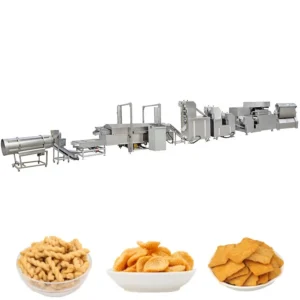
Frying Crispy 3D Corn Bugles Pellets Fried Chips Snacks Food Machine Production Line Bugles Making Extruder
¥100.00 Select options This product has multiple variants. The options may be chosen on the product page -

New Automatic Bugles Puff Snack Production Line Price Corn Chips Making Machine Fried Maize Machine High Productivity Large
¥8,570.00 Select options This product has multiple variants. The options may be chosen on the product page -
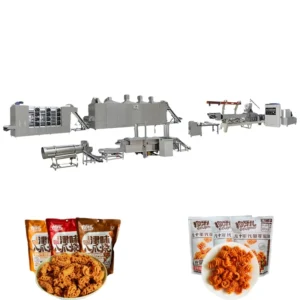
Fried Flour Corn Bugles Extruded Chips Pellets Doritos Snacks Food Machine Production Line Extruder
¥100.00 Select options This product has multiple variants. The options may be chosen on the product page -
Automatic Fried Crispy Bugles Snacks Food Making Machines Wheat Flour Sala Food Extruder
¥100.00 Select options This product has multiple variants. The options may be chosen on the product page