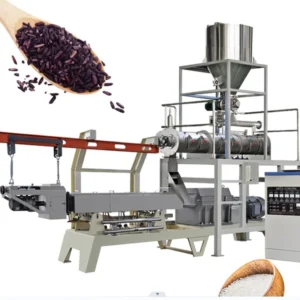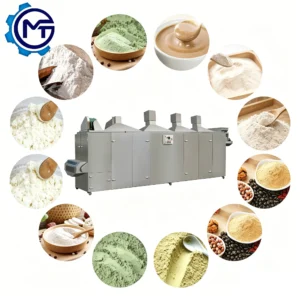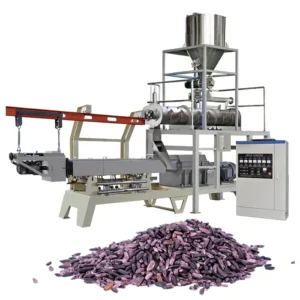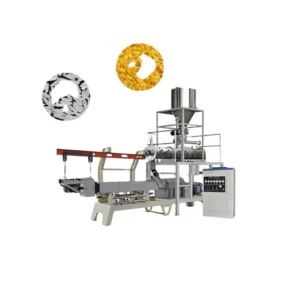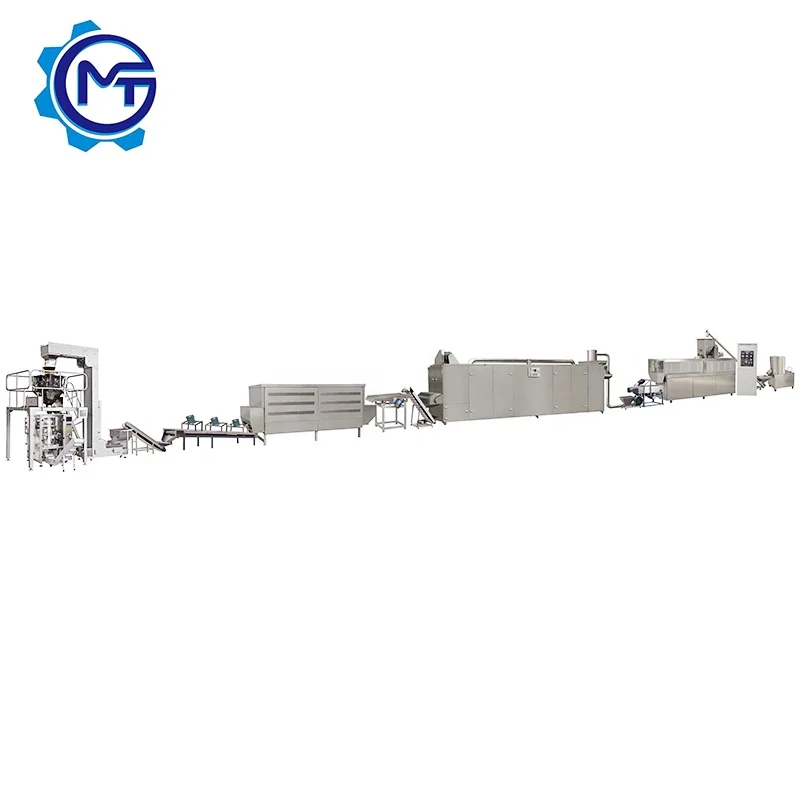


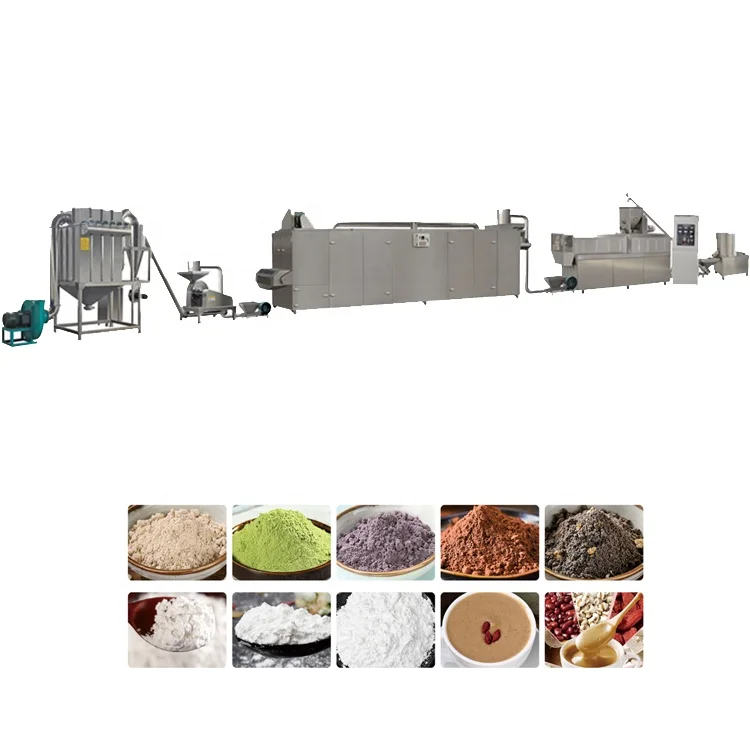


MT65/MT70/MT70C Nutritional Powder Processing Line, Twin-Screw Extruder, PLC Control — complete turnkey system from mixing through extrusion to drying and flavoring, with throughput-matched stations configured as one coordinated line.
- High-temperature, high-pressure twin-screw process achieves starch gelatinization in a single pass, with screw and die design matched to your grain formulation and target powder density
- Self-cleaning extruder design reduces changeover downtime between product runs across infant cereal, fortified blends, and instant powder applications
- In-house testing workshop validates capacity on your raw material before shipment, supported by full line layout documentation and on-site commissioning
Description
Verified Output on Your Grain — Every nutritional powder processing line turnkey project runs a full trial on your actual raw material in our testing workshop before it ships, so the capacity you see on paper holds up when your specific rice or corn blend hits the extruder.
Technical Specifications
| Parameter | Value |
|---|---|
| Model | MT65 / MT70 / MT70C |
| Product Type | Nutritional Powder Processing Line |
| Screw Type | Twin screw (double screw extruder) |
| Installed Power | MT65: 70 kW / MT70: 90 kW / MT70C: 110 kW |
| Real Power Consumption | MT65: 40 kW / MT70: 60 kW / MT70C: 90 kW |
| Output Capacity | MT65: 100–150 kg/h (basis to be confirmed) / MT70: 150–200 kg/h (basis to be confirmed) / MT70C: 200–250 kg/h (basis to be confirmed) |
| Overall Dimensions (L×W×H) | MT65: 22,000×1,200×2,200 mm / MT70: 25,000×1,500×2,200 mm / MT70C: 30,000×3,500×4,300 mm |
| Control System | Automatic control with self-cleaning function |
| Line Stations | Mixer, double screw extruder, dryer, flavoring system |
| Process Method | High-temperature and high-pressure extrusion, starch denaturation and gelatinization |
| Material Contact | Sanitary food grade |
| Standards | CE, ISO |
Application Suitability
| Application | Material or Output |
|---|---|
| Infant and baby rice cereal | Rice flour, broken rice, pregelatinized starch blends |
| Fortified nutritional powder | Wheat flour, corn flour, vitamin and mineral premix |
| Instant breakfast powder | Whole grain blends with added protein isolates |
| Pregelatinized starch powder | Corn starch, tapioca starch, modified starch bases |
| Supplementary feeding programmes | Multi-grain blends for institutional distribution |
Why "Rated Capacity" Means Nothing Without Your Raw Material
The extruder only delivers its quoted output when the screw configuration, barrel temperature profile, and moisture content all match what you actually feed it.
I once watched an infant cereal line stall at barely half its nameplate rate because the buyer’s local broken rice carried noticeably higher fat than the standard test grain. Gelatinization went erratic within the first hour. The dryer could not keep up, and the powder clumped at the packing station. Situations like this surface constantly when a nutritional powder processing line turnkey project skips pre-shipment trials. [NEED_CITE: raw material variability in infant food production]
Barrel Zones and Starch Gelatinization Control
The twin-screw extruder in this nutritional powder processing line uses multiple independent heating zones along the barrel. Each zone holds a separate temperature setpoint so that starch denaturation progresses in stages rather than all at once. This staged approach prevents localized overheating that would scorch the powder or leave ungelatinized cores in the final product. Operators adjust zone temperatures from the control panel based on real-time torque and amperage feedback.
Dryer Matching and Moisture Removal
A common mistake on powder lines is sizing the dryer for the extruder’s peak output rather than the actual moisture load leaving the die. When extruded material exits at elevated moisture, the dryer must remove that water within a fixed residence time. If the dryer belt is too short or the air volume insufficient, partially dried powder reaches the flavoring drum and causes uneven coating adhesion. Every station on this line is throughput-matched so the dryer handles the moisture burden the extruder actually delivers. [NEED_CITE: moisture balance in extruded food drying systems]
Screw Geometry, L/D Ratio, and Residence Time
The twin-screw configuration uses intermeshing screws whose flight depth and pitch change along the shaft. Feed sections have deeper flights to pull in flour and premix without bridging. Compression zones narrow the channel to build pressure and shear. Metering sections stabilize output before the die. This graduated geometry controls how long material stays inside the barrel and how much mechanical energy it absorbs. For nutritional powders that require thorough gelatinization without excessive browning, the residence time window is narrow, and the screw profile must be specified to the buyer’s grain blend.
The Cost of Skipping Line Integration
When an extruder, dryer, and flavoring drum arrive from separate vendors, nobody takes responsibility for the gaps between them. The extruder pushes out material faster than the dryer can handle. The flavoring drum runs at a fixed speed that does not match upstream output. Powder accumulates at transfer points, operators intervene manually, and batch consistency suffers. These integration failures rarely show up in a single-machine quote. [NEED_CITE: line integration failures in food processing equipment]
Why Sourcing the Full Line from One Supplier Matters
The mixer feeds the extruder at a rate calibrated to the screw speed and barrel fill ratio, not a generic bucket-elevator figure. The dryer length and air volume are calculated from the actual moisture content of your specific grain blend as it exits the die. The flavoring drum rotation and spray nozzle arrangement match the throughput leaving the dryer. Electrical schematics confirm voltage and frequency for your facility before production begins. The self-cleaning extruder design shortens changeover time between product runs, which matters when a single line handles multiple nutritional powder formulations. Factory trial runs validate all of this on your raw material before any crate leaves the workshop.
Documentation & Verification
- Line layout showing throughput matched at every station from mixer to packing
- Trial run report conducted on your grain blend in our testing workshop
- Screw and die configuration record specified to your target powder particle size
- Electrical schematic with voltage, frequency, and control language confirmed for your facility
- Factory test record documenting real power draw and output on your formulation
- Operation and maintenance manual with wear parts list and replacement intervals
Installation, Commissioning & Support
- Foundation and floor loading plan matched to the MT70C’s 30-meter line footprint
- Dedicated power circuit sized for the MT70’s 90 kW installed load
- Modular station delivery allowing phased assembly in low-clearance facilities
- First-run parameter tuning covering barrel temperatures, screw speed, and feed rate
- Operator training on the self-cleaning function to reduce product changeover time
- Spare screw elements and die plates stocked for the initial production period
What We Need to Configure Your Line
To build an accurate layout and capacity proposal, share your primary grain type and any premix additives, your target daily output, and the available floor space in your production hall. Confirm your local voltage and frequency so the motor and control panel are wound correctly. If you can send a sample of your raw material, we will run it through the extruder in our testing workshop and include the trial data with the proposal.
Frequently Asked Questions
Q: How is line capacity verified on my specific grain blend before shipment?
A: We run your actual raw material through the twin-screw extruder in our in-house testing workshop. The trial records output rate, gelatinization level, and moisture content at the die exit. These results confirm which model tier — MT65, MT70, or MT70C — meets your target and whether the dryer and flavoring stations need adjustment.
Q: How are dryer and flavoring station capacities matched to the extruder output?
A: Dryer belt length and air volume are calculated from the moisture content your grain blend carries out of the die. The flavoring drum speed and spray rate are then set to the dried throughput. This prevents bottlenecks where one station runs faster or slower than the rest of the line.
Q: What screw configuration is specified for nutritional powder versus infant cereal?
A: Infant cereal typically requires a higher degree of starch gelatinization with lower shear to protect heat-sensitive vitamin premixes. We adjust flight depth, compression ratio, and barrel zone temperatures accordingly. The die orifice diameter is selected to produce the target particle size after milling.
Q: What voltage and control language options are confirmed before production?
A: The motor winding, heating elements, and control panel are all built to your facility’s voltage and frequency. The PLC interface language is set to match your operators. These details are locked in during the specification confirmation stage before any fabrication begins.
Related products
-
Fully Automatic Fortified Nutrition Powder Baby Food Production Line
¥8,238.27 Select options This product has multiple variants. The options may be chosen on the product page -

High Productivity New Condition Safe Healthy and Nutritious Baby Food Meal Replacement Powder Production Line
¥30.00 Select options This product has multiple variants. The options may be chosen on the product page -

Industrial Automatic 500kg/h Baby Cereal Nutrition Powder Extruder Manufacturing Process Line
¥8,238.27 Add to cart -

Compact Automatic Baby Cereal Nutrition Powder Production Line with 500kg/h Capacity and PLC Control
¥9,500.00 Add to cart