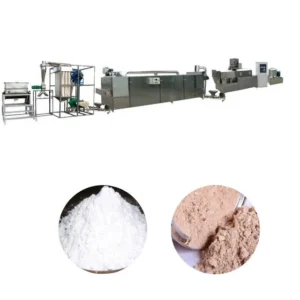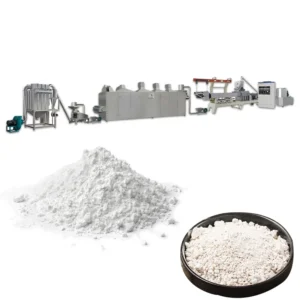
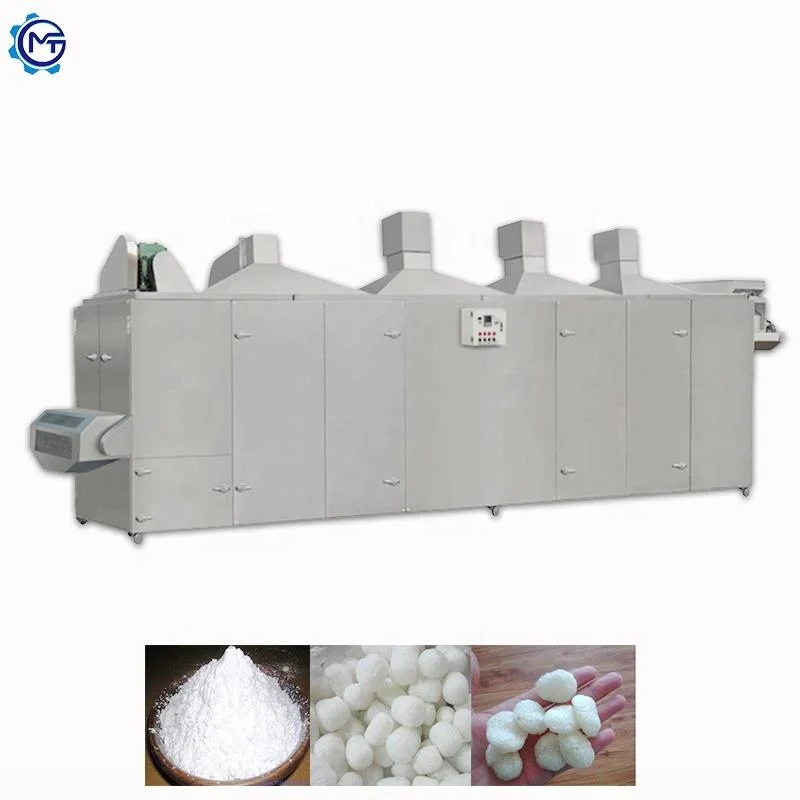
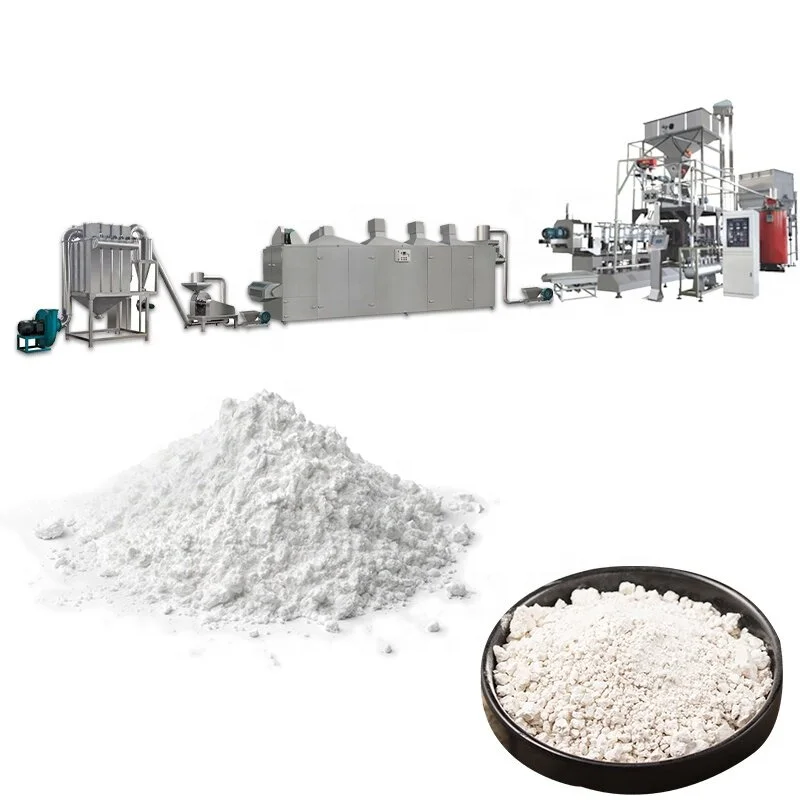


Modified Starch Processing Line, Twin-Screw Extruder, PLC Control, 304 Stainless Steel Contact Parts — engineered for cassava, corn, potato, and wheat starch gelatinisation with screw configuration and die design matched to your raw material and target modification degree. Multiple energy options (electricity, gas, diesel, steam) integrate with existing utility infrastructure, while throughput across mixing, extrusion, drying, and grinding stations is balanced to prevent bottlenecks.
- CE certified with line layout, trial run report, and screw configuration record delivered before shipment
- In-house testing workshop validates output on your actual starch variety prior to dispatch
- Single-supplier accountability from batching through packing eliminates integration gaps between separate vendors
Description
Screw geometry matched to starch variety — every barrel section and die orifice on this modified starch processing line is specified after reviewing the buyer’s raw material sheet, not copied from a generic build.
Technical Specifications
| Parameter | Value |
|---|---|
| Product Type | Modified Starch Processing Line |
| Screw Type | Twin-screw |
| Raw Materials | Wheat flour, corn starch, potato starch, cassava starch |
| Capacity Range | 80–500 kg/h (basis not stated in source — confirm raw material, moisture content, and product specification) |
| Voltage & Frequency | Three phase 380 V / 50 Hz; single phase 220 V / 50 Hz (configurable to local supply) |
| Control System | PLC with MCC panel |
| Frame Material | Stainless steel 201 |
| Contact Material | Food-grade stainless steel 304 |
| Energy Source Options | Electricity, gas, diesel, or steam |
| Electrical Components | Siemens (China) or equivalent motors; Delixi or Delta inverters |
| Total Installed Power | approx. 100 kW (electric heating); approx. 50–60 kW (gas / diesel heating) (rated or peak not specified in source) |
| Mixer Motor | 4.0 kW |
| Mixer Dimensions | 1.2 × 0.9 × 1.4 m |
| Screw Conveyor Motor | 1.1 kW |
| Screw Conveyor Dimensions | 2.5 × 0.6 × 2.3 m |
| Screw Conveyor Output | 0–150 kg/h (basis not stated in source — confirm material bulk density) |
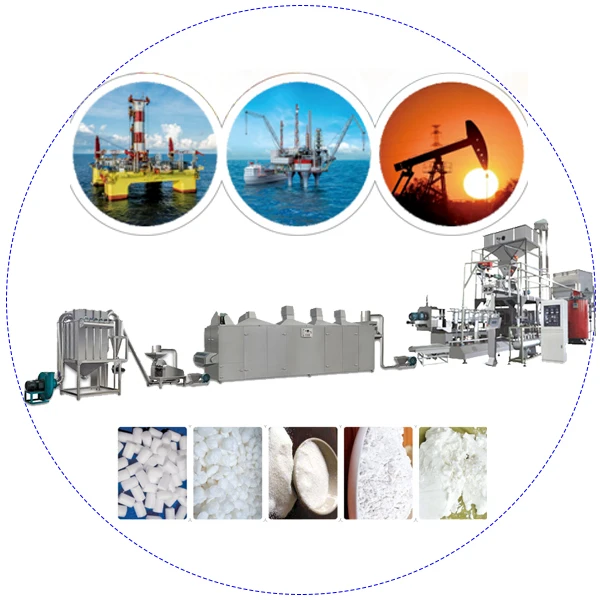
| Process Flow | Mixer → Screw Conveyor → Twin-screw Extruder → Shift → Air Conveyor → Dryer → Air Conveyor → Conditioning → Conveyor → Grinder |
| Die Configuration | Interchangeable dies for different product forms |
| Assembly State | Complete line with supporting equipment |
| Certification | CE |
Application Suitability
| Application | Material or Output |
|---|---|
| Pregelatinized starch for instant food mixes | Cassava starch, corn starch at controlled moisture |
| Modified starch for paper sizing and corrugating | Wheat flour, potato starch derivatives |
| Cold-water-swelling starch for drilling fluids | Corn starch, cassava starch with targeted gelatinisation degree |
| Instant thickening starch for sauce and soup bases | Blended root and cereal starches |
| Industrial binder starch for textile warp sizing | Corn starch, wheat flour at high shear settings |
Why "500 kg per Hour" Means Nothing Without the Starch Variety
Capacity on a modified starch processing line is inseparable from the raw material, moisture target, and gelatinisation degree you require.
I have watched customers take a quoted throughput figure and sign a purchase order before anyone asks whether that number came from cassava flour at 14 % moisture or waxy corn starch at a completely different shear profile. Three months later the extruder is running, the motor amperage is climbing, and the actual output sits well below what was promised. The gap is rarely a mechanical failure; it is a specification mismatch that no one caught before production started [NEED_CITE: starch gelatinisation behaviour differences across botanical sources].
Barrel Sections, Screw Elements, and Starch Shear Sensitivity
Cassava starch gelatinises at a lower temperature and tolerates less mechanical shear than corn starch, so the screw element sequence that works for pregelatinized corn flour will over-process cassava, producing a gummy mass that blocks the die. On this Modified Starch Processing Line turnkey configuration, the screw configuration is rebuilt for each raw material: kneading block angles, element pitch, and reverse-flight sections are selected against the buyer’s specific starch variety and target degree of gelatinisation rather than left at a default build.
Dryer Throughput Must Track Extruder Output
An extruder pushing modified starch at a steady rate is only half the equation. If the downstream dryer cannot evaporate moisture fast enough, wet product backs up, clumps in the air conveyor, and forces the entire line to slow. Every dryer on this line is sized against the extruder’s maximum output at the highest expected inlet moisture, so the bottleneck stays where it belongs — at the operator’s intentional set-point, not inside an undersized heat exchanger [NEED_CITE: industrial starch dryer capacity matching principles].
What the Power Figures Actually Tell You
The total installed power splits into two ranges depending on the energy source. Electric heating draws roughly 100 kW across barrel heaters, dryer elements, and drive motors, while gas or diesel heating drops that figure to around 50–60 kW because thermal energy comes from the burner rather than resistance elements. For a buyer in a region where industrial electricity tariffs are high but natural gas is metered cheaply, the fuel-fired option shifts operating cost noticeably downward without changing extrusion mechanics. The PLC monitors barrel zone temperatures and adjusts heating duty cycle, so product consistency is maintained regardless of which energy source is selected. The mixer’s 4.0 kW motor and the 1.1 kW screw conveyor are sized to keep raw material flowing into the extruder throat at a rate the twin-screw can absorb without surge feeding.
The Price of Skipping a Trial Run
When a line ships without anyone running the buyer’s actual cassava or corn starch through the extruder first, the real commissioning begins on the factory floor — with the buyer’s production schedule already waiting. Screw elements get swapped, barrel temperatures get re-mapped, and die orifices get resized while installation technicians stand by. Every day of post-delivery adjustment is a day the line is not producing saleable modified starch, and the cost of that delay usually outweighs the shipping weight of a few trial-run samples [NEED_CITE: commissioning delays in starch extrusion projects].
Why Procurement Teams Place the Full Line Here
Single-supplier accountability means the mixer, extruder, dryer, conditioning drum, and grinder are all throughput-matched before they leave the factory, so no station chokes the next. Screw configuration and die design are documented against the buyer’s raw material data sheet, giving the process team a starting recipe instead of a blank slate. An in-house testing workshop allows trial runs on the customer’s own cassava, corn, potato, or wheat starch before crating, so the line arrives with a proven parameter set. Pre-sales engineering covers layout, utility planning, and phased installation scheduling, and the same team stays through on-site commissioning and operator training. CE-marked construction and food-grade stainless steel 304 contact surfaces satisfy export-market regulatory requirements without last-minute re-certification [NEED_CITE: CE machinery directive requirements for food processing equipment].
Documentation & Verification
- Line layout drawing showing throughput balance from mixer through grinder
- Screw and die configuration record matched to your starch variety
- Factory trial-run report on your raw material before dispatch
- Electrical schematic with voltage and frequency confirmed to destination
- Operation and maintenance manual with wear parts cross-reference
- CE declaration of conformity for the complete assembly
Installation, Commissioning & Support
- Foundation plan accounts for mixer vibration and extruder torque reaction
- Dedicated circuit sized for 100 kW electric or 60 kW fuel-heated load
- Modular frame bolts together on-site to fit standard container shipping
- PLC language and HMI labels set to operator preference before power-on
- First-run parameter log handed over with screw and die configuration record
- Wear parts list covers screws, dies, and barrel liners with interchange part numbers
What We Need to Size Your Line
Send the starch variety you plan to process, the target gelatinisation degree or cold-water viscosity specification, and your intended daily output window. Include the voltage and frequency at your facility along with available energy sources — electricity, gas, diesel, or steam — so the heating system can be configured before fabrication begins. If you have existing upstream milling or downstream packing equipment, share the interface dimensions so the conveyor and conditioning stations can be matched.
Frequently Asked Questions
Q: How is line capacity verified, and what conditions does the quoted output assume?
A: Throughput is confirmed by a trial run in the testing workshop using the buyer’s actual starch, at the moisture level and gelatinisation target specified for production. The resulting capacity figure is documented in the trial-run report and referenced against the extruder screw speed, barrel temperature profile, and dryer residence time recorded during that run.
Q: How are screw configuration and barrel temperatures matched to different starch types?
A: Each starch variety — cassava, corn, potato, wheat — has a distinct gelatinisation temperature and shear sensitivity. Screw elements are selected and sequenced to deliver the correct mechanical energy, while barrel zone heaters are set to a temperature profile that brings the starch through gelatinisation without over-processing or leaving uncooked granules.
Q: What voltage, frequency, and control language options are confirmed before production?
A: The buyer’s local supply voltage and frequency are verified during the specification stage, and the PLC program along with HMI labels are written in the operator’s preferred language. Electrical schematics are updated to reflect these choices before the control panel is wired.
Q: How is throughput balanced between the extruder, dryer, and grinding stations?
A: Each station is sized so its maximum handling rate meets or exceeds the extruder’s output at peak moisture and density. The dryer’s evaporation capacity, the air conveyor’s volumetric flow, and the grinder’s throughput are all calculated against the same production target, preventing any single unit from becoming a bottleneck.
Q: What does on-site installation and commissioning cover?
A: The installation team positions and levels every module, connects utilities to the pre-confirmed voltage and energy source, and runs the line through a production cycle with the buyer’s raw material. Operators receive hands-on training on PLC operation, screw and die changes, and daily maintenance routines before the team departs.
Related products
-
Cassava & Pregelatinized Corn Starch Extrusion Equipment – CE Certified Industrial Twin-Screw Modified Starch Line
¥65.00 Select options This product has multiple variants. The options may be chosen on the product page -
2025 New Design Modified Starch Big Capacity Industrial Use Food Additives Core Components Motor Bearing
¥50.00 Select options This product has multiple variants. The options may be chosen on the product page -
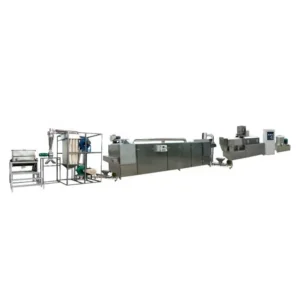
Automatic Modified Corn Starch Making Machine 304 Stainless Steel Gearbox High Efficiency Starch Processing Production Line
¥30.00 Select options This product has multiple variants. The options may be chosen on the product page -
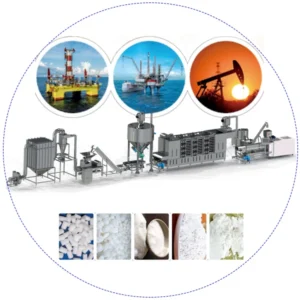
Modified Starch Production Line for Industrial Drilling Twin Screw Extruder Large Output Modified Starch Manufacturing Machine
¥50.00 Select options This product has multiple variants. The options may be chosen on the product page