

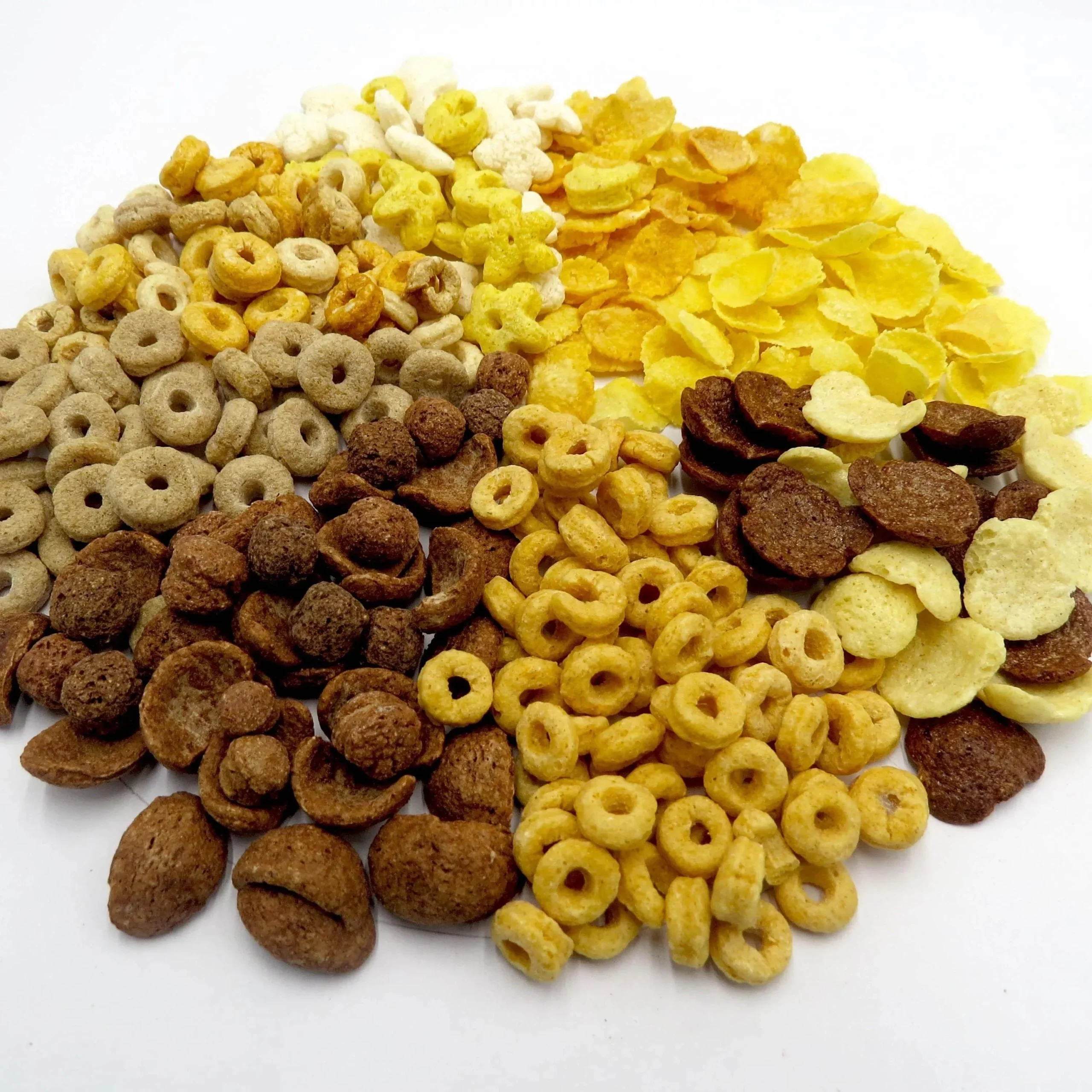
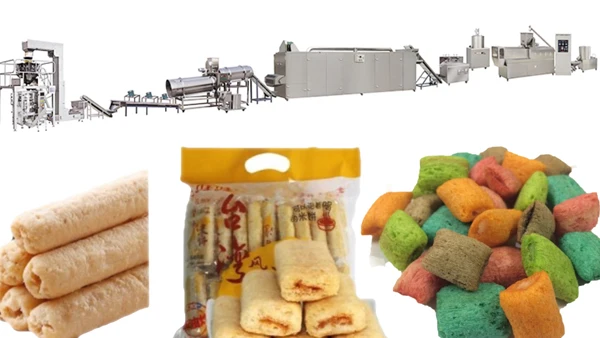
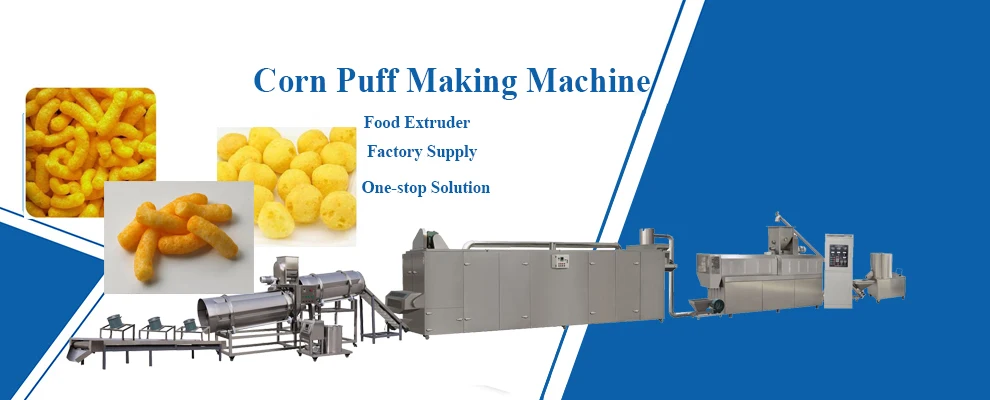


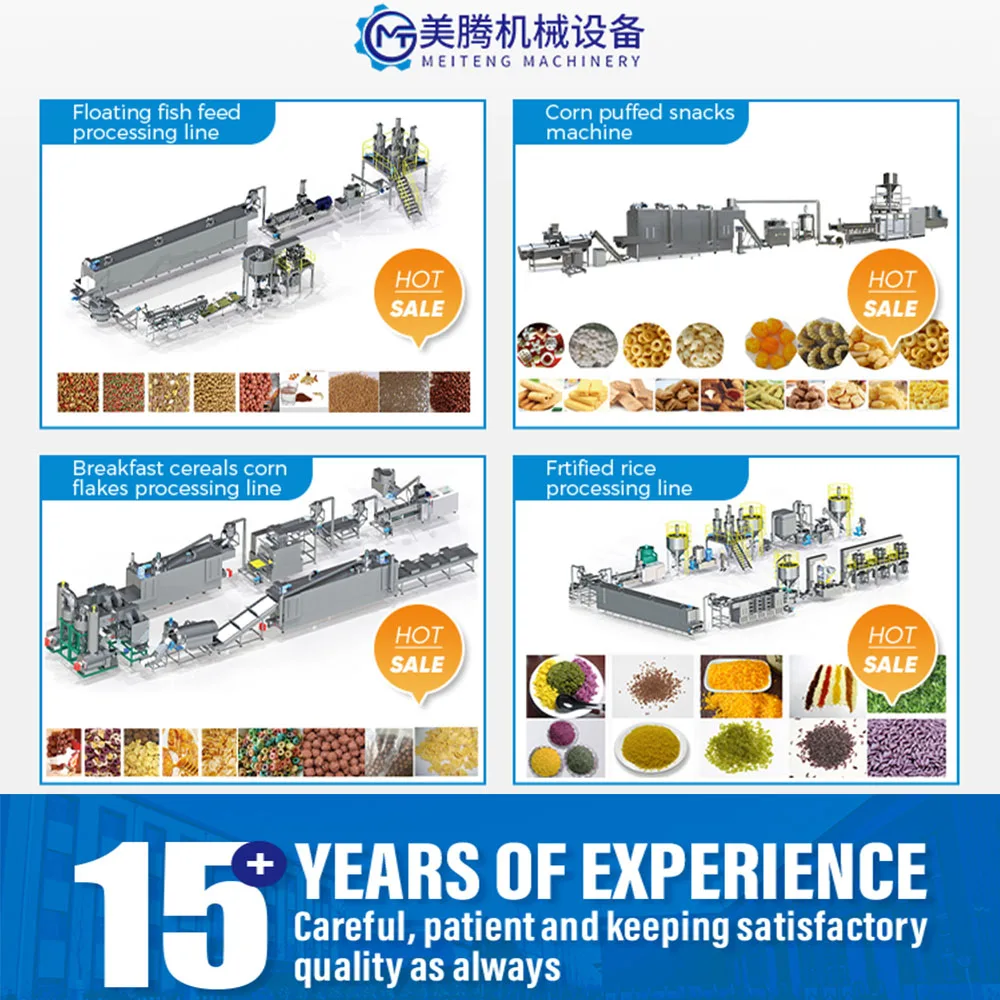
Breakfast Cereals Processing Production Line, Twin-Screw Extruder, PLC Control, Food-Grade Stainless Steel — engineered as a complete turnkey project from mixing through extrusion, flaking, drying, roasting, coating to packaging.
- Screw configuration and die design are specified to your raw material and target cereal product, ensuring proper gelatinization, expansion and uniform texture
- Throughput is matched across every station so no single unit bottlenecks the line
Supported by in-house trial runs on your raw material before shipment and on-site commissioning with operator training.
Description
Throughput-matched turnkey line — every station from mixing to packaging is sized so the extruder output never waits on a slower dryer or coater.
Technical Specifications
| Parameter | Value |
|---|---|
| Product Type | Breakfast Cereals Processing Production Line |
| Control System | PLC controlled, fully automatic integrated processing |
| Extruder Type | Twin-screw extruder |
| Line Stations | Mixing, extrusion, flaking, drying, roasting, coating, packaging |
| Coating System | High-efficiency chocolate and sugar coating device |
| Drying & Roasting Method | Hot air circulation with even heating |
| Contact Material | Food-grade stainless steel across all food-contact parts |
| Adjustable Parameters | Flaking thickness, drying temperature, extrusion speed, coating volume |
| Output Capacity | Basis to be confirmed based on raw material and target cereal |
| Screw Configuration | L:D ratio and screw diameter to be confirmed per formulation |
| Voltage & Frequency | Configurable for target market (to be confirmed before production) |
| Overall Dimensions | To be confirmed per station and total line footprint |
| Rated Power | To be confirmed based on final line configuration |
Application Suitability
| Application | Material or Output |
|---|---|
| Crispy corn flakes | Milled maize grits, sugar, malt, salt |
| Maize chocos | Corn flour blended with cocoa powder and sweetener |
| Cocoa cereals | Corn and rice grits with cocoa and chocolate coating |
| Sweet-coated breakfast cereals | Extruded cereal base with sugar syrup or chocolate enrobing |
| Fortified breakfast cereals | Grain blends with added vitamin and mineral premix |
Why Your Corn Flakes Sank in the Coating Drum
The line was quoted on a standard maize variety — your local grain behaves differently under heat and shear.
I remember a night call from Colombia. A brand-new corn flakes line was running, but the flakes kept sinking in the sugar coating drum instead of tumbling on the surface. The problem was not the coater; it was the extrusion. The screw combination had been set up for a mid-starch yellow maize, and the client was running a high-starch local white variety. Gelatinization happened too early in the barrel, expansion dropped, and the flakes came out dense. Every station downstream inherited the problem. A breakfast cereals processing production line turnkey project only works when the screw configuration, die geometry, and dryer capacity are all matched to the raw material you actually put in the hopper — not the one the factory tested at commissioning. [NEED_CITE: starch gelatinization behavior in twin-screw extrusion of cereal grains]
Screw Profile and Barrel Zones Define Your Flake Texture
Twin-screw extrusion gives the operator independent control over shear, residence time, and temperature across multiple barrel zones. For corn flakes, the goal is partial gelatinization — enough to bind the dough, but not so much that the pellet expands before it reaches the flaking rolls. The screw elements in the early zones handle conveying and hydration, while the mid-zone kneading blocks manage the starch conversion. Adjusting one zone without reading the rest of the profile causes ripple effects all the way to the roaster.
Matching Dryer and Coater Capacity to the Extruder Output
A common mistake in breakfast cereal projects is specifying the extruder correctly and then under-sizing the hot air dryer or the coating drum. When the dryer cannot remove moisture fast enough, flakes arrive at the roaster still holding excess water, producing uneven browning. When the coater is too small for the line flow rate, the sugar or chocolate syrup pools at the bottom of the drum rather than wrapping each piece. On this breakfast cereals processing production line turnkey setup, the drying, roasting, and coating stations are each calculated against the extruder’s actual throughput on the buyer’s grain — not a catalog number. [NEED_CITE: heat transfer and moisture removal rates in hot-air cereal drying]
Reading the Specs That Actually Matter
The twin-screw configuration is the starting point for any cereal extrusion decision. The screw diameter and L:D ratio determine how long material stays in the barrel, which directly controls the degree of starch gelatinization and, therefore, the flake’s density after rolling. A longer barrel with a moderate L:D ratio gives the operator more zones to fine-tune temperature and shear — critical when switching between maize varieties or adding cocoa powder to the formulation.
Flaking roll gap adjustment sets the final thickness. Too thin and the flakes shatter during roasting; too thick and they retain a doughy center. The PLC control allows operators to store thickness and temperature recipes for each product variant, so a changeover from plain corn flakes to maize chocos does not require trial and error on every parameter.
The hot air circulation system in the dryer and roaster distributes heat evenly across the bed depth, preventing scorching on the top layer while the bottom stays under-dried. Food-grade stainless steel on every contact surface keeps the line compliant with international food safety expectations and simplifies wash-down between runs. [NEED_CITE: food contact material requirements for cereal processing equipment]
The Cost of Skipping the Trial Run
Buyers who approve a line layout without insisting on a raw material trial often discover the mismatch during installation. The extruder produces pellets that are either too dense for flaking or too fragile to survive the dryer belt transfer. Reworking the screw combination on-site means flying in a process engineer, ordering new screw elements, and losing production days. In one case, a Central American client spent weeks adjusting barrel temperatures and moisture injection before accepting that the original die design could not produce an acceptable flake shape from their locally sourced maize. All of this could have been caught in a pre-shipment test. [NEED_CITE: cost of post-installation re-engineering versus pre-shipment trial runs]
Why Source This Line Here
The entire breakfast cereals processing production line turnkey project — from batching system through extrusion, flaking, drying, roasting, coating to packaging — comes from one supplier, which means throughput is matched at every junction rather than assembled from mismatched vendors.
Screw and die configurations are documented against the buyer’s specific grain formulation, not pulled from a generic template, so the line arrives with a starting recipe rather than a blank slate.
An in-house testing workshop allows raw material trial runs before shipment, producing a test report that shows actual flake density, expansion ratio, and moisture levels on the buyer’s own maize or corn blend.
Electrical schematics, voltage specifications, and PLC language are confirmed against the installation site before the control panels are wired, preventing the commissioning delays that arise from incompatible frequency or unlabeled interfaces.
On-site installation, operator training, and wear parts supply are included in the project scope, so the first screw element or die replacement does not leave the factory searching for drawings.
Documentation & Verification
- Line layout and capacity calculation matched to your cereal formulation and target output
- Screw and die configuration record specific to your grain blend, not a generic build
- Trial run report on your raw material showing flake density and moisture before dispatch
- Electrical schematic and voltage confirmation aligned with your plant supply
- Operation and maintenance manual covering every station from mixer to packer
- Wear parts list with part numbers for screws, dies, flaking rolls, and dryer belts
Installation, Commissioning & Support
- Foundation plan and utility routing prepared for the PLC-controlled integrated line footprint
- Dedicated power circuits sized to the total connected load of extruder, dryer, and roaster
- Modular station delivery allowing phased assembly within existing building clearances
- First-run parameter setting for extrusion speed, barrel temperature, and flaking gap
- Operator training covering recipe changeover between corn flakes, maize chocos, and coated variants
- Wear parts inventory recommendation for screws, dies, and coating drum internals
What to Include in Your Inquiry
To configure a breakfast cereals processing production line turnkey project that runs your raw material from day one, share the grain type and supplier specification sheet, target hourly or daily output, workshop dimensions with ceiling height, local voltage and frequency, preferred PLC language, and whether existing upstream or downstream equipment must be integrated. If you can send a raw material sample, a pre-shipment trial run can be arranged to confirm flake quality before the line enters production.
Frequently Asked Questions
Q: How is line capacity verified against my specific raw material and target cereal product?
A: We run your grain sample through the twin-screw extruder and downstream stations in our testing workshop. The trial produces actual flake samples so you can evaluate density, expansion, and coating adhesion. Results are documented in a trial run report that travels with the shipment.
Q: How do you ensure throughput is matched across every station so no single unit bottlenecks the line?
A: Each station — mixer, extruder, flaker, dryer, roaster, coater, packer — is sized against the extruder’s real output on your formulation. The layout calculation shows material flow rates at every junction, eliminating the common problem of a fast extruder feeding a slow dryer.
Q: What is the scope of the turnkey project in terms of layout, utility planning, and operator training?
A: The scope covers line layout, utility load calculation, installation scheduling, first-run parameter setting, and operator training on recipe changeover. Electrical schematics and PLC programming are confirmed to your site voltage and preferred control language before panel assembly begins.
Q: Can the screw configuration and die design be tailored to my formulation before the trial run?
A: Yes. Screw element arrangement and die geometry are specified to your grain type, moisture content, and target flake shape. The configuration is recorded in the documentation package so replacements can be ordered with the correct part numbers when wear parts are due.
Q: What voltage, frequency, and control language will be confirmed before production begins?
A: Your plant supply specifications — voltage, phase, and frequency — are confirmed during the proposal stage. The PLC interface language is set before the control panels are wired, so operators see familiar terminology from the first day of commissioning.
Related products
-

New Stainless Steel Automatic Snack Food Machinery Extruder Puffed Corn Maize Puff Processing Line for Food Industry High
¥12,350.00 Select options This product has multiple variants. The options may be chosen on the product page -

New Puffed Snack Food Machine Production Line Corn Flake Puff Corn Making Machine Twin Screw Extruder 100-500kg/h Capacity Food
¥8,500.00 Select options This product has multiple variants. The options may be chosen on the product page -

Puff Corn Extruder Machine Puffed Core Filled Snack Food Production Line Machine
¥8,500.00 Select options This product has multiple variants. The options may be chosen on the product page -

Hot Sale Corn Snack Extruder Puffed Snacks Production Machine Corn Puffs Making Machine
¥20,000.00 Select options This product has multiple variants. The options may be chosen on the product page

