

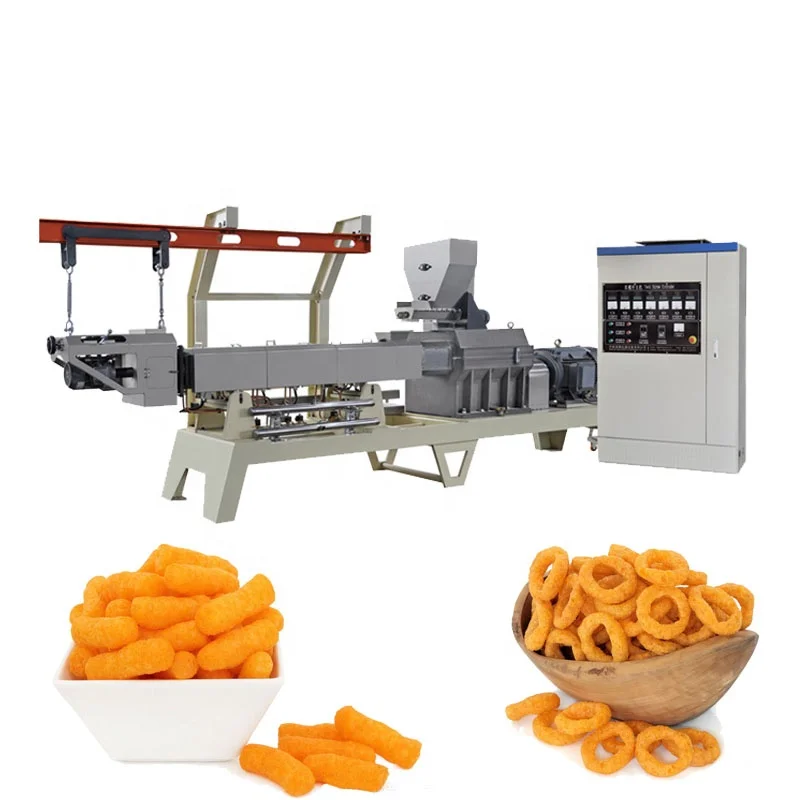
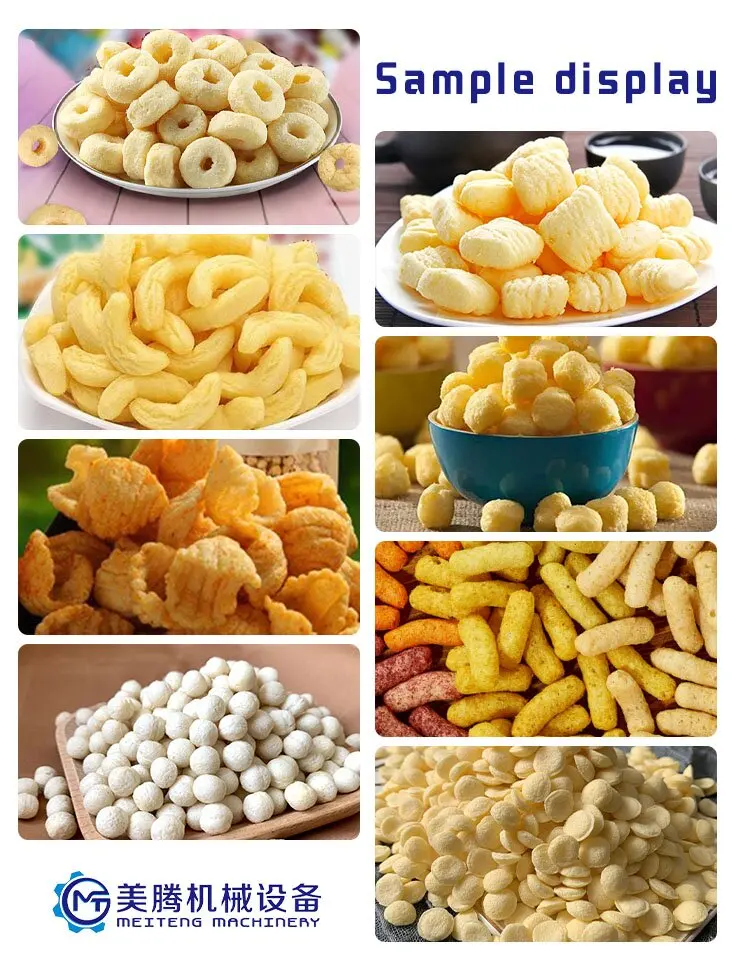

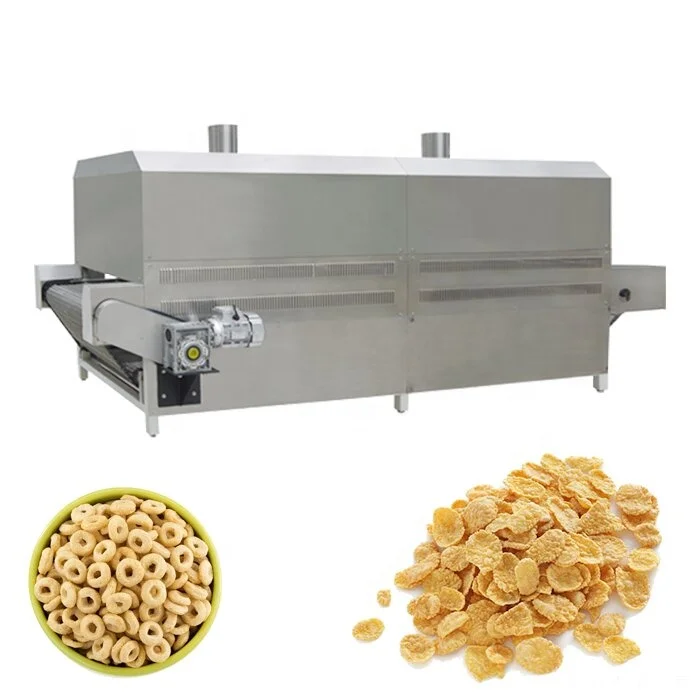
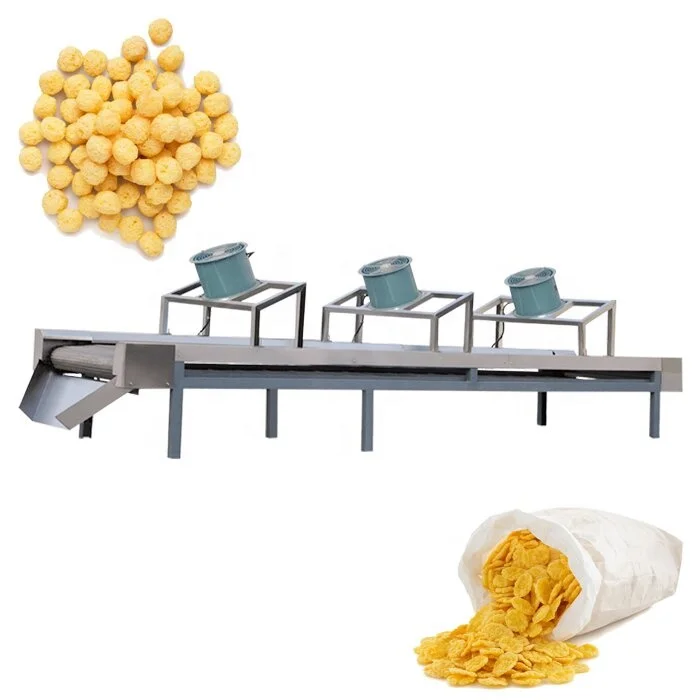
MT65 / MT70 / MT85 / MT75 / MT95 Fully Automatic Puffed Snack Processing Line, Twin-Screw, PLC & MCC Control — complete turnkey system from powder mixing through extrusion, shaping, roasting, seasoning and cooling.
Screw configuration and die design are matched to your grain-based formulation and target texture, while every station is throughput-balanced under one supplier to eliminate bottlenecks between extruder output, roaster belt length and seasoning drum residence time.
- Backed by in-house trial runs on your raw material before shipment, with full configuration records and documentation delivered.
Description
Throughput-Matched Turnkey Engineering — Every station on this puffed snack processing line, from the powder mixer through the roaster and cooler, is capacity-balanced under one supplier so the extruder never outpaces downstream drying or seasoning.
Technical Specifications
| Parameter | Value |
|---|---|
| Model | MT65 / MT70 / MT85 / MT75 / MT95 |
| Product Type | Fully Automatic Puffed Snack Processing Line |
| Screw Type | Twin-screw |
| Installed Power | 84 kW (MT65) / 132 kW (MT70) / 239 kW (MT85) / 186 kW (MT75) / 260 kW (MT95) |
| Power Consumption | 59 kW (MT65) / 92 kW (MT70) / 167 kW (MT85) / 140 kW (MT75) / 180 kW (MT95) |
| Output Capacity | 120–150 kg/h (MT65, basis to be confirmed) / 200–250 kg/h (MT70, basis to be confirmed) / 300–400 kg/h (MT85, basis to be confirmed) / 400–500 kg/h (MT75, basis to be confirmed) / 500–1000 kg/h (MT95, basis to be confirmed) |
| Control System | Automated PLC and MCC |
| Line Stations | Powder Mixer, Screw Conveyor, Twin-screw Extruder, Sandwich Machine, Shaping Machine, Elevator, High-temperature Roaster, Seasoning Machine, Cooler |
| Construction Material | Stainless steel (food-grade contact materials) |
| Overall Dimensions (L×W×H) | 21000×1200×2200 mm (MT65) / 23000×1500×2200 mm (MT70) / 28000×3500×4300 mm (MT85) / 24000×1500×2800 mm (MT75) / 31000×3500×4300 mm (MT95) |
| Warranty | 1 year complete warranty, life-time maintenance service |
Application Suitability
| Application | Material or Output |
|---|---|
| Sandwich cakes and core-filled puffed snacks | Corn, rice, wheat flour blends with cream or chocolate filling |
| Puffed rice crackers and wheat roast | Rice grits, wheat flour, multi-grain formulations |
| Nutritious breakfast cereals | Fortified grain mixes, oat and corn-based recipes |
| 2D and 3D shaped extruded snacks | Starch-rich doughs with die-cut or co-extruded geometry |
| Direct-expanded savory snacks | Corn grits, cassava starch, potato starch blends |
Why Nominal Capacity Figures Mislead Snack Buyers
A line rated on one raw material can lose half its output when the recipe changes.
I learned this the hard way last year when a client ordered a snack line based on corn flour trial results, then switched to cassava starch in actual production. The expansion rate dropped sharply, and the line could not hold the quoted throughput. We nearly lost the order. That is why every puffed snack processing line turnkey project we ship now goes through an in-house trial run on the buyer’s actual formulation before the machines leave the factory [NEED_CITE: in-house machine testing workshop trial runs before shipment].
Screw Configuration Dictates Your Snack Texture
The twin-screw extrusion unit at the heart of this line does not ship with a generic screw setup. Screw elements and die geometry are matched to your raw material’s starch content, moisture level, and the target expansion ratio. This is what separates a crisp, airy rice cracker from a dense, under-expanded failure. The PLC-controlled barrel temperature profile maintains consistent gelatinisation across the full screw length, which directly controls the bite and mouthfeel of the finished puffed snack processing line turnkey output.
Balancing Every Station Against Real Output
A common failure in snack line projects is an extruder that pushes product faster than the roaster can dry it, creating a backlog of wet, clumping product on the conveyor belt. The high-temperature roaster on this line features a 3.5-meter effective belt length with far-infrared heating elements designed to match the extruder’s discharge rate. The seasoning drum and cooler downstream are sized the same way, so the entire puffed snack processing line turnkey system moves product at one continuous rate without manual intervention or pile-ups [NEED_CITE: throughput matching across extrusion line stations].
Reading the Specs That Matter
The powder mixer’s 150 kg tank volume and 10-minute batch cycle define how often the extruder needs refilling; a shorter mix time on a smaller tank would force the extruder to idle between batches, dragging down actual daily output. The twin-screw extruder’s main motor power (30 kW on the MT65-class unit) governs the shear energy available for starch gelatinisation — lower motor power limits the range of raw materials you can process without pre-conditioning. The roaster’s gas consumption and far-infrared heater array determine how quickly moisture is driven out of the extruded product; insufficient drying capacity leaves snacks soft and shelf-unstable. PLC and MCC control across the line ensures that once parameters are dialed in during the trial run, they are locked and repeatable for every subsequent production batch.
The Cost of Skipping the Trial Run
When a snack line ships without a factory trial on the buyer’s actual recipe, the first production run becomes the trial — except now the buyer is paying for raw material waste, idle operators, and missed shipment deadlines while engineers adjust screw speed and barrel temperatures remotely. Moisture content, starch source, and fat ratio all change how a twin-screw extruder behaves, and no catalog spec can predict this without a physical test. Buyers who skip this step frequently report weeks of troubleshooting after installation [NEED_CITE: post-installation commissioning delays from untested formulations].
Why Source This Line From One Supplier
Every station — powder mixer, screw conveyor, twin-screw extruder, sandwich machine, shaping machine, roaster, seasoning drum, cooler — is selected and matched by the same engineering team, eliminating the finger-pointing that happens when separate vendors supply individual machines. Screw configuration and die design are specified to your raw material, not pulled from a standard catalog. The in-house testing workshop runs your actual formulation before shipment, so product development happens at the factory, not on your floor. CE and ISO certification covers the complete line, not just individual components. Pre-sales consultation covers line layout, utility planning, and capacity calculation matched to your facility.
Documentation & Verification
- Line layout and capacity calculation matched to your raw material and target snack format
- Screw and die configuration record documenting the exact setup tested during the trial run
- Trial run report on your raw material produced in the testing workshop before dispatch
- Electrical schematic with voltage and frequency confirmed to your facility specifications
- Operation and maintenance manual with wear parts list for screws, dies, and heating elements
- Packing photographs and customs documentation support for export shipment
Installation, Commissioning & Support
- Line footprint planning based on the selected model’s dimensions, up to 31 meters in length for the MT95
- Power supply verification against installed power ratings before electrical cabinet connection
- On-site assembly and alignment of all stations from mixer through cooler by trained engineers
- First-run parameter setting on your raw material with PLC recipe storage for future batches
- Operator training covering screw configuration changes, die swaps, and roaster temperature adjustment
- Wear parts supply including replacement screws, dies, and roaster heating elements with ongoing support
What We Need To Configure Your Line
To move past a generic quotation, share your primary raw material and recipe formulation, the target snack format and piece dimensions, and your required hourly output on that specific recipe. Also confirm your facility’s voltage, frequency, and preferred control language so the electrical cabinets are built correctly before shipping. If you have existing upstream or downstream equipment that this line must connect to, include those specifications as well.
Frequently Asked Questions
Q: How is the line capacity verified against my actual raw material and recipe?
A: Before shipment, we run your raw material through the twin-screw extruder and full downstream line in our testing workshop. The trial run measures actual output, expansion ratio, and product texture under controlled conditions. A trial run report is delivered with the line, documenting the screw speed, barrel temperature profile, and moisture settings that produced the target specification.
Q: What screw and die configuration is selected for my target snack texture and density?
A: Screw element arrangement and die geometry are chosen based on your raw material’s starch type, fat content, and the expansion level your market expects. A configuration record is provided so you can replicate the setup on future production runs or request matching spare parts when replacements are needed.
Q: How is throughput balanced across the extruder, roaster, seasoning drum and cooler to prevent bottlenecks?
A: Each station is selected so its rated handling capacity matches or slightly exceeds the extruder’s output on your confirmed recipe. The roaster belt length and heating capacity, seasoning drum volume, and cooler airflow are all calculated against the extruder discharge rate to maintain continuous flow without product pile-up.
Q: What voltage, frequency and control language options are confirmed before production?
A: Your facility’s electrical supply specifications and preferred HMI language are confirmed during the engineering stage. The PLC and MCC cabinets are then built to those exact parameters. The electrical schematic delivered with the line reflects the as-built configuration, not a generic template.
Related products
-

Fully automatic puff snack processing line
¥8,500.00 Select options This product has multiple variants. The options may be chosen on the product page -

Puff Corn Extruder Machine Puffed Core Filled Snack Food Production Line Machine
¥8,500.00 Select options This product has multiple variants. The options may be chosen on the product page -

New Stainless Steel Automatic Puffed Rice Flour Snacks Making Machine High Productivity Multi-function
¥11,050.00 Select options This product has multiple variants. The options may be chosen on the product page -

Twin Screw Corn Puffs Extruder Machine Small Corn Snack Food Extruder Machine
¥100.00 Select options This product has multiple variants. The options may be chosen on the product page


