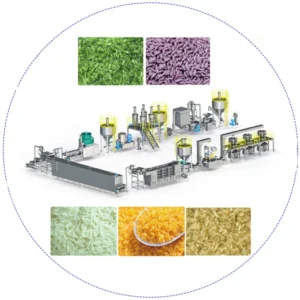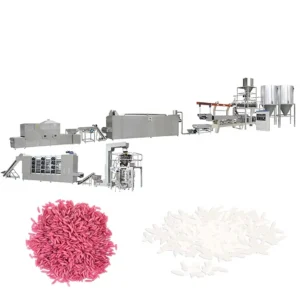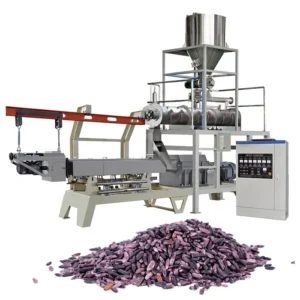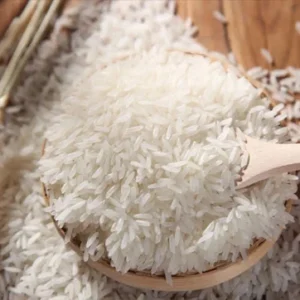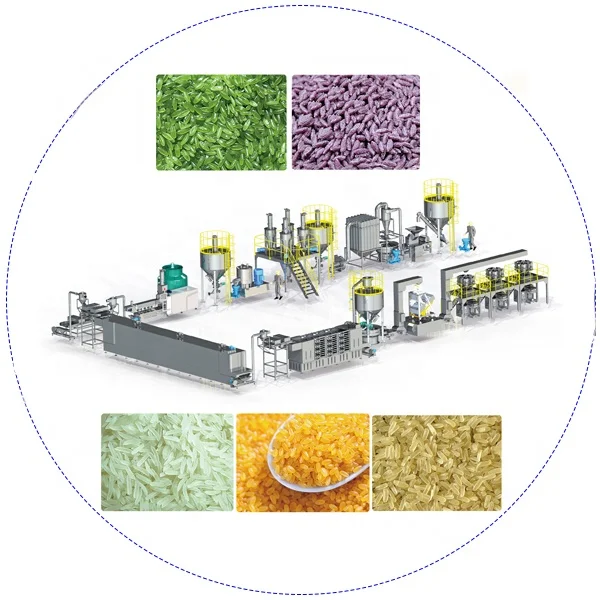

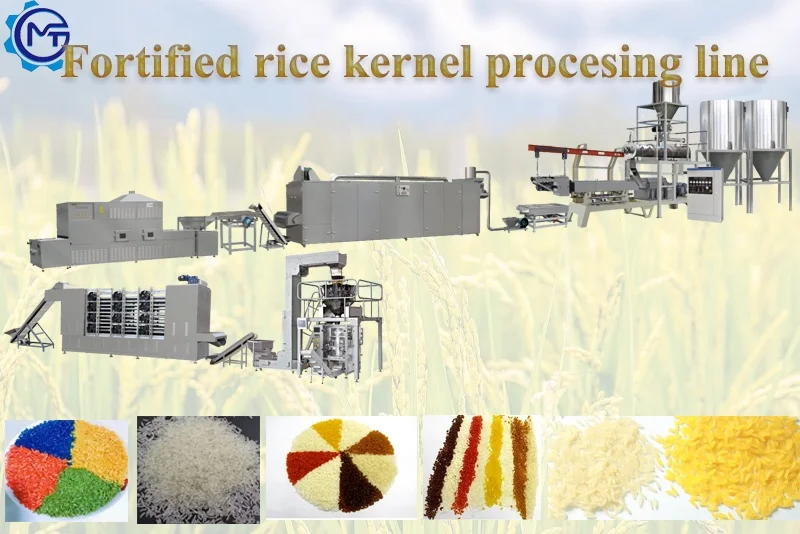


Fortified Rice Processing Line, Twin Screw Extruder, Mixing to Packing — complete turnkey plant for artificial and nutritional rice kernels from broken rice, corn, millet, wheat and starch with vitamin and mineral premix.
- Screw configuration and die design matched to your raw material formula, controlling kernel density, shape and nutrient retention through extrusion, low-temperature drying and high-temperature roasting stages.
- Frequency-controlled drives and automatic lubrication across all stations keep throughput stable during continuous shifts.
- Trial runs on your raw material in our testing workshop before shipment, with full line layout, capacity calculation and electrical documentation delivered for smooth commissioning.
Description
Complete Production Line Delivery — from raw material batching through extrusion, drying, and packing, with every station’s throughput matched to prevent bottlenecks on your fortified rice project.
Technical Specifications
| Parameter | Value |
|---|---|
| Product Type | Fortified Rice Processing Line |
| Extruder Type | Twin screw (single or double screw feeding system selectable) |
| Model MT65 Capacity | 80–100 kg/h (basis to be confirmed with raw material formula and moisture) |
| Model MT70 Capacity | 100–120 kg/h (basis to be confirmed with raw material formula and moisture) |
| Model MT85 Capacity | 200–300 kg/h (basis to be confirmed with raw material formula and moisture) |
| Model MT75 Capacity | 300–500 kg/h (basis to be confirmed with raw material formula and moisture) |
| Model MT95 Capacity | 800–1000 kg/h (basis to be confirmed with raw material formula and moisture) |
| Model MT65 Installed Power | 85 kW (Power consumption: 60 kW) |
| Model MT70 Installed Power | 120 kW (Power consumption: 85 kW) |
| Model MT85 Installed Power | 235 kW (Power consumption: 165 kW) |
| Model MT75 Installed Power | 180 kW (Power consumption: 135 kW) |
| Model MT95 Installed Power | 260 kW (Power consumption: 195 kW) |
| Speed Control | Frequency speed controlling |
| Lubrication & Cooling | Automatic lubricating and cooling system |
| Screw Material | Wear-resistant special-treated screw |
| Drying Oven Heating Source | Electric or gas |
| Drying Oven Feature | Circulation drying; frequency motor controls mesh belt speed |
| Production Procedure | Mixing → Extruding → Vibrating → Low temperature drying → Cooling → High temperature roasting → Cooling → Packing |
| Standards | CE; ISO |
Application Suitability
| Application | Material or Output |
|---|---|
| Government or NGO nutrition programs | Fortified rice kernels with added vitamins and minerals |
| Rice mill byproduct valorization | Artificial rice from broken rice and rice bran |
| Multigrain nutritional products | Kernels from corn, millet, wheat, oats, buckwheat, and beans |
| Infant and clinical nutrition | Pre-gelatinized nutritional rice powder or instant porridge base |
| Retail packaged grains | Reconstituted rice kernels blended with natural grains |
What the "Rated Capacity" Figures Leave Out on a Fortified Rice Line
A line is only as fast as its slowest station, and capacity means nothing if the dryer cannot keep up with the extruder.
I have watched buyers focus entirely on the twin-screw extruder’s output rating, only to find the drying section bottlenecking the entire Fortified Rice Processing Line turnkey project once production begins. The extruder pushes out a specific volume of wet, freshly extruded kernels, and if the mesh belt dryer lacks sufficient length or airflow, the backlog forces the extruder to idle. This mismatch wastes energy and creates inconsistent moisture levels across batches. [NEED_CITE: typical moisture content targets for shelf-stable artificial rice kernels] The real measure of an Artificial Rice Extrusion Line plant is the synchronized throughput from mixer to packer, verified with your actual raw material formula before the equipment leaves the factory.
Screw Configuration for Starch Gelatinization and Kernel Shape
The twin-screw extruder at the heart of this line does more than push material through a die. The screw elements must be arranged to achieve a specific degree of starch gelatinization — enough to bind the broken rice flour and micronutrient premix into a coherent dough, but not so much that the kernels lose their shape during drying. We configure the kneading blocks and reverse elements based on the amylose content of your specific rice or grain blend. A high-amylose broken rice source will require a different shear profile than a waxy corn base, and the die aperture must match the target kernel dimensions for your market.
Multi-Stage Drying to Lock in Kernel Integrity and Nutrition
Freshly extruded artificial rice kernels carry significant internal moisture and are structurally fragile. The drying section of this Fortified Rice Processing Line turnkey project uses a two-stage approach: a low-temperature circulation dryer first removes surface moisture and sets the kernel shape, then a controlled high-temperature roasting pass drives out internal moisture while developing a slight surface hardness that protects the kernel during handling and storage. This staged method prevents case-hardening — where the outside seals while the inside remains wet — which leads to cracking and nutrient degradation. [NEED_CITE: effect of drying temperature profile on vitamin retention in extruded grain products]
Reading the Power and Capacity Table Correctly
The five extruder models in this series cover a wide output range, but the installed power figures tell an equally important story about your facility’s electrical infrastructure. The MT65 draws 85 kW installed with roughly 60 kW operating consumption, suitable for facilities with limited transformer capacity, while the MT95 requires a 260 kW supply for high-volume output. Frequency speed controlling on the main drive allows fine-tuning of screw RPM to match material behavior — a critical adjustment when switching between a pure broken rice formula and a multigrain blend with higher fiber content. The automatic lubricating and cooling system protects the bearings during extended runs, reducing the risk of unplanned stops that would otherwise leave material carbonizing inside the barrel.
The Cost of Undersizing the Drying and Cooling Stages
Buyers who treat the extruder as the only critical machine in an Artificial Rice Extrusion Line plant often face compounding problems downstream. Undersized dryers force the extruder to run below its rated output, meaning the project never reaches the planned daily tonnage. Inadequate cooling after roasting leaves kernels warm going into the packing station, causing condensation inside bags and shortening shelf life. These issues are not apparent during a brief factory demonstration with a single material — they emerge weeks into production when the formula or ambient humidity changes. [NEED_CITE: post-extrusion cooling requirements for moisture-sensitive packaged food products]
Why Source the Entire Line from One Supplier
Every station in this Fortified Rice Processing Line turnkey project — mixing, extrusion, vibrating separation, drying, roasting, cooling, and packing — is sized and specified together so that material flow is continuous. The screw configuration and die design are matched to your raw material and target kernel shape, not copied from a generic template. Before shipment, your actual raw material is run through our in-house testing workshop to verify kernel formation, texture, and drying behavior. Pre-sales engineering covers the complete line layout and utility plan, and on-site installation includes commissioning, operator training, and a documented wear parts schedule to keep the line running beyond the first year.
Documentation & Verification
- Factory test record on your specific grain formula and micronutrient premix before dispatch
- Line layout drawing with capacity calculation matching each station from mixer to packer
- Screw element arrangement and die configuration record for your target kernel dimensions
- Electrical schematic with confirmed voltage, frequency, and control panel language for your site
- CE declaration of conformity and ISO certificate for customs and regulatory clearance
- Operation manual with preventive maintenance schedule and wear parts list
Installation, Commissioning & Support
- Floor plan review to confirm space for the MT95 at 36 × 3.5 × 4.3 m plus dryer and packing area
- Dedicated electrical circuit sized for up to 260 kW installed load with correct voltage and frequency
- Equipment shipped in modular sections for container loading and reassembly at your facility
- Commissioning includes screw speed tuning, dryer belt frequency adjustment, and first production run
- Operator training covers barrel temperature profile management and die cleaning procedures
- Wear parts list with lead times for screws, dies, and mesh belt sections included at handover
Preparing Your Project Inquiry
To move from a general concept to a firm line proposal, we need your target grain blend or formula, the daily or hourly output you plan to run, and the final kernel specifications your market expects. Please also share your facility’s available voltage and frequency, the preferred control language for the PLC interface, and whether you can send a sample of your raw material for a pre-shipment trial run.
Frequently Asked Questions
Q: How do you confirm the actual capacity of the line with my raw material?
A: We run your specific grain blend and micronutrient premix through our in-house testing workshop before finalizing the line configuration. The trial verifies extrusion behavior, kernel formation, and drying characteristics, producing a test report that documents the achievable throughput on your material rather than relying on generic ratings.
Q: Will the added vitamins and minerals survive the extrusion process?
A: Nutrient retention depends on barrel temperature profile, residence time, and screw shear intensity. We configure the screw elements and temperature zones to balance starch gelatinization with minimal thermal degradation of heat-sensitive micronutrients, and the trial run can include nutrient analysis of the finished kernels.
Q: How do you prevent the dryer from becoming a bottleneck?
A: Each dryer in the line is sized to handle the maximum moisture load from the extruder at its confirmed output. The mesh belt speed is controlled by a frequency motor, allowing adjustment of residence time to match different formulas and ambient humidity conditions at your facility.
Q: What electrical and control details need confirming before production?
A: We need your site voltage, frequency, and phase specification, along with the preferred language for the control interface. These details are confirmed before production begins so that the electrical schematic, motor ratings, and PLC programming match your local infrastructure and operator requirements.
Q: What happens after the line arrives at our facility?
A: Our technicians handle on-site installation, commissioning, and operator training. You receive a complete wear parts list with recommended replacement intervals, and ongoing maintenance support is available to keep the extruder screws, dies, and dryer belt in working condition throughout the line’s operating life.
Related products
-
500kg/h Automatic PLC Controlled Nutrition Baby Food Extruder Machine for Rice Cereal Processing
¥9,500.00 Add to cart -
150-500kg/h Twin Screw Extruder Baby Rice Flour Making Machine
¥9,500.00 Select options This product has multiple variants. The options may be chosen on the product page -
Automatic Iron Fortified Baby Rice Cereal Nutrition Powder Making Machine 500kg/h PLC Controlled
¥8,238.27 Add to cart -

Automatic Instant Powder Production Line Nutritional Powder Extruder Machine
¥10,000.00 Select options This product has multiple variants. The options may be chosen on the product page