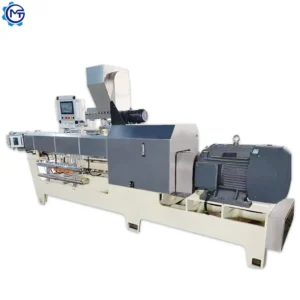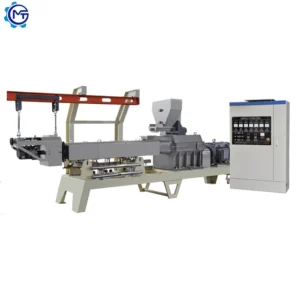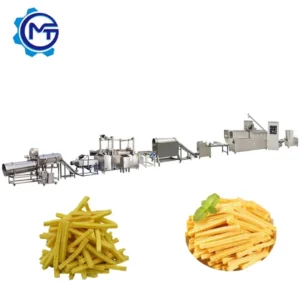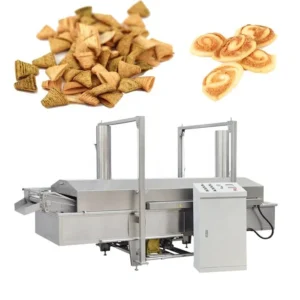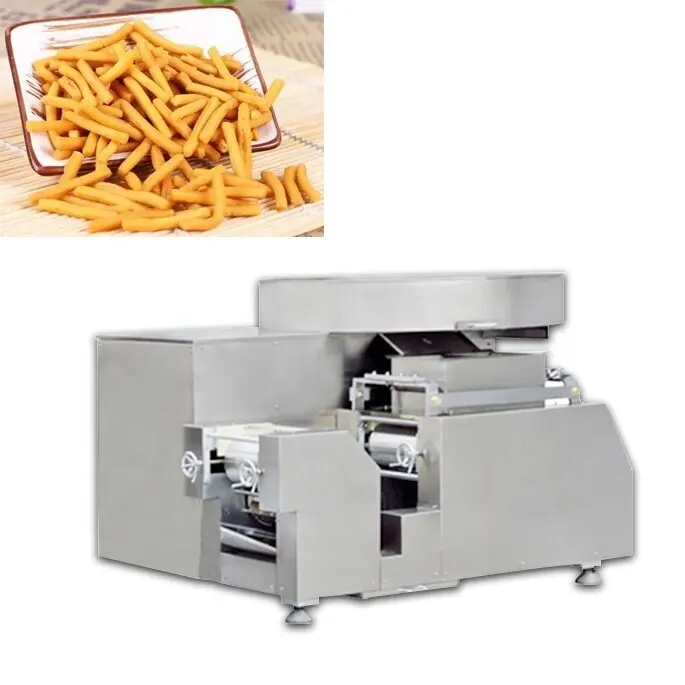

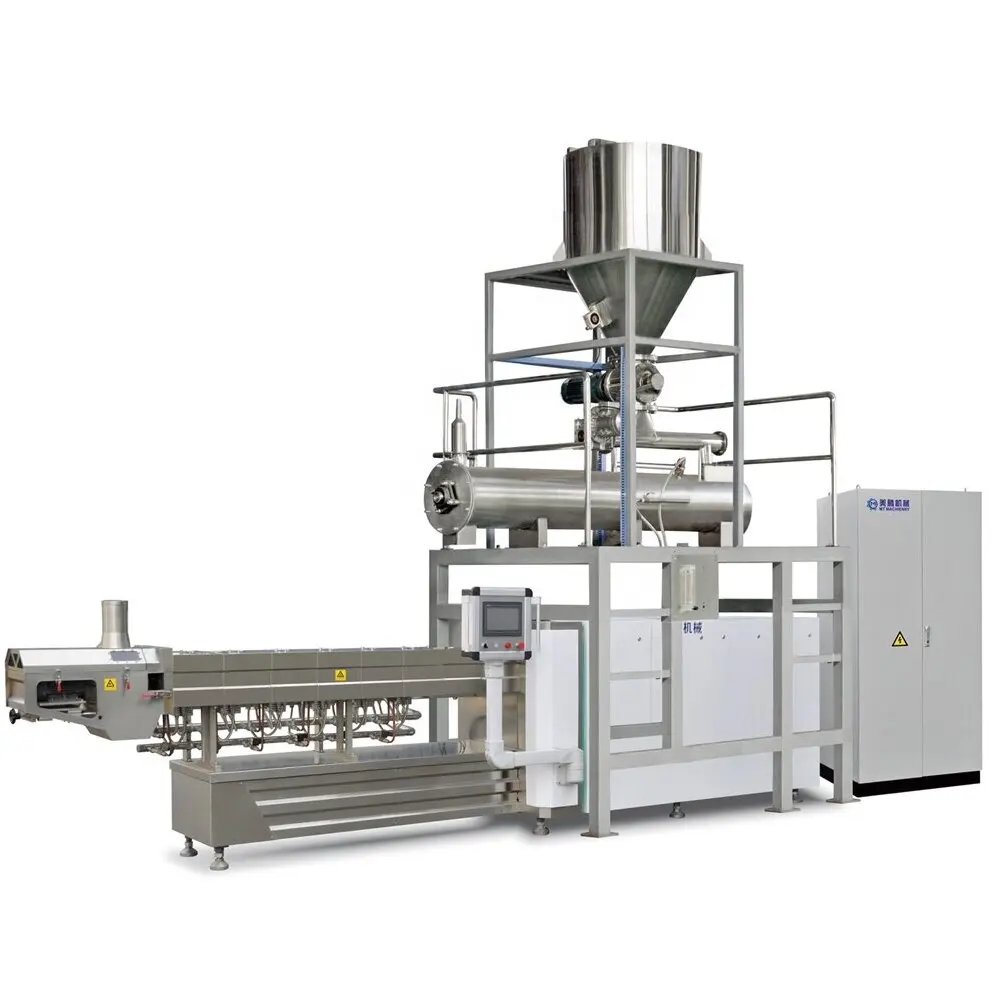

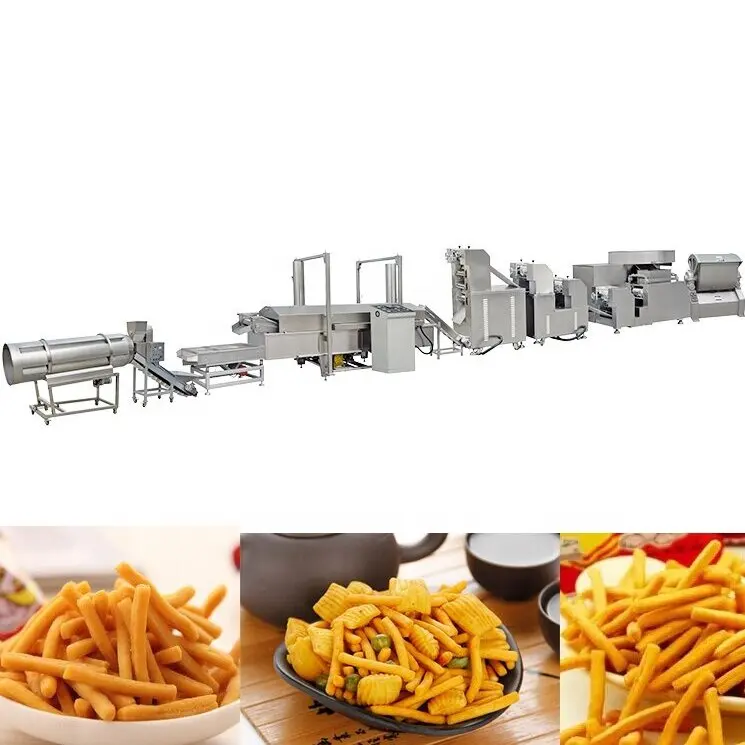

Continuous Deep Fryer for Snack Production Line, 380V, 320 L oil capacity, PLC control — engineered to match upstream extruder throughput in a turnkey snack processing project. Designed with double-layer anti-floating mesh belt and continuous oil filtration, this fryer maintains consistent frying quality across pasta chips, pellet chips, and extruded formats while reducing oil acid value.
- Gas or electric heating options with frequency-conversion stepless belt speed
- Full 304 stainless steel construction with automatic lifting hood for maintenance
- Line layout and capacity calculation provided to confirm station throughput alignment before production
Description
Throughput-Matched Frying Station — every continuous fryer is sized to the extruder’s actual output on your raw material, preventing the bottleneck that occurs when downstream capacity is guessed rather than calculated.
Technical Specifications
| Parameter | Value |
|---|---|
| Product Type | Continuous Deep Fryer for Snack Production Line |
| Heating Method | Electricity Heating / Gas Heating (configurable) |
| Heating Tube Power | 60 kW (electric heating variant) |
| Drive Power | 2.6 kW |
| Oil Capacity | 320 L |
| Voltage & Frequency | 380V / 50Hz |
| Control System | PLC |
| Overall Dimensions (L×W×H) | 6700 × 2200 × 1200 mm |
| Net Weight | 2000 kg |
| Output Capacity | 100–1000 kg/h (basis to be confirmed) |
| Conveyor Speed Control | Frequency conversion stepless speed regulation |
| Mesh Belt Type | Upper and lower double-layer mesh belt (anti-floating design) |
| Oil Filtration | Continuous oil circulation filtration system |
| Slag Discharge | Bottom slag discharge system |
| Lifting System | Automatic lifting system for upper hood and mesh belt |
| Construction Material | Food-grade 304 stainless steel |
| Key Features | Fully assembled continuous line unit, machinery test report provided, video outgoing-inspection provided |
Application Suitability
| Application | Material or Output |
|---|---|
| Fried pasta snack production | Extruded wheat or durum pasta shapes requiring uniform submersion |
| Pellet chip processing | 2D/3D starch-based pellets transitioning from drying to frying stage |
| Core-filled fried snack formats | Extruded pillows or tubes with cream filling requiring controlled oil exposure |
| Continuous snack line integration | Downstream station matched to twin-screw extruder output and moisture profile |
What "100–1000 kg/h" Leaves Out About Fryer Sizing
A fryer’s real capacity is not a number on a nameplate — it is the throughput that holds steady when your specific product format, moisture content, and oil absorption rate are running through the belt.
I have seen snack lines where the extruder was rated at a comfortable output, but the fryer downstream was chosen from a catalog without anyone calculating the actual oil load. The result is always the same: the belt slows down to achieve the target color and texture, the extruder keeps pushing product, and within an hour there is a pile of unfried半成品 sitting on a conveyor waiting for the fryer to catch up. That backlog degrades product quality and forces operators to run the line below its real capability [NEED_CITE: throughput matching between extrusion and frying stations]. When sourcing a turnkey fried snack production line fryer, the first question should never be the maximum belt speed — it should be how many kilograms of your specific dough format, at your specific exit moisture from the dryer, the oil bath can handle per hour while maintaining temperature recovery.
How Turnkey Layout Eliminates the Frying Bottleneck
The frying station does not operate in isolation. Oil temperature drops every time cold product enters the bath, and recovery time depends on heating capacity, oil volume, and the mass flow rate of product passing through. In a turnkey fried snack production line fryer project, the layout calculation starts from the extruder’s verified output on your flour or starch blend, factors in the moisture reduction achieved by the upstream dryer, and then determines the belt length and oil volume required to hold a consistent frying temperature. This is why the 320 L oil capacity and 60 kW heating specification here are not standalone selling points — they are variables in an equation that includes your product.
Oil Filtration and Product Consistency Across Long Runs
Continuous frying generates fine particulate that carbonizes in the oil bath, raising the acid value and transferring off-flavors to later batches. The continuous oil circulation filtration system on this unit removes suspended solids before they accumulate, which is critical when a single production run lasts eight hours or more. Without filtration, operators face a choice between stopping the line to change oil or accepting a gradual darkening of product color across the shift [NEED_CITE: oil degradation impact on snack food sensory quality]. The bottom slag discharge system works in parallel, collecting heavier debris that settles below the belt path.
Reading the Specification Sheet Against Your Production Reality
The 6700 × 2200 × 1200 mm footprint tells you the floor space required, but the dimension that matters more for line planning is the belt length inside that envelope — it determines the maximum residence time available at the slowest belt speed. Frequency conversion stepless speed regulation lets operators dial in frying time precisely, but the physical limit is set by the tank. The upper and lower double-layer mesh belt with anti-floating design addresses a specific problem: low-density extruded snacks tend to float on the oil surface, resulting in uneven color and undercooked tops. The upper belt holds product submerged, which is essential for pasta-based formats and hollow pellet chips that have significant buoyancy. The PLC control system centralizes belt speed, oil temperature, and filtration cycle timing into one interface, and the control language must be confirmed for the target market before the panel is wired.
The Hidden Cost of an Undersized Frying Station
When the fryer is the constraint, the entire line runs at the fryer’s pace. The extruder is capable of more, the dryer has spare capacity, but the output number at the packing station reflects only what the oil bath could absorb. Operators compensate by raising oil temperature to shorten residence time, which burns the surface before the interior moisture has fully flashed off — producing snacks that look done but go soggy within days [NEED_CITE: moisture migration in fried snack products post-packaging]. Replacing a batch fryer with a continuous unit that is still undersized for the upstream throughput simply converts a batch bottleneck into a continuous one.
Why Project-Level Procurement Changes the Outcome
The fryer is designed and quoted as part of a complete line from batching through extrusion, drying, frying, seasoning, and packing — so throughput is matched at every station rather than assembled from independent purchases. Screw configuration on the upstream extruder and die design are specified to the buyer’s raw material, which directly affects the moisture content and density of the product entering the fryer. An in-house testing workshop conducts trial runs on the customer’s actual flour or starch blend before shipment, verifying that the frying parameters hold on real product rather than assumed values. Electrical schematics with voltage and frequency confirmation are completed before production begins, eliminating commissioning delays caused by mismatched supply. On-site installation includes throughput verification at each station, with the frying belt speed calibrated to the extruder’s verified output during commissioning.
Documentation & Verification
- Line layout showing fryer position, utility connections, and throughput match to upstream extruder
- Electrical schematic with confirmed voltage, frequency, and PLC language for target market
- Trial run report on customer raw material documenting frying time, oil temperature, and product color
- Machinery test report and video outgoing-inspection recorded before crating
- Operation and maintenance manual covering belt tensioning, oil filtration cycle, and hood lifting procedure
- Wear parts list specifying mesh belt sections, heating elements, and filtration consumables
Installation, Commissioning & Support
- Floor must accommodate 6700 × 2200 mm footprint with clearance for hood lifting and maintenance access
- Dedicated 380V / 50Hz circuit with capacity for 60 kW heating load plus drive and control power
- Unit arrives fully assembled; hood and belt lifting system allows immediate internal inspection on arrival
- First-run commissioning includes belt speed calibration against extruder output and oil temperature profiling
- Operator training covers PLC navigation, filtration system operation, and emergency stop procedures
- Spare mesh belt sections and heating elements identified in wear parts list for first reorder cycle
What We Need to Scope Your Frying Station
To calculate the correct fryer configuration for your line, share the product format you are running — pasta shape, pellet chip dimension, or core-filled pillow — along with the flour or starch blend and the exit moisture from your dryer. Confirm the local voltage and frequency at the installation site, and the preferred control language for the PLC interface. If you are integrating this fryer into an existing line rather than a new build, provide the current extruder output rate and the available floor length for the frying and cooling sections.
Frequently Asked Questions
Q: How is fryer capacity verified against the upstream extruder’s actual output on my raw material?
A: We run your specific flour or starch blend through the extruder in our testing workshop, measure the exit moisture after drying, and then calculate the oil load and residence time the fryer must sustain. The belt speed and oil temperature are set during this trial, and the results are documented in a trial run report before shipment.
Q: What voltage, frequency, and control language options are confirmed before shipment?
A: The electrical schematic is finalized with your confirmed supply specifications — typically 380V / 50Hz, but configurable for other markets. PLC interface language is set during the design phase so operators see familiar terminology from day one of commissioning, avoiding translation delays on site.
Q: How is the frying station footprint and utility planning integrated into the full turnkey line layout?
A: The 6700 × 2200 × 1200 mm fryer envelope is placed in the line drawing alongside the extruder, dryer, seasoning drum, and cooling conveyor. Utility routing for electrical supply, oil fill and drain points, and exhaust ventilation is planned so no station waits on another trade to finish before installation begins.
Q: What on-site installation, commissioning, and operator training is included in the project scope?
A: Engineers oversee placement, utility connection, and first oil fill. Commissioning includes running your product through the complete line and adjusting belt speed and oil temperature until output matches the layout calculation. Operators are trained on PLC controls, filtration maintenance, and the automatic hood lifting system for daily cleaning.
Q: Can the fryer be phased into an existing line, and how is throughput matching handled during commissioning?
A: Yes. We survey the existing extruder and dryer output, then set the fryer belt speed and oil temperature to match that verified rate. If the existing line output exceeds this fryer’s capacity on your product format, we identify that gap before production rather than discovering it during installation.
Related products
-
Fried Flour Corn Bugles Extruded Chips Pellets Doritos Snacks Food Machine Production Line Extruder
¥100.00 Select options This product has multiple variants. The options may be chosen on the product page -
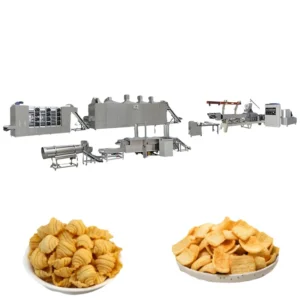
New Doritos Chips Frying Equipment Machine Automatic Tortilla Corn Chips Making Line Portable High Productivity
¥100.00 Select options This product has multiple variants. The options may be chosen on the product page -
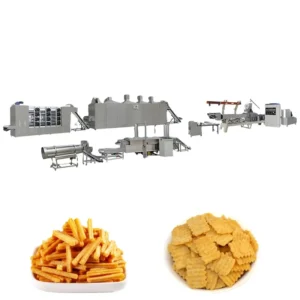
Fried Bugles Chips Production Line Fried Doritos Tortilla Snack Food Extruder
¥100.00 Select options This product has multiple variants. The options may be chosen on the product page -
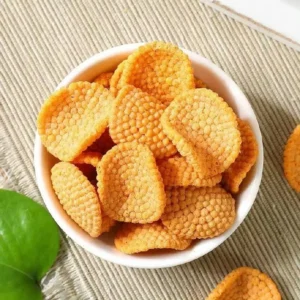
New Automatic Bugles Puff Snack Production Line Price Corn Chips Making Machine Fried Maize Machine High Productivity Large
¥8,570.00 Select options This product has multiple variants. The options may be chosen on the product page