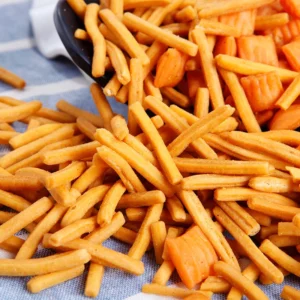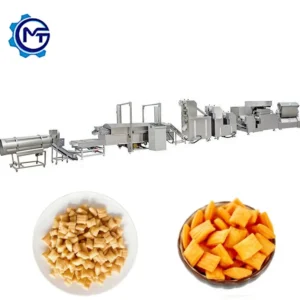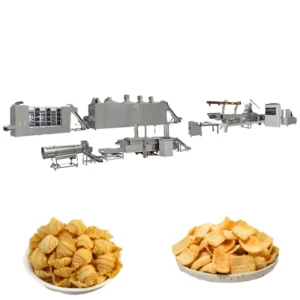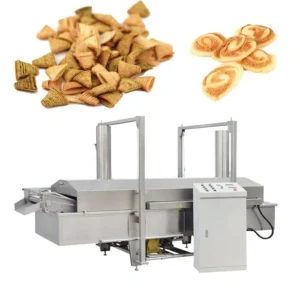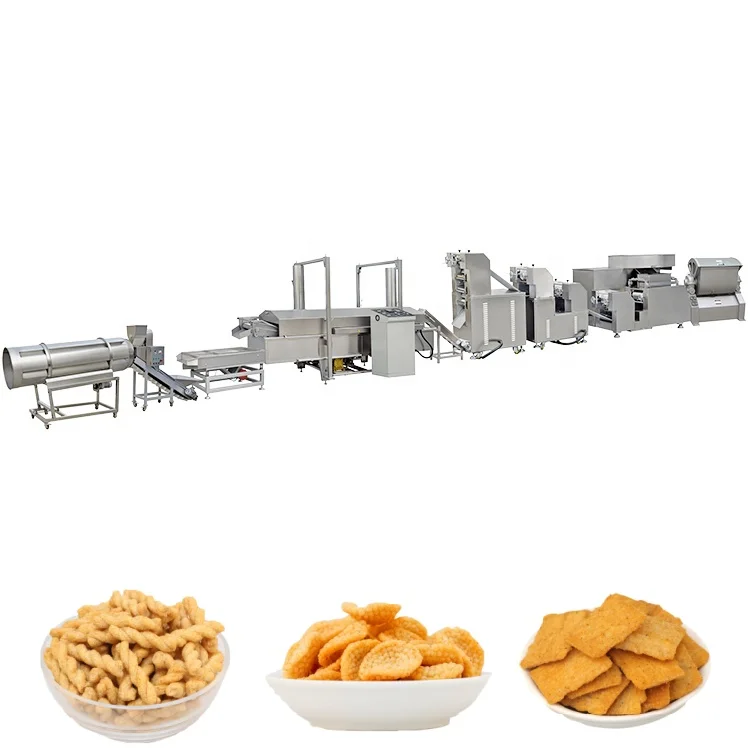
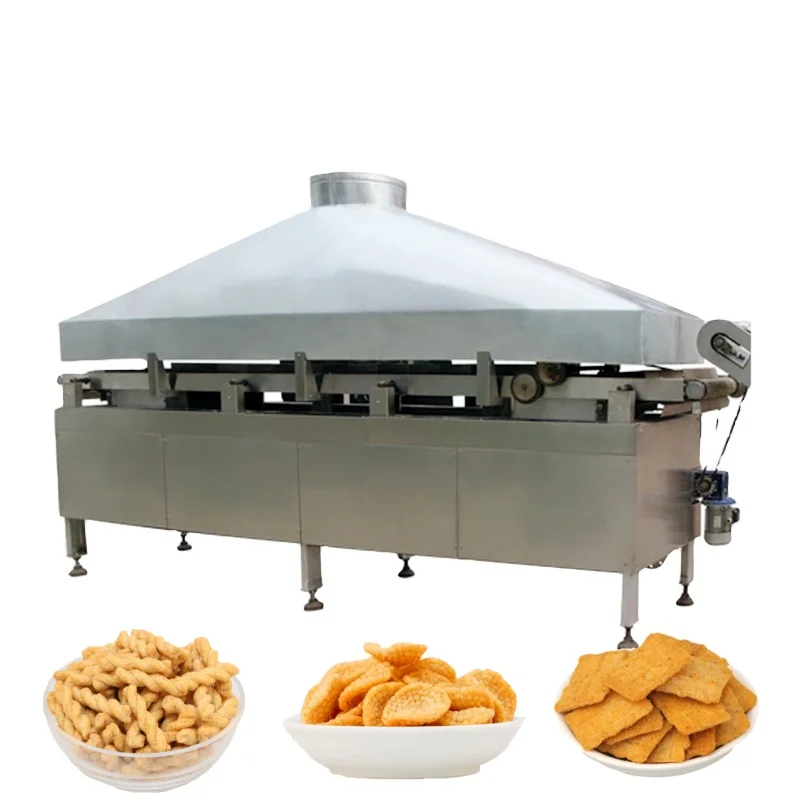
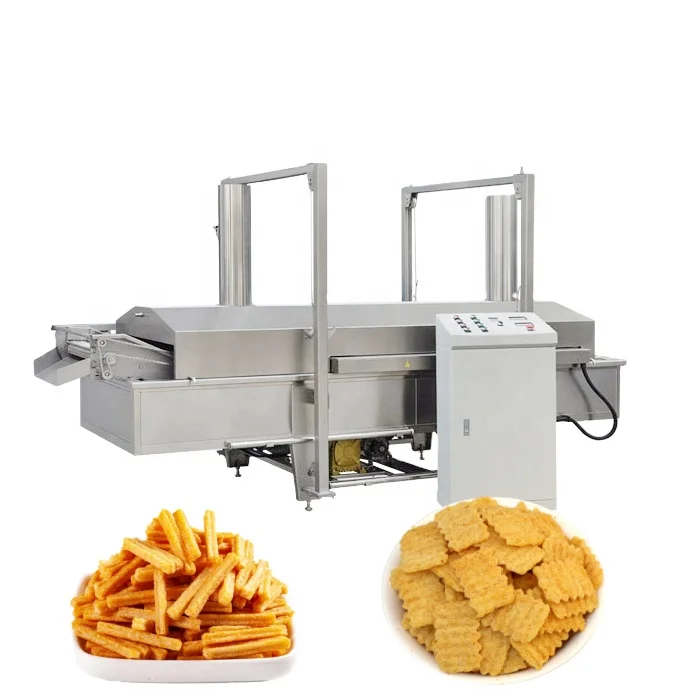
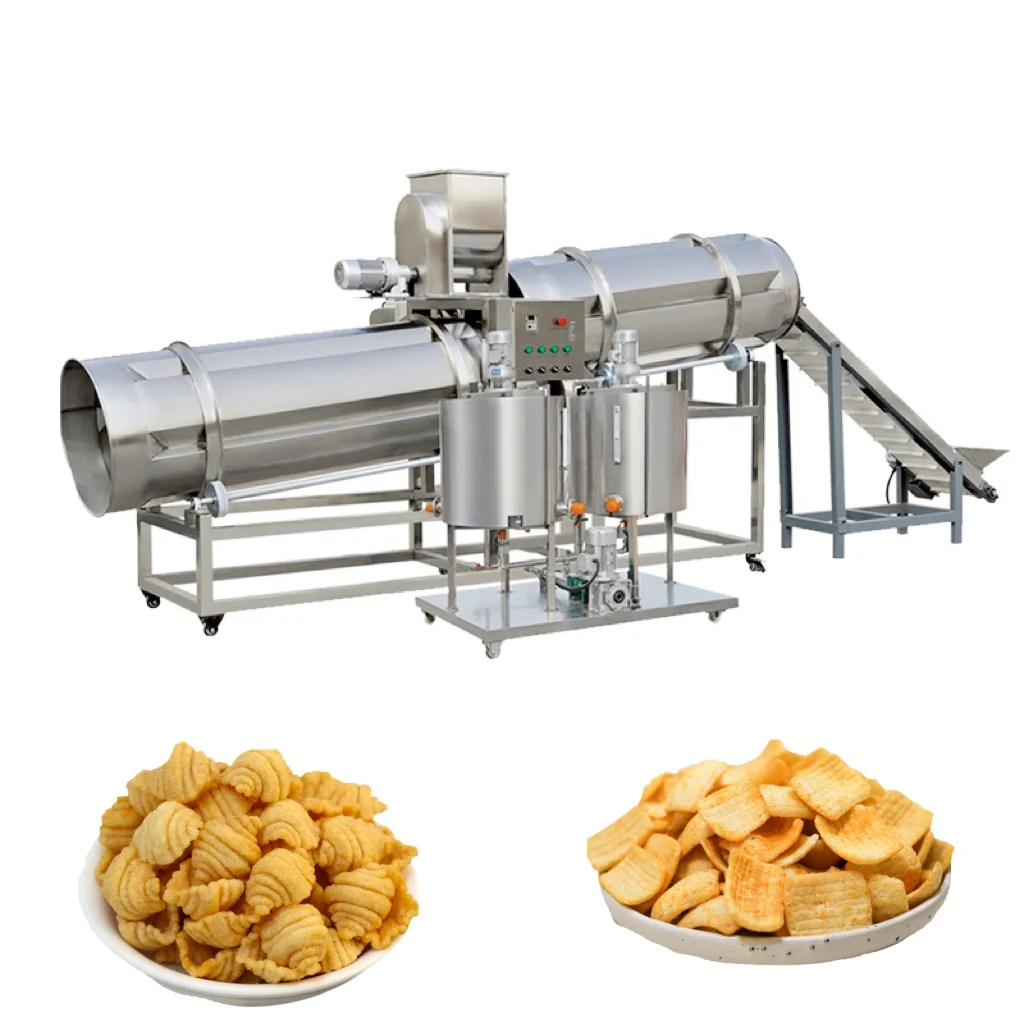
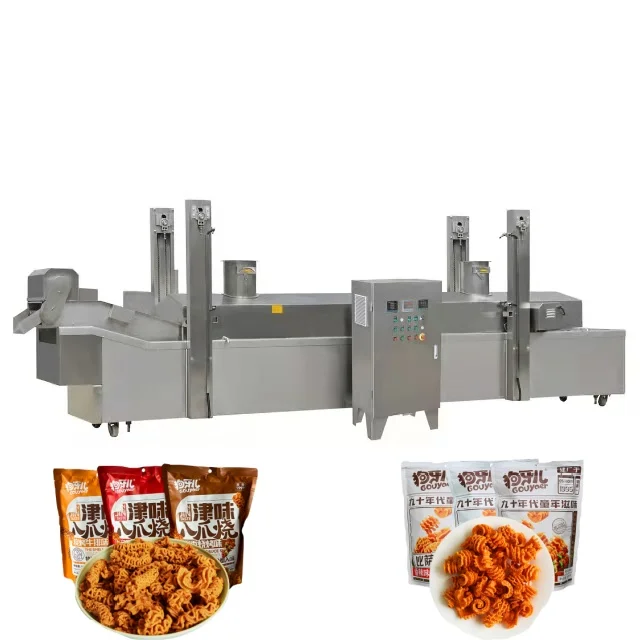
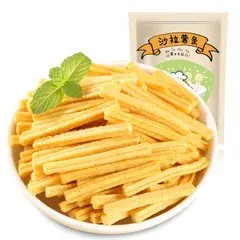
Electric Heating Fried Puffed Snack Production Line, Single Screw Extruder, Automatic Fryer — designed as one integrated turnkey project from mixing through extrusion, cutting, frying, flavouring and cooling.
- High and low pressure screw configuration expands raw material range across wheat flour, corn starch and potato starch formulations
- Adjustable die set produces screw shells, round tubes, square tubes, rings and custom cartoon shapes
- Energy options span electricity, gas, diesel and steam to match site utility availability
- 380V/50Hz three-phase standard, customizable to local voltage and frequency
Throughput at every station is matched before production, so the fryer and flavouring drum never bottleneck extruder output. In-house trial runs on buyer’s raw material validate product texture and density before shipment.
Description
Turnkey Line Sizing — every station from mixing to flavouring is throughput-matched on your raw material before a single drawing is issued.
Technical Specifications
| Parameter | Value |
|---|---|
| Product Type | Electric Heating Fried Puffed Snack Production Line |
| Extruder Type | Single Screw Extruder with high and low pressure screw |
| Output Capacity | 120 kg/h (basis not stated in source — confirm raw material formulation / moisture / target product shape) |
| Rated Power | 50–70 kW (electric heating); approximately 100 kW (full line estimate) |
| Voltage & Frequency | 380V / 50Hz (three phase); 220V / 50Hz (single phase); customizable to local voltage |
| Line Stations | Mixer → Screw Conveyor → Single Screw Extruder → Pulling and Cutting Machine → Automatic Fryer → Automatic Flavoring Line → Cooling |
| Energy Options | Electricity / Gas / Diesel / Steam |
| Die Configuration | Adjustable dies for screw shell, round tube, square tube, ring, cartoon shapes |
| Raw Materials | Wheat flour, corn starch, potato starch |
| Material | Food-grade stainless steel 201 (304 optional) |
| Overall Dimensions (L×W×H) | 12000–26000 × 1200 × 2200 mm |
| Motor & Electrical | Siemens (China-made) or China top brand motors; Delixi or Delta inverters |
| Certification | CE, ISO 9001 |
| Warranty | One year warranty with lifetime technical guidance (source value — verify against manufacturer catalog) |
Application Suitability
| Application | Material or Output |
|---|---|
| Salad sticks and breadstick-format fried snacks | Wheat flour and corn starch blends, extruded then secondary-puffed in fryer |
| Golgappa / pani puri hollow shells | Wheat flour formulations requiring thin-wall expansion and controlled oil uptake |
| Screw shell, round tube, square tube puffed snacks | Potato starch and corn starch blends with adjustable die forming |
| Ring and cartoon-shaped children’s snacks | Multi-formulation batches using quick-change die inserts |
| Fortified fried snack lines for nutrition programmes | Blends incorporating vitamin and mineral premixes into starch base |
Why Your Fryer Bottleneck Starts at the Extruder
When snack manufacturers size a fried puffed food production line turnkey package on a single number — say, the extruder’s nameplate output — they discover too late that the fryer cannot keep pace with the actual product moisture and density coming off the die. The extruder, fryer, and flavouring drum must each be calculated against the same formulation, not quoted independently.
I saw this first-hand on a salad stick project for a South American buyer. The line was planned around a nominal capacity figure, but the buyer’s corn flour was coarser than the reference formulation. Extrusion pressure climbed, the product came out denser, and frying time had to lengthen to achieve the right crunch. The fryer became the constraint, and the entire line rhythm fell apart. That project needed a full re-layout before the buyer could hit stable production [NEED_CITE: throughput matching between extrusion and downstream frying stations].
How the Single Screw Expands Your Formulation Range
The high and low pressure screw configuration inside the extruder is the first variable we set when adapting a fried puffed food production line turnkey to a new recipe. High pressure zones compress the starch melt to build internal steam, while low pressure zones allow controlled expansion before the die. Shifting the balance between these zones changes how wheat flour, corn starch, or potato starch behave under heat and shear. For a golgappa shell that must puff thin and crisp in hot oil, the screw profile favours a short residence time with rapid pressure release. For a thick-walled salad stick, the profile holds pressure longer so the extrudate emerges firm enough to survive the conveyor transfer into the fryer.
Die Selection and the Shapes Your Market Actually Buys
Adjustable dies let a single line produce screw shells, round tubes, square tubes, rings, and custom cartoon shapes without swapping the entire barrel assembly. In practice, each shape demands a different moisture target at the die face — round tubes tend to collapse if the extrudate is too wet, while rings need enough moisture to fuse at the weld line before entering the fryer. We record the die number, orifice diameter, and land length for every shape you plan to run, so the settings are documented before the line ships rather than discovered during commissioning [NEED_CITE: die geometry and product expansion relationship in single screw extrusion].
Reading the Specs That Actually Matter
The rated power band of 50–70 kW for electric heating tells you the thermal headroom available at the barrel zones, but the full line draws closer to 100 kW when the fryer and flavouring stations are running simultaneously — a detail that matters for your transformer sizing and dedicated circuit planning. The overall length of 12 to 26 metres reflects the number of stations and the conveyor distances needed for product cooling between frying and flavouring; a shorter footprint usually means the cooling conveyor has been compressed, which risks oil-soaked product reaching the seasoning drum. Food-grade stainless steel 201 is specified for structural panels and guards, with 304 available for direct product contact surfaces if your local food safety code requires it. Siemens or equivalent motors paired with Delixi or Delta inverters give you variable screw speed control, which is how operators fine-tune output when switching between a corn starch and a potato starch formulation on the same shift.
What Happens When Stations Are Mismatched
A fryer that is undersized relative to the extruder output forces operators to slow the extruder down, which changes barrel fill level and destroys the texture specification you set during the trial run. An undersized flavouring drum means the product piles up, tumbles unevenly, and leaves you with batches that have inconsistent seasoning coverage — something your quality team will flag on the first retail audit. These are not theoretical concerns; they are the most common reasons a new snack line fails its first production week [NEED_CITE: common commissioning failures on fried snack lines].
Why Buyers Source the Whole Line Here
Throughput matching across every station — extruder, fryer, flavouring drum, cooling conveyor — is calculated on your specific raw material blend, not on a generic reference formula. The in-house testing workshop runs trial batches with your actual flour and starch before the line is finalised, so die configuration and screw profile are locked to a proven result rather than guessed. Electrical schematics are confirmed to your facility voltage and frequency before production begins, eliminating the delays that happen when a 380V machine arrives at a 440V site. Energy source flexibility across electricity, gas, diesel, and steam means the fryer and dryer are specified to whatever utility is available and affordable in your region. On-site installation, commissioning, and operator training are handled by the same engineering team that designed the layout, so the people who set the parameters are the people who explain them to your shift supervisors.
Documentation & Verification
- Line layout drawing showing throughput match between extruder, fryer, and flavouring drum for your target snack shape
- Trial run report on your actual wheat flour or starch blend, recording die pressure, moisture, and fryer residence time
- Electrical schematic confirming voltage, frequency, and control language for your facility
- Screw and die configuration record listing orifice size, land length, and screw profile for every shape in your range
- CE declaration of conformity and ISO 9001 certificate covering the complete line assembly
Installation, Commissioning & Support
- Foundation plan accounts for the 12 to 26 metre line length and fryer load, with levelness tolerance for the extruder barrel
- Dedicated three-phase circuit sized to the full 100 kW estimate, with isolator placement per station
- Line arrives in modular station groups; the extruder and fryer are positioned first, then conveyors are aligned to belt height
- First production run uses the trial run parameter set as baseline, with live adjustments to screw speed and fryer temperature
- Operator training covers die changeover procedure, screw cleaning after starch-heavy batches, and inverter fault reading
- Wear parts list includes screw sections, die inserts, and fryer mesh belts with reorder part numbers
Preparing Your Inquiry
Share the raw material formulation you plan to run — wheat flour ratio, starch type, any premix additives — along with the snack shapes and target hourly output so the line can be sized from the extruder forward. Confirm your facility voltage, frequency, and preferred energy source for the fryer so the electrical package is correct before fabrication starts. If you have an existing mixing or packing station that the new line must connect to, send the interface dimensions so the conveyor heights and transfer points are designed to fit.
Frequently Asked Questions
Q: How is line capacity verified and what raw material formulation is the 120 kg/h output based on?
A: The 120 kg/h figure appears in the source specification but the raw material basis, moisture content, and target product shape are not stated. We verify actual capacity by running a trial on your specific formulation in the testing workshop before the line is finalised, so the output number you plan against comes from your own product, not a reference sheet.
Q: What voltage, frequency, and control language options are confirmed before shipment?
A: The line supports 380V/50Hz three-phase and 220V/50Hz single-phase as standard, and can be customised to your local supply. We confirm voltage, frequency, and the language for motor labels and inverter displays during the specification review stage, well before production begins, so commissioning starts without electrical rework.
Q: How is screw and die configuration specified to match my raw material and snack shape?
A: The single screw extruder uses a high and low pressure screw profile that we adjust based on your formulation’s starch type and moisture target. Die inserts are selected from the adjustable range — screw shell, round tube, square tube, ring, or custom cartoon — and the orifice diameter and land length are recorded for each shape you plan to produce.
Q: What does the trial run in the testing workshop cover before the line ships?
A: The trial run uses your actual raw material blend to extrude, cut, and fry sample batches. We record barrel temperature profile, screw speed, die pressure, product density, and fryer oil uptake. The resulting parameter set becomes the baseline for commissioning, so your first production week starts from proven settings rather than blank adjustments.
Q: How are the fryer and flavouring stations sized to avoid bottlenecking the extruder?
A: Each downstream station is calculated against the extruder’s verified output on your formulation, not against a generic nameplate figure. The fryer belt length and oil volume are set to handle the product moisture coming off the die, and the flavouring drum volume is matched to the batch weight per minute so seasoning coverage stays even at full line speed.
Related products
-
Frying Crispy 3D Corn Bugles Pellets Fried Chips Snacks Food Machine Production Line Bugles Making Extruder
¥100.00 Select options This product has multiple variants. The options may be chosen on the product page -
Fried Bugles Chips Production Line Fried Doritos Tortilla Snack Food Extruder
¥100.00 Select options This product has multiple variants. The options may be chosen on the product page -
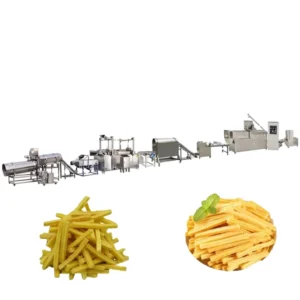
High-Yield Automated Fried Snack Production Line – Double Screw Salad Strips & Millet Crust Making Equipment
¥65.00 Select options This product has multiple variants. The options may be chosen on the product page -
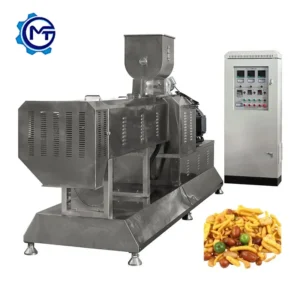
New 100-200kgh Automatic Fried Nimko Extruder Machine Food Grade Stainless Steel for High Productivity Fried Snacks Processing
¥8,575.00 Select options This product has multiple variants. The options may be chosen on the product page