

11482
Description
Integrated Frying and Extrusion Throughput — Every station in this line, from mixing to packing, is matched by capacity calculation rather than assembled from separate catalog pages, eliminating bottleneck risk.
Technical Specifications
| Parameter | Value |
|---|---|
| Product Type | Snack Food Processing Line (Extrusion & Frying) |
| Rated Power (Fryer Drive/Conveying) | 2.6 kW |
| Heating Tube Power | 60 kW |
| Voltage & Frequency | 380V / 50HZ |
| Control System | PLC |
| Heating Method | Electricity Heating / Gas Heating |
| Fryer Oil Capacity | 320 L |
| Fryer Belt Type | Upper and lower double-layer mesh belt |
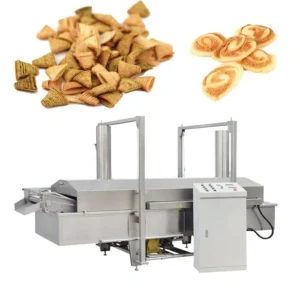
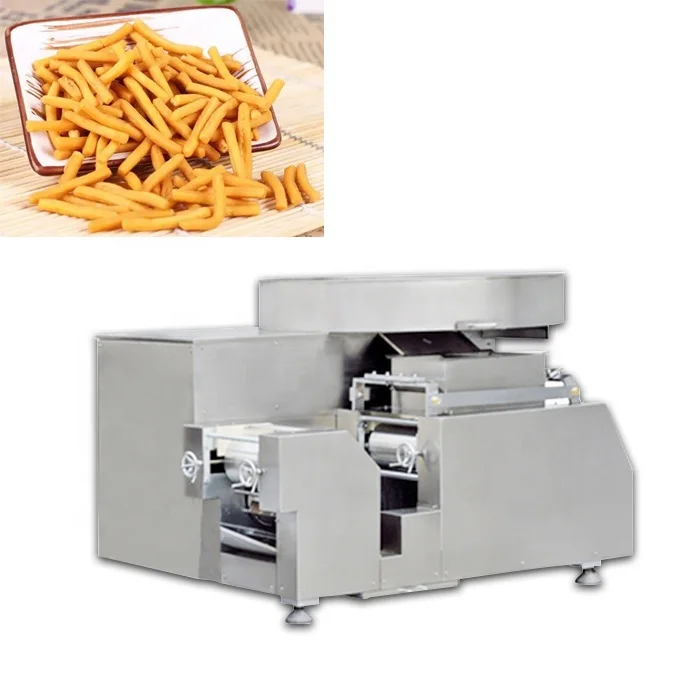
| Overall Dimensions (Frying Machine) | 6700 × 2200 × 1200 mm |
| Net Weight | 2000 KG |
| Output Capacity | 100–1000 kg/h (basis not stated in source — confirm raw material, moisture, product format) |
| Food-Contact Material | 304 Stainless Steel |
| Key Features | Automatic lifting system, bottom slag discharge, oil circulation filtration, frequency conversion stepless speed regulation |
| Standards | CE; Machinery Test Report; Video Outgoing-Inspection |
Application Suitability
| Application | Material or Output |
|---|---|
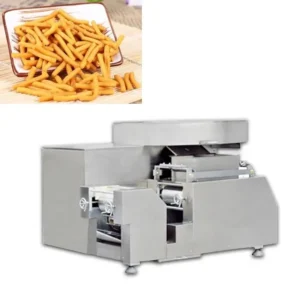
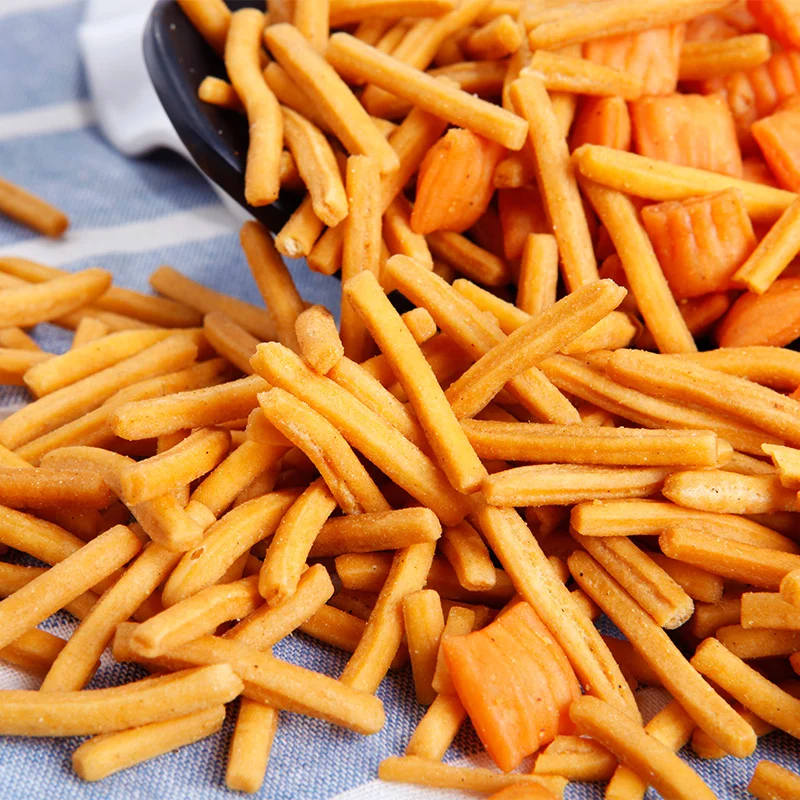
| Fried sticks and wheat flour snack formats | Wheat flour, corn grits, blended grain doughs |
| Extruded and fried pellet-based snacks | Potato starch, tapioca, corn-based pellet formulations |
| Puffed snack formats requiring post-extrusion frying | Rice flour, multigrain blends, cereal doughs |
| Fried snack production for food and beverage factories | Continuous shift operation with oil filtration demand |
What "Rated Capacity" Hides When Stations Are Sourced Separately
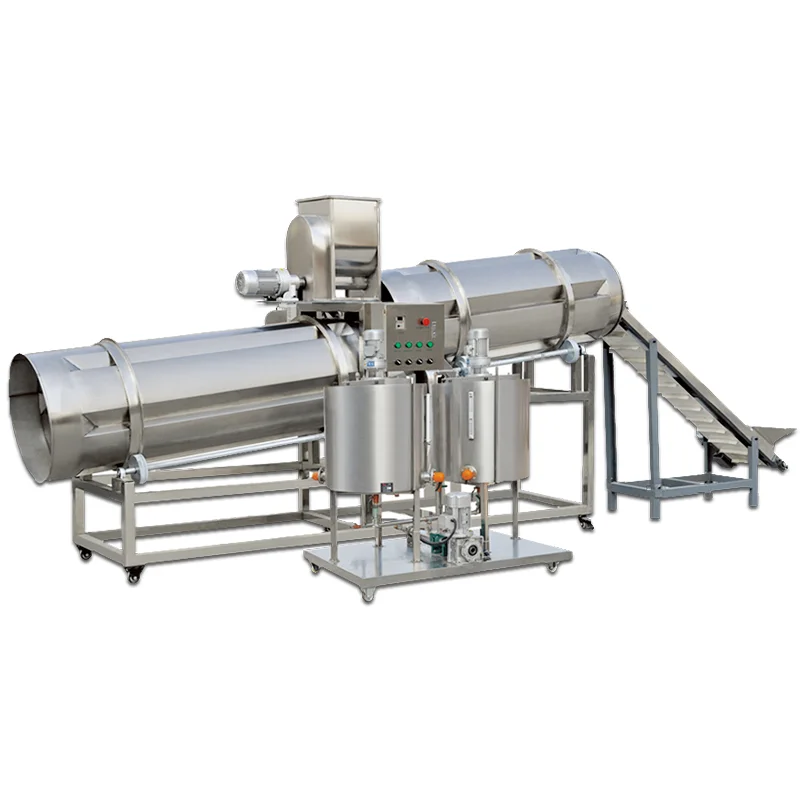
A fryer that runs faster than the extruder, or a flavouring drum that cannot keep up with the cooling conveyor, turns a high-capacity quotation into a low-capacity reality.
I walked into a snack factory outside Suzhou last year where the owner had bought each station from a different supplier. The extruder nameplate said 500 kg/h, but the fryer belt could only handle about half that volume without overlapping product. They were running the entire snack food production line turnkey at the speed of the slowest machine, paying for capacity they never saw. Mismatched throughput between stations is the single most common cause of underperforming lines, and it rarely shows up until the first production day [NEED_CITE: throughput matching in multi-station food processing lines].
Designing the Line as One System, Not a Collection of Machines
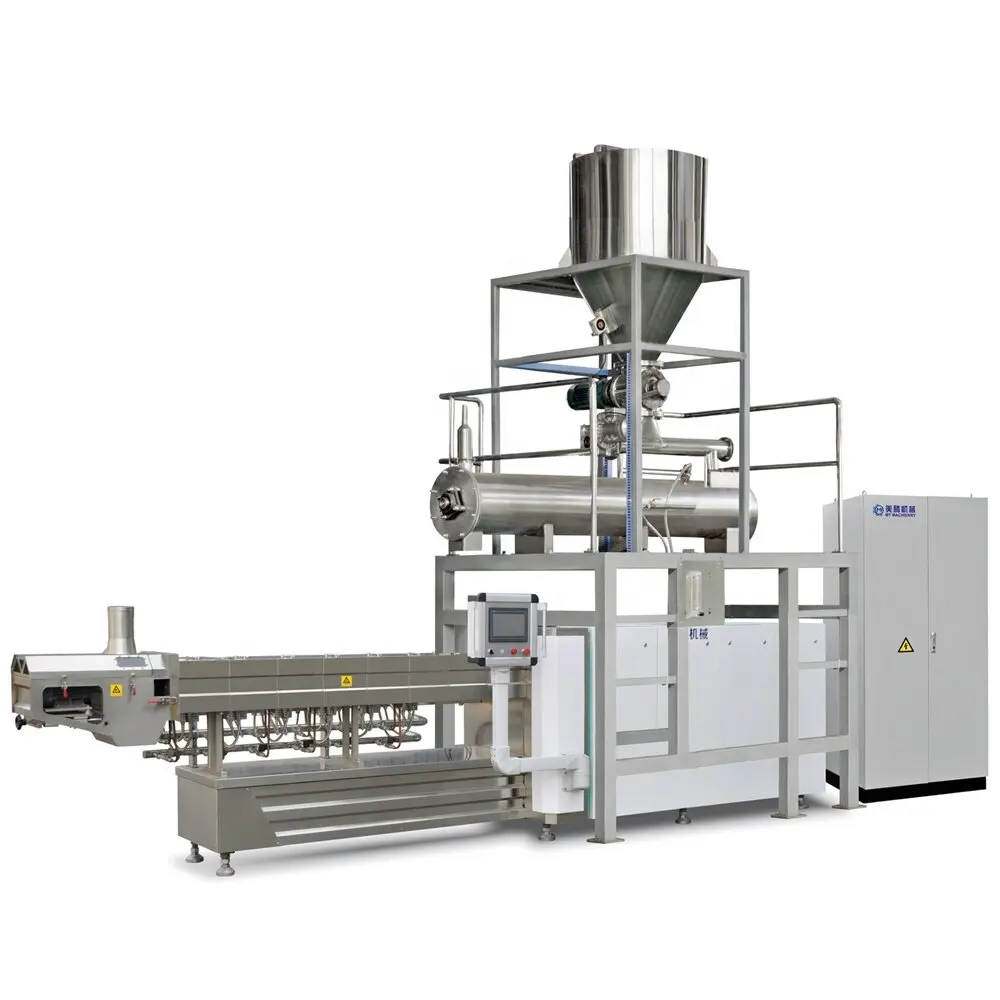
When you specify a snack food production line turnkey from a single engineering source, the extruder output, fryer belt speed, oil volume, and downstream cooling length are all calculated against the same target throughput. The PLC control architecture coordinates frequency conversion speed regulation across stations so the line ramps up and down as one unit.
This matters most during product changeovers. A shift from wheat flour fried sticks to a corn-based pellet snack changes the extrusion output rate, the required frying time, and the oil absorption characteristics. A line designed as an integrated project can accommodate those shifts through parameter adjustment rather than hardware modification [NEED_CITE: extrusion and frying process integration for snack manufacturers].
Continuous Fryer Engineering for Uniform Heat Transfer
The double-layer mesh belt holds the product below the oil surface, preventing buoyant extruded pieces from floating and receiving uneven treatment. This is critical for low-density puffed snacks that would otherwise spend half their frying cycle above the surface. The upper and lower belt arrangement keeps each piece fully submerged for a consistent duration, which directly controls final moisture content and colour.
The oil circulation filtration system continuously removes fines and sediment generated during frying. Without this, free fatty acid levels climb rapidly in a high-throughput environment, altering flavour and shortening oil service intervals. The 320 L oil capacity, combined with 60 kW heating tube power, provides sufficient thermal mass to maintain stable frying temperature even when cold product enters continuously.
Reading the Specifications That Determine Product Quality
The choice between electricity heating and gas heating affects more than utility cost. Electric heating delivers precise temperature control through the PLC, holding the oil within a narrow band that keeps colour and acrylamide formation predictable. Gas heating offers faster recovery in facilities with limited electrical infrastructure, but requires dedicated exhaust and combustion air planning in the line layout.
The frequency conversion stepless speed regulation on the fryer belt is the primary control for frying time. A wheat flour fried stick at 18 mm diameter may need a different belt speed than a thin pellet chip, because the internal moisture migration rate differs between thick and thin geometries. The PLC stores these profiles so operators can switch products without manual timing.
The 304 stainless steel construction across all food-contact stations meets hygiene expectations for snack processing and withstands the combination of hot oil, steam, and caustic cleaning agents used during wash-down cycles. This material choice affects long-term maintenance cost more than any single specification on the sheet.
When Configuration Is Copied Instead of Specified
A generic screw and die setup pushed through an extruder that was never tested on the buyer’s actual flour blend will produce product with the wrong expansion ratio. The snack arrives at the fryer too dense or too fragile, and no amount of oil temperature adjustment corrects a structural problem that originated upstream. I have seen entire production runs scrapped because the die geometry was specified for a different raw material than what the buyer’s local market supplies [NEED_CITE: extruder screw and die configuration impact on snack texture].
When the fryer capacity is not matched to the extruder output, product piles up at the fryer infeed. Pieces overlap on the belt, some receive insufficient frying time, and the final moisture content varies across the batch. This inconsistency shows up in the packing hall as weight variation and in the market as shelf-life complaints.
Why Procurement Through One Supplier Changes the Outcome
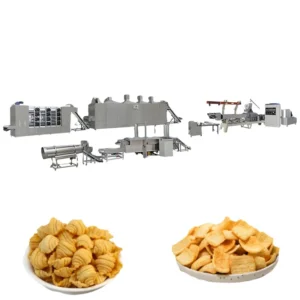
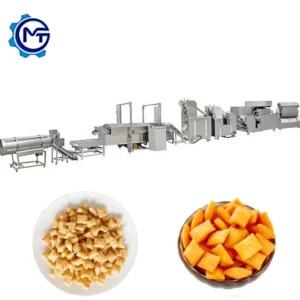
Every station in this line — mixing, extrusion, frying, flavouring, cooling, packing — is laid out by the same engineering team that calculates throughput. The fryer belt width, oil volume, and filtration rate are sized to match the extruder’s actual output on the specified raw material, not a nameplate figure.
An in-house testing workshop runs trial production on the buyer’s flour blend or starch formulation before the line ships. Screw configuration, die selection, and fryer temperature profiles are recorded in a trial run report, so commissioning at the buyer’s facility starts from validated parameters rather than from scratch.
The electrical schematic confirms voltage, frequency, and PLC language to the target market before fabrication begins. This prevents the costly delay of rewiring or reprogramming a control cabinet that arrived configured for a different grid standard [NEED_CITE: voltage and frequency confirmation in food machinery export].
Food-grade 304 stainless steel is used throughout all contact surfaces, and the CE declaration of conformity accompanies the shipment documentation.
Documentation & Verification
- Line layout drawing with throughput calculation across mixing, extrusion, frying, and packing stations
- Trial run report recording fryer temperature, belt speed, and product density on your raw material
- Screw and die configuration record matched to your target snack format and expansion ratio
- Electrical schematic confirming voltage, frequency, and PLC control language for your facility
- CE declaration of conformity and machinery test report for customs and compliance clearance
- Packing photographs and container loading plan for shipment verification
Installation, Commissioning & Support
- Foundation planning accounts for the 6700 mm fryer length and 2000 KG line weight across stations
- Dedicated 380V / 50HZ circuit with capacity for the 60 kW heating tubes plus drive motors
- Fryer ships with oil circulation system pre-assembled; on-site connection to exhaust and utility points
- First production run validates PLC parameters against trial run report on your actual raw material
- Operator training covers belt speed adjustment, oil filtration maintenance, and product changeover procedure
- Wear parts list specifies mesh belt, screw, die, and heating tube replacements with sourcing guidance
- Preventive maintenance schedule addresses oil system flush intervals and drive component inspection
What We Need to Move Forward
To configure this snack food production line turnkey for your product, share the raw material specification you will run, the target snack format and dimensions, and your daily output target. Include the available floor space and ceiling height so the layout can be planned around existing structures. Confirm the local voltage and frequency at your facility, and let us know if you want to send a sample of your flour or starch blend for a trial run in the testing workshop before the line enters fabrication.
Frequently Asked Questions
Q: How is line throughput calculated and matched across extrusion, frying, and packing stations?
A: Each station is sized against the same target output based on your raw material and product format. The extruder screw speed determines upstream volume; the fryer belt width and speed are set so product arrives in a single layer without overlap; the cooling conveyor length allows adequate residence time before packing. The capacity calculation document shows the matched figure at every station.
Q: Can a trial run be performed on our raw material before shipment?
A: Yes. Send a sample of your flour blend or starch formulation to the testing workshop. The engineering team runs the extruder and fryer on that material, recording screw configuration, die selection, frying temperature, and belt speed. A trial run report with product samples and validated parameters is included with the shipment, so commissioning starts from a proven baseline.
Q: What is the phased installation and commissioning schedule for a complete line?
A: The line arrives in sections matching the container loading plan. Mechanical installation proceeds station by station — extruder first, then fryer, then downstream equipment — with utility connections between each phase. Electrical commissioning follows, then wet testing with water, then the first production run on your material. Operator training runs concurrently with production validation.
Q: How are voltage, frequency, and PLC control language confirmed for our target market?
A: During the specification confirmation stage, you provide the local grid standard and preferred control language. The electrical schematic is reviewed and signed off before fabrication. The PLC program, HMI interface, and all motor drives are configured to match, preventing rewiring or reprogramming delays when the line arrives at your facility.
Q: What spare wear parts are included, and how are replacements supplied?
A: The initial spare package typically covers screws, dies, and mesh belt sections identified as wear items in the parts list. Each part is catalogued with dimensions and material specification so replacements can be sourced locally or supplied from the factory. The documentation includes recommended replacement intervals based on the trial run data for your specific raw material.
Related products
-
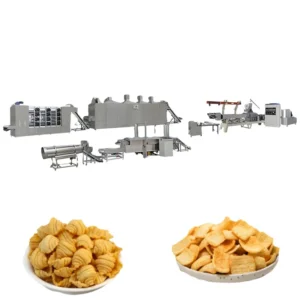
Automatic Fried Crispy Bugles Snacks Food Making Machines Wheat Flour Sala Food Extruder
¥100.00 Select options This product has multiple variants. The options may be chosen on the product page -
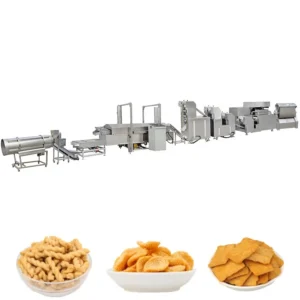
Electric Heating Fried Puffed Food Production Line – Salad Sticks Making Equipment
¥65.00 Select options This product has multiple variants. The options may be chosen on the product page -
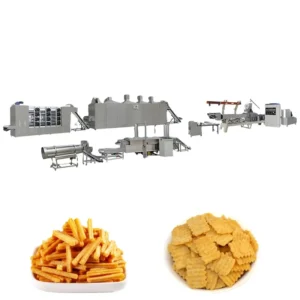
Fried Bugles Chips Production Line Fried Doritos Tortilla Snack Food Extruder
¥100.00 Select options This product has multiple variants. The options may be chosen on the product page -
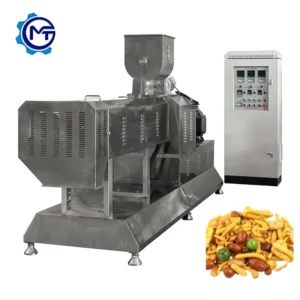
New Automatic Traditional Fried Nimko Making Machine High Productivity Large Capacity Stainless Steel Production Line
¥8,575.00 Select options This product has multiple variants. The options may be chosen on the product page