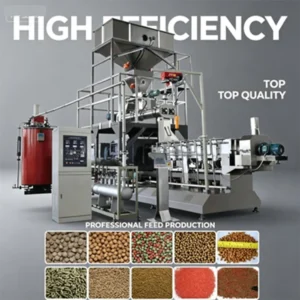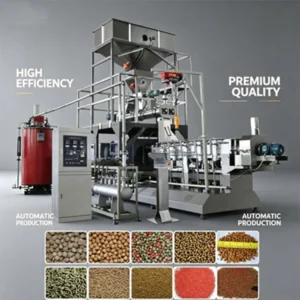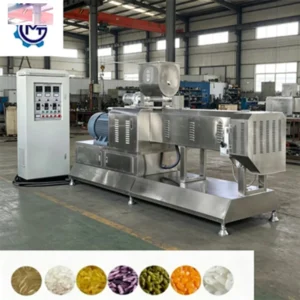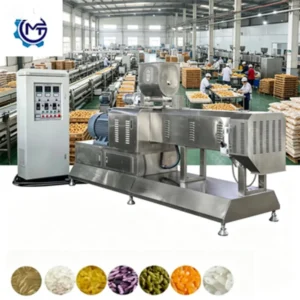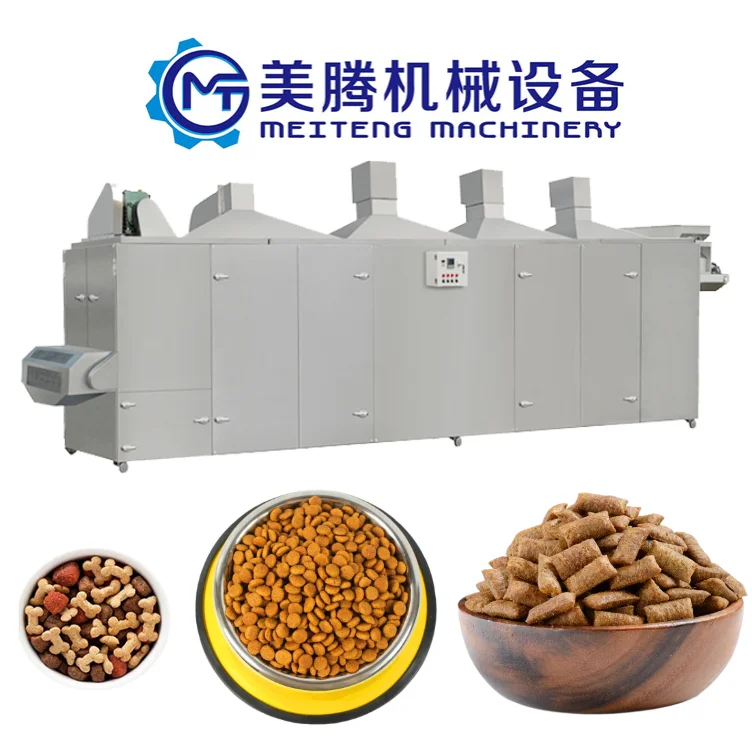


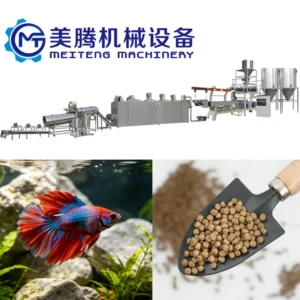
MT85 Multi-Purpose Pet Food Production Line, 500 kg/h Output, 45 kW Twin-Screw Extruder, PLC & MCC Control — engineered as a turnkey project with throughput balanced at every station from mixing through extrusion, drying, and packaging. Screw configuration and die design are matched to your raw material formulation, ensuring consistent kibble density and texture across dry, semi-moist, and treat formats on a single platform.
- Complete line from batching to packing under one supplier, eliminating bottleneck risk between stations
- In-house trial runs on your raw material before shipment, validating product specs before installation begins
Description
Throughput-Matched Engineering — Every station on the MT85 pet food production line is sized to the extruder’s actual output, eliminating the dryer and packaging bottlenecks that plague lines assembled from separate vendors.
Technical Specifications
| Parameter | Value |
|---|---|
| Model | MT85 |
| Product Type | Multi-Purpose Pet Food Processing Line |
| Output Capacity | 500 kg/h (basis to be confirmed — depends on raw material formulation and moisture content) |
| Rated Power | 45 kW |
| Voltage & Frequency | 380V 50Hz Three Phase (configurable for destination market) |
| Screw Type | Twin-screw |
| Control System | PLC & MCC |
| Line Stations | Mixing, extrusion, drying, packaging |
| Material Contact | Food-grade stainless steel |
| Assembly State | Complete turnkey production line |
| Standards | CE, FDA (verify certificate validity and scope) |
Application Suitability
| Application | Material or Output |
|---|---|
| Dry kibble for dogs and cats | Corn, meat meal, bone meal, grain blends at varying protein ratios |
| Bird feed pellets | Millet, sorghum, seed mixes with vitamin premix |
| Floating and sinking aquatic feed | Fish meal, soy protein, starch binders for catfish and tilapia |
| Semi-moist pet food | High-moisture meat and glycerin formulations |
| Pet treats and bite-size snacks | Flavor-intensive doughs with fat and seasoning inclusions |
What "500 kg/h" Leaves Out About Your Pet Food Production Line Turnkey
Capacity is only meaningful when tied to the exact raw material formulation you will run.
I once watched a Middle East customer take delivery of a line quoted at nominal capacity, only to discover their bone-meal-heavy recipe produced a dense, under-expanded kibble that dragged actual throughput down considerably. The extruder ran fine; the problem was the mismatch between what was promised and what their specific recipe could physically deliver. That experience reshaped how I approach every pet food production line turnkey inquiry — the first question is always about the recipe, not the output target [NEED_CITE: raw material moisture and protein content effect on extrusion expansion].
Layout and Throughput Balance Across Stations
The MT85 is configured as a single coordinated pet food production line turnkey project rather than a collection of standalone machines. The mixer batch size matches the extruder’s hourly consumption rate, the dryer belt length and residence time align with the moisture removal required at full output, and the packaging station is rated to handle the finished product flow without queuing. This throughput matching prevents the most common line-level failure: a bottleneck at one station that silently caps the entire system.
Screw Configuration and Die Design Per Recipe
Every MT85 build starts with the buyer’s raw material profile and target kibble density. The twin-screw arrangement, screw element sequence, and die plate geometry are specified together — not copied from a generic template. A high-probone-meal recipe requires different shear and residence time than a corn-dominant formulation, and the screw configuration reflects that difference. The die opening diameter and face pattern are then matched to the expansion behavior the material exhibits during trial runs [NEED_CITE: twin-screw element arrangement and its effect on starch gelatinisation].
Power, Voltage, and Control Logic on the Shop Floor
The 45 kW main drive provides the torque margin needed for dense, high-protein recipes that resist conveyance through the barrel. The 380V 50Hz three-phase supply is the standard configuration, but voltage and frequency must be confirmed against the destination facility’s electrical infrastructure before production begins — a mismatch here delays commissioning by weeks. The PLC and MCC control system manages barrel temperature zones, screw speed, feeder rate, and dryer parameters from a single interface, maintaining batch-to-batch consistency across long production runs. Operator language and HMI labeling are set to the buyer’s preference before the panel is wired.
The Cost of Skipping the Trial Run
Buyers who approve a screw and die configuration on paper alone often face weeks of adjustment after installation. The wrong screw element sequence can leave kibble too dense for the target market or too fragile for packaging and transport. Without a pre-shipment trial on the actual raw material, the first production run becomes an expensive experiment — raw material is wasted, downstream equipment is stressed, and the commissioning timeline stretches well past the plan [NEED_CITE: pre-shipment factory trial run practices for food extrusion lines].
Why Source the Full Line from One Supplier
The MT85 arrives as a coordinated system, not a pile of machines from different factories that the buyer must integrate alone. Throughput is calculated across every station before the layout is drawn, so the dryer and packaging units are not undersized relative to the extruder. The screw and die record is built around the buyer’s specific recipe and documented before metal is cut. Electrical schematics confirm voltage, frequency, and control language for the destination country before the panel is assembled. An in-house testing workshop allows trial runs on the buyer’s raw material before the line is crated, catching formulation issues at the factory rather than on the customer’s floor. The installation team handles mechanical assembly, utility connection, and operator training as a single commissioning schedule.
Documentation & Verification
- Line layout drawing with throughput calculation per station for the MT85 configuration
- Screw element sequence and die plate record matched to your raw material formulation
- Factory trial run report on your recipe documenting actual expansion and density
- Electrical schematic confirming voltage, frequency, and HMI language for your facility
- CE declaration of conformity covering the complete line assembly
- Wear parts list with screw and die replacement intervals for your recipe type
Installation, Commissioning & Support
- Foundation and floor loading plan scaled to the MT85 line footprint and dryer weight
- Dedicated circuit specification for the 45 kW main drive and drying oven heating elements
- Modular shipment configuration allowing container-by-container arrival and phased assembly
- First-run parameter setting on your raw material during on-site commissioning
- Operator training covering PLC interface navigation, screw changeover, and emergency stop logic
- Spare screw elements and die plates supplied with the initial shipment based on your recipe wear profile
Preparing Your Inquiry
To move forward on the MT85, share your target kibble format, raw material recipe with approximate protein and moisture ranges, and daily production target. Include your facility’s available floor space, ceiling height, and local voltage and frequency so the layout and electrical package can be sized correctly from the start. If you have existing upstream milling or downstream packaging equipment, note the interface points so the line can be integrated without gaps.
Frequently Asked Questions
Q: How is the 500 kg/h capacity verified, and what raw material formulation is it based on?
A: The 500 kg/h figure is a nominal rating that must be validated against your specific recipe. We run your raw material in our testing workshop and document the actual throughput, expansion ratio, and kibble density in a trial report before the contract is finalized. Capacity varies with protein content, fat ratio, and moisture level.
Q: How do you ensure throughput is balanced between extruder, dryer, and packaging stations?
A: Each station is sized during the layout phase based on the extruder’s verified output on your recipe. The dryer belt length, airflow, and residence time are calculated to remove the required moisture at full rate, and the packaging station is selected to handle the finished flow without accumulation.
Q: What voltage and frequency options are available for different target markets?
A: The standard configuration is 380V 50Hz three-phase, but the drive and heating circuits can be built for other industrial voltages. We confirm your facility’s exact supply before the electrical panel is wired to avoid commissioning delays on site.
Q: Can the screw and die configuration be customized to our specific raw material and kibble density target?
A: Yes. The twin-screw element sequence, barrel temperature profile, and die geometry are all specified to your recipe and target product. We document the configuration and verify it during the pre-shipment trial run on your actual raw material.
Q: What does the phased installation and commissioning schedule look like for a complete turnkey line?
A: The MT85 ships in modular sections. Installation begins with mechanical placement and utility connection, followed by cold testing, then hot runs with your raw material. Operator training runs in parallel with the final commissioning phase, and the schedule is agreed before shipment.
Related products
-
MT100 Brand 1.5-2.0t/h PLC Controlled Multi-Species Cat Food Processing Line
¥45,000.00 Select options This product has multiple variants. The options may be chosen on the product page -
MT85 500kg/h Multi-Purpose Pet Food Processing Line for Dogs Cats Birds Fish & More-380V 50Hz Three Phase 45KW
¥65,000.00 Select options This product has multiple variants. The options may be chosen on the product page -
250-300kg/h Capacity PLC Controlled Multi-Species Cat Food Processing Line
¥35,000.00 Select options This product has multiple variants. The options may be chosen on the product page -
1.0-1.2t/h High Capacity Multi-Species Fish Feed Processing Line to Produce Fish Food
¥45,000.00 Select options This product has multiple variants. The options may be chosen on the product page