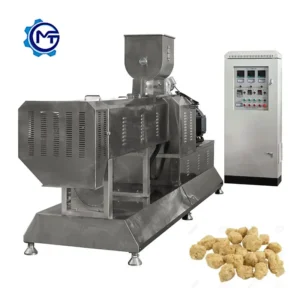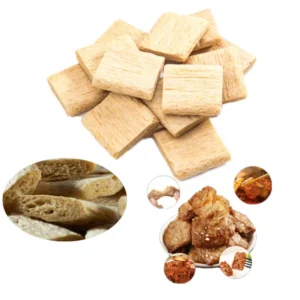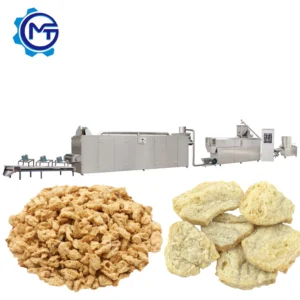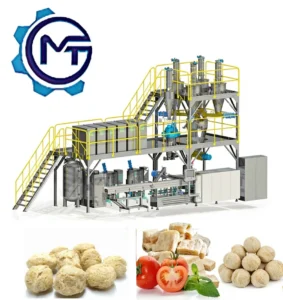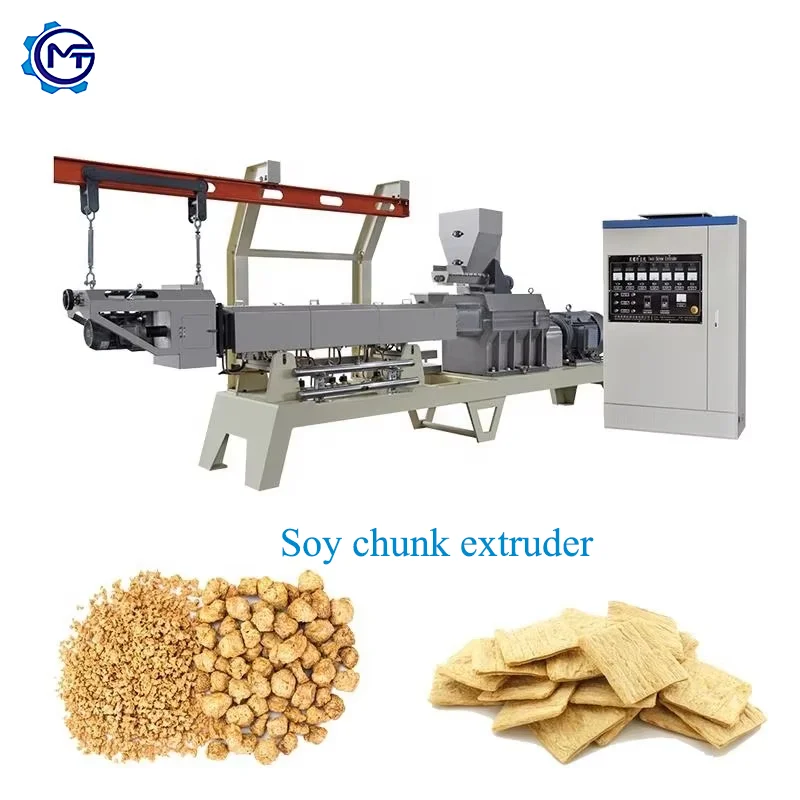

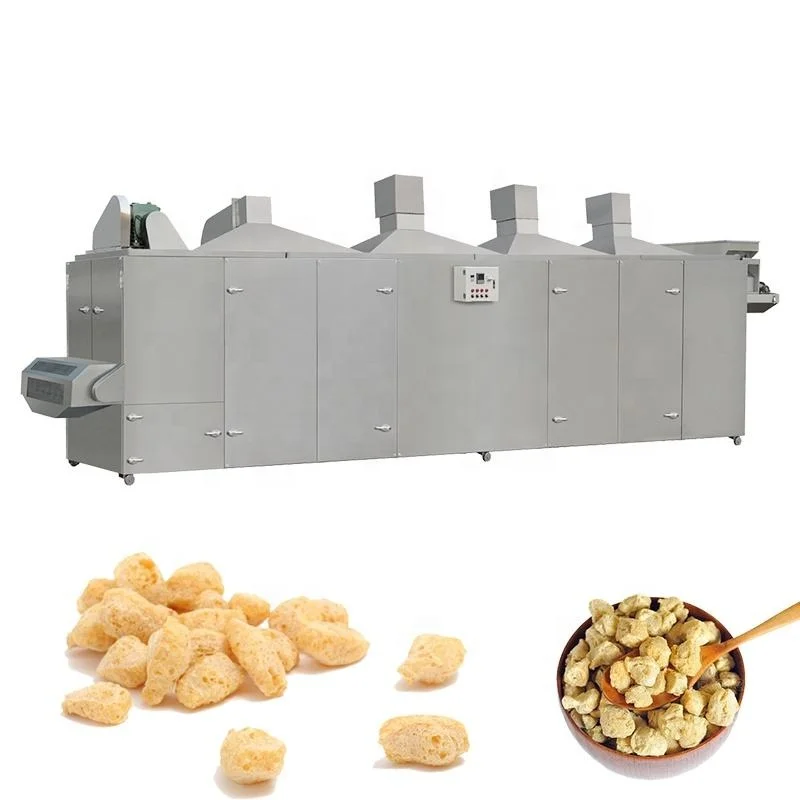


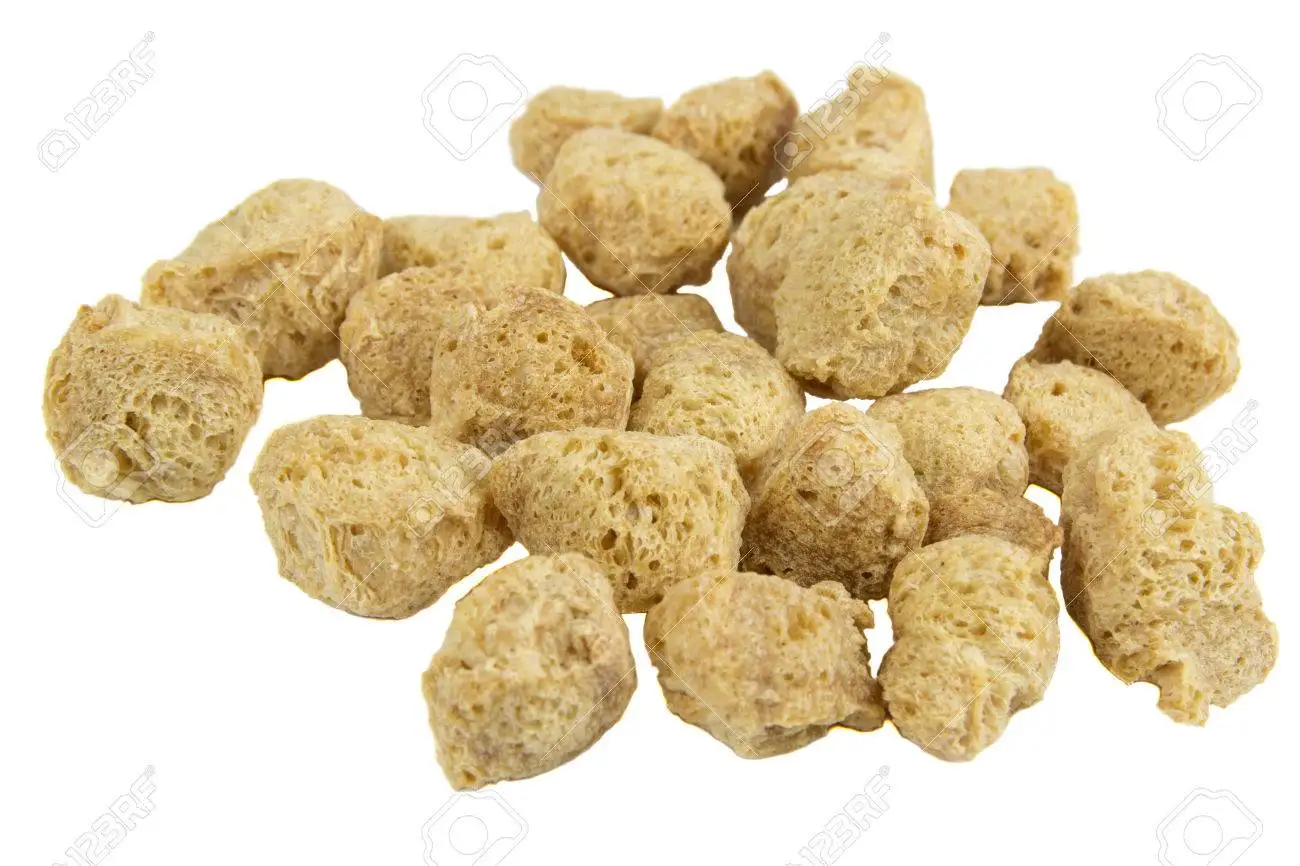
MT65 / MT70 / MT85 Textured Vegetable Protein Extrusion Production Line, Twin-Screw, CE Certified — engineered for plant-based meat processing from batching to packing.
- Screw configuration and die design matched to your soybean meal or peanut meal formulation, controlling fiber structure and expansion density through precise barrel temperature and moisture profiles.
- Three capacity tiers available with complete line throughput matching across mixing, extrusion, drying, cooling and packing stations.
Backed by in-house trial runs on your raw material before shipment, line layout documentation, and on-site commissioning support.
Description
Throughput matched at every station — the TVP extrusion line is engineered as a single integrated system from batching through packing, so extruder output, dryer belt speed and cooler capacity are calculated together against your specific soybean or peanut meal formulation rather than assembled from standalone catalog units.
Technical Specifications
| Parameter | Value |
|---|---|
| Product Type | Textured Vegetable Protein (TVP) Extrusion Production Line |
| Model Options | MT65 / MT70 / MT85 |
| Installed Power | MT65: 85 kW; MT70: 120 kW; MT85: 195 kW |
| Actual Power Consumption | MT65: 65 kW; MT70: 90 kW; MT85: 165 kW |
| Output Capacity | MT65: 150–200 kg/h (basis to be confirmed); MT70: 200–300 kg/h (basis to be confirmed); MT85: 600–800 kg/h (basis to be confirmed) |
| Extruder Type | Twin-screw |
| Main Motor Power | 30 kW (extruder detail block) |
| Overall Dimensions (L×W×H) | MT65: 18000×1300×2300 mm; MT70: 20000×1500×2400 mm; MT85: 24000×3500×4300 mm |
| Mixer Capacity | 150 kg tank, 10 min per batch cycle |
| Mixer Rotary Speed | 385 rpm |
| Mixer Power | 4 kW |
| Dryer Type | High-temperature roaster (far infrared / gas) |
| Dryer Effective Belt Length | 3.5 m |
| Dryer Heater Array | 3.9 kW × 24 far infrared units |
| Cooling Machine Capacity | 200–300 kg/h (basis to be confirmed) |
| Control System | Available with PLC or MCC control |
| Voltage & Frequency | Configurable to target market |
| Material | Stainless steel (food-grade contact parts) |
| Certification | CE, ISO |
| Warranty | 1 year complete line |
Application Suitability
| Application | Material or Output |
|---|---|
| Soybean meat for ham and sausage processing | Low-temperature soybean meal |
| Vegetarian canned food ingredients | Defatted soy flour and protein isolate blends |
| Plant-based protein for quick-frozen meals | Peanut meal and soy composite formulations |
| Fast food patty and nugget base material | Textured soy protein chunks and granules |
| Fortified protein supplements | Multi-grain protein blends with adjustable fiber structure |
Why Nominal Capacity Numbers Mean Nothing Without Your Raw Material
A textured vegetable protein production line turnkey rated at 800 kg/h on standard soy flour may produce far less when you switch to the defatted peanut meal available in your local market.
I spent over two weeks on-site in West Africa watching a TVP line fail to produce acceptable fiber structure because the client’s actual raw material was脱脂花生粕 rather than the standard soybean meal used during factory trials. The screw combination and barrel temperature profile had to be completely reworked. That is the gap between a quoted capacity and a real working line. When you evaluate a textured vegetable protein production line turnkey, the first question should never be about the brochure number — it should be about what happens when your specific formulation enters the barrel. [NEED_CITE: raw material variability in plant protein extrusion]
Screw Geometry That Dictates Fiber Formation
The twin-screw configuration on the MT65, MT70 and MT85 series is not a generic build. Screw element sequencing — the ratio of conveying flights to kneading blocks to reverse elements — determines the shear history the protein experiences inside the barrel. For soybean meal targeting a meat-like fiber structure, the kneading zone must generate enough mechanical energy to denature and realign the protein chains without overheating and destroying the matrix. This textured vegetable protein production line turnkey is specified with screw and die combinations matched to your raw material test results, not copied from a default template.
Barrel Temperature Zones and Protein Denaturation Control
The barrel is divided into independently controlled heating zones, each governing a different stage of the protein transformation. Early zones handle moisture equilibration and initial protein unfolding, while downstream zones control the degree of cross-linking that determines whether the final TVP product has a fibrous, layered, or granular texture. Getting these zones wrong on a high-protein formulation like defatted peanut meal can collapse the fiber structure entirely. The in-house testing workshop allows these parameters to be locked in before the machine leaves the factory. [NEED_CITE: protein denaturation temperature ranges in extrusion processing]
What the Power and Dimension Figures Actually Tell You
The installed versus actual power gap — for example, 195 kW installed against 165 kW real consumption on the MT85 — reflects the difference between peak motor rating and steady-state thermal load during continuous extrusion. The MT85’s 24,000 mm line length accommodates the longer dryer and cooling conveyors needed to bring high-moisture extrudate down to stable storage conditions without case hardening the surface. The mixer’s 10-minute batch cycle at 385 rpm is sized to keep pace with the extruder’s continuous feed demand, preventing starvation or surge loading that would disrupt fiber consistency.
The Hidden Cost of Mismatched Station Throughput
When the extruder delivers more wet extrudate than the dryer belt can handle at the required residence time, product piles up, surface moisture stays too high, and microbial stability is compromised before packing. Conversely, an oversized dryer running half-empty wastes thermal energy and increases per-kilogram production cost. These bottlenecks are invisible in a line assembled from separate vendor quotes where each station is specified in isolation. [NEED_CITE: throughput imbalance consequences in continuous food processing lines]
Why Procurement Should Consolidate Under One Line Builder
The line layout and capacity calculation is produced as a single document covering every station from raw material intake to final packing, not as separate supplier quotations stapled together. Screw and die configuration is recorded against your specific formulation trial, so replacement parts can be reordered without repeating the development process. Voltage and frequency are confirmed against your facility’s supply before production begins, preventing the commissioning delays that occur when a 380V machine arrives at a 415V site. The in-house testing workshop runs your actual raw material before shipment, producing a trial report you can review before accepting delivery. Operator training covers the specific screw combination and temperature profile established during that trial, not a generic startup procedure.
Documentation & Verification
- Line layout drawing showing throughput calculation at each station matched to your TVP formulation
- Screw and die configuration record tied to your soybean or peanut meal trial results
- Factory trial run report on your raw material conducted before dispatch
- Electrical schematic with confirmed voltage, frequency and control language for your facility
- CE declaration of conformity and ISO certificate for customs and regulatory clearance
- Wear parts list with reorder codes for screws, dies and barrel liners
Installation, Commissioning & Support
- Foundation plan provided based on the MT65/70/85 overall dimensions and dynamic load points
- Dedicated circuit sizing calculated from actual power draw, not installed peak ratings
- Line arrives in modular sections for phased assembly within your facility’s access constraints
- First production run supervised on-site using parameters locked during factory trial
- Operator training covers screw change procedures and barrel temperature adjustment for formulation shifts
- Spare screw elements and die plates shipped with initial order to cover first replacement cycle
Before You Request a Quote
To configure the right line, we need your target raw material specification including protein content and moisture level, your intended TVP product format such as chunks, granules or slices, and your daily production target. Please also confirm your facility’s available voltage and frequency, the control panel language preference, and whether you require a trial run on your material before shipment.
Frequently Asked Questions
Q: How is line capacity verified on my specific soybean meal formulation and moisture level?
A: Your raw material is run through our in-house testing workshop before shipment. The trial records actual throughput, fiber structure quality and moisture profile at each station. These results form the basis of the capacity figure in your line specification document, not a generic catalog rating.
Q: How do you match throughput between the extruder, dryer and cooling stations?
A: Each station is sized against the wet extrudate output from your specific formulation. Dryer belt length, air temperature and residence time are calculated so the extruder’s continuous output is fully absorbed without accumulation or starvation at any transfer point along the line.
Q: What screw and die configuration will be used for my target TVP fiber structure?
A: The screw element sequence and die geometry are selected based on your raw material’s protein content and the fiber density your end product requires. The configuration is documented and tested during the pre-shipment trial so it can be replicated or adjusted when you scale production.
Q: Can a trial run be performed on my raw material before shipment?
A: Yes. The trial is conducted in the testing workshop using your supplied raw material. The report covers throughput rate, product texture and density, moisture content at extruder exit and dryer exit, and the confirmed screw and die configuration for your review before the line is packed.
Q: How is the commissioning schedule structured for a complete turnkey TVP line?
A: Installation follows a phased sequence from upstream mixing through extrusion to downstream drying and packing. Our engineer remains on-site through first stable production, verifying that each station’s parameters match the factory trial results and training your operators on the specific configuration established for your formulation.
Related products
-
CE Certified Vegetarian Meat Processing Machine
¥9,500.00 Select options This product has multiple variants. The options may be chosen on the product page -
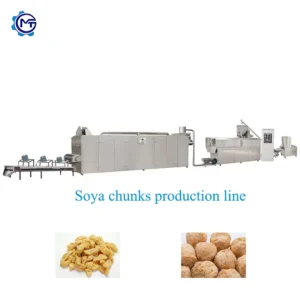
Soybean Protein Making Machine Automatic Soy Chunk Production Line
¥30.00 Select options This product has multiple variants. The options may be chosen on the product page -
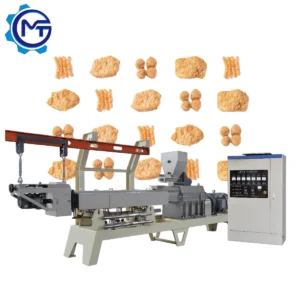
Textured Soy Protein Production Line for Vegetarian Meat Nugget Manufacturing
¥8,238.27 Select options This product has multiple variants. The options may be chosen on the product page -
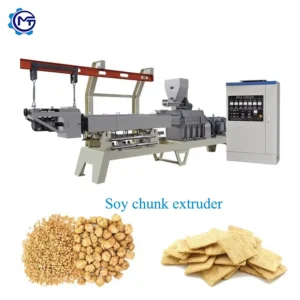
Textured Soybean Protein Extruder Plant Protein Processing Production Line TVP Making Machine
¥30.00 Select options This product has multiple variants. The options may be chosen on the product page