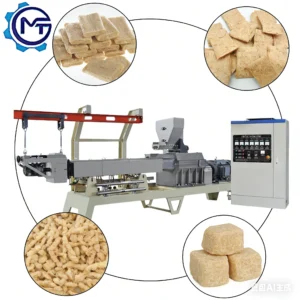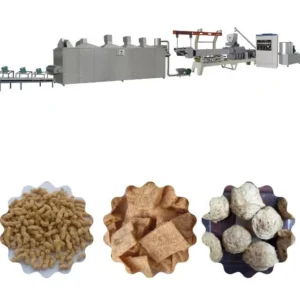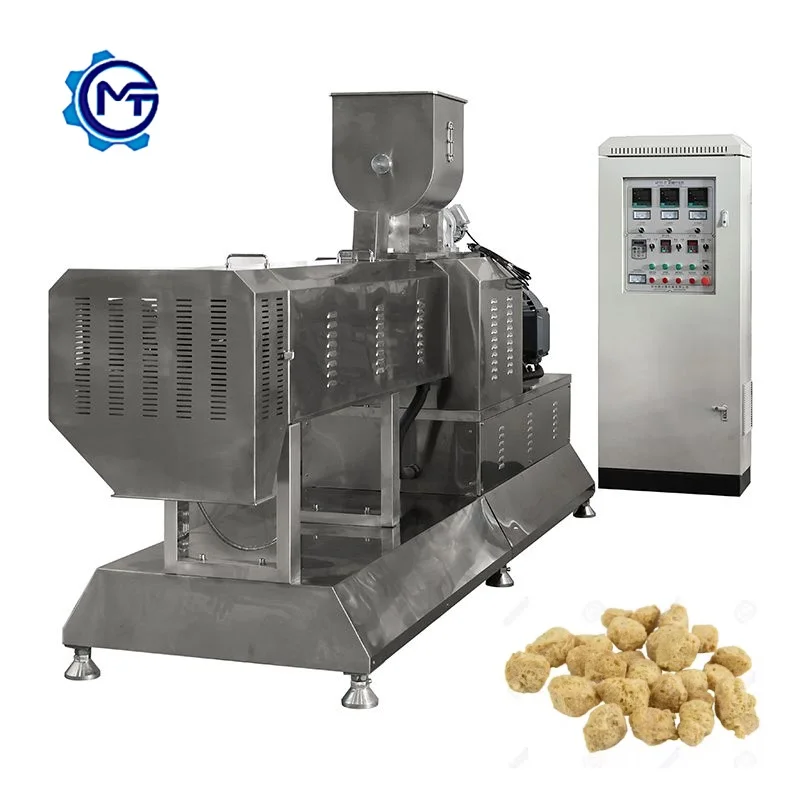
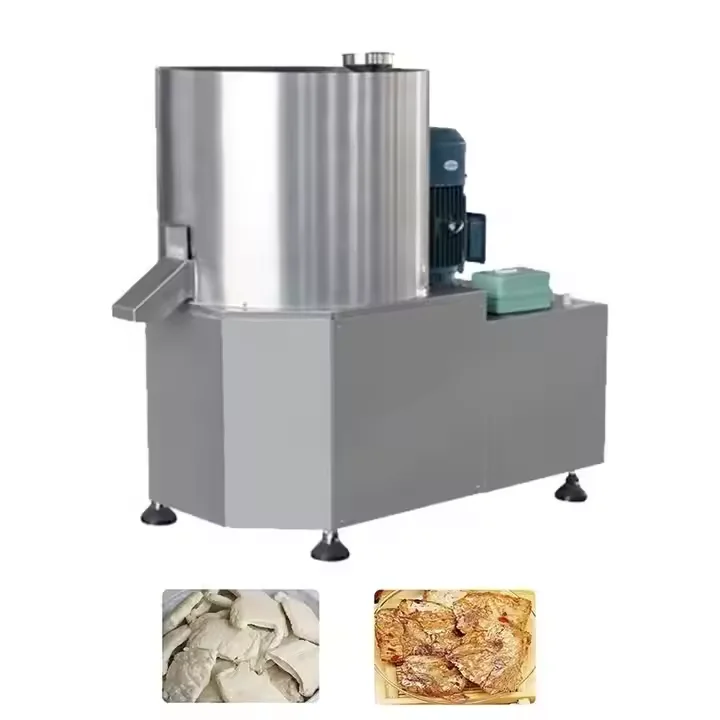
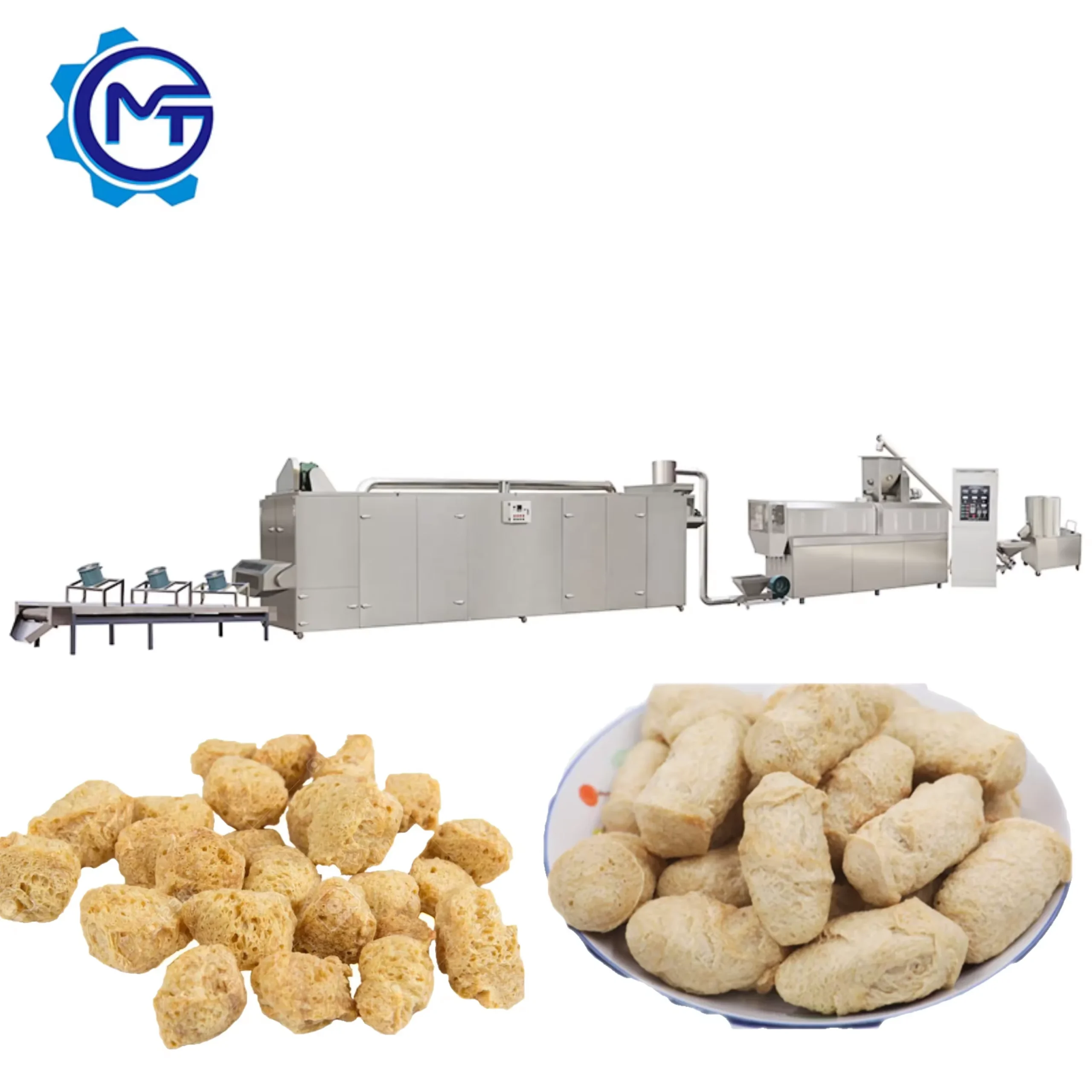
MT65 / MT70 / MT75 / MT85 Texturized Soy Protein Production Line, Twin Screw, PLC Control — complete turnkey line from batching to cooling.
Screw configuration and die design are specified to your raw material — defatted soya flour or low-temperature flakes — targeting the exact fiber structure for soya nuggets, TVP or soya chunks. Multi-layer dryer heating source is buyer-selectable, with throughput matched across every station.
-
In-house trial runs on your raw material before shipment
-
Line layout and capacity calculation provided per project
-
On-site installation, commissioning and operator training included
MT65 / MT70 / MT75 / MT85 Texturized Soy Protein Production Line, Twin Screw, PLC & MCC Control — integrated from mixer through extruder, multi-layer dryer and cooling conveyor. -
Screw and die configuration specified to your raw material, targeting layered fiber structure for soya nuggets, TVP or soya chunks
-
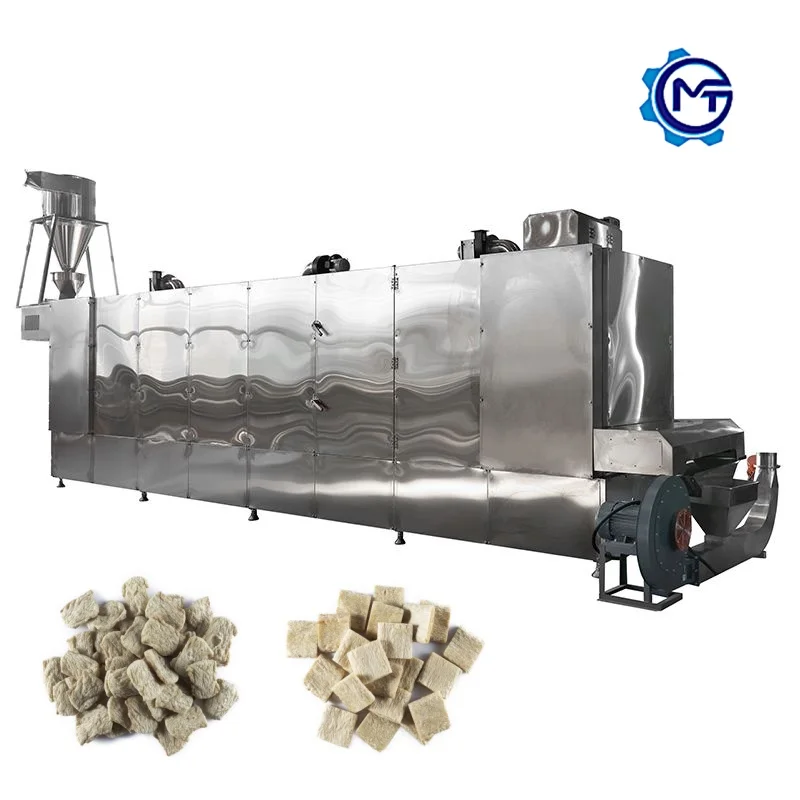
Dryer heating source selectable (fuel / gas / electricity), with throughput matched across every station to prevent bottlenecks
-
In-house trial runs on your actual defatted soya flour or flakes before shipment, with full trial report provided
Description
Integrated line throughput — Every station from the mixer to the cooling conveyor is sized against the twin-screw extruder output so the texturized soy protein production line turnkey runs without bottlenecking or material backlog.
Technical Specifications
| Parameter | Value |
|---|---|
| Product Type | Texturized Soy Protein Production Line |
| Models Available | MT65, MT70, MT75, MT85 |
| Screw Type | Twin Screw |
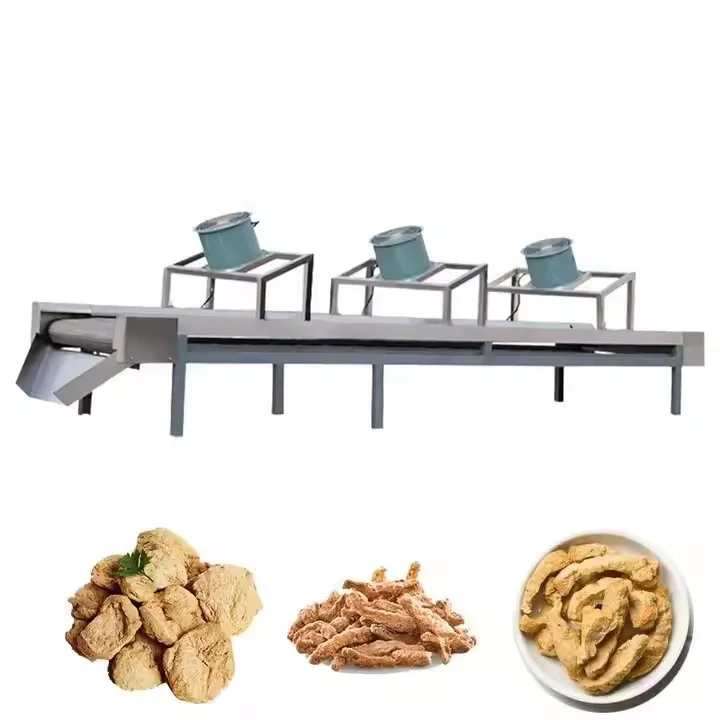
| Line Stations | Mixer → Screw Conveyor → Twin Screw Extruder → Air Conveyor → Multi-layer Dryer → Cooling Machine |
| Raw Material Compatibility | Defatted soya flour, low temperature soya flakes, soybean dregs, peanut dregs |
| Output Capacity (MT65) | 100-150 kg/h (basis to be confirmed) |
| Output Capacity (MT70) | 150-200 kg/h (basis to be confirmed) |
| Output Capacity (MT75) | 150-200 kg/h (basis to be confirmed) |
| Output Capacity (MT85) | 250-300 kg/h (basis to be confirmed) |
| Installed Power (MT65 / MT70 / MT75 / MT85) | 84 kW / 160 kW / 190 kW / 210 kW |
| Power Consumption (MT65 / MT70 / MT75 / MT85) | 59 kW / 120 kW / 140 kW / 140 kW |
| Overall Dimensions (MT65) | 40000 × 1200 × 2200 mm |
| Overall Dimensions (MT70) | 41000 × 1500 × 2200 mm |
| Overall Dimensions (MT75) | 43000 × 1500 × 3200 mm |
| Overall Dimensions (MT85) | 45000 × 1500 × 3500 mm |
| Main Motor Power | 22 kW / 30 kW / 45 kW (model dependent) |
| Extruder Screw Length | 1050 mm / 1520 mm (model dependent) |
| Heating Power | 10 kW / 14 kW (model dependent) |
| Mixer Power Options | 4 kW / 7.5 kW / 15 kW |
| Mixer Capacity Options | 20-30 kg / 70-80 kg / 170-180 kg |
| Dryer Heating Options | Fuel / Gas / Electricity (buyer selectable) |
| Control System | PLC and MCC |
| Die Configuration | Interchangeable moulds for soya nuggets, TVP/TSP, soya chunks |
| Standards | CE, ISO |
Application Suitability
| Application | Material or Output |
|---|---|
| Texturized vegetable protein (TVP/TSP) | Defatted soya flour and low temperature soya flakes processed into layered fiber structures |
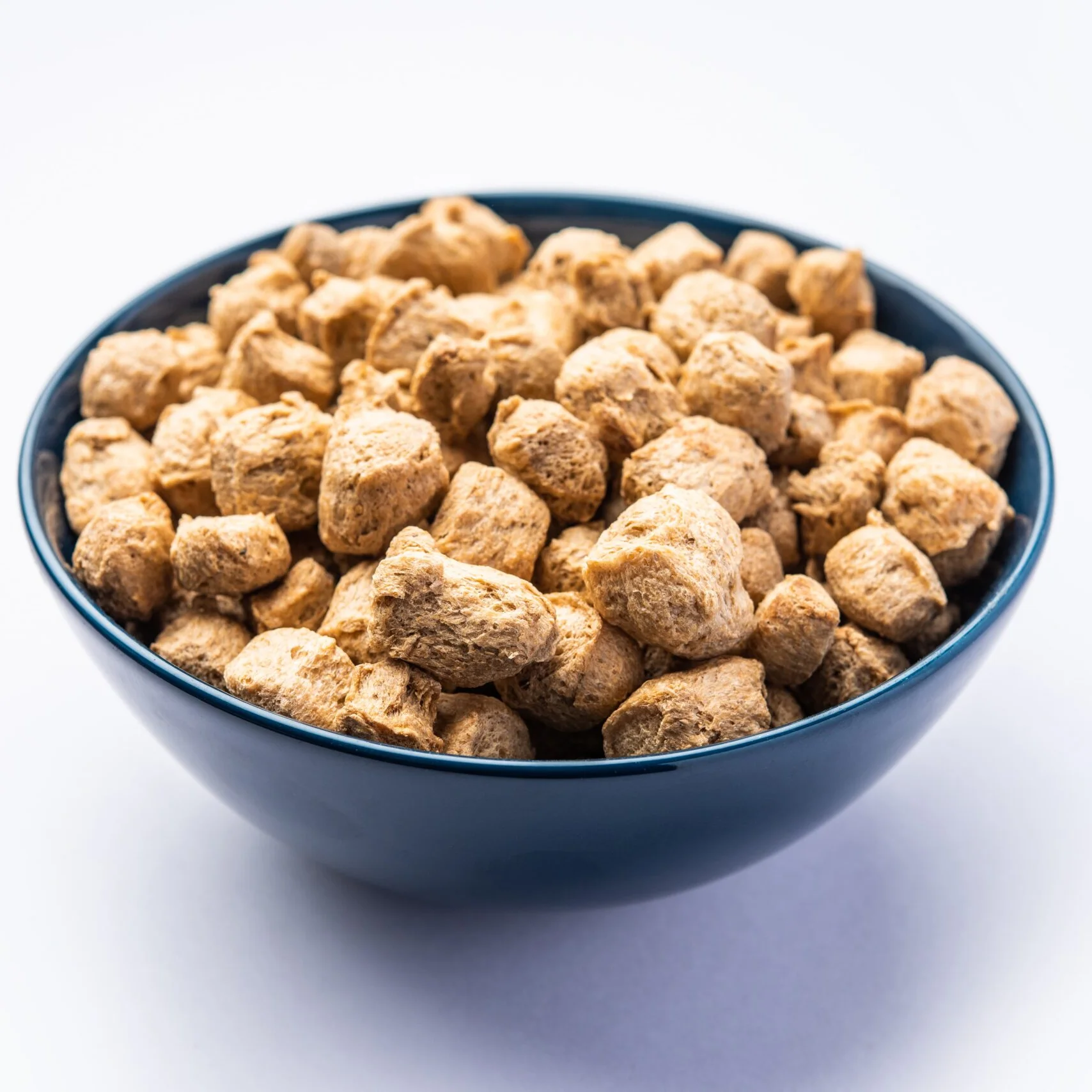
| Soya nuggets and soya chunks | High-protein soy-based ingredients sized for food service and retail packaging |
| Plant-based meat analogues | Texturized protein blocks with directional fiber for meat substitute formulations |
| Secondary extrusion capability | Cereal and snack formats produced via screw and die adjustment on the same extruder platform |
Why Nominal Capacity Figures Fail on Actual Soy Material
Line capacity only matters when measured against the specific raw material and moisture content you will actually run.
I once watched a buyer commission a soy protein line rated for standard defatted soya flour, only to switch to high-fiber soybean dregs after installation. The screw set could not handle the different flow characteristics — material bridged in the feed zone, the die face clogged, and the line sat idle while a new screw configuration was engineered and shipped. That kind of downtime is entirely preventable. The texturized soy protein production line turnkey capacity you see on a spec sheet assumes a reference material that may not match yours [NEED_CITE: raw material variability in soy protein extrusion]. When moisture content shifts or fiber percentage changes, the effective throughput can drop significantly from the published number.
Matching Screw Geometry to Soy Protein Fiber Formation
The twin-screw configuration on this texturized soy protein production line turnkey allows the screw elements to be arranged in sections that control shear, residence time, and pressure independently along the barrel. For TVP with a pronounced layered fiber structure, the compression and metering zones need to maintain a specific thermal and mechanical profile that unfolds the protein molecules and aligns them through the die. Changing the screw element sequence lets the same extruder platform produce dense soya chunks or lighter soya nuggets without replacing the barrel assembly.
How Die Selection Determines Final Product Density and Texture
The interchangeable die moulds define the cross-section, expansion ratio, and internal cell structure of every piece leaving the extruder. A die with fewer, larger openings produces thick soya chunks suited to stewing and braising applications, while a multi-hole die creates smaller nugget formats used in breading and frying. Die geometry works together with barrel temperature and moisture addition to set the final bulk density — which is the parameter your downstream packaging and your end customer’s kitchen both depend on [NEED_CITE: die design influence on extruded food density].
Reading the Power and Dimension Specs for Plant Layout
The installed power figures across the MT65 through MT85 models reflect the total connected load of every motor and heating element on the line. Power consumption values are lower because not every heater zone and drive runs at full draw simultaneously — this is the figure to use when sizing your electrical supply and transformer. The overall dimensions show line lengths stretching past forty meters, which means you need a production hall with clear floor space and adequate ceiling height, particularly for the MT75 and MT85 where the dryer stack rises above three meters. The multi-layer dryer uses a double pitch roller chain drive with adjustable temperature and drying time, and the heating source is selectable among fuel, gas, and electricity to match your local utility cost structure.
The Cost of Skipping a Pre-Shipment Material Trial
When a line ships without running the buyer’s actual raw material, the first real production test happens on your floor, on your schedule, with your installation crew standing by. If the screw configuration does not match your soy flakes or dregs, you face weeks of adjustment while product goes to waste. I have seen lines sit idle because the feeding motor could not pull high-fiber material through the conveyor at the rate the extruder demanded [NEED_CITE: feed system matching in extrusion lines]. That problem shows up in minutes on a workshop trial but takes days to diagnose in a production environment where every variable is new.
Why This Line Is Configured as a Single Supplier Package
The mixer capacity is matched to the extruder feed rate so you are never waiting for a batch or dumping material that sat too long. The screw conveyor and air conveyor are sized to move the extruded product at the rate it exits the die, preventing accumulation that would cool and set the protein before it reaches the dryer. The multi-layer dryer length and temperature zones are calculated against the moisture content coming out of the extruder, and the cooling machine at the end brings product to packing temperature without creating a bottleneck. Every station is specified together, so one supplier carries responsibility for the throughput of the entire texturized soy protein production line turnkey rather than pointing you to separate vendors when a station underperforms.
Documentation & Verification
- Line layout and capacity calculation matched to your target output and raw material
- Screw and die configuration record specific to your soy flour, flakes, or dregs
- Factory trial run report on your actual raw material before dispatch
- Electrical schematic with voltage, frequency, and control language confirmation
- CE declaration of conformity and ISO certificate
- Operation and maintenance manual with wear parts list
Installation, Commissioning & Support
- Floor space exceeding forty meters in length with clear access for the multi-layer dryer height on MT75 and MT85
- Dedicated electrical circuit sized to the installed power rating of your selected model up to 210 kW
- Line arrives in modular sections with plastic film inner wrap and wooden case outer for ocean freight
- On-site commissioning includes screw configuration validation and barrel temperature profile tuning
- Operator training covers die changeover procedures and PLC parameter adjustment for different product formats
- Wear parts inventory list provided at handover covering screws, dies, and mixer components
What to Prepare Before Requesting a Quotation
Send your raw material specification including protein content, fiber percentage, and typical moisture range. Confirm your target product format — nuggets, chunks, or granular TVP — along with the daily output you need to meet. Provide your facility voltage and frequency, the available floor length and ceiling height, and whether you need the dryer configured for gas, fuel, or electric heating.
Frequently Asked Questions
Q: How is line capacity verified against my specific raw material and moisture content?
A: We run a production trial on your actual defatted soya flour or soya flakes in our testing workshop before the line ships. The trial confirms screw configuration, feed rate, and effective throughput under your material conditions, and the results are documented in a trial run report included with your shipment.
Q: How do you match dryer and cooling capacity to the extruder output?
A: The multi-layer dryer length, temperature zones, and belt speed are calculated against the moisture load coming from the extruder at your confirmed throughput. The cooling machine is then sized to bring that dried product to packing temperature. Every station is specified together so no single point restricts the line.
Q: Can screw and die configuration be specified for my target product texture?
A: Yes. The screw element sequence and die mould are selected based on your target format — soya nuggets, TVP granules, or soya chunks — and the fiber structure your end market expects. This configuration is validated during the pre-shipment trial run on your raw material.
Q: What electrical and control confirmations happen before production begins?
A: We provide an electrical schematic showing voltage, frequency, and circuit requirements matched to your destination market. Control language for the PLC interface is confirmed at the same stage so operators can navigate menus in their working language from the first day of commissioning.
Q: What does the installation and commissioning process look like for a complete line?
A: The line ships in modular sections. After positioning, we connect utilities, validate the screw and die configuration against your material on-site, tune barrel temperature zones, and run production. Operator training covers changeover procedures and daily maintenance before the engineering team departs.
Related products
-
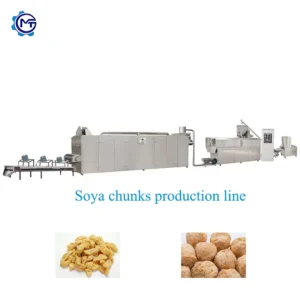
Soybean Protein Making Machine Automatic Soy Chunk Production Line
¥30.00 Select options This product has multiple variants. The options may be chosen on the product page -
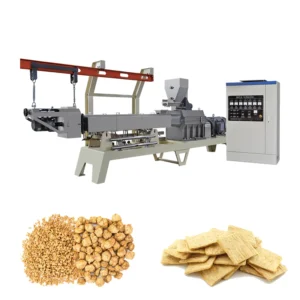
New Condition Soybean Protein Machine for Soy Chunks Production Textured Vegetable Protein Production Line
¥30.00 Select options This product has multiple variants. The options may be chosen on the product page -
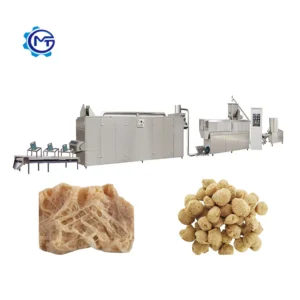
New High Efficiency Protein Production Line Plant Protein Equipment for Artificial Vegetarian Meat Processing Food Grade
¥65.00 Select options This product has multiple variants. The options may be chosen on the product page -
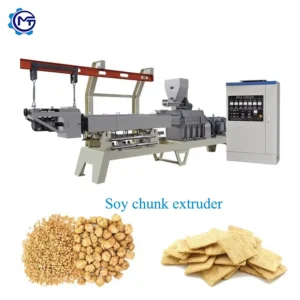
Textured Soybean Protein Extruder Plant Protein Processing Production Line TVP Making Machine
¥30.00 Select options This product has multiple variants. The options may be chosen on the product page