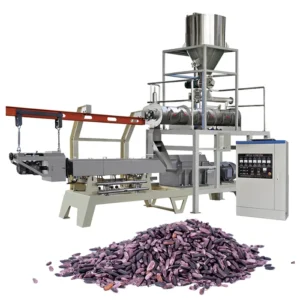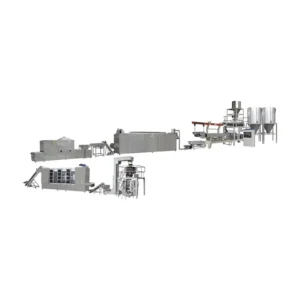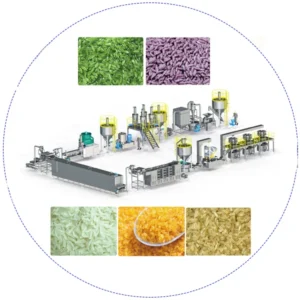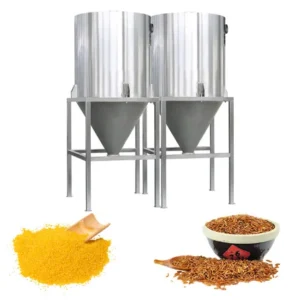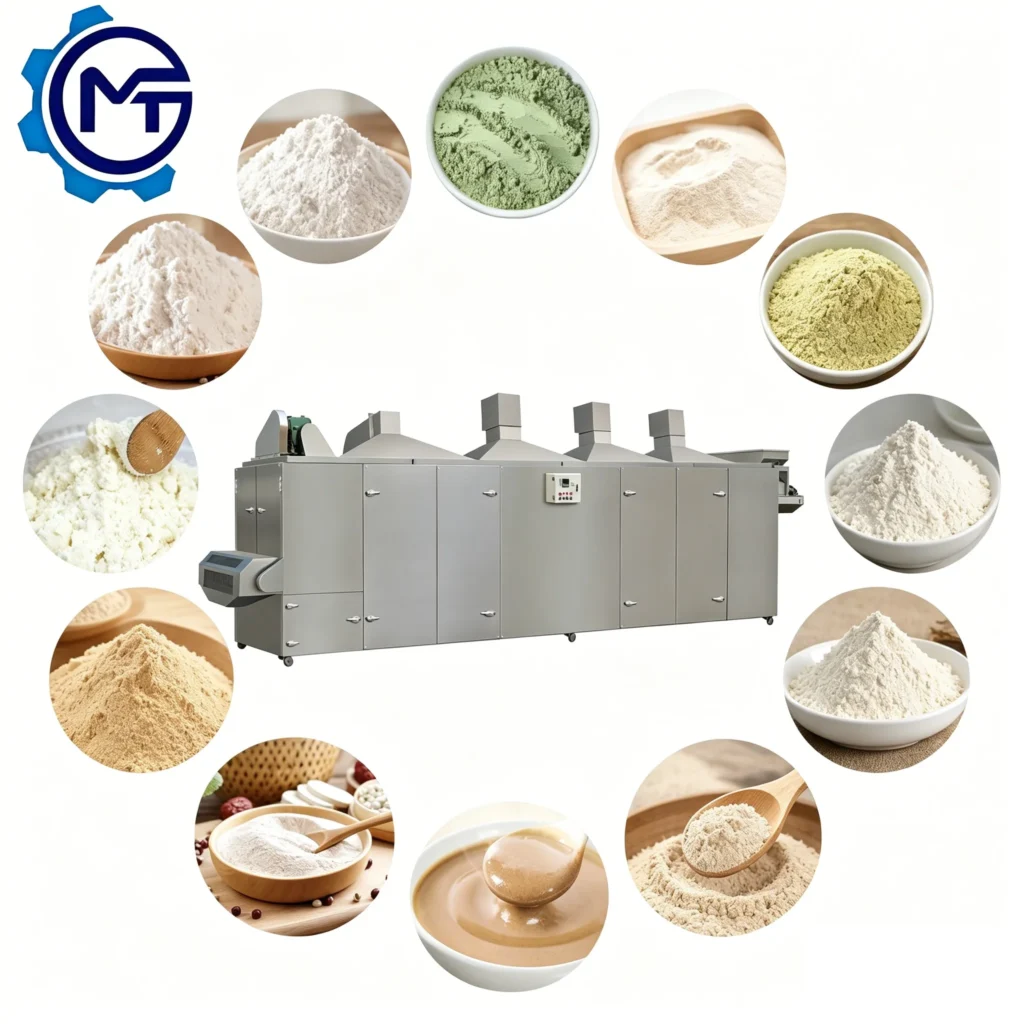
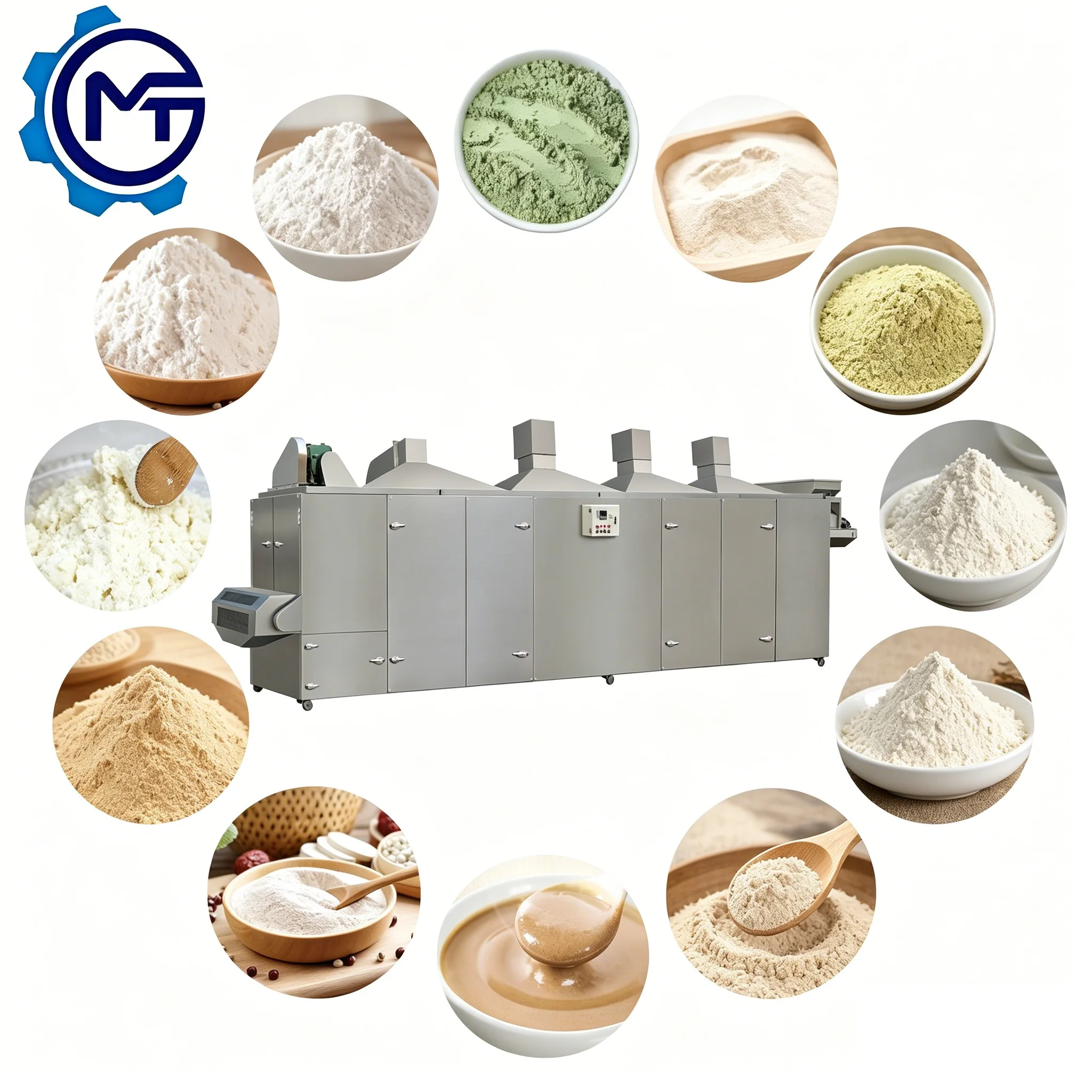
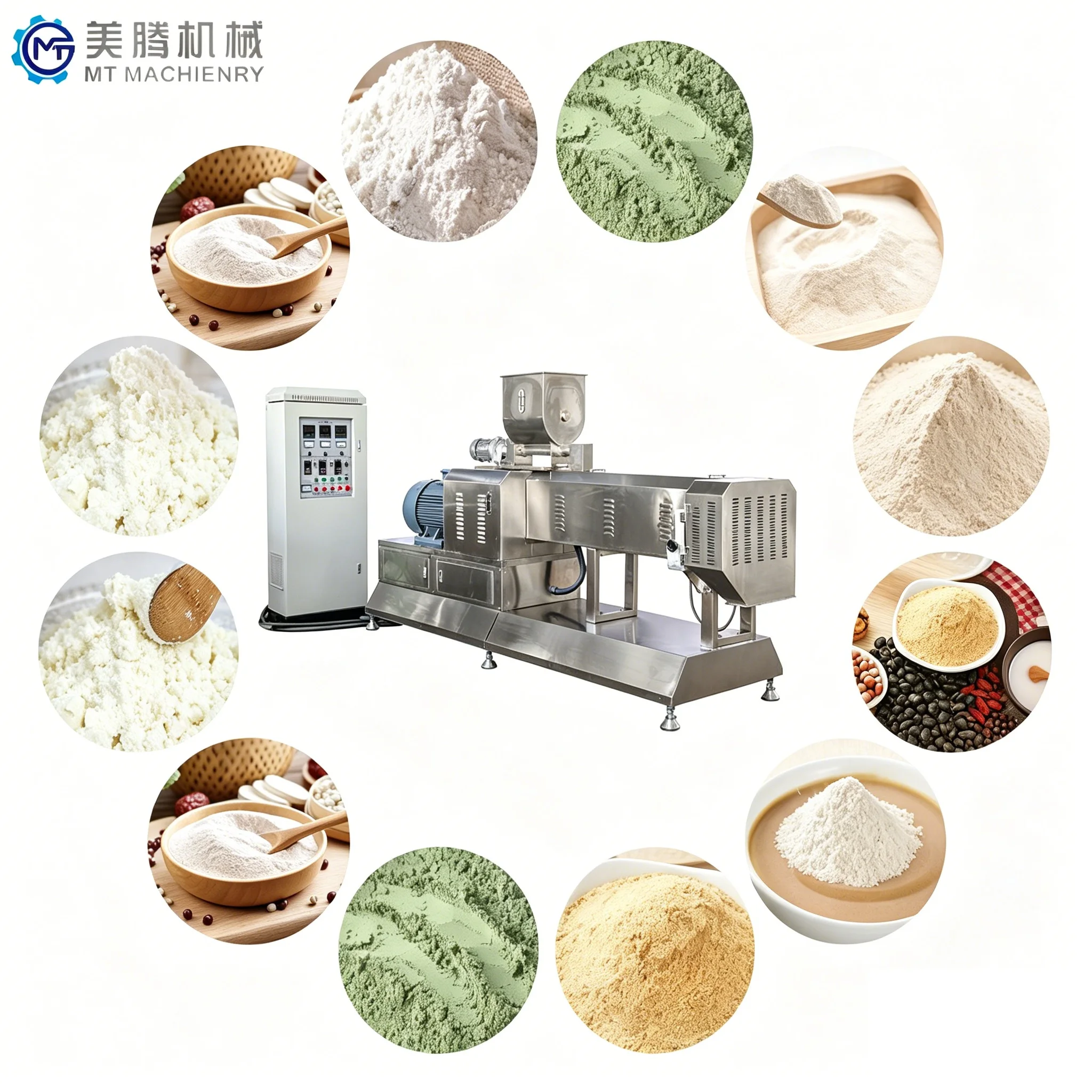

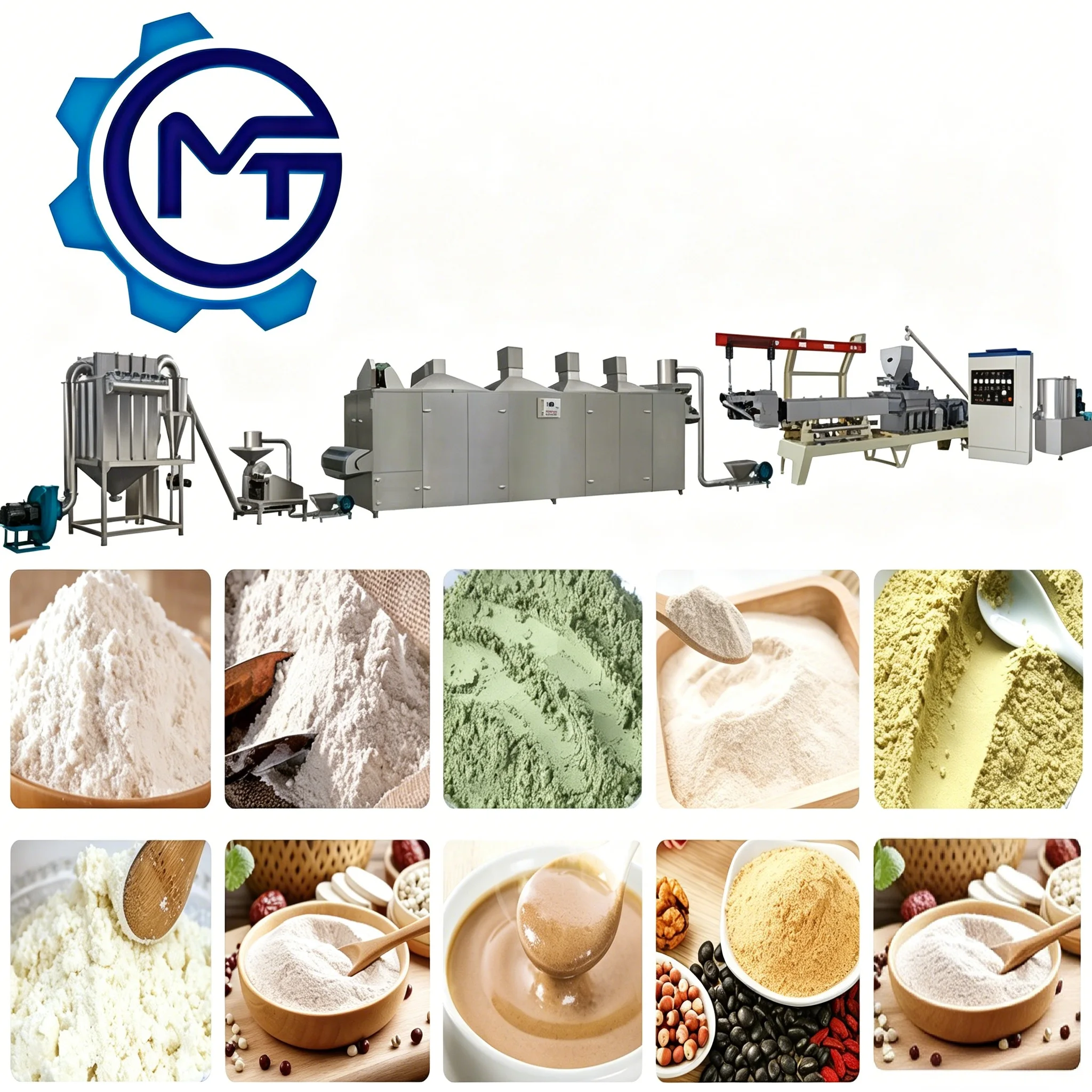


Infant Rice Powder Processing Line, 200-500 kg/h Output, PLC Touch Control, 304 Stainless Steel — engineered as one integrated turnkey project with throughput-matched stations from mixing through baking to packing.
- Full automatic operation with digital recipe management minimizes operator error across every production stage
- Food-grade contact surfaces and flexible heat source options (electric/gas/steam) align with site utility infrastructure and hygiene standards
- Supports diverse grain formulations including rice, corn, and beans for baby food and nutritional porridge applications
Complete line capacity is verified through in-house trial runs on your actual raw material before shipment, with full electrical schematics and control language confirmed for your destination market.
Description
Throughput-matched integration — Every station from batching through extrusion to packing is balanced to the buyer’s actual formulation so no single segment dictates the real output.
Technical Specifications
| Parameter | Value |
|---|---|
| Product Type | Nutritional Powder Processing Line |
| Output Capacity | 200–500 kg/h (basis not stated in source — confirm raw material / moisture content / formulation) |
| Construction Material | Food-Grade 304 Stainless Steel |
| Control System | PLC with Touch Control Panel and Digital System |
| Heat Source Options | Electric / Gas / Steam |
| Key Line Stations | Baking Ovens, Mixers (full line configuration not detailed in source — confirm complete station list) |
| Automation Level | Full Automatic |
| Warranty | 1 Year |
| After-Sales Service | Overseas Engineer Service Available |
Application Suitability
| Application | Material or Output |
|---|---|
| Infant rice powder manufacturing | Rice flour blended with milk powder, DHA microcapsules, and vitamin premixes |
| Fortified baby food production | Corn, beans, and multi-grain blends processed into fine nutritional powder |
| Nutritional porridge lines | Pre-cooked grain formulations for weaning food and dietary supplement markets |
| Institutional nutrition programmes | Grain-based instant porridge for school feeding and relief distribution |
Why Nominal Capacity Numbers Mislead on a Nutritional Powder Processing Line Turnkey
A line rated at 500 kg/h on plain rice flour may stall below 300 kg/h once whey protein and lipid-based microcapsules enter the formula.
I watched a nutritional powder processing line turnkey project sit idle for four days because the trial runs used only base grain flour. The buyer’s actual recipe included heat-sensitive protein isolates and oil-encapsulated nutrients that altered flow behaviour through every thermal zone. Baking oven residence time had to be recalculated, mixer shear rates were adjusted downward, and downstream packing speed dropped because the cooled powder clumped at the original throughput. The capacity plate on the extruder was technically accurate — for a different formulation entirely [NEED_CITE: raw material formulation impact on extrusion line throughput].
Thermal Profiling Across Protein-Sensitive Formulations
When infant rice powder carries added dairy proteins and fat-encapsulated micronutrients, each thermal station must hold a narrower temperature band than standard grain-only runs. The PLC touch control panel allows operators to store distinct recipe profiles so that baking oven zones shift automatically when the formulation changes. This prevents localized overheating that denatures whey fractions or ruptures DHA microcapsule shells. A nutritional powder processing line turnkey project succeeds or fails on whether these thermal transitions are mapped before the equipment leaves the factory floor.
Throughput Balance From Batching to Packing
A complete line moves material through mixing, extrusion or baking, drying, cooling, and packing in a continuous chain. If the mixer batch cycle takes longer than the downstream oven can accept, the entire nutritional powder processing line turnkey installation runs below its rated speed. Station capacities are calculated against the specific bulk density and moisture content of the buyer’s recipe, not a generic grain powder average. This matching exercise is where most capacity shortfalls originate, and it must be documented before production begins [NEED_CITE: throughput matching methodology for multi-station food processing lines].
Reading the Specification Sheet for Real-World Behaviour
Food-grade 304 stainless steel across contact surfaces ensures that acidic vitamin premixes and mineral salts do not corrode mixing vessels or baking trays between production runs. The PLC digital system records batch parameters — zone temperatures, conveyor speeds, dwell times — creating an audit trail that GMP-compliant infant food facilities require for lot traceability. Flexible heat source compatibility means the baking ovens can connect to electric elements, gas burners, or steam coils depending on the site’s utility infrastructure. Full automatic operation reduces manual intervention during recipe changeovers, limiting contamination risk when switching between allergen-containing and allergen-free formulations.
The Cost of Skipping the Formulation Conversation Early
Buyers who defer recipe details until after purchase often face unplanned shutdowns during commissioning. Protein-rich blends demand different screw speeds, barrel temperatures, and die geometries than pure starch bases. When these parameters are guessed rather than tested, the line produces powder that fails dissolution tests or shows visible fat separation on the packing belt. Reworking thermal profiles on-site costs weeks of production time and erodes operator confidence in the equipment before full-scale output ever begins [NEED_CITE: commissioning delays caused by unconfirmed raw material specifications].
What Distinguishes This Supply Approach
Line layout and capacity calculations are produced as a single document showing how every station — from the batching scale through the mixer, baking oven, dryer, cooler, and packing head — is matched to the buyer’s target output. An in-house testing workshop runs the buyer’s actual raw material blend before shipment, generating a trial run report that confirms texture, moisture, and throughput under real formulation conditions. Twin-screw expertise spans infant nutrition, grain-based porridge, and fortified food applications, meaning screw configuration and die selection are specified to the product rather than copied from a catalogue build. Electrical schematics confirm voltage, frequency, and control language before production starts, preventing the wiring delays that stall commissioning in export markets. Documentation packages include operation and maintenance manuals with wear part lists specific to the installed configuration.
Documentation & Verification
- Line layout and capacity calculation showing throughput balance across every station from batching to packing
- Trial run report on the buyer’s actual infant rice powder formulation before shipment
- Electrical schematic with voltage, frequency, and PLC interface language confirmed for the destination market
- Screw and die configuration record specifying how each extrusion segment is tuned to the target product
- Factory test record documenting thermal profile and output rate under the confirmed recipe
Installation, Commissioning & Support
- Foundation and floor-space plan aligned to the full line footprint including mixer, baking oven, and packing stations
- Dedicated electrical circuit sized to the PLC control panel load and selected heat source configuration
- Overseas engineer commissioning with recipe-specific parameter tuning on the buyer’s raw material
- Operator training covering PLC recipe storage, thermal zone adjustment, and CIP cleaning of 304 stainless steel surfaces
- Wear parts list with lead times for baking trays, mixer blades, and extrusion screws matched to the installed build
Preparing Your Inquiry
Share your target formulation including base grain type, protein fraction percentage, and any lipid-encapsulated additives so that station sizing reflects real material behaviour. Specify the daily output target and the number of recipe variants the line must handle without full CIP cycles. Confirm local voltage, frequency, and preferred PLC interface language to avoid rewiring or reprogramming during commissioning.
Frequently Asked Questions
Q: How is line capacity verified against the buyer’s specific grain formulation and moisture content?
A: Capacity verification runs in the testing workshop using the buyer’s actual raw material blend. The trial measures throughput at each station — mixing cycle time, baking oven dwell, cooling conveyor speed, and packing rate — then adjusts station sizing until the entire nutritional powder processing line turnkey chain sustains the target output without bottleneck.
Q: What is the complete station list and how is throughput matched between mixing, baking, and packing?
A: The station list is built from the buyer’s recipe and output target. Mixing batch size, baking oven belt width and length, cooling conveyor residence time, and packing head speed are calculated as a single system. Throughput matching ensures that no individual station forces the rest of the line to run below its design rate.
Q: How are voltage, frequency, and PLC language confirmed before production starts?
A: Electrical specifications are collected during the quotation stage and written into the line specification sheet. The PLC touch control panel is programmed in the destination language, and the electrical schematic is reviewed with the buyer’s site engineer before fabrication begins to prevent on-site wiring conflicts.
Q: Can a trial run be conducted on the buyer’s raw material in the testing workshop before shipment?
A: Yes. The in-house testing workshop runs the buyer’s formulation — including any protein isolates, fat microcapsules, or vitamin premixes — and records thermal profiles, moisture content, and powder texture. The resulting trial run report is shared before the line ships, confirming that the nutritional powder processing line turnkey project meets the product specification.
Related products
-

Automatic Instant Powder Production Line Nutritional Powder Extruder Machine
¥10,000.00 Select options This product has multiple variants. The options may be chosen on the product page -
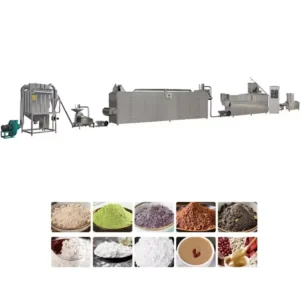
Healthy Baby Food Production Line Nutritional Powder Equipment for Baby Food Supplements for Flour Processing Machinery
¥8,500.00 Select options This product has multiple variants. The options may be chosen on the product page -
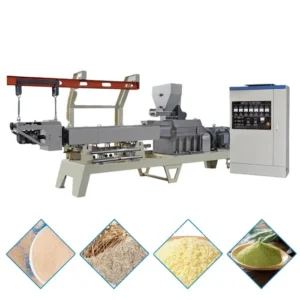
Industrial Instant Corn Paste Production Line Nutritional Powder Processing Equipment Meal Replacement Nutrition Powder Machine
¥65.00 Select options This product has multiple variants. The options may be chosen on the product page -

New Automatic Nutritional Powder Making Machine for Baby Food Production Line
¥20.00 Select options This product has multiple variants. The options may be chosen on the product page