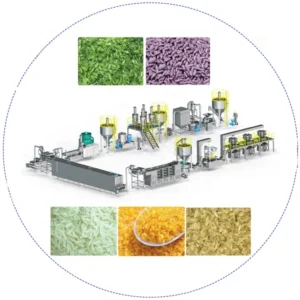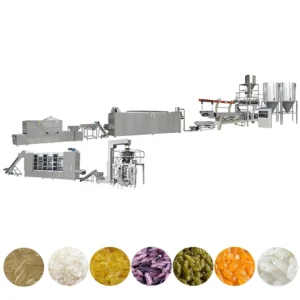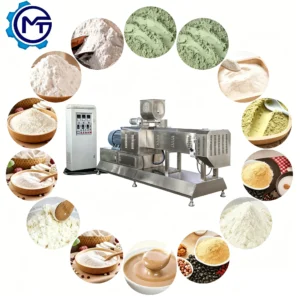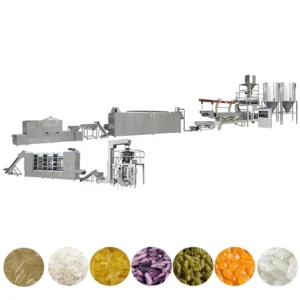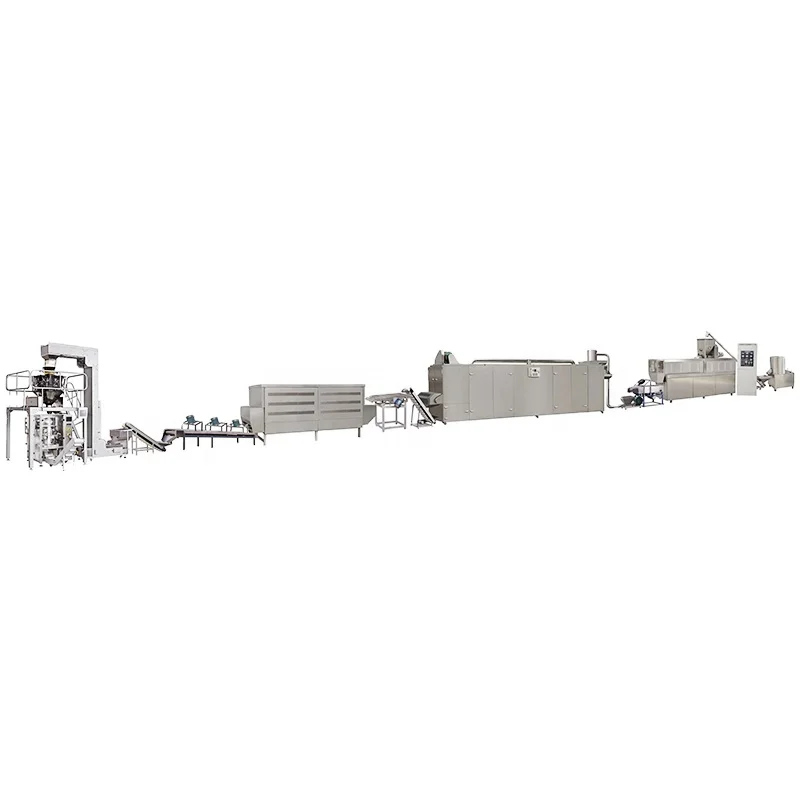
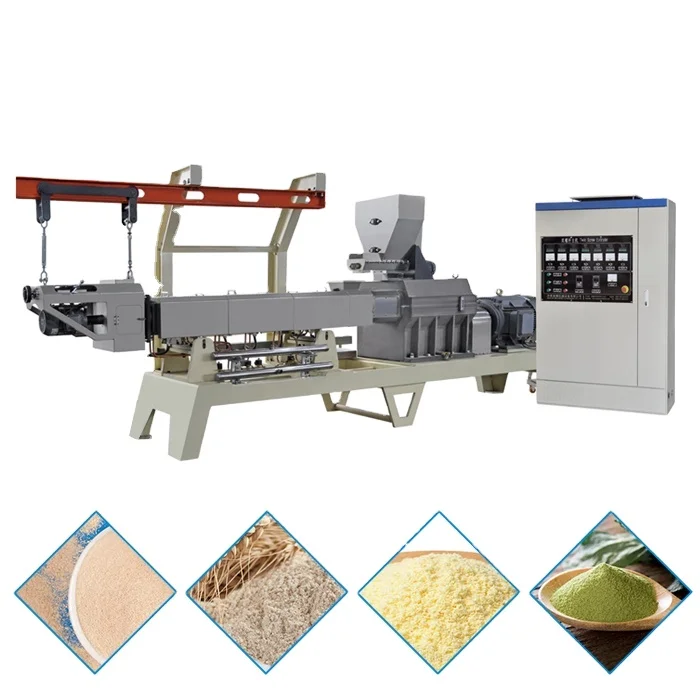
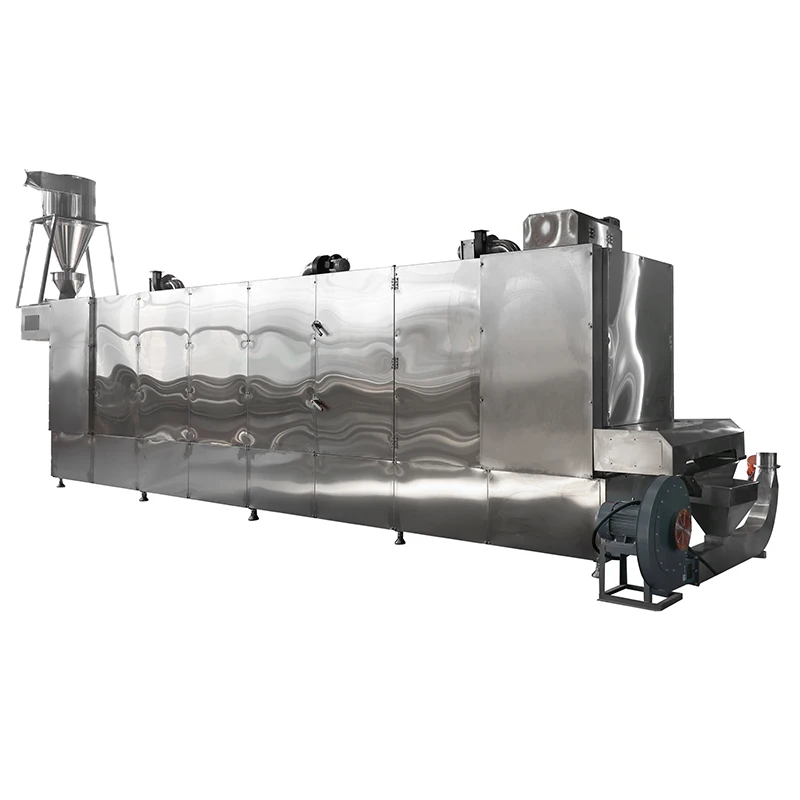
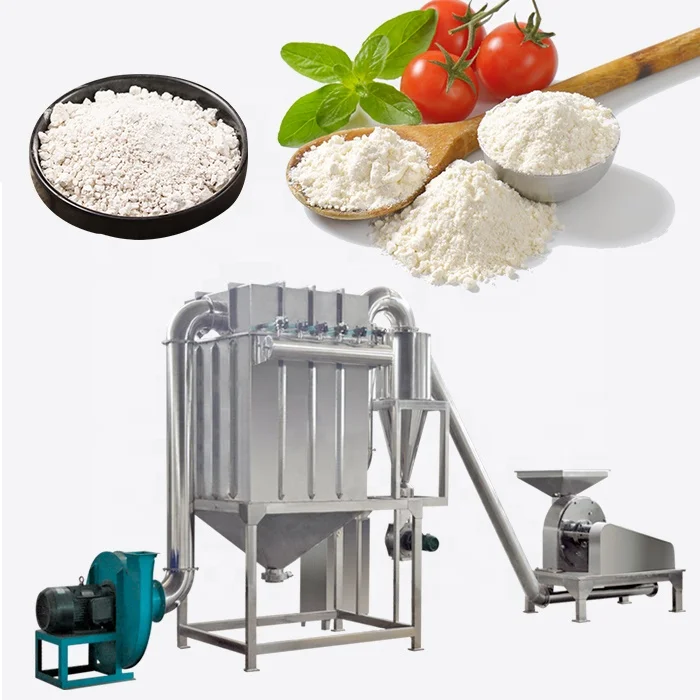
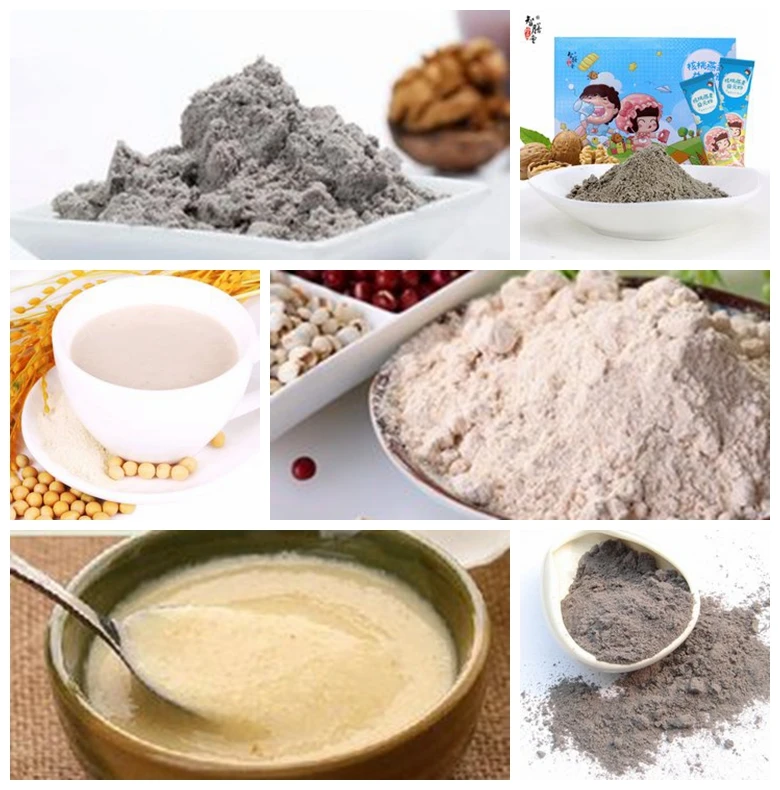
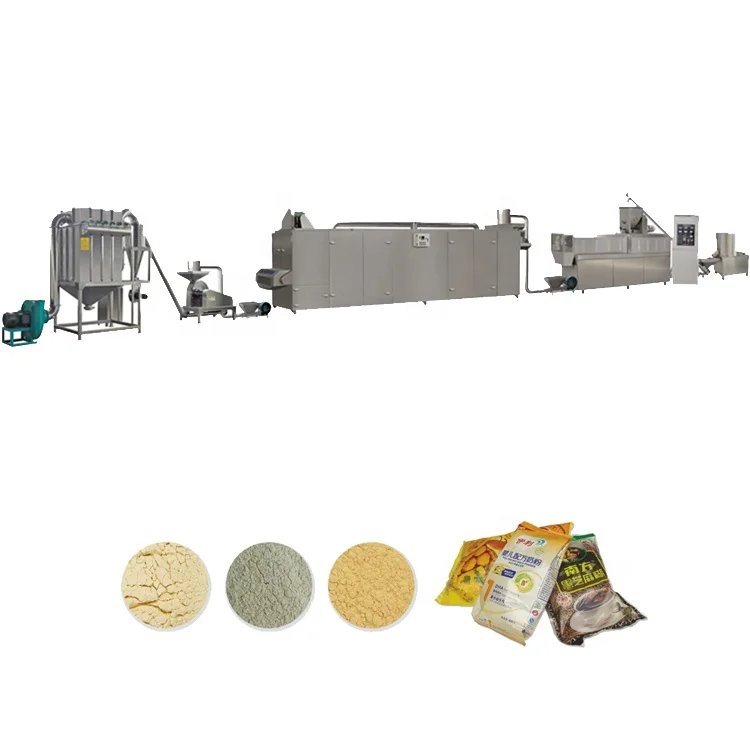
Nutritional Powder Processing Line, Twin-Screw Extrusion, VFD Control, Siemens Motors — engineered for infant formula, fortified meal replacement and instant cereal powders from raw grains including corn, rice and oats.
High-temperature, high-pressure extrusion with five-second dwell achieves thorough starch gelatinisation for improved digestibility, while interchangeable die heads and three model tiers accommodate varied powder textures and batch volumes across the complete layout.
Line throughput is balanced from batching through drying and packing under one supplier, with pre-shipment trials on your grain blend and on-site commissioning included.
Description
Single-supplier line engineering — throughput matched from batching through extrusion to packing on nutritional and infant formula powder projects, so no station chokes the output you planned for.
Technical Specifications
| Parameter | Value |
|---|---|
| Product Type | Nutritional Baby Food Powder Production Line |
| Model Options | MT65 / MT70 / MT85 |
| Installed Power (MT65) | 66 kW |
| Real Power Consumption (MT65) | 50 kW |
| Output Capacity (MT65) | 100–150 kg/h (basis not stated in source — confirm raw material / moisture) |
| Overall Dimensions (MT65) | 19000 × 1200 × 2200 mm |
| Installed Power (MT70) | 100 kW |
| Real Power Consumption (MT70) | 67 kW |
| Output Capacity (MT70) | 200–240 kg/h (basis not stated in source — confirm raw material / moisture) |
| Overall Dimensions (MT70) | 21000 × 1500 × 2200 mm |
| Installed Power (MT85) | 130 kW |
| Real Power Consumption (MT85) | 80 kW |
| Output Capacity (MT85) | 400–500 kg/h (basis not stated in source — confirm raw material / moisture) |
| Overall Dimensions (MT85) | 30000 × 3500 × 4300 mm |
| Voltage & Frequency | Three-phase 380V/50Hz, single-phase 220V/50Hz (configurable to local grid) |
| Control System | VFD (variable frequency drive) controlled |
| Motor Brand | Siemens |
| Screw Type | Twin-screw |
| Contact Material | Stainless steel |
| Processing Method | High-temperature, high-pressure extrusion within five seconds |
| Certification | CE |
| Warranty | 12 months |
Application Suitability
| Application | Material or Output |
|---|---|
| Infant baby food powder | Corn, rice, oats — starch gelatinised for digestibility |
| Meal replacement and dietary supplement powder | Blended grains with added protein or fibre fractions |
| Fortified instant cereal powder | Pre-cooked grain bases for nutrition programme contracts |
| Nutritional porridge and weaning food | Multi-grain formulations requiring controlled expansion and density |
Why the Voltage Question Should Come Before the Quotation on a Nutritional Powder Processing Line Turnkey
Local grid compatibility decided at enquiry stage prevents months of commissioning delay.
A nutritional powder processing line turnkey project landed in a region running 415V/60Hz will not start up on a panel wired for 380V/50Hz. I have watched a feed mill in Tanzania sit idle for six weeks because the frequency converter was never specified, and the local electrician had no schematic to work from [NEED_CITE: voltage and frequency standards by export market]. When you build nutritional and infant formula powder, the extruder barrel heaters, the dryer circulation fans, and the VFD-controlled motors all must agree on the same electrical standard. Get that wrong and you are rewiring an entire line after it has been bolted to the floor.
Matching Throughput Across Every Station
A nutritional powder processing line turnkey is only as fast as its slowest station. If the extruder pushes 240 kg/h but the dryer can only handle 180 kg/h, wet product piles up on the conveyor and you lose both yield and consistency. The line layout we draft before quotation calculates the residence time and belt load at each transfer point, so the mixing hopper, extruder, dryer, and packing station all move at the same rhythm. This is the core of turnkey nutritional powder processing line planning — one supplier sizing every piece of equipment to the same real throughput figure.
Raw Material Behaviour Inside the Barrel
Grain blends for infant food powder vary widely in fibre, fat, and starch ratio. A formulation heavy on oat bran behaves nothing like a straight rice grits feed inside the twin-screw barrel. Shear profile, moisture injection point, and die aperture all need adjustment to hit the target bulk density and water solubility index. That is why we run the buyer’s actual grain blend in our testing workshop before the extruder ships [NEED_CITE: starch gelatinisation behaviour under twin-screw extrusion parameters]. The trial confirms screw configuration, die geometry, and barrel temperature zones against the real formulation — not a textbook proxy.
Reading the Spec Sheet Against Your Production Target
The three model tiers cover distinct capacity bands. The MT65 draws 50 kW real power and fits a 19-metre line footprint, suited to small-batch or pilot production of infant formula. The MT70 moves to 67 kW real power across 21 metres, handling mid-volume nutrition programme contracts. The MT85 at 80 kW real power occupies a 30-metre layout for larger-scale fortified powder output. Capacity figures in the table are referenced to a basis not stated in source, so always confirm the target raw material and moisture content before treating them as firm commitments. Siemens motors across the range deliver stable torque through the high-temperature, high-pressure extrusion cycle, and VFD control lets operators fine-tune screw speed without stopping the line.
The Hidden Cost of Skipping the Trial Run
Lines quoted on nominal capacity often fall short the moment the buyer’s grain blend hits the hopper. Extruder throughput drops, the dryer runs wet, and the packing station starves. I have seen nutritional powder installations where the first week of production was spent entirely on screw reconfiguration because no trial was done on the buyer’s actual oats-and-rice formulation [NEED_CITE: extrusion trial run protocols for grain-based nutritional powders]. The cost is not just the wasted raw material — it is the delayed shipment to institutional buyers who have contract deadlines.
Why This Line Is Engineered Under One Roof
Every station from batching to packing is sized by the same engineering team, so throughput figures on the layout drawing reflect one calculation, not three separate vendor quotes stitched together. Screw and die configurations are selected against the buyer’s grain formulation after the workshop trial, not copied from a generic build. Electrical schematics are drawn for the destination voltage before the panel is wired, so the first power-on happens without surprises. Stainless steel contact surfaces throughout the extruder, dryer, and conveying sections meet the hygiene standards expected in infant food production. Pre-sales consultation covers layout, utility planning, and phased installation so the buyer knows exactly what the site needs before a single crate arrives.
Documentation & Verification
- Line layout and capacity calculation showing matched throughput for your nutritional powder formulation
- Trial run report on your grain blend from our in-house testing workshop before dispatch
- Screw and die configuration record matched to your target powder density and solubility
- Electrical schematic with voltage and frequency confirmed for your destination market
- CE declaration of conformity and ISO certificate for the complete processing line
- Operation and maintenance manual with wear parts list for extruder screws and dies
Installation, Commissioning & Support
- Foundation requirements scaled to the MT85 footprint of 30000 × 3500 mm or smaller model layouts
- Dedicated electrical circuit sized to the real power draw of the selected model tier
- Modular line stations shipped in assembly-ready sections for on-site bolt-up and alignment
- First-run commissioning with barrel temperature profiling and VFD parameter tuning on your grain blend
- Operator training covering screw speed adjustment, die changes, and moisture control for powder consistency
- Wear parts list specifying screw segments and die plates with reorder references for ongoing maintenance
What We Need to Size Your Line
Send the grain formulation you intend to run, including the percentage of each component and the target moisture at the extruder inlet. Let us know the daily output you need and whether the line must fit inside an existing building envelope. Share the local voltage and frequency so the electrical design starts on the right standard. If you can ship a sample batch to our workshop, we will run a trial and return the screw and die configuration data along with the quotation.
Frequently Asked Questions
Q: How is output capacity verified on my specific grain blend and moisture level?
A: We run your raw material through the twin-screw extruder in our testing workshop before the line ships. The trial records actual throughput, barrel temperature profile, and die pressure on your formulation, and those numbers — not catalogue figures — form the basis of the capacity guarantee.
Q: What voltage and frequency options are available for my country’s grid?
A: The line ships configurable to three-phase 380V/50Hz, single-phase 220V/50Hz, or your local standard. Voltage and frequency are confirmed at enquiry stage and locked into the electrical schematic before the control panel is wired.
Q: How do you ensure throughput is balanced across mixing, extrusion, drying and packing?
A: The line layout calculates residence time and material flow at each transfer point. Every station is sized by the same engineering team so the extruder output, dryer belt load, and packing rate all move at the same rhythm without bottlenecking.
Q: Can I run a trial on my raw material at your factory before shipment?
A: Yes. Send a sample of your grain blend to our workshop. We extrude it on the same twin-screw model you will receive, document the screw configuration and die geometry that works, and ship the line with those parameters already set.
Q: What is the phased installation and commissioning schedule for a complete line?
A: After the equipment arrives on site, mechanical assembly and alignment take the first phase. Electrical connection and VFD setup follow. Commissioning then runs on your grain blend with barrel temperature profiling and operator training before the line is handed over for regular production.
Related products
-

Full Automatic Complete Baby Food Nutrition Powder Porridge Processing Production Line for Infant Nutrition Factory
¥9,500.00 Add to cart -
Commercial Stainless Steel Baby Rice Powder Grinding Mixing Machine
¥8,238.27 Select options This product has multiple variants. The options may be chosen on the product page -
High Productivity New Condition Nutritious Baby Food Meal Replacement Powder Production Line
¥30.00 Select options This product has multiple variants. The options may be chosen on the product page -

Automatic Instant Powder Production Line Nutritional Powder Extruder Machine
¥10,000.00 Select options This product has multiple variants. The options may be chosen on the product page