

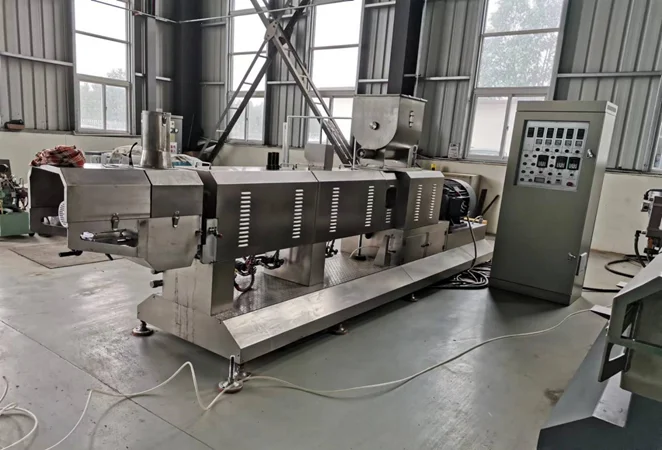
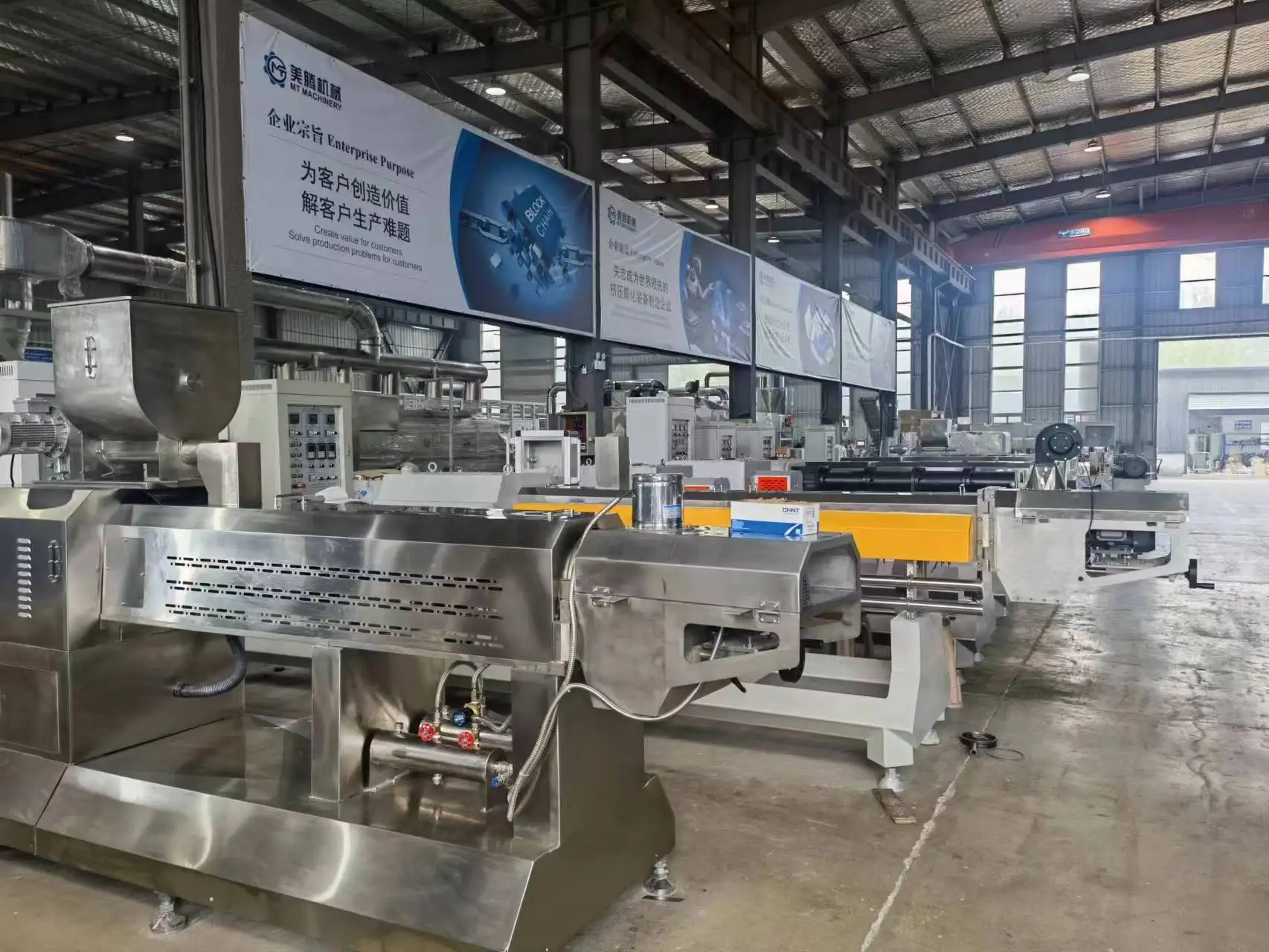
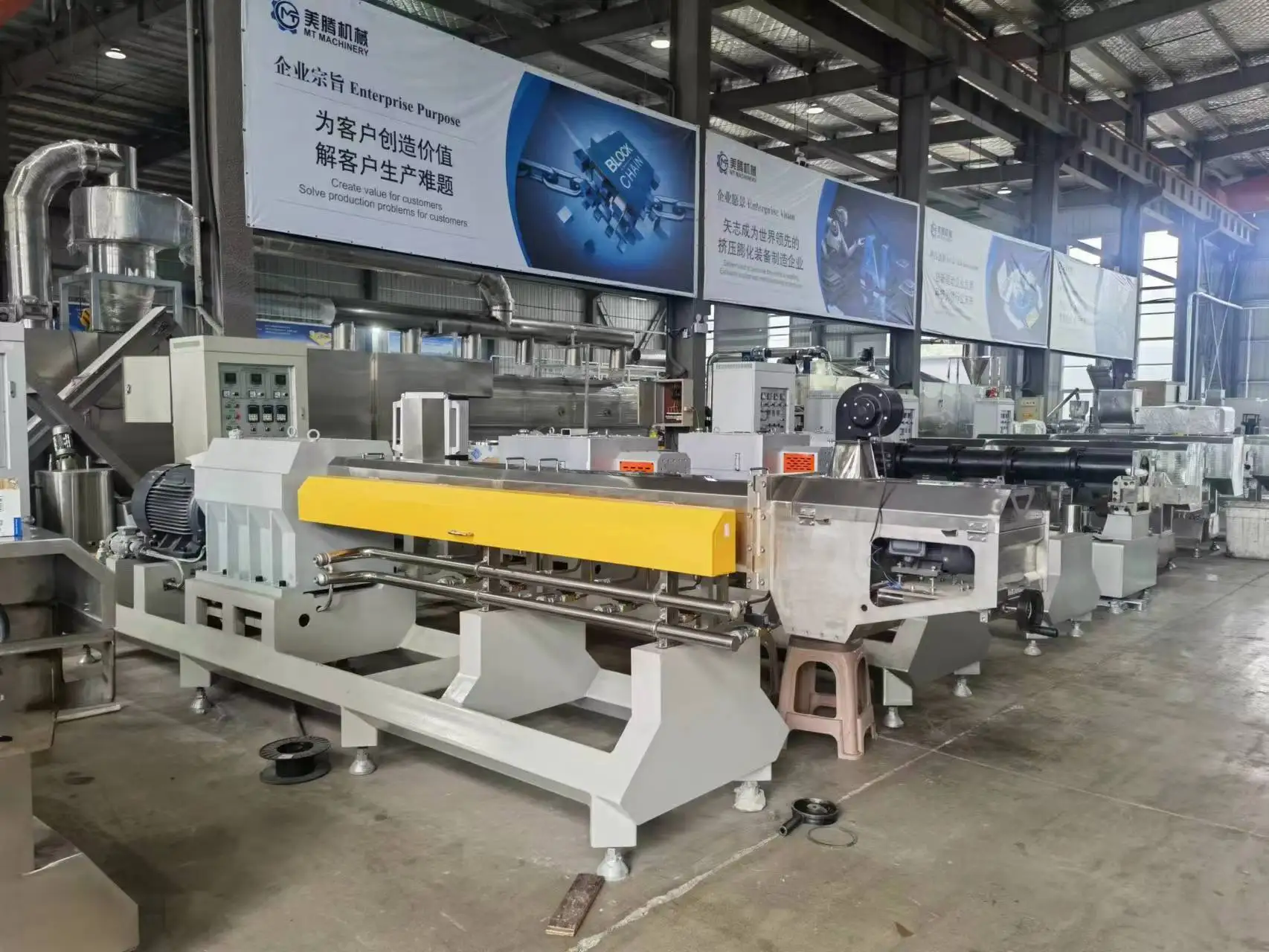
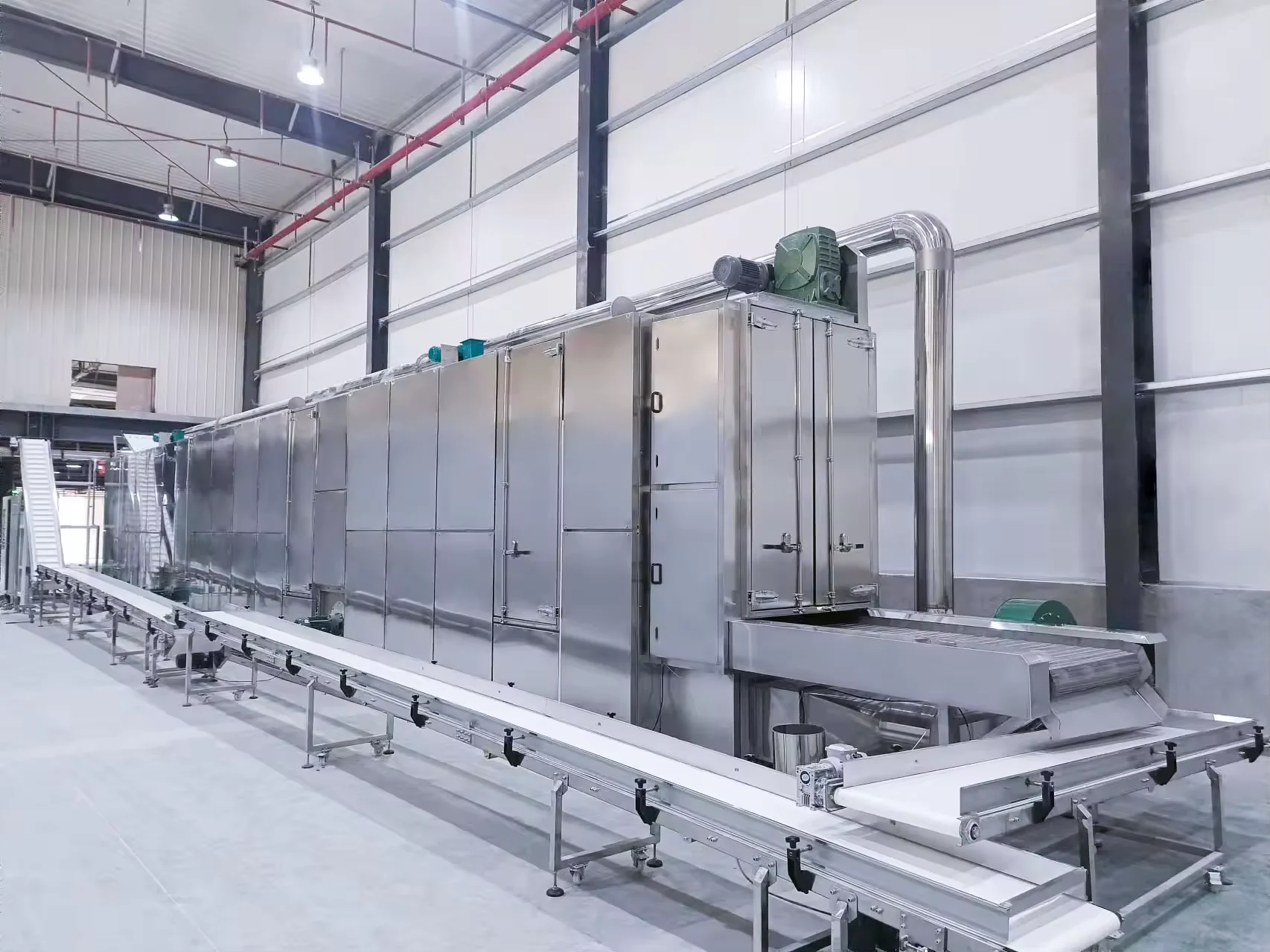
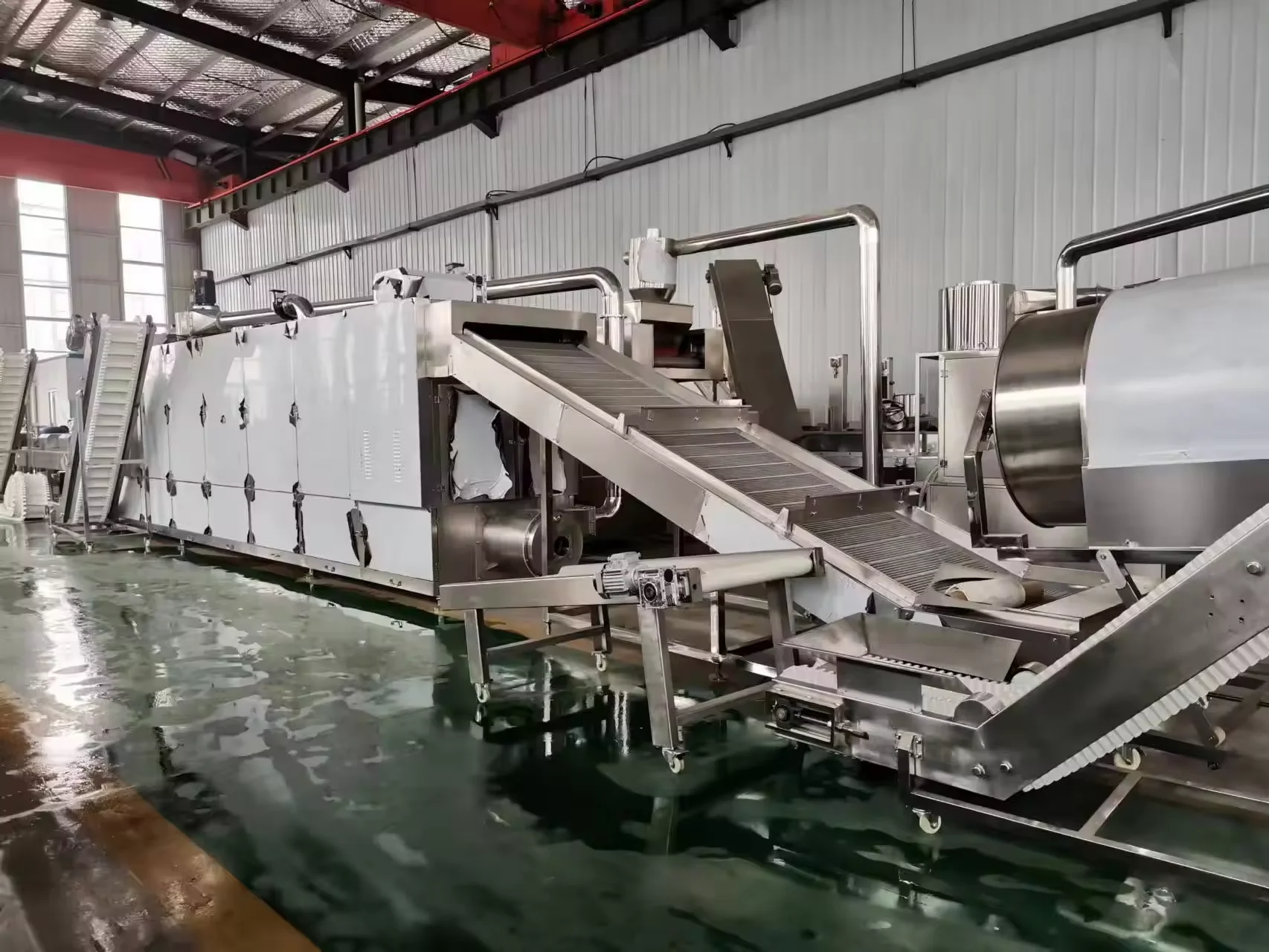
Puffed Snack Food Extrusion Line, Twin-Screw, PLC & MCC Automated Control, Multi-Layer Belt Dryer — engineered as a complete turnkey project from batching through extrusion, drying, and flavoring, with every station’s throughput matched to prevent bottlenecks. Screw configuration and die design are specified to your raw material and target snack format, validated by in-house trial runs on your actual formulation before shipment.
- Line layout, capacity calculation, and utility planning delivered as one integrated project
- Trial run report on customer raw material provided before factory dispatch
- On-site installation, commissioning, and operator training included in project scope
Description
Integrated throughput engineering — Every station in this puffed snack food production line from batching to packing is capacity-matched under one supplier, so the extruder output never overruns the dryer or flavoring drum.
Technical Specifications
| Parameter | Value |
|---|---|
| Product Type | Puffed Snack Food Extrusion Line |
| Screw Type | Twin-screw (double screw) |
| Control System | PLC and MCC automated control (basis not stated in source — confirm PLC brand and HMI language options) |
| Line Stations | Mixing → Extruding → Shaping → Cutting → Drying → Flavoring |
| Dryer Type | Multi-layer belt dryer, configurable length and layer count |
| Flavoring System | Semi-automatic or automatic; sugar, oil, and powder seasoning |
| Output Capacity | To be confirmed based on raw material and product format |
| Voltage & Frequency | To be confirmed for target market |
| Overall Dimensions | To be confirmed based on line configuration |
| Rated Power | To be confirmed based on line configuration |
| Warranty | 24 months, lifetime service support |
| Certification | CE, ISO |
| Assembly State | Factory-assembled and tested before shipment |
Application Suitability
| Application | Material or Output |
|---|---|
| Puffed corn and maize snacks | Corn grits, maize flour, grain blends |
| Puffed rice snacks | Rice flour, rice grits, broken rice |
| Core-filled snacks | Grain-based shell with cream or chocolate filling |
| Fried puffed snack formats | Pellet or direct-expanded dough for secondary frying |
| Specialty extruded shapes | Custom die configurations for rings, balls, tubes, stars |
What "Nominal Capacity" Really Means on a Puffed Snack Line
A line rated on paper output means nothing if it cannot sustain that throughput on your actual corn or rice formulation.
When I first started commissioning extrusion lines, I watched a snack producer lose an entire shift because the dryer could not keep pace with the extruder — the twin-screw was pushing product faster than the belt dryer could remove moisture, so half the output went straight into waste bins. That mismatch happens when stations are sourced separately and nobody calculates the material balance across the full chain. A puffed snack food production line turnkey project must verify throughput station by station before any steel is cut. [NEED_CITE: material balance calculation methods in food extrusion lines]
Screw Configuration Dictates What Your Raw Material Becomes
The twin-screw extruder at the heart of this puffed snack food production line turnkey system is not a fixed machine — screw elements are arranged in a specific sequence to match the starch content, particle size, and moisture of your grain blend. A high-corn formulation needs a different shear profile than a rice-dominant recipe, and the screw configuration determines whether the product exits the die with the right expansion and texture. We build a screw arrangement record for every project so the setup is repeatable across production runs.
Matching Dryer Capacity to Extruder Output
The multi-layer belt dryer is configurable in both length and layer count because different snack formats carry different moisture loads out of the die. A dense, low-expansion pellet holds more residual moisture than a light corn puff, so the drying residence time must be calculated against the actual product — not a generic average. When the dryer is undersized, operators compensate by slowing the extruder, which means the puffed snack food production line turnkey system never reaches its intended throughput. [NEED_CITE: moisture removal requirements for extruded snack products]
Reading the Specification Sheet Like a Process Engineer
Twin-screw extrusion relies on the length-to-diameter ratio and the number of barrel heating zones to control how long the material stays in the barrel and how temperature ramps along the screw. A longer L:D ratio gives the starch more time to gelatinise, which directly affects expansion at the die face. The die configuration then shapes that expanded mass — a small aperture produces higher shear and greater puff, while a larger opening yields a denser bite. PLC and MCC automated control across all stations means the operator sets the barrel temperatures, screw speed, and feeder rate once, and the system holds those parameters through every batch, reducing the variation that causes off-spec product on manual lines.
The Cost of Skipping the Trial Run
Lines shipped without a factory trial on the buyer’s raw material often arrive on-site and produce product that does not match the target density or texture. Rework then means flying in an engineer, swapping screw elements, and running test batches while the rest of the factory sits idle. I have seen snack producers burn through weeks of raw material just dialing in a configuration that should have been locked down before the crates left Shandong. Skipping the pre-shipment test is the single most expensive shortcut in extrusion projects. [NEED_CITE: factory acceptance testing standards for food processing lines]
Why Source the Full Line From One Supplier
Every station in this puffed snack food production line turnkey project is specified by the same engineering team, so the mixer batch size, extruder throughput, dryer residence time, and flavoring drum capacity are calculated as one system. Screw configuration and die design are matched to your raw material and target snack format before production begins. The in-house testing workshop runs your actual formulation through the line before shipment, generating a trial report that confirms output and texture. Voltage, frequency, and control language are confirmed for your market during the design phase, not discovered on installation day. Pre-sales consultation through installation, commissioning, and operator training is handled by the same team that designed the layout.
Documentation & Verification
- Line layout and capacity calculation showing matched throughput across every station
- Screw and die configuration record tied to your specific snack formulation
- Trial run report on your raw material from the in-house testing workshop
- Electrical schematic with confirmed voltage and frequency for your market
- CE declaration of conformity and ISO certificate for customs clearance
- Operation and maintenance manual with wear parts list
Installation, Commissioning & Support
- Foundation and floor space plan based on confirmed line dimensions and multi-layer dryer footprint
- Dedicated power circuit sized to total installed kW with confirmed voltage and phase
- Factory pre-assembly with station-by-station function test before crating
- On-site installation and parameter tuning by engineers familiar with your screw configuration
- Operator training covering PLC interface, safety interlocks, and daily start-up sequence
- Wear parts supply schedule for screws, dies, and cutter blades post-commissioning
What We Need to Build Your Line Quotation
Send us your target snack format, raw material formulation, and intended daily output so we can calculate the material balance and line footprint. Include your workshop dimensions and ceiling height — dryer length and conveyor routing depend on available space. Confirm your local voltage, frequency, and preferred HMI language so the electrical package is built correctly from day one.
Frequently Asked Questions
Q: How do you verify line capacity before shipment?
A: We run your actual raw material through the twin-screw extruder and downstream stations in our in-house testing workshop. The trial produces real snack samples and generates a report documenting throughput, moisture at each stage, and product texture. Configuration adjustments are made during this phase so the line ships with a proven setup rather than an untested assumption.
Q: How is throughput matched between stations to prevent bottlenecks?
A: We calculate material balance from the mixer batch size through extruder output, dryer residence time, and flavoring drum capacity. Each station is sized so the slowest link still meets the line target. This is documented in the capacity calculation you receive before production begins.
Q: What does the turnkey project scope include?
A: The scope covers line layout design, utility planning, equipment manufacturing, factory testing, shipment documentation, on-site installation, commissioning, and operator training. We coordinate every station under one project timeline so installation phases do not conflict with your existing production schedule.
Q: How do you confirm electrical specifications for my market?
A: During the design phase we request your site voltage, frequency, and phase. The PLC and MCC panels are then built and wired to those specifications, with HMI language set to your preference. This is recorded in the electrical schematic before the cabinets leave the factory.
Q: What spare parts are included and how is supply handled afterward?
A: The shipment includes a wear parts list covering screws, dies, cutter blades, and other consumables identified during the trial run. Replacement parts are manufactured to the same configuration record, so lead times remain predictable once you establish a reorder schedule with our service team.
Related products
-

Stainless Steel Corn Puff Cake Making Machine Corn Snack Food Machines Top Selling Snacks Machine
¥8,560.00 Select options This product has multiple variants. The options may be chosen on the product page -

Fully automatic puff snack processing line
¥8,500.00 Select options This product has multiple variants. The options may be chosen on the product page -

Hot Sale Corn Snack Extruder Puffed Snacks Production Machine Corn Puffs Making Machine
¥20,000.00 Select options This product has multiple variants. The options may be chosen on the product page -

New Condition Automatic Corn Puff Snacks Food Extruder Cheese Ball Making Machine Plant
¥100.00 Select options This product has multiple variants. The options may be chosen on the product page


